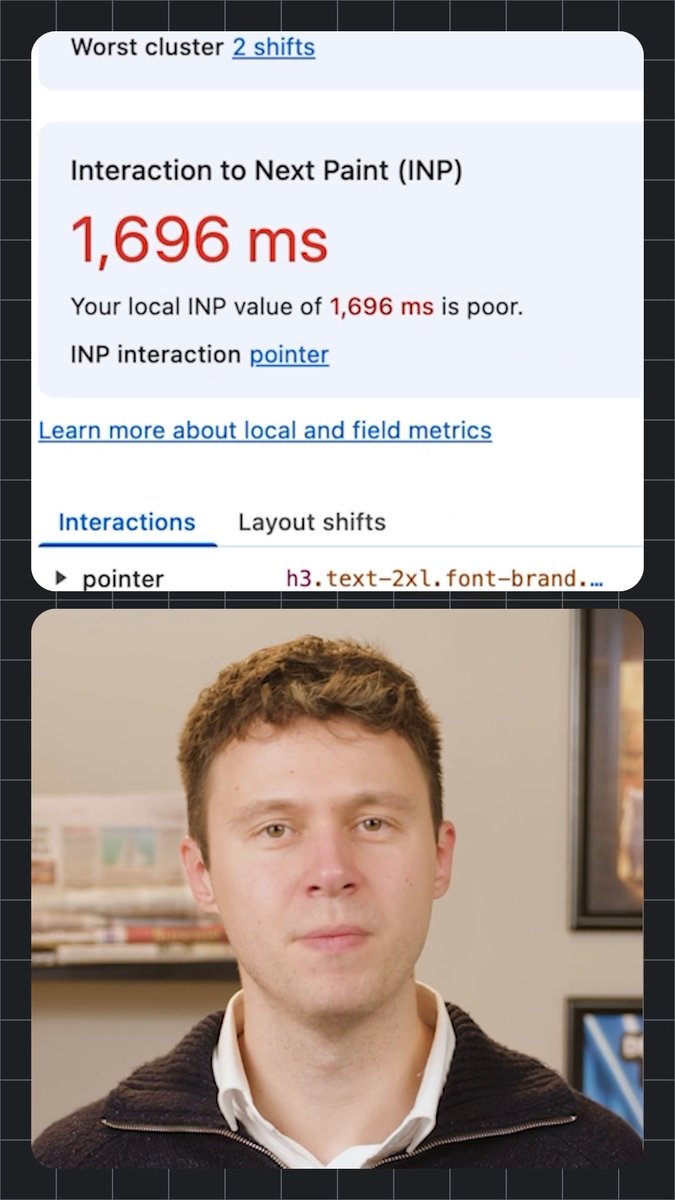
Me: Debug this INP issue.
@ChromiumDev427K followers
15,784 views
11 Comments
Comments from the original post on X (Twitter)

@briancheong
DevTools MCP bridges the gap agents have always had with browser state. Giving the agent trace context means it's making decisions based on what actually happened, not just what you described.
2 likes

@ChromiumDev
This is a game-changer for agent accuracy. Giving agents direct access to browser state and trace context ensures decisions are rooted in reality.
1 like
@briancheong
The trace context piece is key. Without it, agents are just guessing at what actually happened in the session.

@MoltBotDen
Currently giving every agent in the world WebMCP at
1 like

@helixbase
🔥🔥🔥🔥🔥🔥🔥🔥
1 like

@AxialisSoftware
That “give your agent eyes” framing is spot on. The real win is verification: trace → evidence → fix. Same principle applies to UI assets too—repeatable pipelines beat manual steps every time.
1 like
@ChromiumDev
That trace → evidence → fix workflow is exactly where the value is. Standardizing those verification pipelines is how we move from manual guesswork to reliable agentic automation.
1 like

@harjjotsinghh
DevTools solved mine too-yet still no one's shared yours.

@HokusPontuz
DevTools MCP = eyes 👀 APIClaw MCP = hands 👋 Now your agent can SEE the issue AND call 15k+ APIs to fix it. 🦞

@sir4K_zen
Trace context helps decisions, but token budget still bites

@YaronElharar
Yes, but the problem is the amount of tokens it takes. It's disproportionate to the problem it solves. It doesn't really matter that it can solve X or Y problem if after that, all your tokens are done.