正在加载视频...

视频加载失败

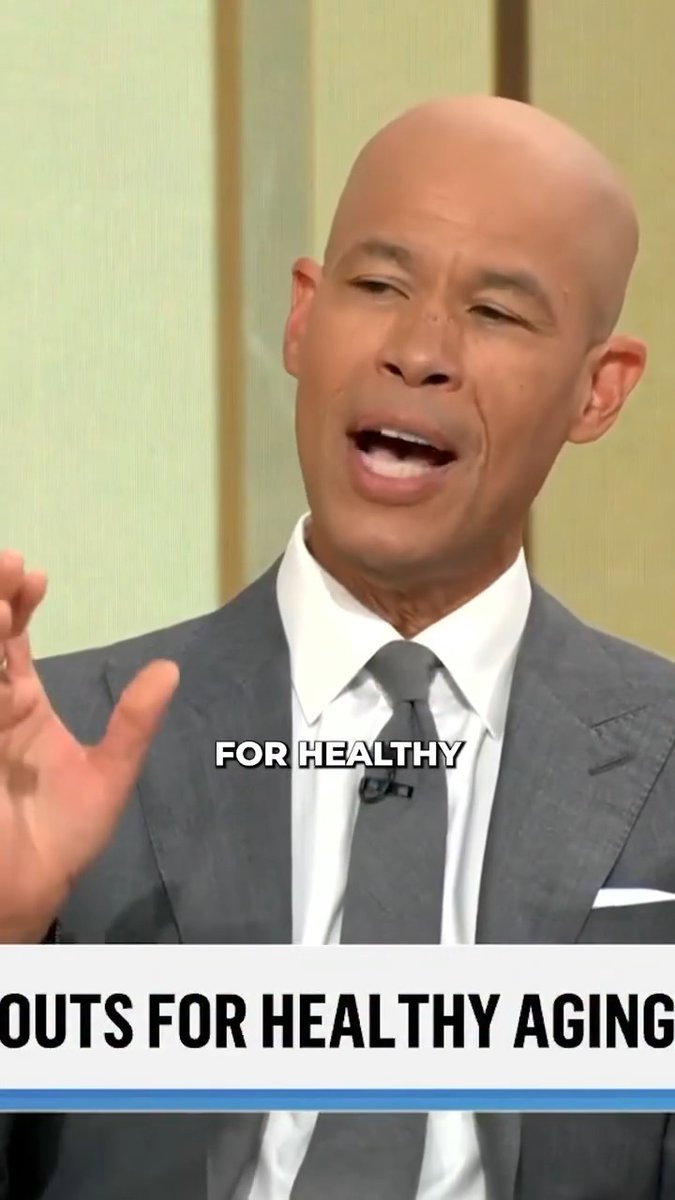
No pharmeceutical can rival exercise when it comes to slowing the aging process - particularly the aging brain. A large-scale trial investiated th effect of aerobic exercise (running, cycling) on cognition in the 20- to 67-year age range. Here’s what they found: Better thinking skills as you age: Exercise...

521,698 次观看 • 2 年前 •via X (Twitter)

10 条评论

Dr. Rhonda Patrick 的头像
Dr. Rhonda Patrick2 年前

The study is titled: “Effect of Aerobic Exercise on Cognition in Younger Adults” and was published in 2019 in Neurology. I’m pretty inspired by the title saying “younger adults, “ but including participants up to 67 years of age. Exercise really does keep you young! Here is a link to the study:

Jesse Ellerbee 的头像
Jesse Ellerbee2 年前

Running has been such a gift in regaining my health and mental health. Stopped looking at it for times and looked at it for the healing. Appreciate all your work, a lot of your findings helped the process 🤙🏻

Milan Bulgarian Trainer 的头像
Milan Bulgarian Trainer2 年前

💯 Here's my 92 years old grandma Maryika, doing her weight training before her cardio:

GuruAnaerobic 的头像
GuruAnaerobic2 年前

New study with 60+ year olds. Leg strength training improves cognitive function.

Peak Insight 的头像
Peak Insight2 年前

Honestly, if our brains had a wishlist, "consistent aerobic exercise" would probably be right at the top! Not only does it help in keeping those neurons firing efficiently, but it also sets a rhythm for the heart and soul. So, whether you're a runner or a cyclist, remember, every step or pedal is a 'thank you' note to your brain. 🚴‍♂️🏃‍♀️🌟

Dr. Scott Carlin 的头像
Dr. Scott Carlin2 年前

I’m finding myself looking forward to these posts every day 😃

RabidWookie 的头像
RabidWookie2 年前

Does this apply to resistance training as well, or are these brain benefits exclusive to aerobic exercise?

Dr. Rhonda Patrick 的头像
Dr. Rhonda Patrick2 年前

There are definitely brain benefits to resistance training as well. According to research, some of the most robust effects on the brain do occur with consistent aerobic exercise, but there are studies showing benefits and improvements in global cognition with resistance training. Both are great!

Imran R Ally, MD 的头像
Imran R Ally, MD2 年前

I’ve seen some research where racket sports were particularly effective in improving neuro plasticity. Wonder what your thoughts were on this topic?

Pete 的头像
Pete2 年前

Such an important message for people to hear! The medical system does a great job for acute injuries, but for chronic disease the best it has is symptom relief. The only treatment is nutrition and exercise.

相关视频

New episode on the optimal exercise intensity, duration, and frequency to prevent and reverse heart aging! In this podcast episode, Dr. Benjamin Levine discusses his groundbreaking research, which reveals how three weeks of bed rest can have a more detrimental impact on fitness than 30 years of aging. Dr. Levine details his research findings that show how a structured exercise regimen can reverse up to 20 years of heart aging by improving both shrinkage and compliance, as well as enhancing aspects of vascular age by 15 years. He also discusses how resistance training and aerobic training have profound differences on the heart, what risks are linked to high-intensity exercise, why recovery is key for the heart, how exercise duration and intensity affect coronary calcium levels, what exercise dose increases Afib risk, and so much more. This episode is a must! Available on YouTube, Spotify, X, and everywhere else. Links in comment. Timestamps: 0:00 - Introduction 1:31 - Bed rest vs. 30 years of aging 5:18 - Recovering from bed rest 6:49 - Does exercise protect against long COVID? 11:27 - Bed rest as a model for space flight 12:24 - How bed rest affects heart size 13:52 - Why a brand-new rubber band mimics a lifetime of endurance training 17:23 - The exercise dose that preserves youthful cardiovascular structure 19:32 - Reversing 20 years of heart aging 23:14 - Reversing vascular age by 15 years 28:38 - Why start an exercise regimen in your 70s? 34:26 - High-intensity exercise risks 37:51 - Balancing high- & moderate-intensity training 42:49 - Training for health vs. training for performance 43:57 - Why muscle mass & cardiorespiratory fitness are like retirement funds 45:12 - Make exercise part of your personal hygiene 46:16 - Why VO2 max correlates with longevity 53:43 - Cardiorespiratory fitness & mortality 59:21 - How does change in fitness over time affect mortality? 1:01:34 - Exercise non-responders 1:05:23 - Limiting factors for VO2 max improvements 1:08:20 - How marathon training affects heart size 1:12:34 - Heart adaptations in purely strength-trained vs. endurance athletes 1:18:23 - Why pure strength-trainers should incorporate endurance training 1:22:07 - How strength training affects blood pressure 1:26:41 - How exercise influences cardiac output 1:28:39 - Does CrossFit count as endurance training? 1:31:04 - Exercise for improving blood pressure 1:36:11 - Lifestyle strategies for treating hypertension 1:38:40 - Why recovery is key 1:42:36 - The best indicator of being overtrained 1:43:36 - Estimating training zones 2-5 1:50:00 - Why HRV is a poor recovery indicator 1:55:16 - Why men are faster runners than women 1:58:49 - Can women achieve similar aerobic exercise benefits doing 2x less? 2:00:21 - Possible cardiovascular benefits of HRT in women 2:02:12 - Defining “extreme exercise” 2:04:00 - How exercise volume affects coronary plaque calcification 2:10:50 - How exercise duration & intensity affect coronary calcium levels 2:14:03 - Why high exercise duration & intensity increases Afib risk 2:16:33 - What exercise dose increases Afib risk? 2:17:59 - Managing stroke risk in athletes prone to Afib 2:21:14 - Why you shouldn’t become an endurance athlete to “live longer”

Dr. Rhonda Patrick

266,327 次观看 • 2 年前

The current physical activity guidelines undervalue vigorous activity. Vigorous activity may be 4–9× more potent than moderate activity for reducing all-cause mortality, cardiovascular disease, diabetes, and cancer risk. The exercise guidelines assume a 2:1 ratio between moderate- and vigorous-intensity activity: two minutes of moderate activity equals one minute of vigorous. That's why the recommendations are 150–300 minutes of moderate or 75–150 minutes of vigorous activity each week. But new data suggest that ratio is wrong. In this brand-new journal-club episode, Brady Holmer (Brady Holmer) and I unpack a groundbreaking study that should change how we think about activity for disease prevention. The research identified that 1 minute of vigorous activity is roughly equivalent to 4–9 minutes of moderate activity, and 53–94 minutes of light activity, for disease risk reduction. It also shows a clear dose-response for vigorous activity that’s much weaker for moderate activity and barely detectable for light activity. We also do a deep dive into why vigorous activity is so powerful, the underlying mechanisms, and discuss practical takeaways, including how even very brief bouts of vigorous movement (think “exercise snacks”) can produce meaningful health benefits. Timestamps are below. You can find links to the episode on YouTube, Apple Podcasts, and Spotify in the next post. Enjoy! Timestamps: 0:00 - Introduction 2:14 - The 1:2 rule for exercise 6:28 - What counts as vigorous? 8:48 - Where exercise guidelines fail 9:32 - Inside the wearable-based study design 15:24 - Vigorous activity—easier than you think? 18:01 - Avoiding healthy user bias 19:12 - A better way to measure exercise 20:58 - Is vigorous 4–10x better? 25:08 - One vigorous min vs. one-hour walk 27:15 - Are light activity's benefits capped? 29:03 - Is vigorous 5x better for your heart? 30:12 - Does zone 2 count as vigorous? 31:24 - Dose-response comparison 32:35 - Vigorous exercise & younger arteries 38:29 - Why aging hearts need intensity 41:22 - Can intensity preserve VO₂ max? 42:40 - Moderate exercise & VO₂ max limits 44:34 - Is vigorous 10x better for diabetes? 51:01 - Why intensity boosts mitochondria 56:11 - Does intense exercise kill tumor cells? 1:02:28 - Hormonal benefits 1:03:19 - Preventing falls with intensity 1:07:49 - Fighting inflammation 1:09:42 - High-intensity training & brain aging 1:11:14 - The 2:1 ratio is out the door 1:13:03 - Could vigorous exercise become a pill? 1:14:21 - Short bursts for longer life 1:18:28 - Can short bouts match full workouts? 1:22:39 - Do wearables undervalue vigorous bursts? 1:25:19 - Can micro-workouts replace the gym? 1:30:23 - Updating exercise guidelines 1:41:48 - Is light activity useless? 1:44:17 - Is vigorous exercise safe for seniors? 1:48:41 - Is HIIT harmful to female hormones? 1:54:18 - Balancing intensity & recovery (80/20 rule) 1:56:43 - Brady’s exercise routine 2:00:30 - Vigorous activity & kids’ brainpower 2:03:27 - Are we undervaluing vigorous exercise? 2:05:16 - Why chasing steps doesn't work

Dr. Rhonda Patrick

306,433 次观看 • 8 个月前

Dr. Daniel Monti just revealed a potentially massive breakthrough in Parkinson’s disease treatment. And it’s much simpler than you think. He just published his third study on a molecule called N-acetylcysteine, or “NAC for short.” “This is a powerful antioxidant.” “It actually protects the liver.” “We know that it does a lot of different things, but the important thing for us is that it’s a precursor to something called glutathione.” “Glutathione protects the brain when there’s damage or oxidative stress and we lose it as we age.” “And when we get sick, we lose it even more.” “So we want to have a way to efficiently increase glutathione in the brain, particularly when we have a neurodegenerative disorder such as Parkinson’s disease.” “We hypothesized early on that giving infused N-acetylcysteine would increase glutathione and actually have a positive impact on Parkinson’s disease.” “We’ve published three studies on this and we look at brain scans in all of them.” “And what we’ve seen is that the N-acetylcysteine increases the efficiency of dopamine in the brain, which is the neurotransmitter or chemical that gets lost in Parkinson’s disease and causes all of those symptoms.” “Our most recent study shows that it improves the way the brain connects to itself or talks to itself the functional connectivity in the brain.” “To be in the study, you couldn’t have changes in your Parkinson's medications for a period of time.” “In both the control group and in the NAC group, people were on their Parkinson’s medications, but if they got the NAC, they did better.” “Their brain came alive in a way that wasn’t happening before.”

Jan Jekielek

170,003 次观看 • 5 个月前

Rebounding, or jumping on a mini-trampoline, offers a variety of health benefits for the body that are both surprising and impressive. Here’s a detailed look at some of the key advantages: 1. Improved Cardiovascular Health ❤️ Rebounding is an excellent way to get your heart pumping and improve cardiovascular health. The rhythmic motion increases heart rate, promoting better circulation and strengthening the heart muscle over time. 2. Lymphatic System Boost 🌿 Unlike many other forms of exercise, rebounding is particularly effective at stimulating the lymphatic system. The up-and-down motion helps to flush out toxins, waste, and other unwanted materials from the body, which can enhance your immune system and overall health. 3. Enhanced Balance and Coordination ⚖️ The unstable surface of the trampoline forces your body to engage multiple muscles to maintain balance, which over time improves your coordination and stability. This can be especially beneficial for older adults looking to maintain their independence and reduce the risk of falls. 4. Low-Impact Exercise 🌟 Despite its effectiveness, rebounding is gentle on the joints. The trampoline absorbs much of the impact, making it a great option for those with joint pain or those recovering from injuries, while still providing a high-intensity workout. 5. Muscle Toning and Strengthening 💪 Rebounding works out various muscle groups, particularly in the core, legs, and lower back. Regular sessions can lead to improved muscle tone, increased strength, and better posture. 6. Improved Bone Density 🦴 The gentle impact on bones from rebounding can stimulate bone growth and increase bone density, which is crucial for preventing osteoporosis and maintaining bone health as we age. 7. Stress Relief and Mental Health 😌 The rhythmic motion of bouncing has been shown to have calming effects, reducing stress and anxiety. Additionally, the physical activity releases endorphins, the body's natural mood lifters, which can help to combat depression and improve overall mental well-being. 8. Better Digestion and Gut Health 🍎 Rebounding can also positively impact digestion by stimulating the digestive tract, promoting better nutrient absorption, and reducing issues like constipation. The gentle motion helps to massage the intestines, aiding in regular bowel movements. 9. Increased Energy Levels ⚡️ Regular rebounding can lead to higher energy levels. The exercise helps to improve circulation and oxygen flow throughout the body, which can leave you feeling more energized and less fatigued throughout the day. 10. Weight Loss and Fat Burning 🔥 Rebounding is an effective calorie-burning exercise. It increases metabolism and helps to burn fat, making it a great option for those looking to lose weight or maintain a healthy weight. Incorporating just a few minutes of rebounding into your daily routine can provide a wide array of benefits, making it a versatile and effective way to support your overall health and well-being.

Barbara Oneill

173,851 次观看 • 1 年前

Scientists discover surprising link between gut-brain interactions and mental health | Eric W. Dolan, PsyPost A new study provides evidence that the connection between the brain and the stomach may be linked to mental health in a measurable way. Researchers from Aarhus University in Denmark, publishing their work in Nature Mental Health, report that a specific pattern of communication between the brain and the stomach reflects how individuals feel emotionally and psychologically. Their findings suggest that these gut-brain interactions can indicate a person’s levels of anxiety, depression, well-being, and overall quality of life. The idea that emotions are linked to physical sensations in the gut is widely reflected in language. People often talk about having “butterflies in the stomach” when nervous, or feeling “sick to the stomach” when distressed. Yet, despite these common expressions, most scientific attention in the field of brain-body interaction has focused on other organs, such as the heart and lungs. These areas have long been studied for their roles in emotion and mood. The researchers were struck by how little was known about how the stomach, in particular, interacts with the brain. While recent studies have explored the influence of gut bacteria and digestion on mental health, very little work had been done on the electrical rhythms of the stomach and how they may directly communicate with the brain’s networks involved in emotion, attention, and cognition. The team behind this new study wanted to explore whether a person’s psychological profile might be reflected in how strongly the stomach and brain are coupled during rest. Their aim was not to link a specific diagnosis like depression to a single brain region, but rather to identify patterns across a broad spectrum of mental health experiences. “Our interest grew from the long-standing discussion about the role of the body in shaping emotion, a question that has fascinated philosophers and scientists for centuries,” said study author Leah Banellis (Leah Banellis), a postdoctoral fellow in Cognitive Neuroscience at Aarhus University. “Yet, while the heart and lungs have received much attention, the stomach has been largely overlooked. This gap struck us as especially surprising, because the link between the stomach and emotional experience feels so intuitive. It is heavily reflected in everyday language, with phrases like ‘butterflies in the stomach,’ ‘sick to our stomach,’ or ‘trust your gut.'” The research was part of the Visceral Mind Project, a large-scale initiative that combines data on brain activity, bodily rhythms, and psychological assessments. The team recorded data from 243 people using a method that captures both electrical signals from the stomach (electrogastrography) and brain activity measured with functional magnetic resonance imaging (fMRI). The participants represented a wide range of mental health profiles, from those reporting high well-being to others showing signs of distress, including anxiety, depression, fatigue, and insomnia. To capture this diversity, the researchers didn’t exclude people with psychiatric symptoms or diagnoses. Instead, they aimed for variation, which would allow their models to detect patterns across the mental health spectrum. Each participant underwent a series of recordings while lying still in the MRI scanner. At the same time, sensors on the abdomen captured the stomach’s slow electrical rhythm, which cycles about three times per minute. This rhythm, which originates from specialized cells in the stomach lining, is typically involved in coordinating digestion. But the researchers suspected it might also be linked to mental state. To analyze the relationship between stomach and brain activity, the team used a method that looks at how well the two rhythms align over time. This measure, known as phase-locking value, essentially captures the degree of synchronization between stomach signals and brain signals across different regions. The researchers then combined this data with results from a comprehensive mental health questionnaire. The battery included 37 different scores across a range of domains—such as anxiety, stress, mood, fatigue, attention, sleep quality, and life satisfaction. Using a statistical method known as canonical correlation analysis, they looked for patterns that linked brain-stomach coupling with the participants’ mental health profiles. The analysis revealed a clear and statistically significant pattern. Stronger coupling between the stomach’s rhythm and brain activity was associated with poorer mental health. Individuals who reported more symptoms of anxiety, depression, stress, and fatigue tended to show increased synchronization between their stomach and brain rhythms. In contrast, those with higher levels of well-being and life satisfaction showed weaker coupling. “For the first time, we’ve found a scientific link between your ‘gut feelings’ and your mental health, showing a surprising connection between your stomach’s natural rhythm and your brain,” Banellis told PsyPost. “Specifically, our study revealed that stronger communication between the stomach and brain is linked to worse mental health, such as higher symptoms of anxiety, depression, stress, and fatigue, whereas weaker stomach-brain communication aligns with better mental health reflected in higher overall well-being and quality of life.” This stomach-brain signature was not random. It was localized in specific brain networks, particularly those involved in attention, cognitive control, and salience detection. Some of the strongest associations were found in regions like the superior angular gyrus and the posterior frontal and parietal areas—regions often implicated in cognitive tasks and mental health disorders. Importantly, the researchers ran multiple control analyses to ensure the robustness of their findings. They ruled out the possibility that the observed effects were simply due to general brain activity patterns, fluctuations in heart rate or breathing, or basic features of stomach physiology. In other words, the association appeared specific to the coupling between the stomach’s electrical rhythm and particular brain networks—not just a general marker of body or brain state. Their approach was designed to detect broad psychological dimensions rather than focus on one diagnosis. The strongest psychological pattern they found was a spectrum ranging from negative affective states (like anxiety and depression) to positive traits (like well-being and quality of life). This result suggests that the stomach-brain connection is not tied to any one disorder but instead reflects a general mode of psychological functioning. “Anxiety, depression, stress, and fatigue showed the strongest links to stomach-brain communication,” Banellis explained. “While phrases like ‘butterflies in the stomach’ or feeling ‘sick to your stomach’ are common ways we describe emotional distress, it was surprising to find such consistent and clear evidence across these symptoms. Even more unexpected was the direction of the effect: we might have assumed that stronger alignment between the body and brain would be beneficial. Instead, our findings suggest that heightened stomach-brain communication could act more like a warning signal, an internal alarm system reflecting mental strain rather than harmony.” Read more:

Owen Gregorian

92,301 次观看 • 10 个月前

By age 50, the average adult has lost at least 10% of their muscle mass and developed a stiffened left ventricle—yet the right exercise plan can reverse both. Over the years, I’ve interviewed some of the world’s top experts in exercise physiology, nutrition science, and human performance. In this brand-new podcast episode, I'm joined by guest Brady Holmer () to distill these insights to answer one key question: What does the science say about how to train? Get the new how to train according to the experts guide at TIMESTAMPS 0:00 - Introduction 3:35 - Training Goals 6:23 - Bed Rest vs. 30 Years of Aging 8:24 - Why Cardiorespiratory Fitness Matters 11:19 - VO2 Max and Longevity 18:47 - Zone 2 Limitations for VO2 Max 22:42 - Demystifying Training Zone Targets 28:29 - Smart Watches vs. Chest Straps 31:43 - Zone 2 vs. Interval Benefits 40:53 - Adjusting the 80/20 Rule 51:07 - Heart Stiffening Starts Early 54:09 - Optimal Four-Day Exercise Habit 1:02:16 - Reversing Twenty Years of Heart Age 1:14:51 - What Intensity Is Better for Mitochondria? 1:17:39 - Does Zone 2 Make You a Better “Fat Burner”? 1:27:04 - Intervals for Glucose Regulation 1:32:24 - Intensity Matters for Brain Health 1:36:20 - Exercise Snacks 1:42:27 - A Caffeine Alternative 1:43:32 - Timing Exercise Snacks 1:45:38 - Muscle Loss with Aging 1:48:19 - Powerpenia 1:50:04 - Resistance Training Principles 1:57:01 - Compound Exercises for Strength 2:00:05 - Rest Intervals Matter 2:02:02 - Lifting Heavy for Mental Resilience 2:05:26 - Should You Train to Failure? 2:08:57 - Strength Training Isn’t Cardio 2:12:16 - Hypertrophy Training 2:17:38 - Body Recomposition Strategies 2:22:52 - Time-Efficient Resistance Training 2:27:38 - The Interference Effect Myth 2:29:32 - Minimum Effective Dose for Resistance 2:31:16 - Sauna Use for Cardiorespiratory Fitness 2:36:17 - Heat vs. Cold for Training 2:39:06 - Anti-Atrophy Effects of Omega-3 2:41:21 - Protein Timing & Distribution 2:46:53 - Creatine Supplementation

Dr. Rhonda Patrick

378,320 次观看 • 1 年前

A person asks Sadhguru, “How much weight training exercise do you recommend?” And Sadhguru answers, “Weight training is not useful, but do 25-50 Surya-Namaskars, it is complete exercise.” First of all, I am not sure why anyone would ask someone like Sadhguru, who is most of the time, in another dimension, a question on exercise and weight training. And secondly, Sadhguru is just plain wrong. Weight (or strength) training is one of the most important aspects of exercise regimen you can include in your daily or 3-4 times a week physical activity because there is great science behind its benefits. I advise my obese or sarcopenic (very poor muscle mass in advanced liver disease) patients to include weight training to improve clinical outcomes. The highest level of scientific evidence showed that standard muscle-strengthening activities were associated with lower risk of death in patients with non-communicable diseases – including cardiovascular disease, diabetes and lung cancer. Another metanalysis showed strong evidence for a considerable risk reduction of strength training for 60 minutes a week, on all-cause death (−15%), cardiovascular disease death (−19%), and cancer death (−14%). See here: here Sadhguru says the older we get, the better we do not weight train. He is again absolutely wrong. The findings of another systematic review/metanalysis support power (strength) training as an effective therapeutic intervention for improving physical function in adults diagnosed with frailty (poor physical function in old age) and patients with chronic medical conditions. See here: In fact, another study on strength training, this one again a metanalysis, concluded that strength training interventions can be used as a non-drug treatment for hypertension (!), as they promote significant decreases in blood pressure. See here: Strength training also reduces significantly, chronic inflammation as shown in another high quality systematic review and meta-analysis. See here: Resistance/Strength training improved muscle mass and muscle strength, thereby improving performance status. Improved performance status is a wonderful benchmark for an active and healthy life. See here: Even in fatty liver disease, independent of weight loss, exercise training was associated with 3 and a half times more meaningful treatment response towards lowering liver fat. Strength training is a powerful tool to maintain liver health. See here: and here Now Surya Namaskar. Surya Namaskar or Sun Salutation is a sequence of around twelve yoga poses connected by jumping or stretching movements, varying somewhat between various Yoga schools – which means, it has no regulation or standardization unlike weight training. In Iyengar Yoga there is a way, in Ashtanga Vinayasa Yoga there is Type A and B and there are other types followed by other schools or Yoga teachers. Along with the stretching and jumping, which is done is a slow and steady manner, the practice includes chanting a “mantra” calling out twelve names of the Sun God. In its classical form, Surya Namaskar is not an exercise, and is not aerobic. The energy cost of exercise is measured in units of metabolic equivalent of task (MET). Less than 3 METs counts as light exercise; 3 to 6 METs is moderate; 6 or over is vigorous. American College of Sports Medicine and American Heart Association guidelines count periods of at least 10 minutes of moderate MET level activity towards their recommended daily amounts of exercise. For healthy adults aged 18 to 65, the guidelines recommend moderate exercise for 30 minutes five days a week, or vigorous aerobic exercise for 20 minutes three days a week. Surya Namaskar in its classical form has a measly 2.9 METs and in its rigorous form (some people perform mutated highly active forms of Surya Namaskar to make it feel like an exercise) can go up to 7.4 METs – which requires a lot of jumping and little stretching and no time to chant the Sun God names - does not even come close to strength training by any margin. Those who are part of the Surya Namaskar and Yoga cult would provide anecdotal experiences on its benefits (please see comment section) through non-classical forms and would call it an “exhilarating experience.” Experiences are not scientific, evidence are. Many Yoga journals and some dubious and third rate Ayurveda journals have also have published on such experiences in small group of patients, which are not validated or published in better journals [like this junk here: There are no metanalysis level data to prove effectiveness of Surya Namaskar as beneficial as aerobic exercise or better than strength training as Sadhguru claims. Do Surya namaskar if you are doing nothing. But upgrade to strength training if you want something. And stop listening to pseudoscience peddlers who speak religion and culture for your healthcare needs. Sadhguru suffers seriously from Dunning Kruger fallacy: a type of cognitive bias, where people with little expertise or ability assume they have superior expertise or ability. This overestimation occurs because of the fact that they don’t have enough knowledge to know they don’t have enough knowledge.

TheLiverDoc™

505,792 次观看 • 2 年前

If you want to meaningfully impact aging in America, start with obesity—few things erode longevity and quality of life as profoundly, accelerating the biological aging process and fueling nearly every major chronic disease. Obesity alone is linked to 13 types of cancer and cuts life expectancy by 3–10 years, depending on severity. It promotes DNA damage and accelerates our fundamental aging process—often measured by epigenetic age. It’s one of the principal differences between the U.S. and many of the world’s longest-lived nations. We’re overfed but undernourished. 60% of all calories Americans consume come from ultra-processed foods that: • Fail to induce proper satiety, pushing us to overeat. • Remain cheaper than whole foods, economically incentivizing the least healthy choices. • Hijack our dopamine reward pathways, reinforcing addictive eating behaviors. This trifecta—no satiety, low cost, and built-in addictiveness—keeps us in a cycle of poor health outcomes and runaway healthcare costs. But caloric excess is only part of the problem—we are also nutrient-deficient. Low omega-3 levels—affecting 80 to 90% of Americans—carry the same mortality risk as smoking. Vitamin D deficiency—easily corrected—compromises immune function, cognition, and longevity. Nearly half of Americans don't get enough magnesium—impairing DNA repair and increasing the risk of cancer. We are not solving these problems—we are medicating them. The average American over 65 takes five or more prescription drugs daily—stacking interactions that compound in unpredictable ways. We must start treating physical inactivity as a disease. It carries the same mortality risk as smoking, heart disease, and diabetes. Going from a low cardiorespiratory fitness to a low normal adds 2.1 years to life expectancy. By age 50, many Americans have already lost 10% of their peak muscle mass. By 70, many have lost up to 40%. This isn’t just about looking strong. It’s about survival. • Higher muscle mass means improved insulin sensitivity - it means a 30% lower mortality risk. • Grip strength is a stronger predictor of cardiovascular mortality - the number one cause of death in the United States - than high blood pressure. • The strongest middle-aged adults have a 42% lower dementia risk. And yet, we treat resistance training as optional. It is not. It is the most powerful intervention we have against aging including increasing muscle mass, strength and bone density. Hip fractures alone kill 20–60% of older adults within a year. This is a death sentence we can prevent with resistance training - which has been shown to lower fracture risk by 30-40%. The current RDA for protein is too low for older adults. Studies have shown when it's increased by half this reduces frailty by 32%, while doubling it, combined with resistance training, increases muscle mass by 27% and strength by 10% more than training alone. If we want to prevent muscle loss and frailty, we must update our protein recommendations and prioritize strength training. We must foster a culture of American exceptionalism built on daily, effortful exercise. Not as an afterthought. Not as a luxury. But as a non-negotiable foundation for aging, but also clear thinking, resilience, and even leadership. The body and brain are not separate. The consequences of poorly regulated blood sugar, sedentary living, and muscle loss are not just physical—they affect cognition, judgment, and resilience. We cannot medicate our way out of what we have behaved our way into. Grateful for the chance to share my voice at the Senate Aging Committee (Senate Aging Committee). A special thank you to Senator Rick Scott (Rick Scott) for making this opportunity possible.

Dr. Rhonda Patrick

407,540 次观看 • 1 年前

Of the 11 major risk factors for Alzheimer's, how many are you actively managing? According to renowned psychiatrist and brain disorder specialist Dr. Daniel Amen, a staggering 50% of Alzheimer's cases are preventable. The key, he explains, is to understand and address the 11 major risk factors, which he summarizes with the acronym BRIGHT MINDS. In a compelling discussion, Dr. Amen outlined several of these critical factors: - B is for Blood Flow: This is the #1 brain imaging predictor. Protect it by managing blood pressure, staying active, and being mindful of substances like excessive alcohol, marijuana, nicotine, and too much caffeine. - R is for Retirement & Aging: As we age, brain health requires more intention. Notably, Dr. Amen points to new research showing that marijuana use in those under 50 is associated with a 600% increased risk of heart attack, highlighting its negative impact on our blood vessels. - I is for Inflammation: A major culprit behind dementia. Combat it by avoiding ultra-processed foods, ensuring adequate Omega-3s, and surprisingly—flossing your teeth nightly to prevent gum disease and low-grade oral infections. - H is for Head Trauma: A major cause of not only psychiatric issues but also substance abuse, as it often damages the frontal lobes and impairs impulse control. - T is for Toxins: This includes drugs, alcohol, mold, and even the products we put on our bodies. Dr. Amen shared a powerful anecdote about a patient whose brain scan deteriorated significantly after general anesthesia, underscoring that it can be toxic to the brain and increase dementia risk. The takeaway is empowering: by loving your brain and taking a proactive, preventative approach to these risk factors, you can dramatically shift your cognitive future. Your brain is your most precious asset. How will you protect it today?

Camus

17,892 次观看 • 9 个月前

Here’s EVERYTHING you need to know about warm up sets: Most people are doing warm up sets ALL wrong and they’re costing themselves from an efficiency/effectiveness standpoint as a result Warm ups are designed to A) guard against injury B) prepare you for your working sets Warm up sets should NEVER be taken in close proximity to failure…most should see you leaving 6, 7, 8+ reps in reserve (the lone exception to this = sets performed for 1-2 reps @ ~90+ of your intended working weight) This is in STARK CONTRAST to working sets which should all end around 0-2 RIR You probably need about ~2 warm up sets before your first exercise or two depending on the specifics of your programming Here is an example of a typical warm up protocol: - a 5-10 minute brisk walk on the treadmill (optional) - 50% of your working weight on your first exercise for ~12 reps (mandatory) - 75% of your working weight on your first exercise for ~6 reps (mandatory) - 90% of your working weight on your first exercise for ~2 reps (optional) After you complete the working sets for your first exercise, you may want to repeat the last 3 steps prior to performing your next exercise IF it is an antagonist exercise (Ex: Lat Pull-Down after Sternal Pecs Machine Press OR Seated Leg Curls after Hack Squats) After that, you probably don’t need any additional warm up sets unless you are just using them as “primers” (sets to make sure your movement pattern / the machine settings / etc. are on point) - If doing a PUSH workout, I’m probably using 2-3 warm up sets before my first exercise only (assuming it’s a multi joint movement) - If doing a PULL workout, I’m probably using 2-3 warm up sets before my first exercise only (assuming it’s a multi joint movement) - If doing an UPPER workout, I’m probably using 2-3 warm up sets before my first exercise and 1-2 warm up sets before my second exercise (assuming they’re antagonist multi joint movements) - If doing an LOWER workout, I’m probably using 2-3 warm up sets before my first exercise and 1-2 warm up sets before my second exercise (assuming they’re antagonist multi joint movements) - If doing a FULL BODY workout, I’m probably using 2-3 warm up sets before my first exercise, 1-2 warm up sets before my second exercise, and may even 1-2 warm up sets before my third and fourth exercises as well (assuming they’re all multi joint movements — antagonist push/pull movements for both upper & lower) (As you can see, the major downside of FULL BODY workouts is often the excess warm up time needed — this is why they work best for beginners much of the time) General rule of thumb: If your first set of an exercise is NOT your best set of that exercise in terms of performance (assuming we equate RIR), you are NOT warming up properly You should see a fall off in performance as sets transpire on a given exercise…this is a feature, not a bug of productive/effective resistance exercise WHEN WARMED UP PROPERLY

Dean Turner

49,107 次观看 • 18 天前

Here’s EVERYTHING you need to know about warm up sets: Most people are doing warm up sets ALL wrong and they’re costing themselves from an efficiency/effectiveness standpoint as a result Warm ups are designed to A) guard against injury B) prepare you for your working sets Warm up sets should NEVER be taken in close proximity to failure…most should see you leaving 6, 7, 8+ reps in reserve (the lone exception to this = sets performed for 1-2 reps @ ~90+ of your intended working weight) This is in STARK CONTRAST to working sets which should all end around 0-2 RIR You probably need about ~2 warm up sets before your first exercise or two depending on the specifics of your programming Here is an example of a typical warm up protocol: - a 5-10 minute brisk walk on the treadmill (optional) - 50% of your working weight on your first exercise for ~12 reps (mandatory) - 75% of your working weight on your first exercise for ~6 reps (mandatory) - 90% of your working weight on your first exercise for ~2 reps (optional) After you complete the working sets for your first exercise, you may want to repeat the last 3 steps prior to performing your next exercise IF it is an antagonist exercise (Ex: Lat Pull-Down after Sternal Pecs Machine Press OR Seated Leg Curls after Hack Squats) After that, you probably don’t need any additional warm up sets unless you are just using them as “primers” (sets to make sure your movement pattern / the machine settings / etc. are on point) - If doing a PUSH workout, I’m probably using 2-3 warm up sets before my first exercise only (assuming it’s a multi joint movement) - If doing a PULL workout, I’m probably using 2-3 warm up sets before my first exercise only (assuming it’s a multi joint movement) - If doing an UPPER workout, I’m probably using 2-3 warm up sets before my first exercise and 1-2 warm up sets before my second exercise (assuming they’re antagonist multi joint movements) - If doing an LOWER workout, I’m probably using 2-3 warm up sets before my first exercise and 1-2 warm up sets before my second exercise (assuming they’re antagonist multi joint movements) - If doing a FULL BODY workout, I’m probably using 2-3 warm up sets before my first exercise, 1-2 warm up sets before my second exercise, and may even 1-2 warm up sets before my third and fourth exercises as well (assuming they’re all multi joint movements — antagonist push/pull movements for both upper & lower) (As you can see, the major downside of FULL BODY workouts is often the excess warm up time needed — this is why they work best for beginners much of the time) General rule of thumb: If your first set of an exercise is NOT your best set of that exercise in terms of performance (assuming we equate RIR), you are NOT warming up properly You should see a fall off in performance as sets transpire on a given exercise…this is a feature, not a bug of productive/effective resistance exercise WHEN WARMED UP PROPERLY

Dean Turner

53,653 次观看 • 5 个月前

Enrique Delgado-Garcia, a 25-year-old recruit at the Massachusetts State Police Academy in Braintree, has died as a result of injuries apparently sustained during a defensive tactics boxing training exercise. However, his family says his injuries are not consistent with what he would’ve sustained during a training exercise. They say he had missing teeth, his neck was broken, brain injuries and contusions all over his body. Friends and family are devastated. And fortunately, they want answers. “They killed my cousin! And they run away like cowards!” said a family member. “All he did was study and run. That’s all he ever did!” How on earth does one sustain a broken neck, have missing teeth and brain injuries from a boxing training exercise? You don’t even hear of those kinds of injuries in the pro boxing and fighting world. It sounds like there’s a lot more to this story that the Massachusetts State Police isn’t telling. Who’s investigating this? Hopefully it’s an outside agency. As we’ve seen, the Massachusetts State Police don’t particularly care about conflicts of interest, or conducting real investigations where protocol is followed when it’s the death of a fallen brother in blue. Enrique previously served as a victim witness advocate in the Worcester County District Attorney’s Office. According to his family, it was his dream to become a State Police Trooper. My thoughts and prayers are with Enrique’s family and friends. As you can see, they’re clearly and understandably devastated. His injuries don’t match the narrative. And they’re outraged. It’s refreshing and commendable to see them demanding answers. ———— On a side note: All of the descriptions and reporting I’ve seen of what happened to him say things like: “he suffered a medical emergency during a training exercise…” or “he became unresponsive in the boxing ring during a defensive tactics training exercise”. Typically, suffering a medical emergency includes things like having a heart attack, seizure, or severe allergic reaction, for instance. Someone whose neck has been fractured, is missing teeth and has severe brain injuries didn’t do it to themself. And one doesn’t typically sustain such injuries because they, for instance, fainted and fell to the ground, breaking their neck, knocking their teeth out and causing brain injuries on the way. Those things happen, especially if you’re physically fighting someone (boxing), because that other person DID them to you. Did he “become unresponsive” while just standing there doing nothing? Or did he become unresponsive because someone knocked him out? This very passive, distancing language is concerning. Let’s hope his family gets some answers soon. 🙏🏼 #MassachusettsStatePolice #PoliceCoverup #PoliceCorruption #CantonCoverup #JusticeForJohnOKeefe #FreeKarenRead

Olivia

230,153 次观看 • 1 年前

Friedberg: New study shows enzyme reverses skin age from 70+ years to 31 Chamath: That’s a $2T market. Did Scientists Just Discover How to Reverse Skin Aging!? “CML is kind of the predominant molecule that gets formed in this extracellular matrix that's driving aging, and nothing breaks it down. So these scientists set out to try and create an enzyme, an enzyme is a protein that breaks something down, that can break down CML. And so these guys kind of went out and they took the target, which is CML, and tried to figure out, ‘Okay, how do we actually degrade CML, clear that extracellular matrix, and reverse aging?’ They started to test it on the proteins that we would find in our body, casein, collagen, retinal proteins, which are in your eye, hemoglobin, and they were able to get rid of 52 to 97% of the CML, just degrade it away. And then they found several sites where they were able to degrade over 90%. And then they took actual human skin from elderly patients that had donated their skin, and they put this enzyme onto that skin, and they were able to eliminate 55% of the CML on the skin, basically reverse the skin's age down to the age of a 31-year-old, this is from greater than 70-year-old patients, just by putting this enzyme on the skin. And so it's kind of a groundbreaking demonstration of combination of AlphaFold, what's called directed evolution, where you change the order of the DNA that changes the structure of the protein to test different proteins, do high throughput screening, and ultimately make a novel protein that doesn't exist in nature today that can do something pretty profound for human health.” Chamath: “It will be a trillion-dollar market. If you can create a cream…” Friedberg: “I mean, dude, if you could put this enzyme literally on your skin and have it absorb in…” Chamath: “Game over. That alone is $2 trillion.”

The All-In Podcast

2,974,775 次观看 • 1 个月前

i don't think people realize what just happened with brain implants in china for the first time in history, a brain implant has been approved for commercial sale. you can actually buy one. it's called neo. costs around $15,000. the question everyone asks first: does it actually work? here's what the implant does. a coin-sized chip gets placed on the surface of the brain, right over the area that controls movement. when a paralyzed patient imagines moving their hand, the chip reads that signal, sends it to a computer, and the computer drives a mechanical glove that moves for them picking up objects, gripping utensils, handling daily tasks. all from thought alone. the whole surgery takes an hour and 40 minutes. surgeons thin the skull, open a small window, and place two electrodes directly on the surface of the brain. then they close it up, patients go home within a week. 32 patients with spinal cord injuries were implanted in a clinical trial led by huashan hospital > ALL 32 regained the ability to grab objects through the glove. > 100% improvement rate. > zero adverse side effects. no other brain implant company on earth has received approval to sell their device commercially. elon's neuralink is still in clinical trials. side effects from their more invasive approach have stalled any path to regulatory clearance. china is the only country where you can buy a brain implant right now. this is by design. months before the approval, china published a national policy document with 17 steps to dominate the brain implant industry within 5 years. they want brain-reading devices to be as common as hearing aids. headbands, visors, earpieces that pick up brain signals... all mass-produced for consumers. and the government is coordinating the whole thing. funding the research, building the manufacturing, clearing the regulatory path, all at once. the West is moving painfully slow in comparison...still running controlled trials one patient group at a time. china already has a commercial product, a 72-year-old moving his leg on state television, and a national playbook to own the entire category.

Ole Lehmann

51,914 次观看 • 4 个月前

Brain under construction! 🚧 🧠 🚧 Did you know that the period from prenatal to age three is the single most consequential window in all of human development? It is here that the fundamental architecture of the brain is “wired” in ways that will serve to support (or hinder) your child’s success for decades to come. At birth, your baby’s brain comes equipped with roughly 100 billion nerve cells, virtually all they will ever have. But what these cells must develop is the ability to communicate effectively with one another. They do this by transmitting electrical impulses. And there’s no time in life when these connections (known as synapses) are firing like they are during infancy. Scientists estimate that during the earliest years of life these neural connections are being made at a rate of one million per SECOND. Pretty impressive, huh? How can you help ensure your baby’s brain is optimally wired for success? Through attentive and nurturing interactions like the ones shown here. Every word you speak, every facial expression you convey, and every loving touch is helping to create important new connections. No one can be this attentive 24 hours a day. But prioritizing time to speak, sing, laugh, and play with your baby face-to-face is an investment you’ll never regret - and one that will serve them well for years and years to come. Know a new parent or grandparent? Pass it on! This brain-building dad and his adoring little one were shared to IG by genesiscostner.

Dan Wuori

374,876 次观看 • 2 年前

Scientists just figured out how to reverse aging using AI. And this is a massive breakthrough. We can now reprogram any human cell back to age 20. Heart cells, brain cells, skin cells, all reset to their biological prime. And here’s the wildest part…the technology to do this, has already existed since 2012 (it won the Nobel Prize). But the real breakthrough wasn’t possible until this year, when they supercharged it with AI. It’s a wild story. So in 2006, scientists discovered Yamanaka factors. They’re proteins that can basically convert any normal cell into a universal stem cell. Now this was a huge deal, because these stem cells are basically like magic healers. If you have torn muscle tissue, you could inject these stem cells into the area and they will turn into the youthful muscle cells you need. So Yamanaka factors were this insane breakthrough, because they allowed any human to turn any cell you already have into these magic healers. But, there was one big problem… It turns out, the original Yamanaka factors weren’t very good at this stem cell conversion. They could do it, but they just weren’t very reliable. Enter OpenAI...and this is where things get crazy. OpenAI designed a special AI model built specifically to create new proteins. Think of it like ChatGPT but for protein engineering. So they took all the Yamanaka research and asked this new AI to go ham on improving it. And get this… Their version was 50x more effective than the original. They tested it on 50 year old cells and it successfully started repairing 30% of their cells in just 7 days. This is just science fiction…it actually happened. And it sounds crazy, but in a few years, humans will be able to take a shot that will literally reverse the age of their cells.

Whiplash347

68,643 次观看 • 9 个月前