Loading video...

Video Failed to Load

Go Home

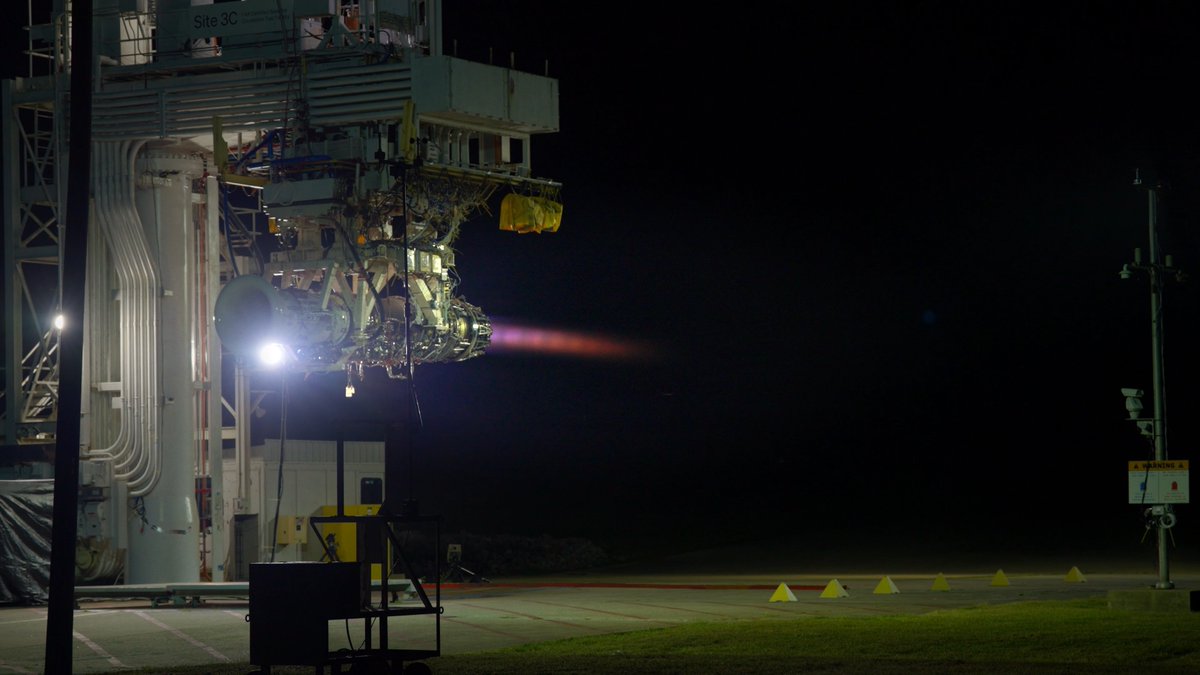
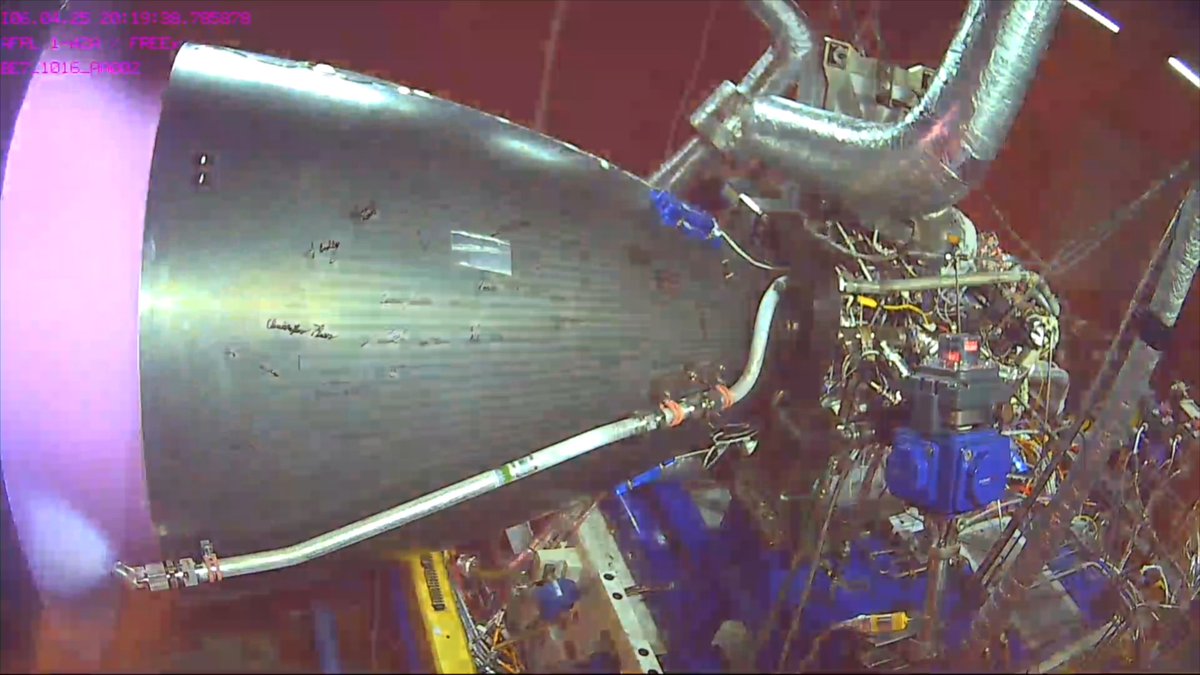
No runway, no problem. Shield AI and GE Aerospace just cleared a critical path to vertical flight, completing engine light-off testing of the Axisymmetric Vectoring Exhaust Nozzle (AVEN) for X-BAT. Engineers from both companies integrated the AVEN into GE Aerospace's F110-GE-129E engine, then completed functional checkouts and engine light-off...

97,541 views • 19 days ago •via X (Twitter)

0 Comments

No comments available

Comments from the original post will appear here

Related Videos

As the CFM LEAP engine shuts down, you can hear the distinctive “whoosh” sound followed by a gush of air. That is the Reverse Bleed System (RBS) at work. During normal operation, a significant amount of fuel remains unpurged in the system after engine shutdown. This residual fuel, located near or within the hot section, vaporizes due to high temperatures and deposits carbon (coke) on the fuel nozzles. Over time, nozzle coking leads to several operational and maintenance issues, including loss of thrust, reduced engine efficiency due to incomplete combustion, accelerated deterioration of hot-section components (combustor and High-Pressure Turbine), engine start failures, potential engine stalls, and increased unscheduled engine removals. The Reverse Bleed System (RBS) prevents fuel nozzle coking by automatically introducing cool air from the core compartment into the engine core flowpath after shutdown. This effectively lowers the fuel nozzle temperature below the coking threshold. RBS can operate for a maximum of 1 hour, and its effectiveness depends on ambient conditions (especially ambient temperature) and the total duration it runs. The last flight of the day contributes the most to fuel nozzle coke accumulation because of the extended dwell time at the gate. By actively managing post-shutdown thermal conditions, RBS significantly reduces coking-related problems, improves engine reliability, and lowers long-term maintenance costs. Now, also coming soon to the CFM56

Arjun Singh

53,381 views • 2 months ago

Canada's first orbital-class rocket engine is now being manufactured! Our patent pending Hadfield-150 engine is the largest and most powerful rocket engine ever built in Canada, and the first known Canadian orbital-class engine to make it to this stage. The Hadfield-150 builds on everything we learned after years of painstakingly designing, manufacturing, and testing the Hadfield-10 series, our first regeneratively cooled and additively manufactured liquid rocket engine. Every engine test, both successful and unsuccessful on our Darkhorse test stand at Area 66, retired risk that's now carried straight into Hadfield-150 and sovereign orbital launch for Canada. A few details about the Hadfield-150 engine series: ✅ Designed to power Tundra and Tundra+, our light and medium-lift launch vehicles, and built to scale to Tempest, our larger reusable medium lift vehicle ✅ Manufactured entirely in-house, from design to print to test, for true sovereign launch capability ✅ Produced at Rocket Factory 1, on our expanding fleet of metal additive manufacturing systems at the AMA Lab, including the largest known metal 3D printer in Canada ✅ Designed for reusability and medium-lift scale from the outset, and built to significantly cut the time, infrastructure, manufacturing and cost iterative engine testing usually requires, with room to scale to even larger engines by leveraging the same design ✅ Capable of engine-out functionality, so losing one on an early flight doesn't have to mean losing the mission ✅ Optimized for Canada's Launch the North initiative, to deliver sovereign operational capability in a time and cost efficient manner Initial testing starts later this year at our new Blackhawk orbital engine test cell at Area 66, our private test range in Ontario. Stacked, integrated vehicle testing comes later at the Atlantic Spaceport Complex, our spaceport in Newfoundland and Labrador. Stay tuned for some exciting and fiery milestones ahead! 🚀🇨🇦 National Defence Defence Research and Development Canada Canadian Space Agency Transport Canada NGen Canada

NordSpace 🇨🇦

27,202 views • 1 month ago

India spent 39 years and over 2000 crore on the Kaveri engine and still cannot hit the thrust a fighter needs. problem was never funding, GTRE had no access to how Rolls Royce or GE engineers think about single crystal blade metallurgy or combustion instability during flight. That kind of knowledge sits inside people who have iterated on live programs for decades, You cannot download someone else iteration history. You have to be inside the program to absorb what it teaches Every country that builds jet engines went through the same ugly loop, Test, fail, retest, discover something that fits nowhere in a textbook. India had no high altitude test facility for the Kaveri. Had to ship the engine to Russia for every trial run. You cannot absorb the parameters that separate a working hot section from a molten one by reading papers. That knowledge gets created inside the program itself. Miss the program, miss the knowledge. No workaround exists. GE will transfer 80% of F414 manufacturing tech to HAL, The remaining 20% is where the real gap lives. Core metallurgy, turbine cooling geometries, thermal margin tables that took forty years of flight data to build. Safran meanwhile is offering India full hot section know how for the AMCA engine. Two competing offers from two different countries, both telling India the same story. You can buy the right to assemble, You cannot buy the intuition that shaped the design. I love yur thought by the way, I watch few weeks Ago reel where he talked about how hard to make just blade :)

Normal Guy

542,452 views • 1 month ago

Following the Delta A330-323(N813NW) engine failure after departure from São Paulo (GRU), many are asking: what actually happens if an airliner loses an engine just after takeoff? As passenger in the cabin watching this scenario unfold, the panic is understandable. Seeing flames from an engine is alarming. But this is exactly the kind of scenario pilots are trained for repeatedly in simulators. Modern multi-engine aircraft are designed to fly safely on one engine. In fact, losing one engine is a certification requirement during testing. Here’s what happens: At liftoff, pilots target V2 speed—the minimum safe speed that guarantees the aircraft can continue climbing even with one engine inoperative. If an engine fails: • The MASTER FIRE warning light will illuminate in the cockpit and the fire warning bell will sound, alerting the pilots on the affected engine (they will close the fuel, hydraulic shutoff, and engine bleed air valves, and also discharge the related fire bottle to extinguish the engine fire). Of course, they will be careful NOT TO shut down the wrong engine (this has happened before). • Maximum thrust is applied on the remaining engine. • Rudder input keeps the aircraft straight (countering asymmetric thrust) • The aircraft climbs straight ahead for best performance (turns reduce climb rate unless required) Once above a safe altitude (typically ~1,500 ft / Minimum Flap Retraction Altitude(MFRA): • The aircraft accelerates • Flaps are retracted (“cleaning up”) • Crew assesses the situation and plans a return or diversion Even at very low altitude, the aircraft remains controllable by design. It may not climb aggressively, but it will climb. Bottom line: What looks catastrophic from the cabin is a scenario pilots are highly trained to handle—and aircraft are engineered to withstand. Hope this helps any nervous flyer. Flying is safe, and the chances of this happening have reduced due to lessons learned from previous incidents. And if you ever find yourself in this situation, trust that the pilots will act according to their training—because that’s their job.

Turbine Traveller

42,927 views • 4 months ago