Loading video...

Video Failed to Load

Go Home

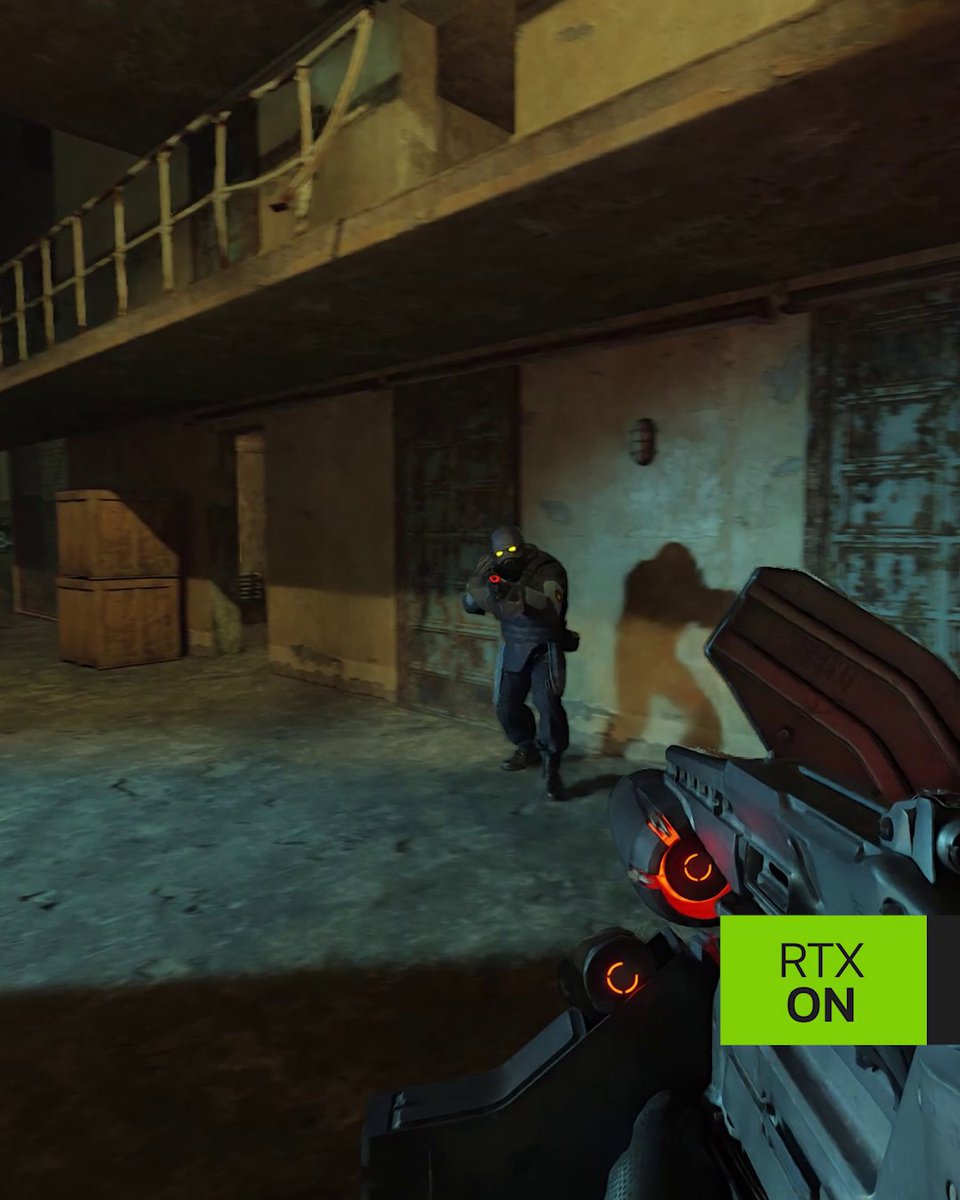
NVIDIA just showed some new relighting capabilities using gaussians, though this is pure ray tracing (no splatting). TRON extends their ray tracing library (3DGRT) to get an editable 3D material scaffold.

28,421 views • 17 days ago •via X (Twitter)

0 Comments

No comments available

Comments from the original post will appear here

Related Videos

3D scanning and rendering is moving so fast - got my splats up and running and I'm mind blown getting ~100fps for this complex 3D scene ⬇️ 🤯 1. WAY faster than NeRF: For comparison, NeRFs would takes around 10 seconds per frame (!) Instead I'm zipping around with FPV controls without breaking a sweat - though I do crash a few times towards the end of the video lol 2. Old Meets New: Gaussian Splatting is cool in that it fuses classical graphics and deep learning techniques. Like NeRFs, this is still a radiance field - just without the slower (ne)ural rendering part. 3. Explicit Representation: Instead you represent a 3D scene as a collection of ellipsoidal "splats" called gaussians. Each gaussian has a position, size, and color. Rendering in real-time is done by projecting into the image plane and alpha blending. 4. Photorealistic Effects: Gaussian splatting use spherical harmonics to represent the view-dependent effects and lighting - allowing surfaces to change color when viewed from different angles, enabling greater photorealism. It doesn't use a neural network, but the training loop is similar to deep learning. 5. Enables Direct Editing: But it's not just speed - with Gaussian Splatting you also get 3D editing support! So you can select, move, and delete stuff, even relight stuff. This type of editing has been more tedious to do with NeRFs and their implicit black box representations. 📲 More tests cooking! Much more to unpack here including simpler explanations. If you enjoyed this post, you might enjoy my feed: Bilawal Sidhu

Bilawal Sidhu

337,090 views • 2 years ago

MaterialFusion Enhancing Inverse Rendering with Material Diffusion Priors discuss: Recent works in inverse rendering have shown promise in using multi-view images of an object to recover shape, albedo, and materials. However, the recovered components often fail to render accurately under new lighting conditions due to the intrinsic challenge of disentangling albedo and material properties from input images. To address this challenge, we introduce MaterialFusion, an enhanced conventional 3D inverse rendering pipeline that incorporates a 2D prior on texture and material properties. We present StableMaterial, a 2D diffusion model prior that refines multi-lit data to estimate the most likely albedo and material from given input appearances. This model is trained on albedo, material, and relit image data derived from a curated dataset of approximately ~12K artist-designed synthetic Blender objects called BlenderVault. we incorporate this diffusion prior with an inverse rendering framework where we use score distillation sampling (SDS) to guide the optimization of the albedo and materials, improving relighting performance in comparison with previous work. We validate MaterialFusion's relighting performance on 4 datasets of synthetic and real objects under diverse illumination conditions, showing our diffusion-aided approach significantly improves the appearance of reconstructed objects under novel lighting conditions. We intend to publicly release our BlenderVault dataset to support further research in this field.

AK

22,959 views • 1 year ago