Video wird geladen...

Video konnte nicht geladen werden

Zur Startseite

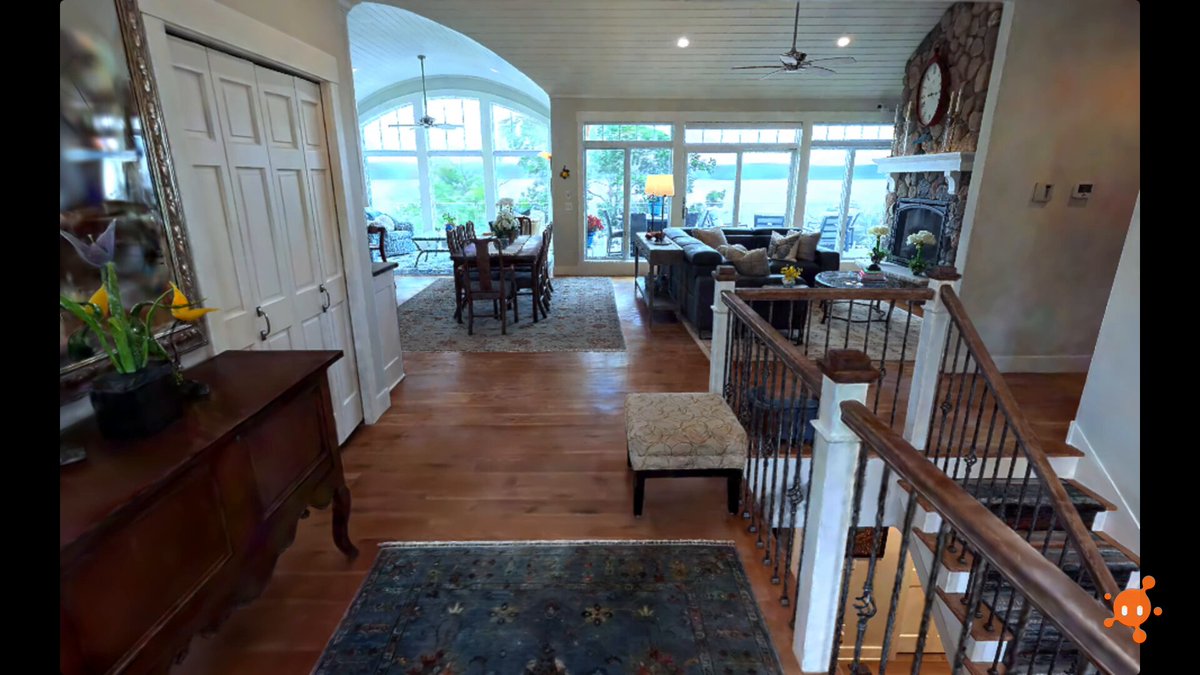
Open Sourcing Forge: 3D Gaussian splat rendering for web developers! 3DGS has become a dominant paradigm for differentiable rendering, combining high visual quality and real-time rendering. However, support for splatting on the web still lags behind its adoption in AI.

120,072 Aufrufe • vor 1 Jahr •via X (Twitter)

14 Kommentare

Profilbild von spark
sparkvor 1 Jahr

At @theworldlabs, we’re building generative 3D foundation models to unlock spatial intelligence. Splats are an important representation for 3D AI, so to enable our vision we built a fast, dynamic web renderer. We believe this tech can be useful to everyone working with 3DGS.

Profilbild von spark
sparkvor 1 Jahr

Today we’re open sourcing Forge under the MIT license for anyone to use or contribute to, aiming to expand what’s possible with 3DGS with a flexible architecture that enables fully dynamic & programmable Gaussian splatting.

Profilbild von spark
sparkvor 1 Jahr

Forge integrates seamlessly with @threejs, runs in the browser via WebGL2 (desktop, mobile, and VR), can load most major splat file formats, and requires minimal code to get up and running. It supports multiple splat objects, multiple cameras, and real-time animation/editing.

Profilbild von spark
sparkvor 1 Jahr

Underlying this is a design that runs user-programmable functions for every splat on the GPU (like shaders in modern 3D graphics) and can be used to create complex animations and effects. We want to help people build new interactive experiences never before seen with 3DGS!

Profilbild von spark
sparkvor 1 Jahr

You can find full source code, examples, documentation, and more at We can’t wait to see what you’ll build!

Profilbild von MrNeRF
MrNeRFvor 1 Jahr

@forgegfx @BenMildenhall Awesome!

Profilbild von Georgia Gkioxari
Georgia Gkioxarivor 1 Jahr

@forgegfx Nice!! Looks 🔥🔥

Profilbild von Yanming Di
Yanming Divor 1 Jahr

@forgegfx @grok what is splat, when can CS people stop inventing new terms ...

Profilbild von shank ⚡️
shank ⚡️vor 1 Jahr

@forgegfx Cool Will try

Profilbild von Julien Blanchon 🇺🇦
Julien Blanchon 🇺🇦vor 1 Jahr

@forgegfx Possible to have an integration with threlte ?

Profilbild von Ian Curtis
Ian Curtisvor 1 Jahr

@forgegfx 🤩🔥💯

Profilbild von Saitoshi
Saitoshivor 1 Jahr

Great to see Forge open-sourced, @sparkjsdev! Easy integration with Three.js scenes will make it even more accessible for developers. This will be a game changer!

Profilbild von XR# —WebXR with .NET, C# & XAML
XR# —WebXR with .NET, C# & XAMLvor 1 Jahr

@forgegfx Awesome! 👏

Profilbild von Patricia
Patriciavor 1 Jahr

@forgegfx Awesome!

Ähnliche Videos

FAU Erlangen-Nürnberg presents TRIPS Trilinear Point Splatting for Real-Time Radiance Field Rendering paper page: Point-based radiance field rendering has demonstrated impressive results for novel view synthesis, offering a compelling blend of rendering quality and computational efficiency. However, also latest approaches in this domain are not without their shortcomings. 3D Gaussian Splatting [Kerbl and Kopanas et al. 2023] struggles when tasked with rendering highly detailed scenes, due to blurring and cloudy artifacts. On the other hand, ADOP [R\"uckert et al. 2022] can accommodate crisper images, but the neural reconstruction network decreases performance, it grapples with temporal instability and it is unable to effectively address large gaps in the point cloud. In this paper, we present TRIPS (Trilinear Point Splatting), an approach that combines ideas from both Gaussian Splatting and ADOP. The fundamental concept behind our novel technique involves rasterizing points into a screen-space image pyramid, with the selection of the pyramid layer determined by the projected point size. This approach allows rendering arbitrarily large points using a single trilinear write. A lightweight neural network is then used to reconstruct a hole-free image including detail beyond splat resolution. Importantly, our render pipeline is entirely differentiable, allowing for automatic optimization of both point sizes and positions. Our evaluation demonstrate that TRIPS surpasses existing state-of-the-art methods in terms of rendering quality while maintaining a real-time frame rate of 60 frames per second on readily available hardware. This performance extends to challenging scenarios, such as scenes featuring intricate geometry, expansive landscapes, and auto-exposed footage.

AK

45,489 Aufrufe • vor 2 Jahren