Video yükleniyor...
Video Yüklenemedi
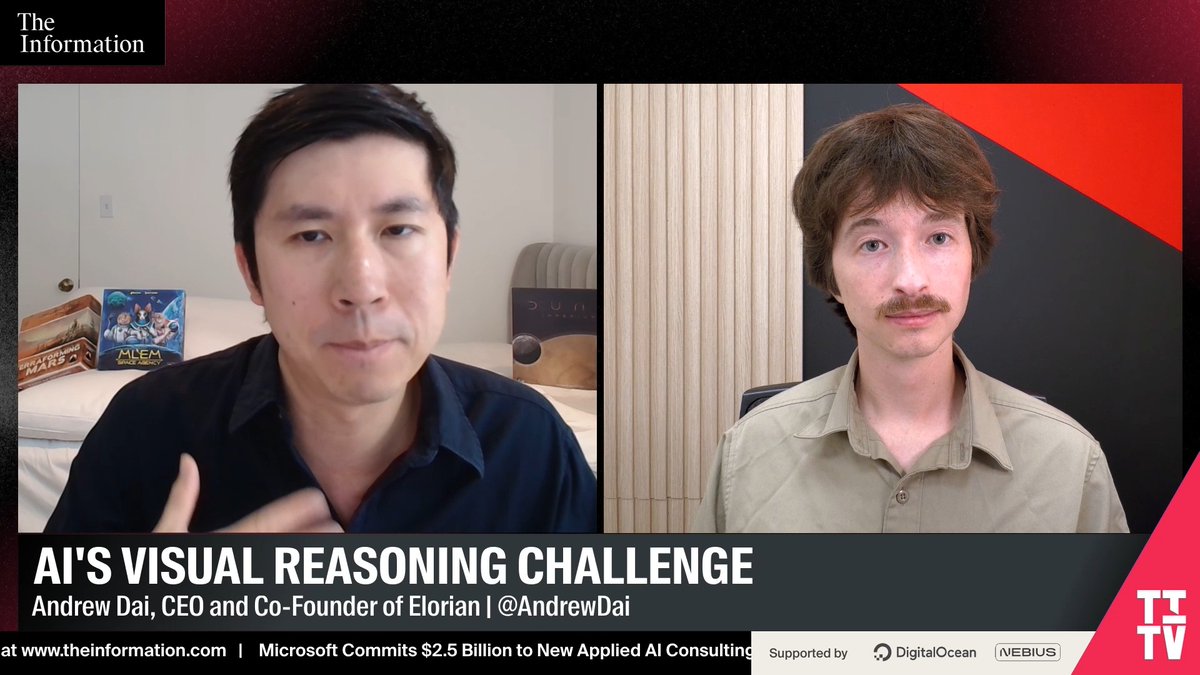
Open-source models are already taking the easier tasks. The bull case for frontier labs rests on one question. "A lot of software engineering, white-collar work in general, does not need Fable 5.1 or Astra 6 level intelligence." "A lot of businesses, especially lower gross margin businesses, are very rationally... show more

35,742 görüntüleme • 2 gün önce •via X (Twitter)
18 Yorum

Get the Full Podcast on Spotify:

Frontier labs selling genius while most work needs a cheap model

which tasks do you count as easy for the open models?

When you strip out API margin differentials (source - your numbers) the frontier labs have lower compute cost per task for easier tasks. With additional compute supply they could capture the market for these tasks too with lower margins on Luna/Sonnet/Terra class models There’s plenty of upside being lowest cost producer of commodity factor of production - look at the Gulf

tbh the easy task money was never the frontier labs game anyway

Besides cybersecurity,what other AI niches could open models attract in the future ?

thank you very much. how about frontier labs are going to dominate every single point of the pareto cap / price curve?

And a lot of compute doesn’t need a power hungry GPU. Please follow these examples

Well said; but electricity will skyrocket

what counts as an easy task keeps moving up every six months, so frontier labs are basically selling a head start that keeps getting shorter

Two-thirds of large businesses now pay for AI per Ramp data but the next leg of adoption may be depth: learning the difference of when to use a top-tier model vs. a less intensive one.

Semianalysis has 0 credibility any more

Feels like lazy analysis. Open source taking over simpler tasks doesn’t necessarily weaken the frontier labs. It could massively expand the market while pushing frontier models to problems that weren’t economically feasible to solve before. The bigger question is whether the labs can maintain pricing power as intelligence gets cheaper. That’s what will determine who captures the value, not how many hypothetical PhDs the economy can absorb.

Once an app lets users pick, routine work drifts to the cheaper model, and the frontier labs have to earn their price on the hardest tasks

the transition point is when local inference cost drops below the coordination overhead of external APIs

Unless you're a Big Tech SWE, the cost effectiveness of open source tokens is really really hard to ignore.

See Wallis/North 1986, or our book forthcoming @PalgraveEcon for an unqualified, No.

Competition at any level (state/country, corporation, individual) ensures that there is a market for ever higher levels of intelligence. You want to be smarter than your competitor.
![Baseten Head of AI Model Training Charlie O'Neill says the future is many specialized LLMs dedicated to specific tasks, with bigger labs deployed on the frontiers of areas like science and math: "People are thinking about intelligence capabilities in the wrong way. People are thinking about intelligence relativistically. They say, 'OK, the open-source gap is like 6 months behind closed-source, and GLM 5.3 is as good as Opus 4.8,' or whatever." "The best way to think about what models can do for you, and for the world, is in an absolute sense." "So for any given task that you want to do with an LLM, there's some intelligence threshold where below that you can't do the task, and above that you have very diminishing returns to more intelligence on the task." "So when you think about it that way, the game of LLMs over the last 5 years has been, 'OK, we have these things we want to do with them. Closed source hits it first... but open-source can eventually do that task. And then for many reasons, once you have the base level of intelligence required to do it, you probably do want to swap to open-source." "It's not really about the [frontier lab] God model being better. Like, if I'm filing a tax return, there is a limit to how much intelligence I need to do that particular thing." "So I think the world is going to look like — frontier closed-source labs are going to continue to push the frontier. You do want to use the most intelligent model. You have very inelastic demand for intelligence when you're doing frontier science or frontier math." "But for a lot of the economically valuable things, it looks a lot like, 'I'm a Cursor, or I'm one of these big companies who are realizing I can't just be a wrapper anymore. I've been through the life cycle of building a product that people love. And I should be using that information to make my model better at the things that I care about, and not at anything else.'"](https://image.24vids.com/tw-2095651279792185623/amplify_video_thumb/2095651051982692352/img/qg4kzLYWNIKvqhP0.jpg)


![SITUATION EXPLAINED: What happens to open source when the US restricts access to frontier AI models? We asked Adrian Dittmann: "China is releasing these models [open source] to gain international dominance, people will work on these things and say, 'Hey, maybe I can contribute to this if it's open source.' This is the thing that actually gets them talent." "If you're not allowed into the next GPT release or you're not allowed to use Fable, then what are you gonna do? You're stuck with the existing stuff, or you will have to use an open source model that might have subtly better capabilities." "The United States will catch up to open source in some form as well. They seem to just be maximizing product creation." "The problem with open source models is you have to be kind of a nerd in order to use them properly. Consumer facing, the effects will be minimal because the average person doesn't care about open source models. They only care whether or not they can do a quick search with Gemini or ChatGPT."](https://image.24vids.com/tw-2070296312504107027/amplify_video_thumb/2070296175820095488/img/m2XxAnBlqgmBMHKv.jpg)


