Video yükleniyor...

Video Yüklenemedi

Ana Sayfaya Dön

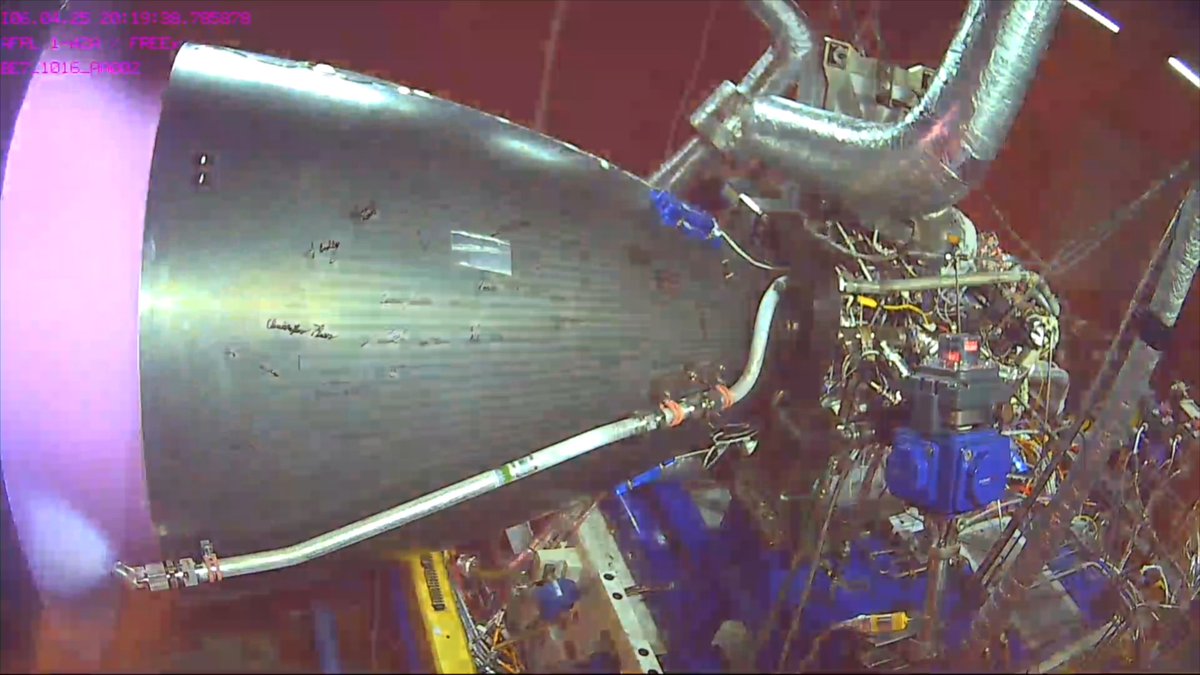
Our flight controllers used the Company’s Lunar Data Network to command Athena’s first planned Trajectory Correction maneuver (TCM) at 11:00 a.m. CT on February 28, 2025, to refine the lander’s trajectory ahead of Lunar Orbit Insertion (LOI). Data from the 6-second full-thrust mainstage engine burn confirmed Athena hit her...

73,456 görüntüleme • 1 yıl önce •via X (Twitter)

22 Yorum

Ed Clark profil fotoğrafı
Ed Clark1 yıl önce

Love it. Let’s make some $$. $LUNR

The Information profil fotoğrafı
The Information1 yıl önce

OpenAI is betting on a little-known startup to stay ahead of Elon Musk in the supercomputer race.

Joe Tegtmeyer 🚀 🤠🛸😎 profil fotoğrafı
Joe Tegtmeyer 🚀 🤠🛸😎1 yıl önce

Awesome work! Excited to see you nail the landing this time!

Space Investor profil fotoğrafı
Space Investor1 yıl önce

Great 👍

Agathatopian profil fotoğrafı
Agathatopian1 yıl önce

Did the laser rangefinder's safety get turned off?

AriBlockchain profil fotoğrafı
AriBlockchain1 yıl önce

The .38 m/s accuracy on Athena’s TCM is a testament to the precision of the Lunar Data Network. Modern space engineering at its finest! 🌕

Intenxe profil fotoğrafı
Intenxe1 yıl önce

@afterhourbot hunt

Komi profil fotoğrafı
Komi1 yıl önce

Tim crain with the huawwww

Gogreen profil fotoğrafı
Gogreen1 yıl önce

Outstanding!!! Stick the landing crew

Good Wahoo profil fotoğrafı
Good Wahoo1 yıl önce

I am betting y'all are going to stick this landing. Literally! 🚀🤞💪😎

The Moon profil fotoğrafı
The Moon1 yıl önce

huaww

astimeflashby profil fotoğrafı
astimeflashby1 yıl önce

so athena's basically doing the cosmic equivalent of parallel parking on the moon. hope she's got a better sense of direction than my ex.

Bill Podley profil fotoğrafı
Bill Podley1 yıl önce

So far,so good! Let's have a perfect landing

the space cpa profil fotoğrafı
the space cpa1 yıl önce

Fantastic news! Thanks for sharing these updates. Keep them coming!

Frei Marcel profil fotoğrafı
Frei Marcel1 yıl önce

superb! Keep on going like this

Emma OMG! profil fotoğrafı
Emma OMG!1 yıl önce

Go Athena go

Cosmology Fact Check profil fotoğrafı
Cosmology Fact Check1 yıl önce

Any photos of the Milky Way yet? Whatever happened to scientific inquiry?

John Smith profil fotoğrafı
John Smith1 yıl önce

Go IM-2!

Tony Shea profil fotoğrafı
Tony Shea1 yıl önce

We just want a MaryLou Retton!!

GP profil fotoğrafı
GP1 yıl önce

Congratulations 🎉

Bettina Inclán profil fotoğrafı
Bettina Inclán1 yıl önce

Great!!!!

Jay Morris🧢 profil fotoğrafı
Jay Morris🧢1 yıl önce

Awesome!!!!

Benzer Videolar

2034 Earth–Venus–Mars opportunity looks promising. 10–15 on-orbit refueling operations may be needed to make a crewed ship full. Most can be done at an altitude of 180–200 km, made possible by Starship’s size. The final refueling may be performed at a higher altitude of ~2000 km, just below the Van Allen belt. Earth departure on 2034-08-21 from 2000 km orbit. A Trans-Venus Injection burn of ~3.7 km/s will place the ship on an Earth–Venus–Earth free-return trajectory. Venus flyby is expected on 2034-12-19, 120 days after departure. Two weeks before the encounter, if the mission proceeds as planned, a 25-m/s maneuver will shift the trajectory from Earth-return to Mars-bound. If not, the ship will free return to Earth in September 2035. The Venus gravity assist will send the ship into another Earth free-return trajectory, with Mars flyby around 2035-06-02. One week before reaching Mars, a system health check will determine whether to commit to Mars Orbit Insertion. If it’s GO, a small 10-m/s manuever will put the ship to less than 100 km altitude periapsis. Otherwise, a Mars flyby will lead to an Earth return in May 2036. The ship will enter the Martian atmosphere at about 9.4 km/s, performing an aerobrake to slow to 4.88 km/s and capture into a 100x140000 km, 7-day period high elliptical orbit. At apoapsis, a 50-m/s plane change will align the inclination with Mars’ equator, followed by additional aerobraking to remove about 650 m/s of velocity, placing the spacecraft in a 120x6128 km orbit. A 550-m/s burn at 6128 km altitude will then adjust the trajectory into Phobos orbit. The ship will stay at Phobos for about 7 days. The Mars–Phobos L1 point is only about two miles above Phobos’ surface, and Mars would dominate nearly half the sky, appearing about 80 times larger than the Moon from Earth. The ship will depart for Deimos afterward. Two burns totaling roughly 750 m/s will transfer the ship from Phobos to Deimos. And the ship will stay at Deimos for 7 days more. From Deimos, the ship will raise its apoapsis to form a 20000x140000 km altitude, 7-day orbit, requiring about 420 m/s of delta-v. At apogee, a 50-m/s burn will adjust inclination and lower periapsis to ~500 km for final Trans-Earth Injection. If time and propellant allow, the orbit can be aligned to a polar inclination for Mars ice-cap observations before departure. A Trans-Earth Injection burn at 500 km altitude, requiring 1.5–1.6 km/s of delta-v in early July 2035. If departure on the first days in July, Earth arrival is expected in December 2035. If missed that window, a March 2036 arrival may look more feasible. Nominal mission duration: 490 days, with 30 days in Mars orbit and 14 days at Phobos and Deimos. Two planets, two moons for 3.7+0.025+0.010+0.05+0.42+0.55+0.75+1.55=7.06 km/s Δv

Chun

224,522 görüntüleme • 8 ay önce