Загрузка видео...
Не удалось загрузить видео
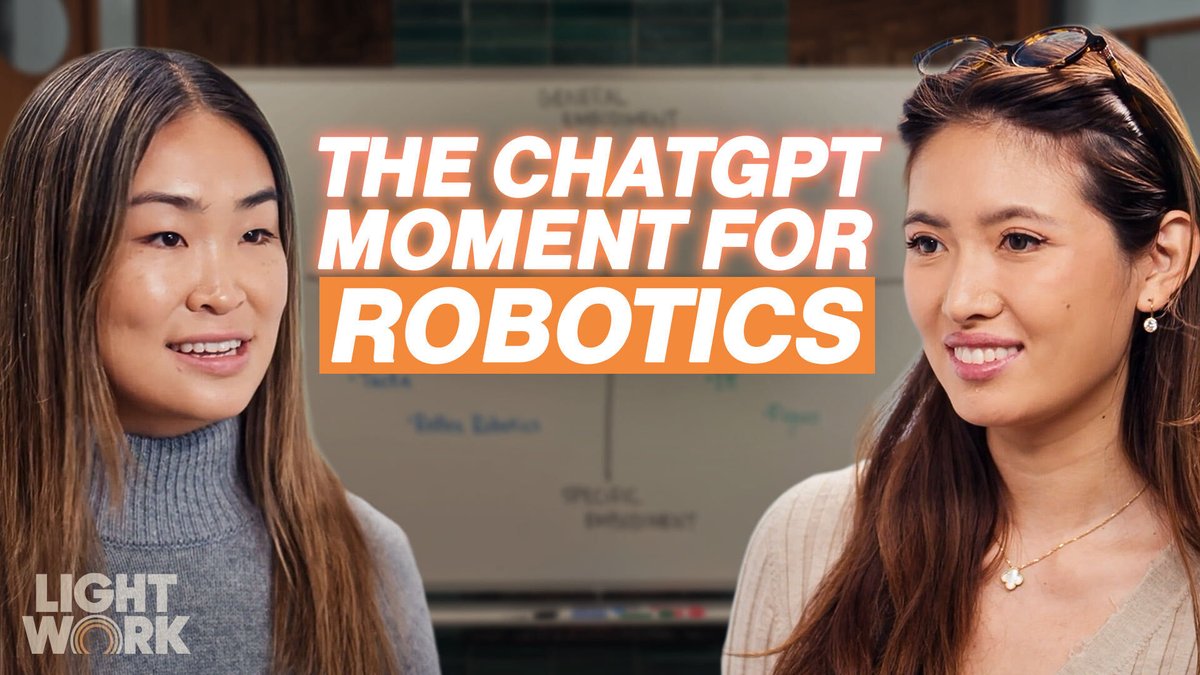
Physical Intelligence (Physical Intelligence) is building a foundation model that can control any robot to do any task — what the team describes as the GPT moment for robotics. The company's cross-embodiment approach trains across many different robot platforms, and recent results show tasks being performed zero-shot that last... show more

118,349 просмотров • 6 месяцев назад •via X (Twitter)
Комментарии: 24

Tune in:

The big shift in robotics is that one AI model trained on data from many different robot types can now outperform a model built for just one robot, which means the field is starting to follow the same scaling pattern as large language models. The hard part is not the algorithms, it's the unglamorous work of collecting and managing real-world robot data at scale. Vuong argues that hosting the AI in the cloud and sending commands to cheap hardware over an API is what changes the economics, because you can upgrade the brain without ever touching the body. Learn quickly from podcast episodes like this using

@garrytan @physical_int When someone creates this for the non-dev, this will really open the world to a significantly higher number of use cases that nobody is even thought of yet.

@physical_int Cross embodiment is the part worth paying attention to. Labs have been treating each robot platform as its own dataset island for years. A single policy that generalizes across form factors is how the data bottleneck in robotics actually starts breaking.

@physical_int If cross embodiment actually holds at scale, robotics stops being a hardware problem and becomes an infrastructure & data problem.

@garrytan @physical_int AI robots finally won’t be just machines remote controlled by people in India!

@physical_int the problem isn't scaling ai to control robots, it's still being able to describe what you want a robot to do in the first place that's where the real complexity is

@physical_int π0.7 trained across platforms while others optimized for one demo.

@physical_int Robotics GPT moment? That's cute, but have you seen the GPU prices? 😂

@physical_int

@physical_int We love robots 🤖
@physical_int the gpt moment for robotics is actually a great analogy but what if this isn't just about robots? what if it's about any device with sensors and actuators phones, drones, autonomous vehicles... if you can train one model to control all of them, that's the real unlock

@physical_int Definitely gotta check out

@physical_int The zero-shot part is the wild bit. Once a robot can transfer across embodiments without a bespoke data-collection marathon each time, the bottleneck shifts from hardware demos to deployment plumbing really fast.

@physical_int And great interview Thanks guys

@physical_int This changes everything for robotics

hey guys, today is YC School Bangalore. if you’re building a startup and doing a lot of networking but still not getting listed in the Y Combinator directory, then this is your moment — just show up and submit your application. go, apply, and get your startup listed in the Indian YC School directory 👇 don’t just network randomly… get yourself visible where it actually matters.

@physical_int "GPT moment for robotics" is really how a new area of technology is born - "sloppotics" 🤖🚀🌛

@physical_int Best
@physical_int I'm really curious what type of data and how it needs to be packaged is the most scarce now on the market. Would love to hear from @ycombinator and @physical_int

@physical_int Cloud-first robotics trades latency for scale, but securing real-time connectivity introduces attack vectors most frameworks ignore. Robust endpoint validation becomes critical.

@physical_int Robots are finally getting real 😳

@physical_int This is the GPT moment for robotics. Cross-embodiment and zero-shot learning is going to be absolutely wild.

@physical_int lol 😂