Video yükleniyor...
Video Yüklenemedi
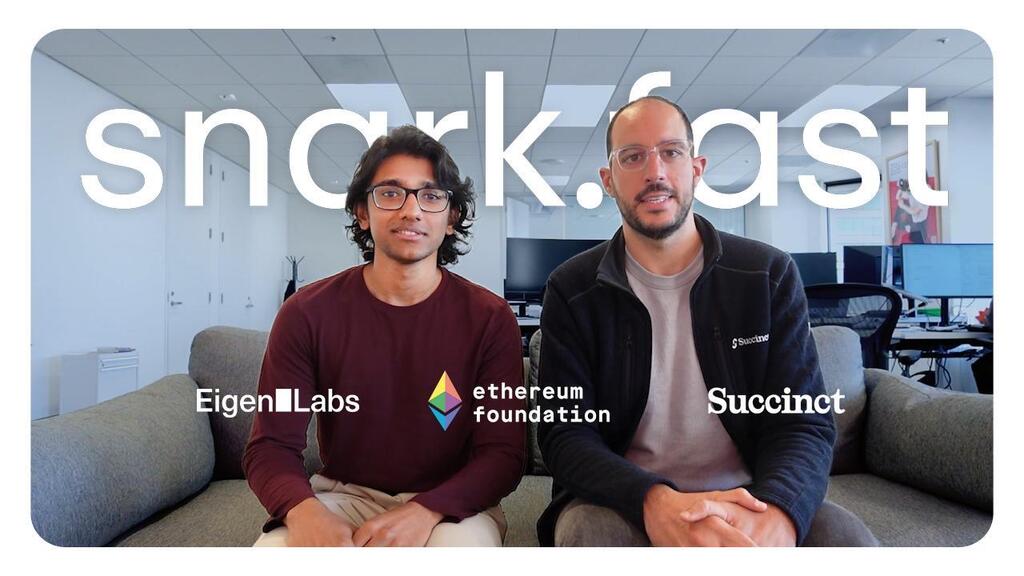
Post-Quantum Zero-Knowledge Proofs solved: From 33 minutes to 3 seconds. We optimized the math and made proving time fast enough to run on your phone. Watch the breakdown 👇

17,137 görüntüleme • 8 gün önce •via X (Twitter)
34 Yorum

33 minutes to 3 seconds, proving speed is so back.

33 minutes to 3 seconds is a massive upgrade

Three seconds on a phone is the number everyone will quote, but proof size and verifier cost decide whether it holds up on chain. Which assumption did you land on, hash based or lattice

The 600x is the part worth unpacking, more than the 3 seconds. A drop that size rarely comes from the same statement getting cheaper. It usually comes from changing what is proven or where: a smaller circuit, a different field or hash, recursion, a GPU. From the number alone nobody can tell whether the 3 seconds and the 33 minutes are proving the same thing, and that is the difference between an optimisation and a change of scope. The constraint underneath is structural rather than an engineering gap. Pairing based succinctness is precisely what Shor removes, so the families that survive the transition are hash based, and they pay for surviving in size: a few hundred byte proof becomes tens or hundreds of kilobytes. Prover time is paid once, by you. Proof size and verifier work are paid by every node, every block, for as long as the chain exists. Five numbers would settle it: statement size, security parameter, device, proof size, verifier cost.

Hash-based proofs survive Shor. The hard part has always been making them fast enough for real use.

LFG

ZK builders are cooking. 🔥

Getting post-quantum proofs down to phone-level performance is notable.

The steady direction from Americanfort makes the project interesting.

Faster is the key

Can’t wait to see how this evolves in mobile applications.This is game-changing!

Nice come to phone

What stands out here is the combination: quantum-resistant security plus practical proving performance.

Post-quantum cryptography often comes with performance concerns. Cutting proving time this aggressively directly addresses that tradeoff.

Faster proving doesn't just improve benchmarks. It expands the number of applications where ZK can run in real time.

Post-quantum security is one thing. Making the proof fast enough for a phone is the harder part.

Okay, 33 minutes to 3 seconds is kind of crazy. That’s the kind of improvement that makes the tech feel actually usable.👀🔥

now super fast

The impressive part isn't just the optimization. It's making heavyweight cryptography viable on everyday hardware.

Privacy technology becomes far more interesting when users can generate proofs locally instead of outsourcing the computation.

nice project

Security is one thing, but making it fast enough to actually use is where this gets exciting 🔥

That’s huge for zero-knowledge proofs running on phones now

Running advanced ZK proving on a phone makes the phrase “user-side cryptography” feel much more realistic.

the enterprise potential here is worth watching

Ok

The phone detail matters. Cryptographic proving that works locally opens a very different design space.

Better math can sometimes matter more than bigger hardware. This looks like one of those cases.

33 minutes was research territory. 3 seconds starts to feel like usable infrastructure.

The hardware requirement is part of adoption. If a phone can handle the proof, the barrier gets dramatically lower.

good

Security primitives need to be practical, not just mathematically impressive. Three-second proving is a meaningful step there.

gAmericanFortress

Quantum resistance gets more compelling when the proof system is fast enough to disappear into the user experience.


![BITCOIN RAILS #69: ZERO-KNOWLEDGE PROOFS FOR POST-QUANTUM BITCOIN | with Benedikt Bünz 🔗 YOUTUBE: 🌿 SPOTIFY: While many Bitcoiners remain hopeful the network will embrace zero-knowledge proofs for protocol-level use cases, practical adoption has remained limited outside of BitVM and a handful of experimental proposals. Most of the world’s ZKP research has circled around Ethereum and other ecosystems, where significant resources have been dedicated to advancing these systems, particularly for scaling and privacy applications. One of the most notable contributors to this research is Benedikt Bünz ☕️ — professor of cryptography at NYU and collaborator of Dan Boneh, who together inarguably form one of the strongest blockchain-applied cryptography teams in the world. The pair recently announced they’ll be leading the new post-quantum cryptography unit localhost research — the first dedicated PQ research effort within a major Bitcoin development organization. With Benedikt leading the charge on the use of zero-knowledge proofs for post-quantum mitigation, the question emerges: will the post-quantum transition be the catalyst to finally bring zero-knowledge proofs to Bitcoin's core protocol? In more detail, Benedikt and I discuss: - Why ZKPs haven’t been widely adopted by the Bitcoin technical community — and why the threat of quantum computers may change that posture going forward - How ZKPs could be used for signature batching to address larger post-quantum signatures in Bitcoin’s post-quantum era - Why Bitcoiners will likely prioritize hash-based signatures as an initial post-quantum scheme — rather than more efficient but less proven alternatives (e.g., lattice-based) - How ZKPs have evolved over the last decade and may finally be ready for Bitcoin’s strict requirements around trust assumptions - Why Benedikt and Dan are teaming up with localhost research to create the first post-quantum cryptography unit within a major Bitcoin development organization + what they hope to accomplish This episode of Bitcoin Rails is brought to you by: LayerTwo Labs LayerTwo Labs — developing research, software, and technologies for scaling Bitcoin via the integration of Drivechains (BIP 300/301) Hashi on Sui — a primitive for executing Bitcoin DeFi transactions, without having to trust a federated bridge or other centralized entity BitBox BitBox — an open-source Bitcoin-only hardware wallet, with smooth UX and no compromises on security. Check out Bitbox [dot] swiss and use code BITCOINRAILS to get a discount TIMESTAMPS: 00:00 — Intro 00:22 — Benedikt's background 04:10 — How Benedikt got into Bitcoin and cryptography 07:42 — First ZK project: proving exchange solvency after Mt. Gox 16:01 — ZK proofs explained 27:43 — How security gets popular & ZK proofs in Bitcoin 35:49 — Other applications of ZK proofs for Bitcoin 40:15 — Why ZK proofs haven't been adopted in Bitcoin 50:46 — Why the Bitcoin post-quantum transition needs ZK proofs 01:07:00 — Cryptographic agility and why lattices win 01:18:00 — The size problem and how SNARKs solve it 01:33:57 — Proving a Bitcoin block in a laptop in 1.5 seconds 01:37:12 — Bitcoin as the primary quantum target 01:40:47 — ZK proofs for seed phrase recovery](https://image.24vids.com/tw-2077037171521790155/amplify_video_thumb/2077029285437612032/img/adv6N-PXvunUqveH.jpg)