Загрузка видео...

Не удалось загрузить видео

На главную

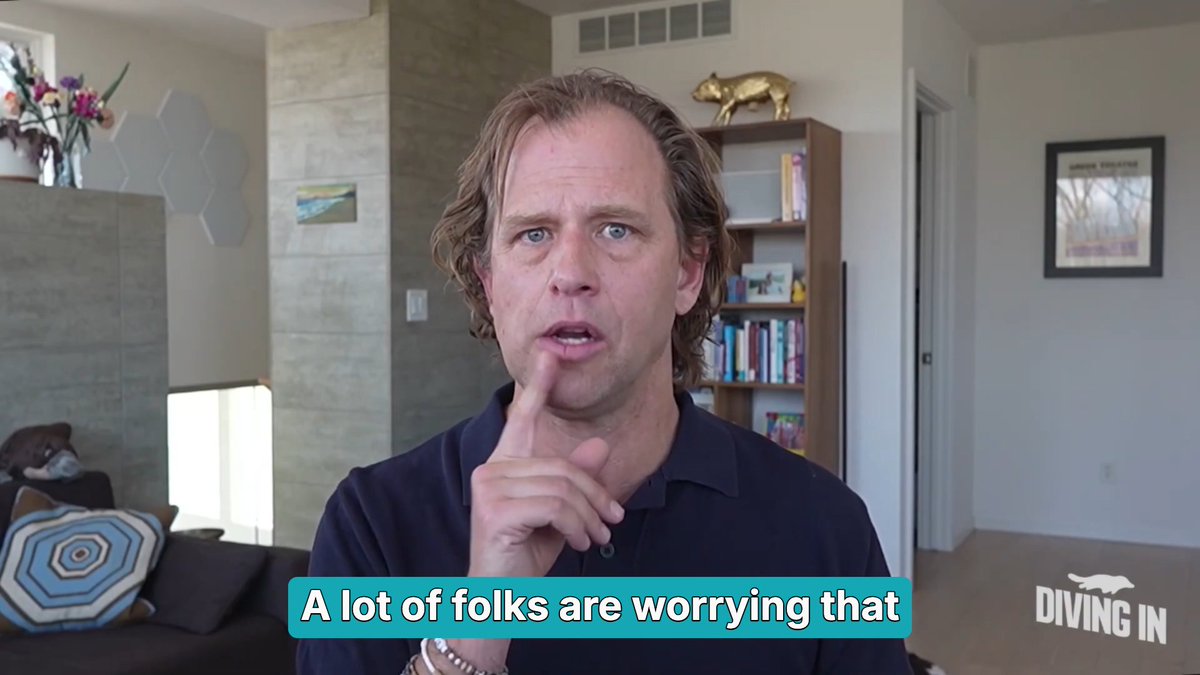
Private credit may hide volatility, but hiding it doesn't make it disappear. We learned that lesson with shadow banks in 2008. Is private credit just shadow banking with a new name? Partly yes, partly no. The honest answer is rarely the satisfying one.

13,465 просмотров • 4 месяцев назад •via X (Twitter)

Комментарии: 0

Нет доступных комментариев

Здесь появятся комментарии из оригинального поста

Похожие видео
Why The Shadow Banking System Could Trigger The Next Major Crisis Please ❤️like, bookmark🔖, and 🔁share with fellow investors In this Short video, Danielle Danielle DiMartino Booth and Adam Taggart discuss why the shadow banking system—not traditional banks—could become the source of the next major financial crisis. * Private credit may have disappeared from the headlines, but that doesn't mean the risks have disappeared with it. In this discussion, the focus shifts beyond private credit itself to the much larger theme—the shadow banking system—and why it could become the next major source of financial instability. * Companies have raised a record $251 billion through equity sales in the first half of the year. That surge has also drawn renewed attention to private equity, which sits at the center of the private credit ecosystem. The concern isn't simply the size of private credit—it's whether the underlying private asset valuations are realistic. * A key issue is the feedback loop between private and public markets. Many public companies own private investments, and gains from those holdings can boost reported earnings. If those private assets are being valued too aggressively, investors have to ask whether the "E" in the P/E ratio is as solid as it appears. Inflated valuations can support stronger earnings, higher stock prices, and more capital raising, creating a cycle that works well until confidence begins to crack. * Although fears around private credit have faded in recent months, Danielle argues that the market has simply moved into an "acceptance phase," not a resolution phase. The structural problems remain, but investors have largely stopped talking about them. * Meanwhile, non-bank financial institutions now control roughly $258 trillion in assets, representing more than half of global financial assets and exceeding the size of the traditional regulated banking system. Unlike banks, these institutions operate with far less transparency and oversight, making it much harder to assess the true level of risk. * At the same time, higher interest rates continue to pressure borrowers. Public company bankruptcies are already running about 40% higher than a year ago, suggesting financial stress is building. If publicly traded companies are struggling under today's financing conditions, the health of private companies—where financial information is far less accessible—remains a major unknown. * Danielle rates concern about private markets at roughly a 7–8 out of 10 now. The combination of opaque valuations, rising bankruptcies, higher-for-longer interest rates, and the enormous size of the shadow banking system creates a meaningful systemic risk. While this doesn't guarantee another financial crisis, it highlights an area that many investors may be underestimating simply because it has faded from the daily news cycle. #privatecredit #privateequity 💡 Get access to my notes with the key takeaways from this interview with Danielle Danielle DiMartino Booth by visiting my Substack (link below) ⬇️

Thoughtful Money®

15,115 просмотров • 1 месяц назад

The financial system is creating the same risk patterns that caused the 2008 crisis—just in a different market. Private credit is that market. It's grown to $1 trillion in loans made by hedge funds and asset managers instead of regulated banks. Here's how it works: → Banks lend money to hedge funds. → Hedge funds use that capital to make risky loans. → Banks claim they have no direct exposure to the borrowers. But the risk doesn't disappear. The loans bypass traditional banking oversight, but the funding still originates from the regulated banking system. When private credit deals go bad, the losses flow back to banks through their hedge fund lending relationships. We're already seeing cracks. BlackRock lost 19% of their private credit fund in one quarter. Subprime auto loans are defaulting at accelerating rates. Overleveraged companies are filing bankruptcy. Nobody's watching the full picture. No transparency requirements mean regulators can't see the scope of interconnected exposures. No one knows which banks are most exposed through which hedge fund relationships. When private credit markets seize up, the connected banks will face losses just like they did with subprime mortgages. The legal framework for "bail-ins" already exists—allowing governments to access depositor funds to recapitalize banks rather than using taxpayer bailouts. This explains why diversification matters. When credit markets experience stress, assets outside the banking system—like precious metals—historically maintain value independent of financial institution health. The pattern repeats: Risk transfer, regulatory gaps, interconnected exposures, and inevitable systemic stress when the cycle reverses. -- This is just scratching the surface of the brewing financial crisis. In a 45-minute video, I also covered: • Why mining stocks give 3-5x leverage to gold price moves (costs stay fixed, profits multiply) • How CME margin hikes force leveraged traders to sell and crash prices •The US has legal framework for bail-ins (Orderly Liquidation Authority) Just comment "CRISIS" and I'll DM you the full video.

Felix Prehn 🐶

19,085 просмотров • 6 месяцев назад