Video wird geladen...

Video konnte nicht geladen werden

Zur Startseite

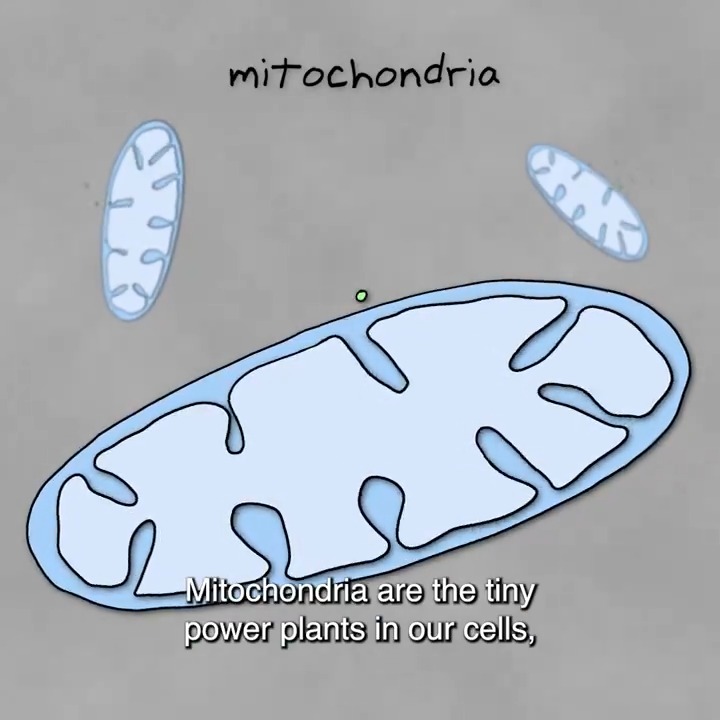
Science Corner: David Friedberg Explains Recent Mitotherapy Breakthroughs ⚡️ On E224, david friedberg broke down what mitotherapy is and how recent discoveries could unleash this treatment for many diseases: "So mitochondria are the powerhouse of the cell." "Every cell in our body gets its energy, which is what it...

58,558 Aufrufe • vor 1 Jahr •via X (Twitter)

11 Kommentare

Profilbild von Bret Scher, MD
Bret Scher, MDvor 1 Jahr

@friedberg Great discussion about the recent research in mitochondria. I was fortunate enough to interview the author of one of the studies, @MitoPsychoBio If you’re interested in mitochondria, you definitely want to know Dr. Picard!

Profilbild von World Transformation Movement
World Transformation Movementvor 2 Jahren

The holy grail of insight needed to rehabilitate the human race! Leading psychiatrist says “this is the most important interview of all time, it solves the human condition, ends suffering & turmoil at its source & finally makes sense of our lives!”

Profilbild von Phil Walker
Phil Walkervor 1 Jahr

@friedberg I would highly recommend interviewing Dr Roger Seheult. Clinical Professor at the School of Medicine and Allied Health at Loma Linda University. Natural sun exposure improving mitochondria and curing severe covid.

Profilbild von The Blanco
The Blancovor 1 Jahr

@friedberg Very impressed that @friedberg is an @AphexTwin fan.

Profilbild von crs
crsvor 1 Jahr

@friedberg I’m assembling a team to make angiogenesis abundant. @Nicole_Paulk x @JessLaMae x @Jiankui_He x @foundmyfitness

Profilbild von Average Joe
Average Joevor 1 Jahr

@friedberg In most cases loss of mitochondria is an effect of inflammation not a cause of the disease. It may delay cell death in some cases, which is a big positive, but it isn’t going to cure the disease.

Profilbild von Jason Kimball
Jason Kimballvor 1 Jahr

@friedberg Mitochondrial peptides are probably the most readily accessible mitochondrial therapy at the moment. And of course injectable NAD+, which arguably has its most profound effect in the mitochondria, has exploded in popularity.

Profilbild von Jae Davis
Jae Davisvor 1 Jahr

science corner is quickly becoming my favorite segment of the pod. would love to hear interviews with people like neil riordan or scotty nelson/ed clay, and go deeper into the specific stem cell therapies they offer. also would be great to hear more about how red light therapy repairs mitochondria.

Profilbild von Jilong | We provide AI marketer - 24/7 marketing
Jilong | We provide AI marketer - 24/7 marketingvor 1 Jahr

@friedberg mitochondria = cell's powerhouse, data = marketing's powerhouse. tested 100+ accounts, optimizing engagement is like cellular energy—precise inputs, measurable outputs. friedberg's insights always spark new angles!

Profilbild von Jeep Gypsy ✌🏻
Jeep Gypsy ✌🏻vor 1 Jahr

@friedberg Fasting causes the body to do this naturally.

Profilbild von Somewhere in the Middle
Somewhere in the Middlevor 1 Jahr

@friedberg Now show us how mitochondria was created out of nothing at the same time the cell was created. The complexity of this is beyond accidents.

Ähnliche Videos

People who felt more purpose in life had mitochondria in their brain that transformed energy more efficiently. The reverse may also be true: Having mitochondria that flow energy more easily may change how you see life. This is the finding Martin Picard — Columbia University professor of behavioural medicine & pioneer of mitochondrial psychobiology — and his team uncovered. They studied the brains of people after they died. Every year before death, participants reported how much purpose they felt, how connected they felt to others, how optimistic they were about the future. Then Picard & his team looked at their mitochondria. Specifically in the dorsolateral prefrontal cortex — the region involved in executive function and active reasoning. The people who felt more purpose had mitochondria with greater energy transformation capacity (specifically higher abundance of Complex I proteins). In Picard’s terms: lower energy resistance — energy flowing more easily through the brain tissue involved in how you think and decide. The human study couldn't tell which direction caused which. But animal studies suggest the relationship can run both ways. Chronic stress and defeat change mitochondria in the brain — Picard and others showed this in animal studies. Stress the animal, make it feel defeated, and the mitochondria in its brain change. Then reverse it. Boost or inhibit mitochondrial function directly in the brain. Anxiety shifts. Social behavior changes. Picard's conclusion: "How you feel can change mitochondria. The mitochondria can change probably how you feel."

no.mind

18,728 Aufrufe • vor 2 Monaten

Nick Lane — one of the world's leading biochemists on mitochondria and the origin of life — doesn't take supplements. His reasoning: "So if you're thinking about taking supplements or whatever it may be, you've got to think — what are the long-term consequences of doing this? We don't really have any good information on how that's going to work out in the long run. And you don't know what you're missing. So that's why I don't do it personally." Your biology operates as a system. Affect one variable and you affect everything connected to it. Take antioxidants as an example. For decades, health advice pushed them as the fix for aging — on the assumption that free radicals are cellular garbage to be swept away. According to Lane, that assumption is wrong. At normal levels, free radicals act as signals. When mitochondria run into metabolic stress, those signals alter transcription factors in the nucleus — proteins that switch genes on and off. They tell the cell what to do next: build fresh mitochondria, activate its own antioxidant defenses, or trigger apoptosis — programmed cell death — if the damage is beyond repair. Flooding the system with antioxidant supplements mutes that signal. It leaves the cell blind to its own internal state. But there's a second problem — independent of the signaling issue. Researcher Gustavo Barja traced most free radical leakage to one specific subunit inside Complex I — out of more than 40 subunits in that single complex. Free radicals leak directly into the space right next to mitochondrial DNA. There are tens of thousands of complexes per mitochondrion. Hundreds of mitochondria per cell. Roughly 50 trillion cells in the body. Hitting that exact site with enough antioxidant concentration is close to impossible. Antioxidant supplements don't fail only because they mute a signal. They fail because the target is unreachable. You cannot supplement your way out of a systems problem.

no.mind

138,167 Aufrufe • vor 2 Monaten

Dr. Andrew Huberman just confirmed a “wild conspiracy theory” about incandescent lights and LED bulbs. The long wavelengths found in incandescents increase your metabolism and “charge your mitochondria.” Conversely, the LED bulbs that most of you have in your house are “causing disruptions in mitochondrial function.” DR. ANDREW HUBERMAN: “Your mitochondria function better, you increase ATP production, your metabolism increases in the presence of red light, long wavelength light to the skin.” “Shine long wavelength light on somebody, watch blood glucose levels in a blood glucose test, and it’s blunted.” “Now, the LED lights that are commonly used now… that short wavelength light, in the absence of long wavelength light, has been shown to damage the mitochondria.” “This used to be considered crazy. This was like chemtrail crazy, right?” “But now we’re starting to see from animal studies and human studies, from Glenn Jeffreys and others, that people’s vision gets better when they get in front of an incandescent bulb once a day.” “If they get sunlight, which also has long-wavelength light, your vision improves because of improvements in mitochondria.” The Biden administration quietly pushed incandescents out of the market through aggressive energy regulations. But you can still find them online today if you look hard enough. If that health insight stood out to you, there’s a lot more where that came from.

A Midwestern Doctor

420,483 Aufrufe • vor 4 Monaten