Video yükleniyor...

Video Yüklenemedi

Ana Sayfaya Dön

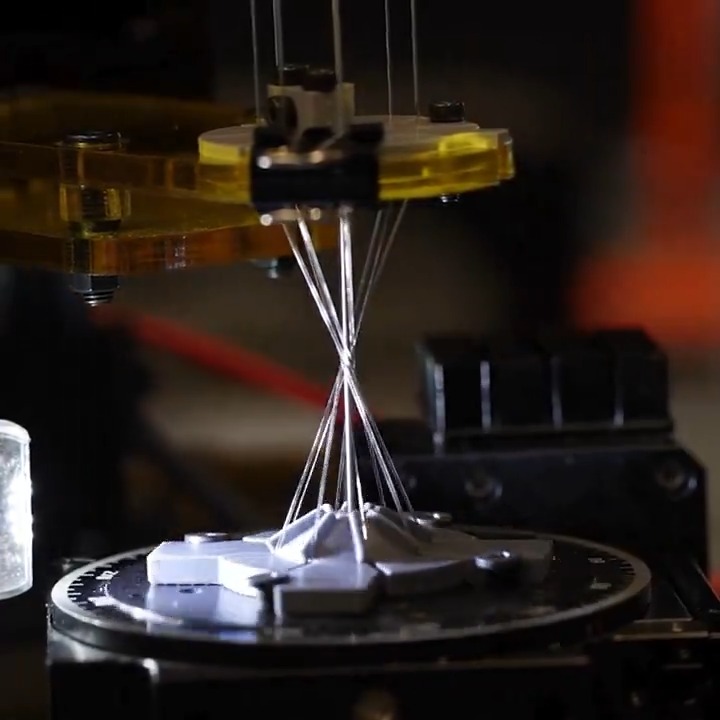
Scott Walter discusses Wuji hand's unique design: rotary actuators integrated into finger phalanges like Lego. Motors form a structure with reducers, enabling 90-degree transmissions at joints. Prioritizes high flexion torque at the base for a 20kg grip.

23,312 görüntüleme • 10 ay önce •via X (Twitter)

0 Yorum

Yorum bulunmuyor

Orijinal gönderinin yorumları burada görünecek

Benzer Videolar

New "superman" Four months later, Shanghai-based Matrix Robotics unveiled the Matrix-3--yet another anthropomorphic humanoid robot situated on the left side of the "Uncanny Valley." Unlike Boston Dynamics' Atlas, which is designed for industrial settings, the Matrix-3 is a general-purpose humanoid robot intended initially for service-oriented environments such as supermarkets, hotels, and office buildings. Standing 1.7 meters tall and weighing 65 kilograms, the adult-sized robot features a full-body covering of biomimetic fabric integrated with tactile sensors, as well as humanoid biomimetic muscles. It employs linear joints rather than the mainstream rotary joints. Matrix claims it is capable of pulling or pushing a load of 200 kg. Optimus makes extensive use of linear joints (linear actuators). It is equipped with dexterous hands offering 27 DOF and boasts a battery life of 4 hours. The robot is powered by a model named WAVE(like an E2E World Action Model) Matrix states that it has already established a manufacturing facility in Shanghai's Zhangjiang with an annual production capacity of 10,000 units. The company plans to deliver 1,000 units this year, with the first batch scheduled for delivery by the end of June. Pricing starts at $99,000. Notably, Matrix founder Zhang Haixing previously served as a leader at Tesla China's Design and Research Center, where he was deeply involved in the early-stage R&D and design of the Optimus robot. This company seems to be delivering on the future envisioned for Optimus.

CyberRobo

40,727 görüntüleme • 2 ay önce

A Breakthrough in Robotics: Spherical Gears Enter Mass Production Spherical gears, the kind of joint that would allow a robot to move like a human shoulder, have been notoriously difficult to manufacture with high precision. That's changing, thanks to a new design and a path to mass production that could have a huge impact on robotics. The breakthrough comes from a new design called the ABENICS spherical gear, developed by researchers at Yamagata University. This innovative mechanism enables a joint to move in three degrees of freedom without the slippage issues of earlier designs. It achieves this by using a "cross-spherical gear" that meshes with one or more "monopole gears." Mass production is now on the horizon. Although the initial manufacturing of the gears was inefficient, Nissei Corporation improved the process and established the necessary technology. The companies Kanematsu and Nissei have now entered the marketing phase, with production expected to begin in 2027. The impact of this technology is significant. Mass-produced spherical gears are expected to enable highly versatile and efficient robotic limbs. ► Humanoid and Mobile Robots: The design allows for compact, high-torque ball joints ideal for creating versatile and efficient robotic limbs. ► Aerospace: Potential applications include deployment mechanisms for satellite solar panels. ► Other Industries: The technology is also being explored for its potential to enhance productivity in healthcare, nursing care, and restaurants.

RoboHub🤖

384,882 görüntüleme • 10 ay önce

China unveils humanoid robot worker with brain that runs 275 trillion ops/sec | Jijo Malayil, Interesting Engineering In tests, SUYUAN used vision and joint control to sort and move crates of various sizes, greatly improving warehouse productivity. Chinese manufacturing firm Shanghai Electric has unveiled its first self-developed industrial humanoid robot, “SUYUAN,” marking a major milestone in its robotics journey. Debuting at the World Artificial Intelligence Conference (WAIC 2025) on July 26 in Shanghai, SUYUAN boasts 38 degrees of freedom and 275 TOPS of on-device computing power, enabling precise operations and fluid movements. According to the firm, designed for diverse industrial use, the robot showcases Shanghai Electric’s end-to-end capabilities—from core tech to integrated solutions—and reinforces its commitment to next-gen industrial automation through a full industry chain strategy. At WAIC 2025, Shanghai Electric also unveiled a new joint venture with Johnson Electric for next-gen humanoid robotics and showcased its “LINGKE” dual-arm robot. Recently, Hangzhou-based Unitree Robotics launched the R1 humanoid with 26 joints for $5,900, showcasing athletic feats like cartwheels, running, and quick recovery. Smart factory assistant Shanghai Electric claims SUYUAN, equipped with 38 degrees of freedom (DoF) and a powerful 275 TOPS on-device computing processor, delivers fluid, human-like movements and high-precision operations across various industrial scenarios. Its advanced articulation and real-time processing capabilities make it highly adaptable, enabling smooth execution of complex tasks in dynamic work environments. SUYUAN, who weighs 110 pounds (50 kilograms) and is 5 feet 6 inches (167 cm) tall, was designed to have human-like proportions. Its 38-DoF articulation offers dexterity, allowing for both wide-range motion and sensitive manipulation. With a single arm, the robot can lift objects up to 4.4 pounds (2 kilograms) in weight and carry a total payload of up to 22 pounds (10 kilograms). With a walking pace of 3.1 miles per hour (5 km/h), SUYUAN is ideal for environments including assembly lines, warehousing, and logistics, according to a statement. To navigate complex industrial settings, SUYUAN combines LiDAR and binocular vision for self-guided mobility. Its 275-TOPS AI processor enables rapid data analysis and integration with large language models, allowing it to understand tasks in natural language and handle objects adaptively, reports Fox 44 News. In pilot demonstrations, the robot successfully identified, picked, and relocated crates of varying sizes using advanced computer vision and coordinated joint control—delivering measurable gains in warehouse efficiency. The company claims that SUYUAN’s launch represents a major turning point in Shanghai Electric’s foray into humanoid robotics and strengthens its vertically integrated approach to industrial automation solutions. Intelligent task handling Shanghai Electric also demonstrated its most recent developments in intelligent manufacturing at WAIC 2025, introducing a new joint venture with Johnson Electric centered on next-generation humanoid robotics and showcasing the “LINGKE” dual-arm robot. With its high-precision operations, adaptive teamwork, and closed-loop data capabilities, the LINGKE robot demonstrated live talents in handling complicated production jobs. LINGKE is made to do more than just replace human labor; it uses compliant force control and bimanual coordination to relieve workers of high-intensity, repetitive jobs. According to the company, the robot enhances operational efficiency by up to five times. Its core strength lies in a Data-Model-Deployment closed-loop system that starts with operational data, followed by data cleansing, model training, live deployment, and feedback-driven optimization—enabling autonomous learning and workflow improvement. Also at the event, Shanghai Electric and Johnson Electric introduced advanced hardware modules for humanoid robots, including rotary joints, linear joints, and dexterous finger joints. These components are designed to support smooth, precise, and quiet motion performance across robotics systems, reports Stock Titan. The joint venture announced two strategic agreements: a first-unit supply deal with the National and Local Co-Built Humanoid Robotics Innovation Center (Qinglong Project) and a cooperation memorandum with Fourier Robotics. Read more:

Owen Gregorian

51,638 görüntüleme • 1 yıl önce