Video yükleniyor...

Video Yüklenemedi

Ana Sayfaya Dön

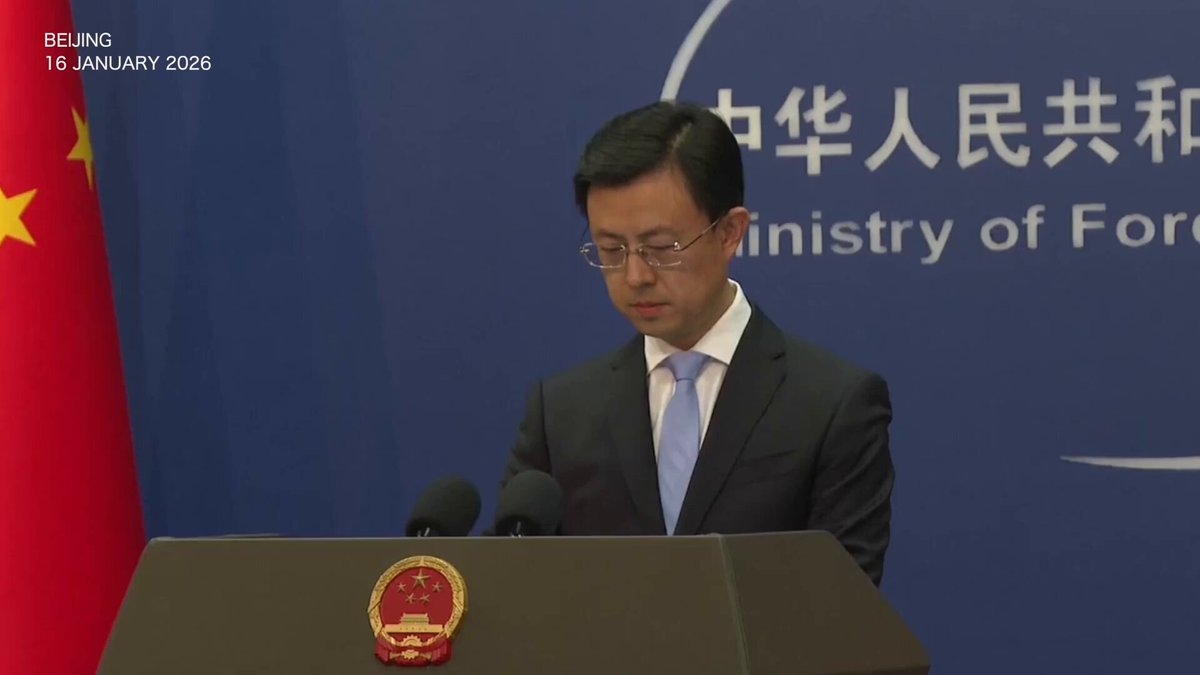
September 18. Every year, warning bells ring across multiple cities in China. Not because China is “using history.” Because history happened. Descendants of Japanese fascists love to accuse China of “weaponizing the past” whenever China refuses to forget Japan’s invasion, occupation and massacres. But there is a fundamental difference...

15,983 görüntüleme • 9 gün önce •via X (Twitter)

12 Yorum

楊華漢 John Yeung profil fotoğrafı
楊華漢 John Yeung9 gün önce

TOP1战犯裕仁逃脱,倭王室未解体,自民战犯党当权近百年,充分说明日本从未忏悔,从未清算的原因。一个侵略战犯们组建和战犯后代把持日本政权的独裁党——自民党,安倍晋三这些战犯的孙子们怎么会清算他们的战犯爷爷?731战犯任职主审教材,自民党持续编造美化历史,世界看到的是洗脑全民粉饰战争和历史

Benny HF Meng profil fotoğrafı
Benny HF Meng9 gün önce

Imperial Japan’s wartime atrocities during World War II remain some of the darkest chapters in modern history. Across China, Korea, and Southeast Asia, civilians and prisoners of war faced massacres, torture, forced labor, sexual violence, starvation, and human experimentation.

中国管理局 profil fotoğrafı
中国管理局9 gün önce

大事な日に、またクソ負けしてやんの。爆笑

𝘊𝘰𝘳𝘳𝘪𝘯𝘦 profil fotoğrafı
𝘊𝘰𝘳𝘳𝘪𝘯𝘦9 gün önce

Go weep for your masters; Japan is nothing but an East Asian beggar dependent on China.

Yangzi Ny💫食に幸あり🍀 profil fotoğrafı
Yangzi Ny💫食に幸あり🍀8 gün önce

旧満州奉天でした。今は瀋陽で私の生まれ故郷です。昨日から横浜花万博のチケット販売が開始されるようになりました。 今日から名古屋アジア大会が開催されます。日本時間18:00に開会式が行なわれます。 みんなで手を取り合って平和に向かって前へ進み、楽しみましょう🍁🤝

HO-RO profil fotoğrafı
HO-RO8 gün önce

護身用にスタンガン持っている前科持ち(?)の更生市民か犯罪歴無しのテロ計画書と武器所持の市民 どっちを逮捕するべきなんでしょうねぇ

すいれん 日台友好🇯🇵🇹🇼 profil fotoğrafı
すいれん 日台友好🇯🇵🇹🇼8 gün önce

6.4 天安門事件?

向井敏明ちゃん皇军よし profil fotoğrafı
向井敏明ちゃん皇军よし8 gün önce

“Eradicating Japan to avenge our country” is supposedly a consensus among most Chinese people. So here’s the question: Does China have civilization? Are Chinese people even human?🤣🤣

狂徒的假话 profil fotoğrafı
狂徒的假话8 gün önce

音量很轻,听不见,基本无效。

🌻🇲🇽 David Romero profil fotoğrafı
🌻🇲🇽 David Romero9 gün önce

China tiene misiles capaces de dividir su carga en ojivas y que pueden golpear entre 3 y 10 objetivos de un solo disparo y que incluso pueden engañar los sistemas antimisiles. Por ejemplo, el Dongfeng-41.

知ってることだけ知ってるさん profil fotoğrafı
知ってることだけ知ってるさん8 gün önce

1949年に建国した中華人民共和国には関係ないし 正当後継国家じゃないんだから気にすんなよ 正当後継国家の証明である玉璽持ってないだろうに お前のバカがちょっとだけ治ったら嬉しいよ☺

晓牧扉 profil fotoğrafı
晓牧扉9 gün önce

就是政治表演!共产党的罪行是一个也没有忏悔

Benzer Videolar

For five thousand years, China has understood one simple truth: history is not a toy. It cannot be bent for politics, edited for convenience, or erased for someone else’s narrative. That’s why, the moment Trump launched “Trade War 2.0” in his second term and began spreading blatant lies about COVID-19, China stopped giving him diplomatic courtesy. A civilization that survived dynasties, invasions, famine, plague, and rebirth does not need to tolerate the delusions of a man who thinks history begins with his tweets. China remembers 2020 clearly. China documented every case, every death, every hospital bed that overflowed. And years from now, when people look back at the pandemic, they will find something striking: China kept the most complete records. Others kept the most convenient ones. This is exactly why Beijing refuses to let Trump rewrite the past, refuses to let Western media manufacture “alternative timelines,” and refuses to let Japan whitewash its history of aggression. A nation that writes its own history — in its own hand, word by word — does not outsource truth. So when the Foreign Ministry calls out lies today, it isn’t just diplomacy. It is civilizational self-defense. It is the insistence that memory cannot be colonized. China will not allow slander to replace fact. China will not allow forgetting to replace evidence. China will not allow those who failed their own people to lecture the world about pandemics. A civilization that knows its past refuses to let others falsify it.

𝘊𝘰𝘳𝘳𝘪𝘯𝘦

26,200 görüntüleme • 8 ay önce

China’s warning about Japan’s re-militarization is not just a warning to Tokyo. It is a warning to the entire region. Japan’s economy has fallen back to roughly its 1992 level in nominal dollar terms, while China has grown into the world’s second-largest economy. China’s military spending has long remained below 1.5% of GDP. Even if Japan pushes defense spending to 5% of its GDP, it still cannot match China’s scale, industrial capacity, military R&D, shipbuilding, missile production, or strategic depth. So let us be honest: Japan’s re-militarization is not a real military threat to China. Japan cannot fight China. The real danger is to the smaller countries that keep telling China to “move on” from history. Japan once invaded, occupied, burned, raped, enslaved, and massacred across Asia. China. Korea. The Philippines. Indonesia. Singapore. Malaysia. Vietnam. Myanmar. Cambodia. Laos. Half of Asia remembers what Imperial Japan did. Or at least it should. The reason Japan has behaved like a “peaceful country” after 1945 is not because Japanese militarism suddenly grew a conscience. It is because the postwar order pulled out the beast’s fangs. And because China became too strong to be swallowed again. Now, as the U.S.-led order weakens, Japan’s Neo-fascist forces are testing the cage. They call it “defense.” They call it “counterstrike capability.” They call it “normalization.” But Asia has heard these words before. Japan has always known how to dress aggression in polite language. Today Japan does not dare confront China directly. So it provokes China, hides behind Washington, cries about Chinese “bullying,” and performs weakness for the Western press. That theater creates a useful illusion: Japan is peaceful. China is aggressive. But the real historical danger is not that Japan will defeat China. It is that Japan will once again turn its militarism toward countries that cannot fight back. And here is the part those countries should understand: China will not sacrifice Chinese soldiers to protect client states that choose the “Indo-Pacific” containment camp and help Tokyo and Washington pressure China. The Chinese people would not allow it. If some countries believe they can cut themselves off from China, stand with Japan, erase history, and become “higher-class Asians” under the U.S. umbrella, then they should prepare to live with the consequences. Japan was restrained by defeat. Not by remorse. And when the leash loosens, the first victims are rarely the strong.

𝘊𝘰𝘳𝘳𝘪𝘯𝘦

29,439 görüntüleme • 3 ay önce

🇨🇳🇯🇵 The issue isn’t that Japan has extremists every country does. The issue is that in Japan, these individuals are openly tolerated, indulged, and even protected. They wave Nazi flags and the Rising Sun Flag, marching through public streets year after year, with police escorting them, year after year. The Japanese government pretends these are merely “marginal voices,” but if the same flags appeared on the streets of Germany, the entire EU would treat it as a national crisis. What lies behind this is not the madness of a few individuals, but a deeply ingrained civilizational hierarchy. For decades, the West has attempted to sculpt a “tamed Japan” as East Asia’s model student, a counterweight to China and a way to shape a regional hierarchy. So they never confront Japan’s atrocities in Asia: crimes fully comparable to those of Nazi Germany: massacres, looting, human experimentation, all documented in UN archives. Post-war Germany chose repentance, but Japan chose amnesia. China waived Japan’s war reparations, and Japan repaid that gesture by recasting itself as a victim, even slandering the very nation that lost 35 million lives to its invasion. This is why Chinese people consider Japan a generational enemy. Not out of hatred, but out of memory. A nation that refuses remorse, refuses history, and even fantasizes about reviving its wartime glory will always be a threat to the next generation of Asia. China is a civilization with five thousand years of memory. Our history is not forgotten, it is inherited. Japanese fascism will never be allowed a second life in Asia, that is a civilizational duty etched into the bones of every Chinese generation.

𝘊𝘰𝘳𝘳𝘪𝘯𝘦

201,224 görüntüleme • 10 ay önce

🇯🇵 Japan wanted Munich to be a stage; 🇨🇳 China made it a mirror. For decades Japan performed amnesia, but the moment its PM openly claimed a right to intervene in “Taiwan affairs,” history walked back into the room. Wang Yi didn’t escalate, he just diagnosed. A Fascist country that refuses to face its war crimes, but believes it can decide China’s sovereignty, is not seeking “stability,” it is rehearsing old ambitions in new language. And here is the part the West rarely understands: Japan should be grateful for the Chinese government’s restraint, and for how much anti-Japanese sentiment it has contained for decades. Japan mistakes its “politeness” and “obedience” for virtues that erase the past. They don’t. Westerners who never lived through Nanjing, who never saw Unit 731, who never heard the last cries of comfort women, cannot feel what 35 million Chinese deaths carved into our memory. But Chinese people know: beneath the romance of falling cherry blossoms is blood-soaked soil, and beneath the elegance of a kimono are the lice of a past Japan refuses to wash off. On Chinese social media, the mainstream view has been consistent for years: the historical reckoning with Japan is unfinished. And this time, it won’t be outsourced to America. It will be carried out by Chinese people themselves, a completing of the Pacific War that history never allowed China to finish, so these scars do not pass to the next generation. When China warns Japan today, it is not hostility. It is memory refusing to be buried.

𝘊𝘰𝘳𝘳𝘪𝘯𝘦

85,739 görüntüleme • 7 ay önce

🇯🇵 Why Japan’s Decline Is Psychological, Not Just Economic Everyone talks about Japan’s economic stagnation — lost decades, shrinking influence, declining industries. But there’s a deeper layer almost nobody touches: Japan’s geopolitical identity crisis is inseparable from its hostility toward China. Not because China threatens Japan. But because China shattered the psychological structure Japan has lived inside for 80 years. 1. Japan once believed it understood how Asia should work. Modern Japan’s national mindset is built on one story: • The U.S. defeated us. • The U.S. rebuilt us. • The U.S. protects us. • The West accepts us as the “civilized Asian,” the honorary white nation. Japan internalized this hierarchy. And then it projected the same logic onto China. Japan slaughtered 35 million Chinese. Ran Unit 731. Used women as sexual slaves. But Tokyo always believed: “I am richer, I am more advanced, I have better reputation. So China should ‘move on’ the same way I moved on under U.S. rule.” Japan thought dominance creates obedience. Because that is how it behaved toward America. 2. When China was weak, Japan mistook silence for acceptance. For decades, China didn’t have the power to push back internationally. Japan interpreted this as: • “China accepted our narrative.” • “China doesn’t dare confront us.” • “The war is over — we won the moral argument.” This is absolutely not reconciliation; it is merely a power illusion. Japan became comfortable believing: “If China must bow to someone, it should bow to me, just like I bowed to America.” 3. Then China rose — and Japan’s entire worldview collapsed. China didn’t just grow. China overtook Japan in every pillar of national power: • GDP • Manufacturing • Technology • Diplomacy • Military • Global influence China now competes with the United States itself — the very empire Japan historically imitates. And this is where the psychological rupture begins: Japan cannot emotionally process a world where China stands on the same level as America. Because in Japan’s internal hierarchy: • America is the master. • Japan is the apprentice. • China is supposed to be below both. But suddenly… the “student of America” watches the “victim of Japan” surpass them both in power and prestige. For many Japanese nationalists, this feels like an existential insult: “How dare China rise to the level of my master? How dare China erase the hierarchy that defines me?” So the hatred intensifies. Not just political hatred — existential hatred. 4. And the irony? China never asked Japan to kneel. China only asked Japan to face history. But to Japan, acknowledging history means acknowledging loss of superiority. So instead, resentment grows. And Japan’s geopolitical relevance shrinks even faster. 5. Japan’s economic decline is inseparable from this psychological stagnation. - While China built entire industrial ecosystems, Japan clung to nostalgia and Western validation. - While China out-innovated, out-built, out-scaled, Japan obsessed over keeping China “in its place.” Japan’s decline is not just economic, it is a refusal to accept a world where it no longer defines Asia.

𝘊𝘰𝘳𝘳𝘪𝘯𝘦

179,313 görüntüleme • 7 ay önce

Elon Musk’s point about China is worth thinking about not because “China is peaceful,” but because China’s historical experience is fundamentally different from the Western imperial model we often use to interpret it. For much of its long history, China’s biggest wars were fought within China, not across oceans to build overseas colonies. Think about the scale of its history, the Three Kingdoms, the An Lushan Rebellion, the Mongol conquest, the Ming–Qing transition, the Taiping Rebellion, and countless periods of fragmentation and reunification. Some of these conflicts produced demographic catastrophes on a scale that is difficult to comprehend today. Elon frequently cited “70%” figure is debatable and shouldn’t be treated as a precise historical statistic. But the broader pattern is real, some of China’s bloodiest chapters were civil wars, rebellions and struggles over the reunification of the Chinese heartland. That matters because history shapes strategic culture. China is a continental civilisation with thousands of years of written history, repeatedly experiencing fragmentation, famine, invasion, reconstruction and reunification. Its strategic instinct has often been about maintaining internal cohesion, securing its borders and building economic strength. This doesn’t mean China has never expanded, fought neighbours or exercised imperial power, it absolutely has. And history is not destiny… But I think the mistake is assuming that China’s rise automatically follows the same trajectory as 19th-century European imperialism, overseas colonies, resource extraction and permanent expeditionary warfare. Look at what China has poured enormous resources into over the past few decades: high-speed rail, ports, manufacturing, cities, energy infrastructure, technology and industrial capacity. That tells us something, the question isn’t whether China is “good” or “bad”, the more useful question is what kind of superpower is China becoming? If we want to compete with China, collaborate with China, invest in China or simply understand China, we need to stop projecting our own historical experience onto it. You cannot understand a civilization with 5,000 years of history by viewing it through a 200-year-old Western lens.

Alvin Foo

325,732 görüntüleme • 21 gün önce

Beijing rejects the West’s new “tribute system” lie. China stood at the height of world civilization for most of its long history. Yet it did not bomb half the world like the United States, a country with only 250 years of history and only 17 years without war. It did not colonize the entire Earth like the British Empire. China became the center of an Asian civilizational order — not a global machine of plunder. That is what the West still cannot understand. They look at China through their own jungle logic: If you are strong, you must dominate. If you rise, you must conquer. If others trade with you, they must be your “tribute system.” But no. Chinese civilization has always despised bullying the weak, worshiping power, and kneeling to foreigners. That is why Chinese people instinctively look down on self-colonized traitors, reverse nationalists, and postwar Japan — people who sold their spine and called the leash civilization. China’s moral line is very clear: What is ours, we will not give up an inch. What is not ours, we do not covet. That is why China defeated India and Vietnam, but did not occupy an extra inch beyond its own claims. Unlike Israel. Unlike Japan. Unlike America. Ask ordinary Chinese people whether China should invade another country, and 99% would reject it. Ask them whether China should defend itself from humiliation, invasion, and national collapse again, and 100% would rather pay the price. The West cannot imagine a powerful China that does not behave like the West. They look at China and see themselves. They fail to understand that China is a civilization masquerading as a nation. A civilization does not need to conquer or tame others. It commands its own gravity.

𝘊𝘰𝘳𝘳𝘪𝘯𝘦

19,670 görüntüleme • 2 ay önce