正在加载视频...

视频加载失败

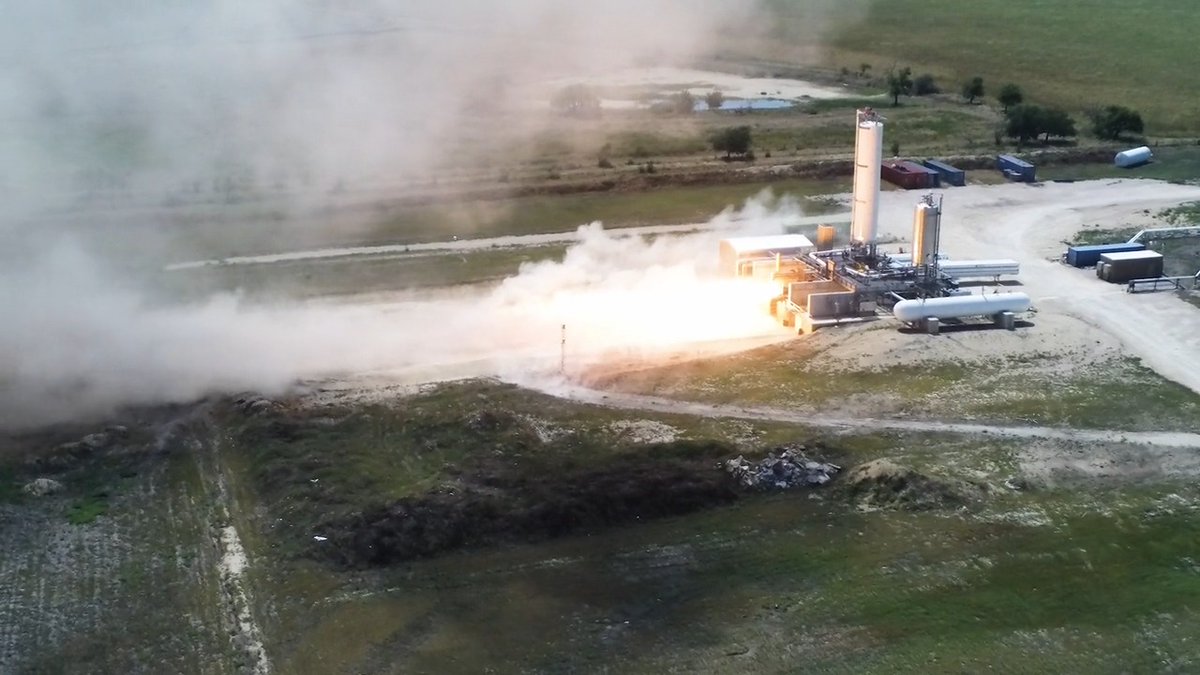
🧵Take a deep dive into the Aeon R engine thrust chamber assembly with our propulsion team. This critical engine component generates about 5 million horsepower, equivalent to the power of 5,000 F1 race cars. ▶️

17,623 次观看 • 2 年前 •via X (Twitter)

11 条评论

Relativity Space 的头像
Relativity Space2 年前

🚀 The TCA is made up of 3 main parts: the main injector, combustion chamber, and skirt. The main injector converts chemical energy in the propellants into thermal energy through combustion. The combustion chamber and skirt then turn this thermal energy into kinetic energy, propelling the rocket forward.

Relativity Space 的头像
Relativity Space2 年前

🛠️ What sets the Aeon R TCA apart? The innovative use of additive technologies. We leverage wire arc additive manufacturing (WAAM) and other methods to 3D print components.

Relativity Space 的头像
Relativity Space2 年前

⏱️ With additive technology, we can go from design to testing in just 3 months, allowing rapid iterations and improvements.

Relativity Space 的头像
Relativity Space2 年前

💡 We’ve done 14 design-print-test iterations of the main injector, boosting performance and reliability—impossible with traditional manufacturing.

Relativity Space 的头像
Relativity Space2 年前

🖨️ Powder bed fusion printing simplifies production, reducing thousands of parts into single pieces printed in days, cutting costs significantly.

Relativity Space 的头像
Relativity Space2 年前

🌬️ Additive manufacturing enables intricate cooling geometries and fluid passages, creating unique designs that meet performance and durability goals.

Relativity Space 的头像
Relativity Space2 年前

🔧 Using NASA's GrCop-42 alloy and high-strength nickel, we optimize the main combustion chamber's thermal and structural properties.

Relativity Space 的头像
Relativity Space2 年前

🌡️ The Aeon R engine withstands temperatures over 6,500°F, more than half the surface temperature of the sun and about 10 times what you'd see in a typical household oven, any metals are typically going to melt at these temperatures. Enter: Regenerative cooling.

Relativity Space 的头像
Relativity Space2 年前

💦 Regenerative cooling channels fuel through the combustion chamber walls, pulling heat away and recycling it for combustion—a win for efficiency!

Relativity Space 的头像
Relativity Space2 年前

🧑‍🔬 Leveraging testing @NASAStennis E1 test stand we're able to test the thrust chamber and the injector independently of the rest of the engine in parallel with the turbo machinery development.

Relativity Space 的头像
Relativity Space2 年前

🌌 Join the team - we're not just making rockets; we're pioneering technologies that could become industry standards. 

相关视频

This is the most powerful commercial jet engine currently flying on an operational airliner. The GE90-115B was built by GE Aerospace specifically for the Boeing 777-300ER. It weighs around 8.3 tonnes, has a 3.25 metre wide fan and produces up to 512 kN (115,000 lbf) of thrust from a single engine. To understand the sheer scale of that output, it produces roughly 2.7 times the thrust of the F135 jet engine powering the F-35, the most powerful fighter engine currently in service. The enormous fan at the front uses just 22 carbon fibre composite blades with titanium leading edges. At maximum thrust, it pulls in roughly 1.4 tonnes of air every second, with nearly 90% bypassing the core rather than passing through the combustor. At around 150 knots during takeoff, its 512 kn of thrust corresponds to roughly 39.5 MW of propulsive power, or in automotive terms around 53,000 hp from one engine. And it burns roughly 4-5 kg of jet fuel every second at maximum power conditions. Two of these engines are enough to power a fully loaded 777-300ER weighing more than 350 tonnes. Even if one engine fails after the critical point during takeoff, the aircraft is certified to continue the takeoff and climb on the remaining one GE90 engine. Each engine costs around $35-40 million. More than 2,500, GE90s engines have been built, and the GE90 family has accumulated nearly 130 million flight hours. And this is precisely why companies like GE Aerospace remain so difficult to displace in jet engines. There is never one breakthrough. GE spent roughly $2+ billion developing the GE90, chasing small gains across hundreds of systems, efficiency, materials, reliability and component life.

Ammanichanda

53,005 次观看 • 20 天前