正在加载视频...

视频加载失败

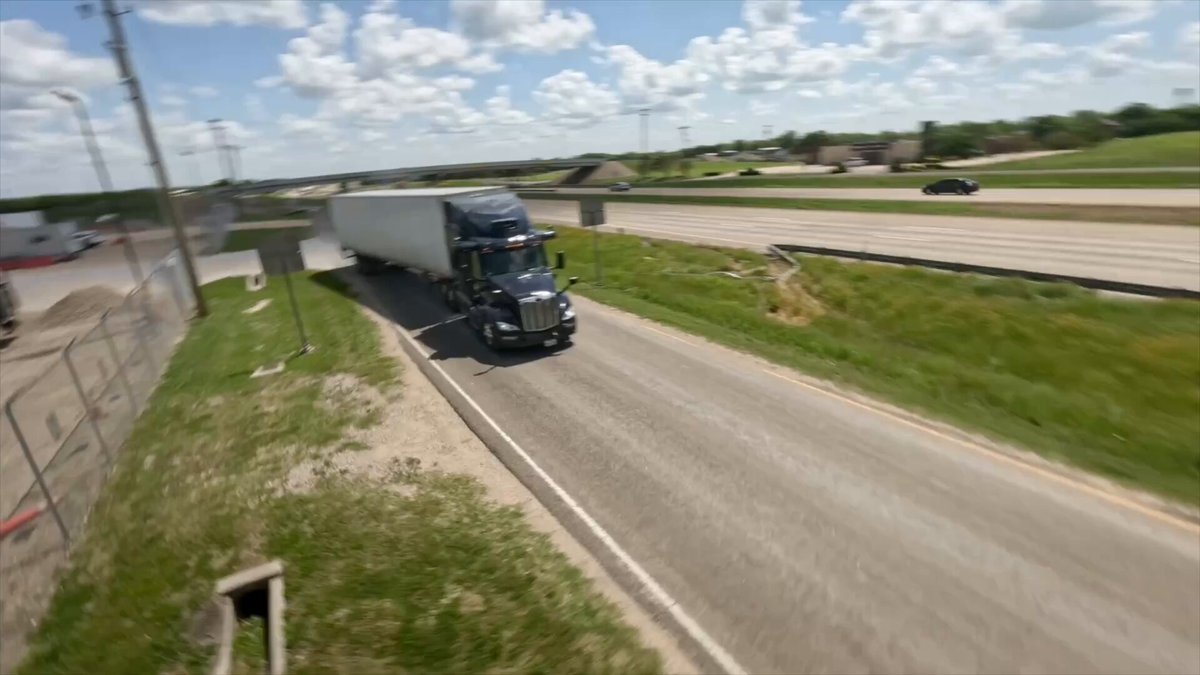
🚨 Tesla surpasses 11B FSD miles tonight, a huge FSD milestone, extending its real-world data dominance powering driverless made-in-Texas Robotaxis: the nation's most cost efficient and first SAE Level 4 system legally certified for paid rides without radar or lidar.
49,932 次观看 • 2 个月前 •via X (Twitter)

0 条评论

暂无评论

原始帖子的评论将显示在这里

相关视频

If insurance companies don’t adapt to Tesla FSD, they’re going to have a real problem. In 2024 at the Berkshire Hathaway shareholder meeting, Warren Buffett got asked, “Assuming Elon delivers on his fully autonomous driving goal. Elon said, if you’ve got at scale, a statistically significant amount of data that shows conclusively that the autonomous car has half the accident rate of a human driven car, I think that’s difficult to ignore. Assuming Elon succeeds in reducing accidents by 50% vs human drivers, wouldn’t auto insurance rates fall to reflect the reduced underwriting risks, thereby adversely impacting Geico’s revenues and float and perhaps margins, too?” His main response was, “Well, let’s just take the extreme example. Let’s say there are only going to be 3 accidents in the U.S. next year for some crazy reason… anything that reduces accidents is going to reduce costs… If accidents get reduced 50%, it’s going to be good for society and it’s going to be bad for insurance companies’ volume… but good for society is what we’re looking for.” I’ve followed Tesla closely for years and now the proof is impossible to ignore. Profiting from insurance is built on risk and FSD is systematically removing it. FSD has now crossed the data threshold that insurers can’t ignore. By 2026, Tesla FSD has logged over 10B+ real world miles from real human behavior, real streets, real weather, real chaos, and it’s materially more data than ANY company in the world has today. Tesla’s own safety reports show it clearly: • Human driven U.S. average: ~1M miles per accident • Tesla Autopilot: ~4.5M miles per accident • Tesla FSD engaged: ~7.5M miles per accident That’s a 7.5x safety improvement over human driving! If the risk is 7.5x lower, and your premiums you’re charging customers don’t change, something is wrong. Insurance pricing is supposed to reflect this risk. This is why today’s Lemonade announcement is a wake up call to insurance providers. When Lemonade announced it’s offering a 50% insurance discount when FSD is steering, they’re reacting to Tesla FSD data. Fewer crashes results in fewer payouts, period. This is what adaptive insurance looks like and thus why Tesla & Lemonade insurance has an advantage. They are adapting to real FSD data and real time risk, and adjusting the prices. All while traditional insurance companies are still using broad historical averages, falling behind and losing customers. Companies like GEICO, State Farm, and Allstate were built for a world where humans are driving, risk is random, and prices update slowly. I believe this era of insurance is ending. Even Warren admitted it in this video, saying cutting accidents in half is great for society, but BAD for insurance volume. Bc less risk means lower premiums and lower premiums mean less float and less float is the core of traditional insurance profits! If FSD adoption hits even 50% of Tesla’s fleet, I bet accident rates could drop 30-50% industry wide. That alone puts massive pressure on a ~$300B U.S. auto insurance market today. This is also why I believe Tesla insurance has a MAJOR advantage. Your premium is solely based on data. It uses real time vehicle telemetry, scores you based on actual driving behavior, and rewards your FSD usage directly and right away. In places like California, Tesla Insurance premiums for FSD users are already 20-30% cheaper than competitors. In some cases, safe drivers see up to 60% discounts. And in Texas, claims for FSD users are 40% lower than non-FSD drivers. The long term outcome is becoming obvious to me. Insurance companies that DO NOT adapt prices dynamically, use real time data, and recognize FSD’s safety advantage will most likely lose their best customers to companies that do. For Tesla owners, this is great news bc safer driving, esp using FSD will result in cheaper insurance, but for legacy insurers, this is an existential moment. You either adapt or risk getting left behind.

Teslaconomics

141,035 次观看 • 7 个月前

Data has always been the bottleneck for physical AI in self driving and robotics. Tesla is taking two very different approaches for FSD and Optimus. Tesla’s Optimus Training Playbook: 1. Build 30k Optimus Gen 3 robots 2. Operate them in a mock environment where they can perform self-play “Optimus Academy” 3. Train in sim using the real robot data to close sim2real gap. Tesla FSD Training Playbook: 1. Sell millions of cars outfitted with cheap cameras 2. Collect diverse real world driving data (especially intervention and failure recovery data) for free as a byproduct of customers driving the cars. 3. Use driving data to train Autopilot/FSD and deploy policies incrementally as a supervised FSD product 4. Repeat until policy reaches robust unsupervised full self driving for robotaxi launch. The Tesla FSD playbook is a beautiful self-funding, customer subsidized, diverse real world data flywheel. The Optimus playbook is the opposite and shares none of the beautiful attributes of the FSD training flywheel that made FSD successful. The key differences: 1. Instead of having customers pay you for vehicles, Tesla will need to fund 30,000 Optimus robots. Assuming the current landed cost per unit is $100k, that will be $3B to build plus another ~30% per year for maintenance labor and spare parts given it’s still an unhardened pre-production prototype is another $900M per year. For reference, Tesla’s GAAP net income in 2025 was $3.8B. 2. Instead of having customers drive their Teslas on roads all across the world giving Tesla an insanely rich and diverse dataset that Waymo and other AV companies could never collect, the Optimus Academy is doing the equivalent of building a fake town in a parking lot and driving their car in that parking lot. No matter how real you try to make the environments for self-play you can never replicate the diversity, complexity and failure modes of the real world. Data collected in staged environments produces demo-grade policies and will not be rich enough to generalize to the vast diversity of environments, tasks, objects, etc. out of distribution. 3. Instead of having customers collect real world failure recovery data (DAgger style) for free every time FSD disengages, the Optimus Academy will need paid teleoperators or onsite operators to collect the recovery data. Assuming 1 person can manage 2 robots to start that would cost $3.5B in labor per year (30,000 robots, $40/hr fully loaded, 16 hrs/day, 365 days per year, 2:1 robot:operator). Tesla can come up with the money to do this but money doesn’t solve the “mock data” problem. Given the higher degrees of freedom in humanoids vs. cars, training a generalized humanoid will be harder and require more data than a self-driving vehicle. The best way to train your robot is by deploying them in the diverse real world, subsidized by real customer operations. Humanoids face a chicken and egg where it’s very hard to bootstrap your way to a first policy that’s good enough to deploy in real production environments. This is an extremely capital intensive playbook (which doesn’t even include cost of training). Time will tell if it works but a better playbook would be finding a way to copy the FSD playbook.

Simon Kalouche

34,671 次观看 • 6 个月前