正在加载视频...

视频加载失败

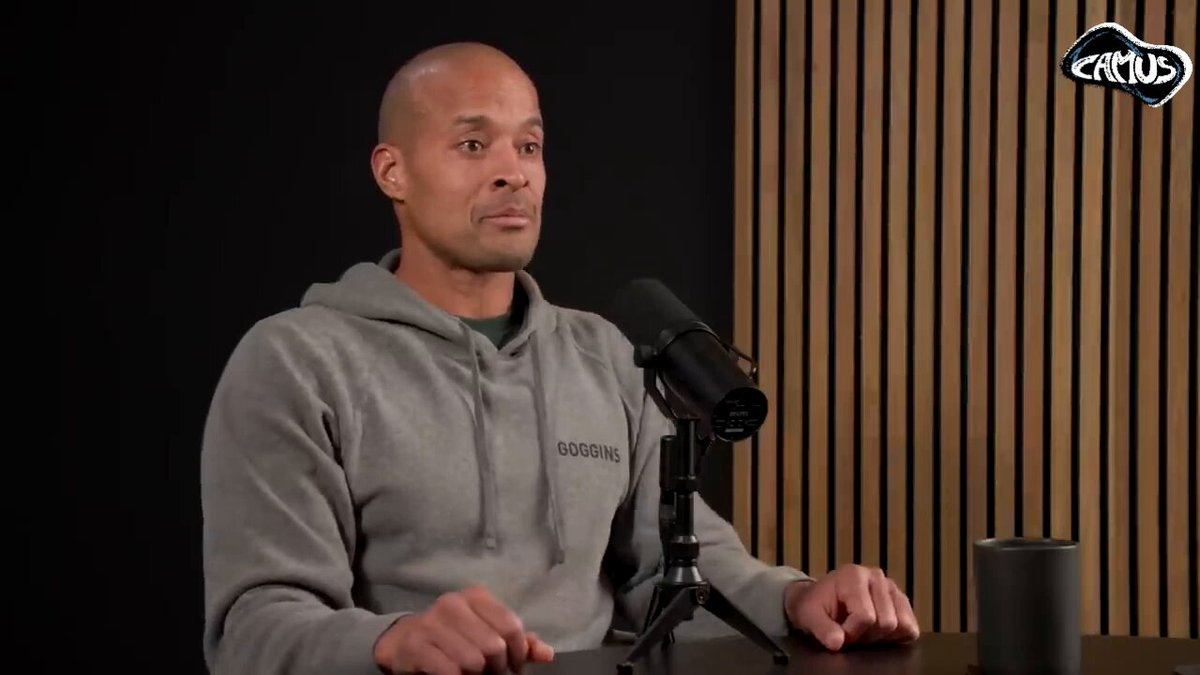
The one brain structure that literally grows when you do things you HATE doing — and shrinks the moment you get comfortable. Stanford neuroscientist Andrew Huberman dropped what he calls “one of the most important discoveries in the history of neuroscience” in a conversation with David Goggins. It’s called...

652,508 次观看 • 7 个月前 •via X (Twitter)

0 条评论

暂无评论

原始帖子的评论将显示在这里

相关视频

Q: How do you build a great company? In the clip below, Sam Altman walks through 9 things he has seen the best founders do: #1 Get to know your users really well “The best founders do customer support themselves. They go visit their users—in the case of Airbnb they go live with them. You want to get to know your users really really well.” #2 Have a short cycle time & understand compound growth “The cycle here is basically: talk to customer to understand pain point → build product to address that → get product in front of user → see what they do → repeat cycle. This cycle is how you iterate and improve. The law of compound growth being what it is: if you can get 2% better every iteration cycle, your iteration cycle is every four hours rather than every four weeks, and you compound that over the course of a few years, you’ll be in a very very different place. Make it one of your top goals to build one of the fastest iterating companies the world has ever seen.” #3 Make a long-term commitment “Most companies have a 2-3 year time horizon. But companies are almost always a 10 year project if they work. If you think about it that way from the very beginning, you will make very different and much better decisions. I think this is the only arbitrage opportunity left in the market. Almost no one makes a fairly long-term commitment to a new project. But if you do that, you will think in a different way, you will hire different people, and it will work very well.” #4 Stay lean until everything is working really well “In the early days, when you’re experimenting and zig zagging, you’re like a fast little speed boat and want to be able to turn the whole company on a dime. You can’t do that if you’re a big company—cash burn aside, which is another problem. The flexibility of the company basically decreases with the square of the number of employees, so you want to stay really small until you’re sure things are working. Once things are working, then you can get really big.” #5 Resist the urge to hire; especially resist the urge to hire mediocre people “Vinod Khosla has a saying that I love: ‘the team you build is the company you build.’ This is really true and I never appreciated how true this was for a long time. If you build a team of great people and you have a product that people love, you’ll have a 90%+ chance of success. Those are both really hard to do, and they’re independent variables. But don’t ignore the team component. The best CEOs I know spend huge amounts of their time recruiting and retaining good talent.” #6 Relentless execution “You have to keep going, and do things perfectly, and get all of the details right. You have to care too much about every experience that a customer has with your company.” #7 Startups are about not giving up “One of the very best companies in the last YC batch applied 7 times before they got in. This is just a version of what happens in startups all of the time: you get beat down, again, and again, and again. And that last time when you get pushed down and don’t think you have enough energy to get back up—that’s the time it actually works. This is what you sign up for if you’re going to start a startup.” #8 Fiduciary duty to take care of yourself “This is a 10-year marathon and you have a fiduciary duty to your shareholders to take care of yourself. Some people treat startups like an all-nighter: they don’t take care of their health, they don’t sleep, they don’t maintain their personal relationships. It is true that startups are a bad choice for work-life balance. But you have a duty to yourself, your team, and your investors to take care of yourself.” #9 Clear mission “You don’t have to figure this out on Day 1, but all of the most successful startups I’ve been fortunate enough to be a part of pretty quickly—in the first one to two years—figure out a really important mission. It’s this mission that gets people to join them. It drives the founders. It gets the media to write about them. And even if you start off building a project that’s just interesting to you and solves a problem in your life—which is how you should start—remember that you should have a clear mission at some point… That is what will convince people to come help you, and that is how you will build this idea into a huge company with a ton of people that really love your product.” Follow Startup Archive for more tactical startup advice!

Startup Archive

407,704 次观看 • 2 年前

Q: How do you build a great company? In the clip below, Sam Altman walks through 9 things he has seen the best founders do: #1 Get to know your users really well “The best founders do customer support themselves. They go visit their users—in the case of Airbnb they go live with them. You want to get to know your users really really well.” #2 Have a short cycle time & understand compound growth “The cycle here is basically: talk to customer to understand pain point → build product to address that → get product in front of user → see what they do → repeat cycle. This cycle is how you iterate and improve. The law of compound growth being what it is: if you can get 2% better every iteration cycle, your iteration cycle is every four hours rather than every four weeks, and you compound that over the course of a few years, you’ll be in a very very different place. Make it one of your top goals to build one of the fastest iterating companies the world has ever seen.” #3 Make a long-term commitment “Most companies have a 2-3 year time horizon. But companies are almost always a 10 year project if they work. If you think about it that way from the very beginning, you will make very different and much better decisions. I think this is the only arbitrage opportunity left in the market. Almost no one makes a fairly long-term commitment to a new project. But if you do that, you will think in a different way, you will hire different people, and it will work very well.” #4 Stay lean until everything is working really well “In the early days, when you’re experimenting and zig zagging, you’re like a fast little speed boat and want to be able to turn the whole company on a dime. You can’t do that if you’re a big company—cash burn aside, which is another problem. The flexibility of the company basically decreases with the square of the number of employees, so you want to stay really small until you’re sure things are working. Once things are working, then you can get really big.” #5 Resist the urge to hire; especially resist the urge to hire mediocre people “Vinod Khosla has a saying that I love: ‘the team you build is the company you build.’ This is really true and I never appreciated how true this was for a long time. If you build a team of great people and you have a product that people love, you’ll have a 90%+ chance of success. Those are both really hard to do, and they’re independent variables. But don’t ignore the team component. The best CEOs I know spend huge amounts of their time recruiting and retaining good talent.” #6 Relentless execution “You have to keep going, and do things perfectly, and get all of the details right. You have to care too much about every experience that a customer has with your company.” #7 Startups are about not giving up “One of the very best companies in the last YC batch applied 7 times before they got in. This is just a version of what happens in startups all of the time: you get beat down, again, and again, and again. And that last time when you get pushed down and don’t think you have enough energy to get back up—that’s the time it actually works. This is what you sign up for if you’re going to start a startup.” #8 Fiduciary duty to take care of yourself “This is a 10 year marathon and you have a fiduciary duty to your shareholders to take care of yourself. Some people treat startups like an all-nighter: they don’t take care of their health, they don’t sleep, they don’t maintain their personal relationships. It is true that startups are a bad choice for work-life balance. But you have a duty to yourself, your team, and your investors to take care of yourself.” #9 Clear mission “You don’t have to figure this out on Day 1, but all of the most successful startups I’ve been fortunate enough to be a part of pretty quickly—in the first one to two years—figure out a really important mission. It’s this mission that gets people to join them. It drives the founders. It gets the media to write about them. And even if you start off building a project that’s just interesting to you and solves a problem in your life—which is how you should start—remember that you should have a clear mission at some point… That is what will convince people to come help you, and that is how you will build this idea into a huge company with a ton of people that really love your product.”

Michael McGuiness

500,098 次观看 • 2 年前

Culture is genetic because behavior is genetic. This beaver never saw a dam in its life. No beavers or anything else ever taught it to build a dam. It wants to build a dam because it is a beaver. Many beavers together build a big dam. That is beaver culture. Humans are not different. Nothing is different. This is what life is. This is how life works. Your body is your mind. A caterpillar wants to build a chrysalis. A bee wants to build a hive. A lion wants to build a pride. You are not special. You are not above your nature. you are INSIDE of it. The thoughts that we think are genetic thoughts. The crimes we commit are genetic crimes. The art we create is genetic art. Just like this beaver, you can give the animal different sticks and it will build a different dam, but it will always build a dam. And you can give humans different "education," but the human will always use it to do what its genes tell it to do. This is the first big answer that you need. This is the biggest piece of the puzzle. This is how to understand people 90% of the way. You just... notice what they do, and get out of the way, and watch them do it. And if they need sticks, you give them sticks. And if you don't like what they do, you have to get away from them. You cannot train dam-building into them or out of them any more than you can with a beaver. A beaver wants to build a dam because it is a beaver. Whatever you see people build, that's what they wanted to build from the sticks they got in the river they were in. Stop pretending you can change it.

hoe_math = PsychoMath

1,189,824 次观看 • 11 个月前