Video yükleniyor...

Video Yüklenemedi

Ana Sayfaya Dön

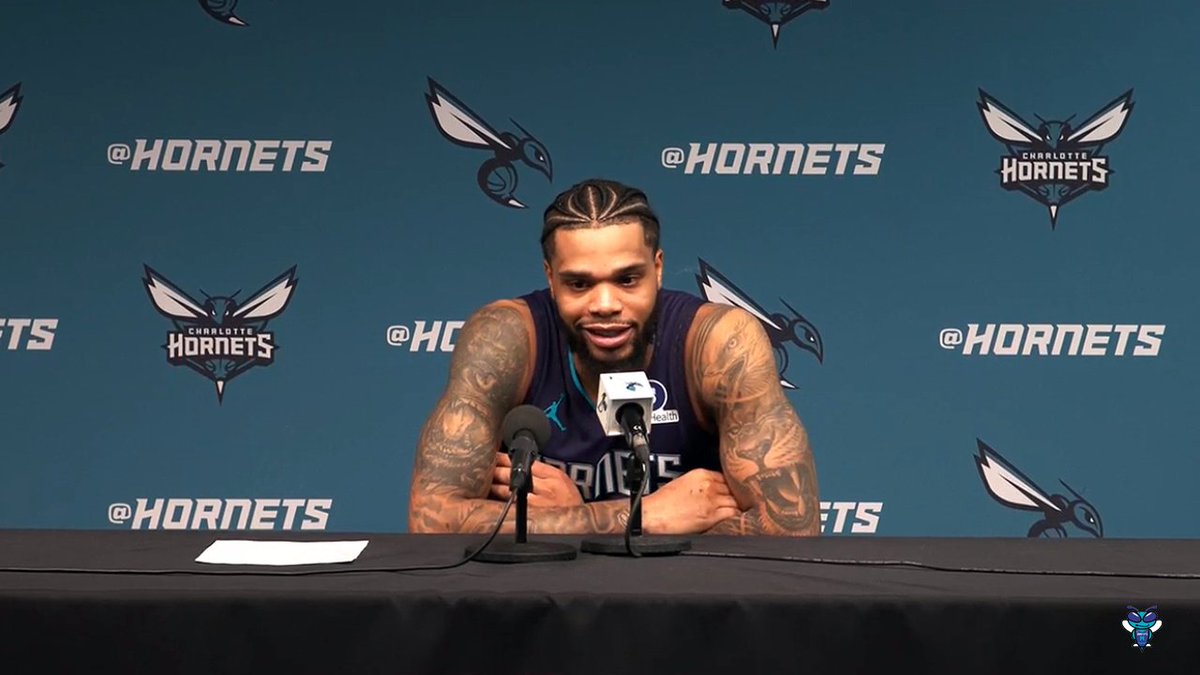
The reason Ruben Amorin needed “legs or ground eater” was because he never believed in players playing close to one another and keeping the ball for a long time. We often launched the ball to our strikers to beat press, he did the same at Sporting CP with Gyokeres...

258,749 görüntüleme • 1 ay önce •via X (Twitter)

0 Yorum

Yorum bulunmuyor

Orijinal gönderinin yorumları burada görünecek

Benzer Videolar

Pressing, transitions and goals in Canada! After the hiring of Jesse Marsch this week by Canada Soccer , there has been lots of talk about pressing and transitions in the football community. This is THE style of play that we have used for the last 5 years with Alliance United FC in @L1OMens and will give you some insight in how this can look. We went away from the 'possession' based 1-4-3-3 that everyone has been using as the 'best way' to develop players and win games. Many say this is the 'right way' of playing. However, we use the players' abilities and inabilities as the starting point and based on players produced in Canada, within our youth system, this is the way we think will get us the best results and help our players get to the next level. You need to understand youth development in our country to understand what is and what is not being taught to young players. This is not a negative outlook, it is just looking at the reality. Many mistake this style of play as just non-stop pressing and chaos. Yes, these two aspects are important but it is a much more deliberate and planned way of playing that is used to predict where the opposition will play the ball, where the ball can be dictated and what areas the opposition leave open for transitions when they attack. In 2019, I was introduced to Ernst Tanner former Academy Director of Red Bull Salzburg and current Philadelphia Union Sporting Director that has led the club to being one of the top clubs in MLS and arguably the best academies in North America the last few years. Both organisations are known for their pressing and fast transitions in addition to producing top players. He became a mentor to me and gave me insights and education on this style of play. He has changed the way I look at football. Every season we try to recruit players that can play this style that I will describe below and we do not waiver in the way we played. Every game since 2019 Alliance United FC have played either in a 1-4-2-2-2 or a 1-4-4-2 midfield diamond....every game. We have no secrets in how we play. We focus on defending, pressing, forcing teams into mistakes and transition football. It is important to understand that we do not care how much possession we have and we actually want the opposition to have the ball most of the time. Stats in football show that only when a team has the ball 70% or more in a match their is a correlation to winning. Anything less is not correlated to winning in a certain match. In addition, 80% of goals are scored under 5 passes or less and under 10 seconds when regaining possession. We follow the trend! So, here are some important points based on the video: a) Pressing higher up the pitch when possible. All 11 players are committed to the team intention (principles) and if anybody is not committed and does not contribute to this style of play, they do not play. There is no leeway on this. Either you are in 100% in or you are not. All it takes is one player to not commit and the plan will not work. If we do not win the ball on the high press, everyone is to drop behind the ball as fast as possible to restart the press closer to our goal. b) Based on the opponent's scouting we press certain players and decide if will press closer to the sideline and 'pin' the player to the sideline or we dictate the passes and dribbles centrally and 'surround' the player to win the ball in central positions. We also decide if we will sometimes drop lower for the opposition to advance so we can play behind them when winning the ball. This is done if we scout that the opposition centre-backs are slower than our two strikers. This means we will 'outrun' them in the space they leave behind. c) When winning the ball we want to exploit space behind their backline as the priority which means that a player(s) need to be passing options behind the backline and preferably centrally which is closer to the goal, players winning the ball has to look to play the ball to the player furthest up the pitch. Possession is not a priority but scoring goals as fast as possible is. d) When winning the ball we stay as central as possible with passes and dribbling. We use the width of the penalty area (44 yards) as the preferable dimension when transitioning. We want to stay within this width. The wider the team plays the ball, the more time the opposition has to block the middle. PLAY AS VERTICALLY AS POSSIBLE! The emphasis is to get the ball to the two strikers and play 1v1 against the CBs. e) We know that most youth players grow up playing against a 1-4-3-3 which means there is one central striker meaning the centre-backs one back press and one can cover. Against 2 strikers this is not possible and many centre-backs do not have the ability to play 1v1 with space behind them. They are not taught the cues to step and press or drop to protect space behind them. They are never taught at youth level. We exploit this deficiency. e) All 11 players must get up the pitch to close the spaces if we lose the ball from our attacking transition so the opposition cannot transition against us and we can counter-press. f) A goal is the best outcome based on the objective of attacking but at the minimum we want to get a shot on goal from a transition. This is a quick overview of a different way of playing football that Canada will see with the Men's National Team.

Ilya Orlov

14,134 görüntüleme • 2 yıl önce

This World Cup has shown how Argentinian players are just built different, and it was interesting because, in the press conferences, both managers addressed this. First, Tuchel talks about the Argentinian value of the ball and how they protect the ball at all costs, how they manage those small spaces, and how they learn this from a young age. He references culture, and this is exactly it. A child playing in a certain environment leads to that. Not every Argentinian child is on the national team, but it raises the ceiling. It creates a certain type of style and a certain type of player. Then Scaloni also references his culture. He sees them play without fear of losing. It comes from playing in an environment where you are constantly faced with the potential of losing and being able to play with that pressure, right? They don’t fight against it. They play with it. They use it. And I think this is where youth football coaches should really take note. This does not mean we should copy and paste Argentinian culture into every training environment, because culture cannot just be copied. But the values within that culture can be inculcated in every training environment. The value of the ball. The courage to receive it in small spaces. The ability to protect it under pressure. The confidence to keep playing after a mistake. The willingness to play with the possibility of losing rather than constantly trying to avoid it. Those values can become part of the environment we create every day. They can be present in the games we design, in what we praise, in what we allow players to struggle with, and in how we respond when they lose the ball. If every mistake leads to the coach stopping the session, giving the answer, or taking the pressure away, then players never learn to play with that pressure. They learn to wait for the coach. It was cool to see how two managers, at such a big stage, reference culture and the environments that kids play in when they’re young. Because the players we see on the biggest stage were not only created by tactics or coaching information. They were created by environments that taught them what to value, how to relate to the ball, and how to play when there was something to lose.

David Garcia

170,444 görüntüleme • 2 ay önce

Introducing the “Get” action in basketball to lacrosse! The “Get” is a 2man action where a player passes the ball to another player and sprints to go “Get” it back on a handoff. This action has similar concepts and reads to pick and roll, but the picker is actually the ball handler! In lacrosse, we have been experimenting with Gets because it creates so many interesting situations and reads for the players. The way we teach it in small sided games is to have one offensive player declare “I’m shut” and the defense has to face-guard him. From there we pick for the shut off player trying to spring them free for the Get. The ball handler has to engage and control their defender, anticipating the shut player trying to get open. The shut player can backdoor if being overplayed towards the get (rejecting the get), receive a flip, or continue curling around the ball getting open for a late pass. The ball handler can feed the reject, flip the ball, or fake the flip to attack the goal or make a late pass to the shut payer curling to the goal. I’ve seen examples of this run in men’s and women’s DI lacrosse at Ohio State and Northwestern, respectively and I’ve run this myself when I was coaching HS girls lacrosse. You will also see on this reel a sick application for Gets vs. a common big-little invert coverage where the short stick doesn’t go behind with his man and plays “Safety” in front of the net. Gets are fun for the players, are incredible for teaching your players 2man game on and off ball, dealing with double teams, and creativity with passing, and can be used to score goals. I hope you enjoy it! Can you think of other applications for Gets?

JM3 SPORTS

12,424 görüntüleme • 1 yıl önce

Ferris State HC Tony Annese - Mesh (QB/Ball Carrier) & Motion Fundamentals QB Mesh Fundamentals - Regardless of play, the first thing the QB needs to do to make sure he has a good mesh is stab the ball back off his hip towards the ball carrier as far as he can. - His arms should be straightened with his eyes at the HOK. - The ball should move with the back through his track. - If the ball is pulled the decision must be made by the time the ball gets to the QB's front hip. Ball Carrier Mesh Fundamentals - The potential ball carrier is the one that is responsible for his track. He needs to make sure his is at the mesh point that the QB is creating. - He must maintain a pocket that is firm enough to secure the ball but loose enough that the QB can pull the ball if the read is a pull read. - Do not deviate from the track until you fully clear the mesh. - If you do not get the ball then track away from the HOK and make him chase you. Motion Fundamentals - All of our motions start up at FULL SPEED! It is incredibly important to make every motion at full speed so the QB has a consistent timing. - The QB is responsible for sending the motion back on every play except for the triple option. - This allows us to control each motion easier. - Every Jet motion should be timed as if the jet back was getting the ball regardless of play. - The motion back will change his depth based on play. - This allows us to use motion with a multitude of schemes. - The motion stops at different spots on different plays and each perimeter player must understand where he should stop for each play.

James Light

19,145 görüntüleme • 8 ay önce