Загрузка видео...

Не удалось загрузить видео

На главную

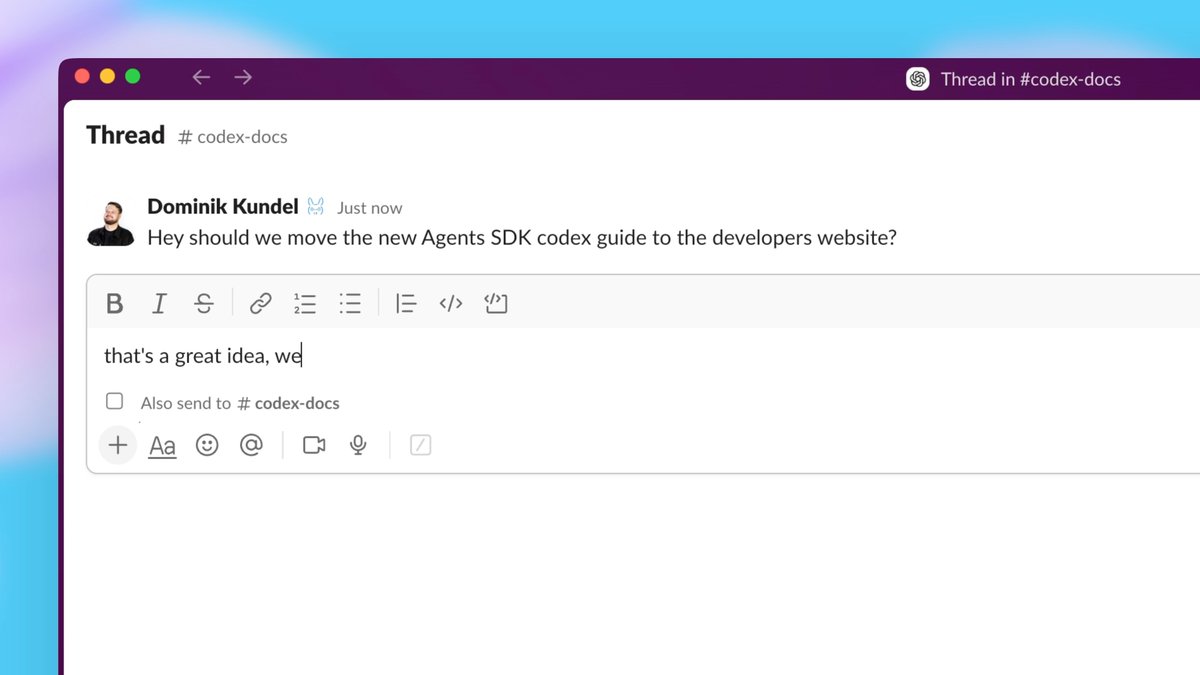
The underrated Codex pattern: stop asking one thread to hold the whole universe. OpenAI's jason talks about thread managers, threads that talk to other threads, Slack context, hourly loops, and feedback IDs. The win is not just parallelism. It is better-scoped context. Join us in the Token Billionaires Lounge,...

83,077 просмотров • 1 месяц назад •via X (Twitter)

Комментарии: 0

Нет доступных комментариев

Здесь появятся комментарии из оригинального поста

Похожие видео

Context vs. Graphs, clearly explained! context engineering is great, but it has a ceiling: you can make one window perfect. there is still only one of it. every technique on that layer is rationing the same scarce thing. compact, retrieve less, delete, defer. all of it is deciding what to drop. Graph engineering fixes this by moving the decision up a layer: not what goes in the window, but how many windows there are and what each one is for. you need both. here's how it works: ↳ inside a window: context engineering. what loads, in what order, what gets compacted ↳ between windows: the graph. how many lanes, what each one is allowed to see, what comes back Prompts → Context → Harness → Loops → Graphs each lane gets a clean window, nothing in one competes with anything in another, and your main thread stops filling up. the trick is being selective about what comes back. a subagent reads six thousand tokens of files and hands you a four hundred token summary. that ratio is the whole point. send back the raw material instead and you have moved the problem, not solved it. one thing to know before you scale it. not everything survives compaction equally, and almost nobody knows the table. ↳ the project-root rules file and auto memory are re-injected from disk. they come back intact ↳ path-scoped rules and nested rules files live in message history. they get summarized away and do not return until a matching file is read again so a rule that genuinely must persist cannot be path-scoped. move it to the root and pay the always-loaded cost, or accept that it is advisory in any long session. and the one that eats whole nights: shared context makes parallel agents converge. four auditors on one window produce one opinion with three echoes. you paid four times for it. below i have quoted my full guide on graph engineering. it covers the three topologies, the verifier patterns, and where the gate should actually open. save this and read it below ↓

Hanako

36,970 просмотров • 22 дней назад