Загрузка видео...

Не удалось загрузить видео

На главную

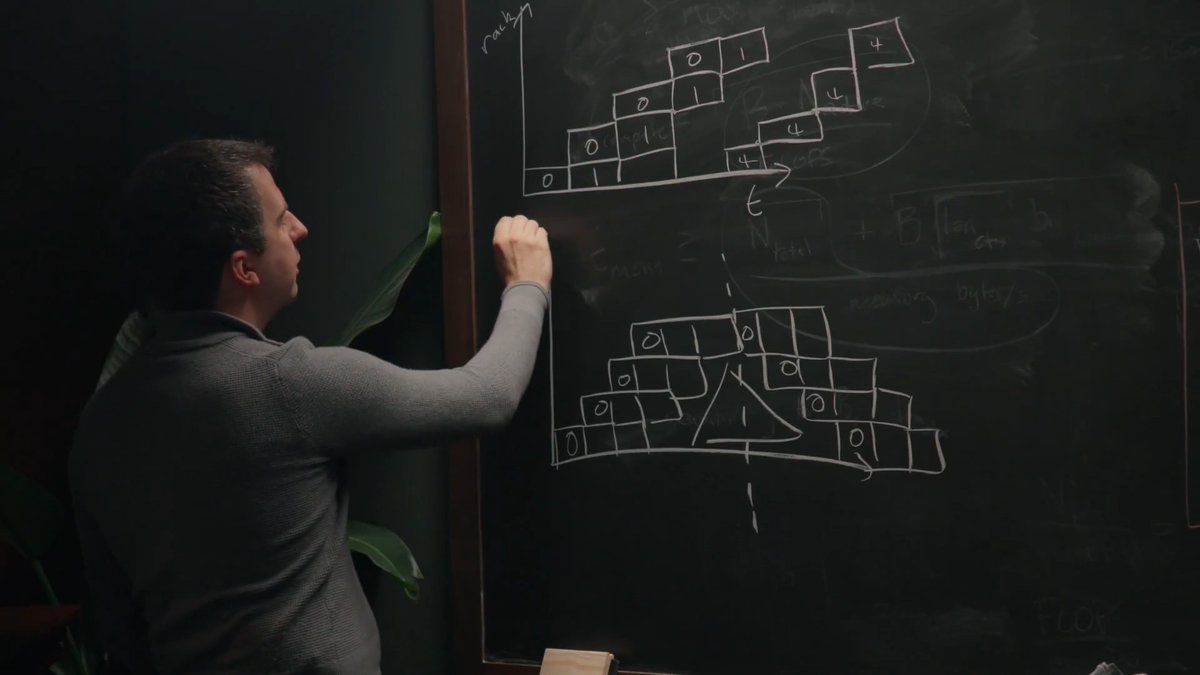
This lecture was a really simple & practical introduction to how machines learn Bayesian Learning, Bayes Theorem, Naive Bayes from Kimia Lab by Professor H.R.Tizhoosh. The lecture also walks through - MAP - Maximum Likelihood - Bayes Optimal Classifier - Naive Bayes model A really beginner-friendly lecture if you...

14,816 просмотров • 3 месяцев назад •via X (Twitter)

Комментарии: 0

Нет доступных комментариев

Здесь появятся комментарии из оригинального поста

Похожие видео

a playlist of 30 youtube videos to learn machine learning fundamentals from scratch if you're struggling on where to start learning ML, this list goes this "Machine Learning: Teach by Doing" is a solid choice to learn both theory and code. (1) Introduction to Machine Learning Teach by Doing: (2) What is Machine Learning? History of Machine Learning: (3) Types of ML Models: (4) 6 steps of any ML project: (5) Install Python and VSCode and run your first code: (6) Linear Classifiers Part 1: (7) Linear Classifiers Part 2: (8) Jupyter Notebook, Numpy and Scikit-Learn: (9) Running the Random Linear Classifier Algorithm in Python: (10) The oldest ML model - Perceptron: (11) Coding the Perceptron: (12) Perceptron Convergence Theorem: (13) Magic of features in Machine Learning: (14) One hot encoding: (15) Logistic Regression Part 1: (16) Cross Entropy Loss: (17) How gradient descent works: (18) Logistic Regression from scratch in Python: (19) Introduction to Regularization: (20) Implementing Regularization in Python: (21) Linear Regression Introduction: (22) Ordinary Least Squares step by step implementation: (23) Ridge regression fundamentals and intuition: (24) Regression recap for interviews: (25) Neural network architecture in 30 minutes: (26) Backpropagation intuition: (27) Neural network activation functions: (28) Momentum in gradient descent: (29) Hands on neural network training in Python: (30) Introduction to Convolutional Neural Networks (CNNs):

ℏεsam

117,748 просмотров • 1 год назад

if you're struggling on where to start learning ML, here’s a playlist of 30 youtube videos to learn machine learning fundamentals from scratch "Machine Learning: Teach by Doing" is a solid choice to learn both theory and code. (1) Introduction to Machine Learning Teach by Doing: (2) What is Machine Learning? History of Machine Learning: (3) Types of ML Models: (4) 6 steps of any ML project: (5) Install Python and VSCode and run your first code: (6) Linear Classifiers Part 1: (7) Linear Classifiers Part 2: (8) Jupyter Notebook, Numpy and Scikit-Learn: (9) Running the Random Linear Classifier Algorithm in Python: (10) The oldest ML model - Perceptron: (11) Coding the Perceptron: (12) Perceptron Convergence Theorem: (13) Magic of features in Machine Learning: (14) One hot encoding: (15) Logistic Regression Part 1: (16) Cross Entropy Loss: (17) How gradient descent works: (18) Logistic Regression from scratch in Python: (19) Introduction to Regularization: (20) Implementing Regularization in Python: (21) Linear Regression Introduction: (22) Ordinary Least Squares step by step implementation: (23) Ridge regression fundamentals and intuition: (24) Regression recap for interviews: (25) Neural network architecture in 30 minutes: (26) Backpropagation intuition: (27) Neural network activation functions: (28) Momentum in gradient descent: (29) Hands on neural network training in Python: (30) Introduction to Convolutional Neural Networks (CNNs):

ℏεsam

109,447 просмотров • 1 год назад

Everybody is talking about recursive self-improvement (RSI) and meta learning. Here is my old 2020 talk about this [1]. It has aged well. Example: humans still define the starts & ends of trials of many modern meta learners. My RSI systems since 1994 LEARN to (re)define them [2]! [1] Meta Learning Machines in a Single Lifelong Trial (talk for workshops at ICML 2020 and NeurIPS 2021, based on earlier talks since 1994). Abstract: the most widely used machine learning algorithms were designed by humans and thus are hindered by our cognitive biases and limitations. Can we also construct meta learning algorithms that can learn better learning algorithms so that our self-improving AIs have no limits other than those inherited from computability and physics? This question has been a main driver of my research since I wrote a thesis on it in 1987 [2]. Here I summarize our work on meta reinforcement learning with self-modifying policies in a single lifelong trial (since 1994), and mathematically optimal meta-learning through the self-referential Gödel Machine (since 2003). Many additional publications on meta-learning since 1987 can be found in the RSI overview [2]. [2] J. Schmidhuber (AI Blog, 2020-2025). 1/3 century anniversary of first publication on recursive self-improvement (RSI) and meta learning machines that learn to learn (1987). For its cover I drew a robot that bootstraps itself. 1992-: gradient descent-based neural meta learning. 1994-: meta reinforcement learning with self-modifying policies. 1997: meta RL plus artificial curiosity and intrinsic motivation. 2002-: asymptotically optimal meta learning for curriculum learning. 2003-: mathematically optimal Gödel Machine. 2020-: new stuff!

Jürgen Schmidhuber

232,370 просмотров • 6 месяцев назад

HARVARD FILMED THE FIRST LECTURE OF THEIR MOST POPULAR STATISTICS COURSE - TAUGHT BY A PROFESSOR WHOSE STUDENTS CALL HIM THE BEST TEACHER THEY HAVE EVER HAD - AND IT PROVES WHY EVEN ISAAC NEWTON GOT PROBABILITY WRONG This is Joe Blitzstein, Harvard, Statistics 110, lecture 1. He has won Harvard's Excellence in Teaching award multiple times, his textbook Introduction to Probability is used in over 200 universities worldwide, and his online course has been taken by over 2 million people across 190 countries. He opens by saying that after a few weeks of this course you will easily solve calculations that 300 years ago required consulting Isaac Newton - and Newton's intuition was still wrong. He traces probability to Fermat and Pascal writing letters back and forth in the 1650s analyzing gambling games. No one had mathematically derived the rules before. They invented the subject by betting on dice in correspondence. Then he shows why the naive definition - probability equals favorable outcomes divided by total outcomes - breaks immediately. Ask what the probability of life on Neptune is. Either there is or there isn't. By the naive definition the answer is 1/2. So is the probability of intelligent life on Neptune. Something is severely wrong. Then the multiplication rule. Two types of ice cream cone and three flavors gives 6 combinations - not because you memorized it but because you can draw a tree and count branches. Every counting problem in the course is just a bigger version of that tree. Then binomial coefficients - n choose k counts the number of ways to select k objects from n when order doesn't matter. The full house in poker falls out in 4 lines of multiplication once you understand the tree. Watch the moment he fills in the sampling table - with or without replacement, order matters or doesn't. Three of the four boxes are immediate from the multiplication rule. The fourth requires a proof he saves for next lecture. That one box is harder than the other three combined. A data scientist I know rewatched this lecture before switching careers into statistics. Said it was the first time probability felt like a system with rules rather than a collection of tricks. Free on YouTube, Harvard, over 2 million views. bookmark this and watch later - after this lecture you will never again confuse equally likely with obviously true

Abyzon

652,660 просмотров • 1 месяц назад