Video wird geladen...
Video konnte nicht geladen werden
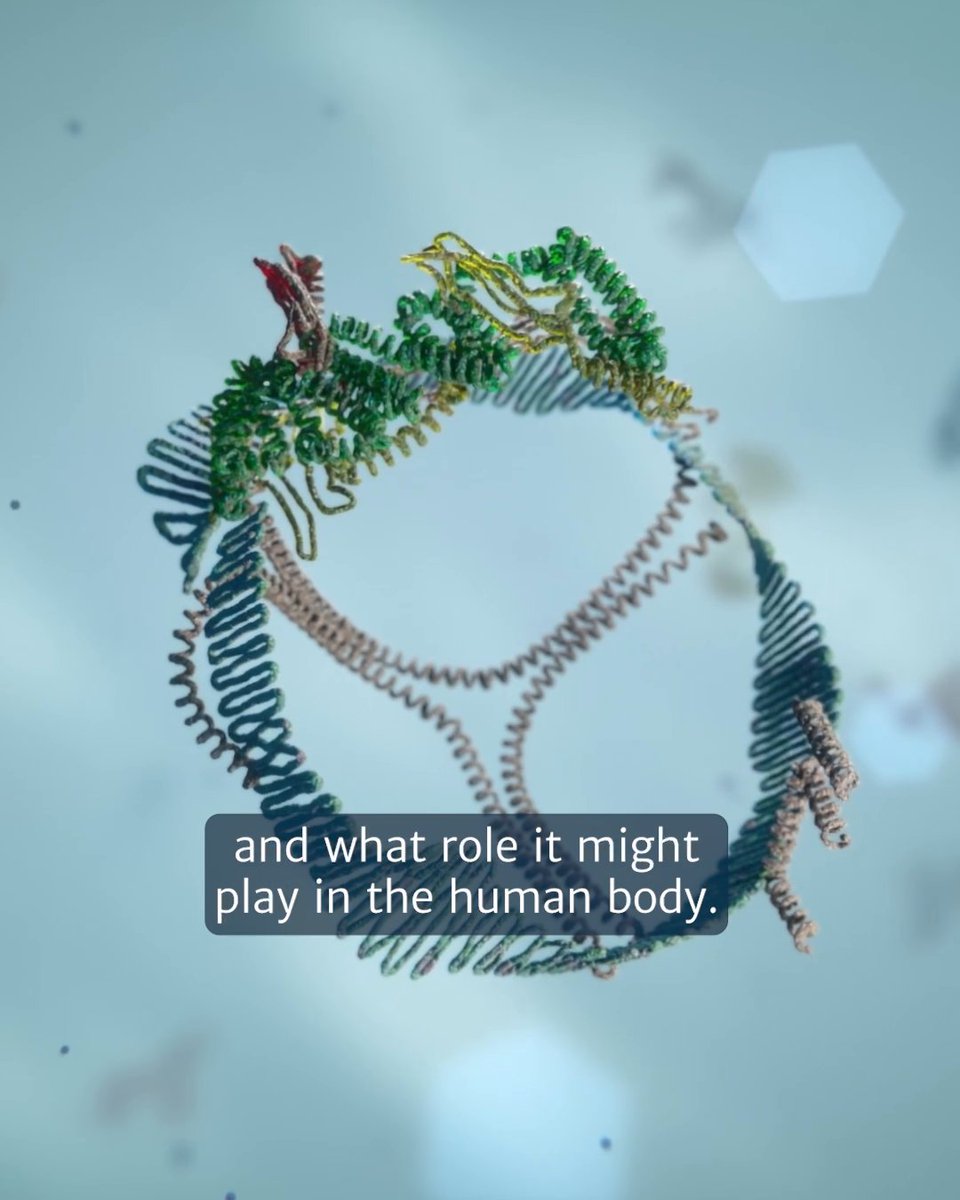
Today in the journal Science: BioEmu from Microsoft Research AI for Science. This generative deep learning method emulates protein equilibrium ensembles – key for understanding protein function at scale.

416,325 Aufrufe • vor 1 Jahr •via X (Twitter)
30 Kommentare

BioEmu aims to emulate the ensemble of structures that a protein will adopt in an experiment or the cell. The ability of a protein to dynamically switch between distinct structures is a basis for its function.
BioEmu 1.1 is trained longer and more carefully in 3 distinct stages on vast data of protein structures, >200 milliseconds of molecular dynamics simulations, and 500,000 protein stability measurements.
BioEmu 1.1 predicts functionally relevant conformational changes, including large-scale domain motions and local unfolding events + an increased success rate in predicting the formation of “cryptic” binding pockets.
BioEmu 1.1 can emulate equilibrium distributions of millisecond-timescale MD at many orders of magnitude speedup, bringing GPU-years down to GPU-hours.
BioEmu 1.1 improves ability to match experimental protein stability measurements with sampled protein structure ensembles with prediction errors below 1 kcal/mol, correlations >0.6 for a large protein stability test set, and train-test sequence similarities ~ 50%.
This also holds up for predicting stability changes of single and double mutants. These results indicate that the encoding of protein mutants still resolves enough differences to be predictive when fine-tuned with the right data.
Also available: MD simulations generated to train BioEmu – more than 100 milliseconds worth of data of 1000s of protein systems and 10,000s of mutants. This dataset stands out for its combined protein sequence diversity and simulation length.
Learn more about BioEmu:
Watch the full BioEmu explainer here:

Exciting breakthrough from Microsoft Research! Modeling protein equilibrium ensembles at this scale has huge implications for drug discovery and disease understanding. BioEmu’s ability to condense years of structural simulation into hours is a massive leap forward. For those exploring how AI can accelerate biomedical research and diagnostics, I’m building tools in this space at Aidoc(dot)help — where we’re working to make cutting-edge biomedical insights more accessible and actionable.

This is huge! Protein dynamics used to be a black box unless you had the time and compute for months of MD simulations. Now that BioEmu’s pulling off millisecond-scale predictions in hours, even catching cryptic binding pockets and mutant stability shifts.

How does one get into this field?

Proteins out here getting their own AI hype train. #PublicAI just leveled up from chatbots to bio-bros.

@IdaundderGraf ...

@ScienceMagazine i love , science…… and the greatest inventor, ever… who is changing my life , exponentially….. and all civilizations….. 🧐🇺🇸

amazing

Protein whisperers unite! #PublicAI

Proteins out here getting the AI glow-up before me.

Proteins out here getting the AI glow-up before me. 😤

So basically, we’re one step closer to protein whisperers?

Proteins out here getting the #PublicAI glow-up while my life remains in beta. 😂

Proteins whisper secrets science has yet to decode. The universe just got ornery.

Imagine a musician's sheet music coming alive - that's kinda what BioEmu does for proteins, figuring out how they move and work together like a well-oiled machine.

@ScienceMagazine 😲

Proteins out here getting the AI glow-up before me. Priorities.

BioEmu sounds like the next big thing in protein matchmaking. #PublicAI
Amazing. Try. Try. Try. error try try try ( 2000000 times ) success.

🙏

....Е сега...как да не каже човек на това "БИО ЕМУ"...ха наздраве🍷🥂😇

So basically, we’re one step closer to protein whisperers?