Video yükleniyor...

Video Yüklenemedi

Ana Sayfaya Dön

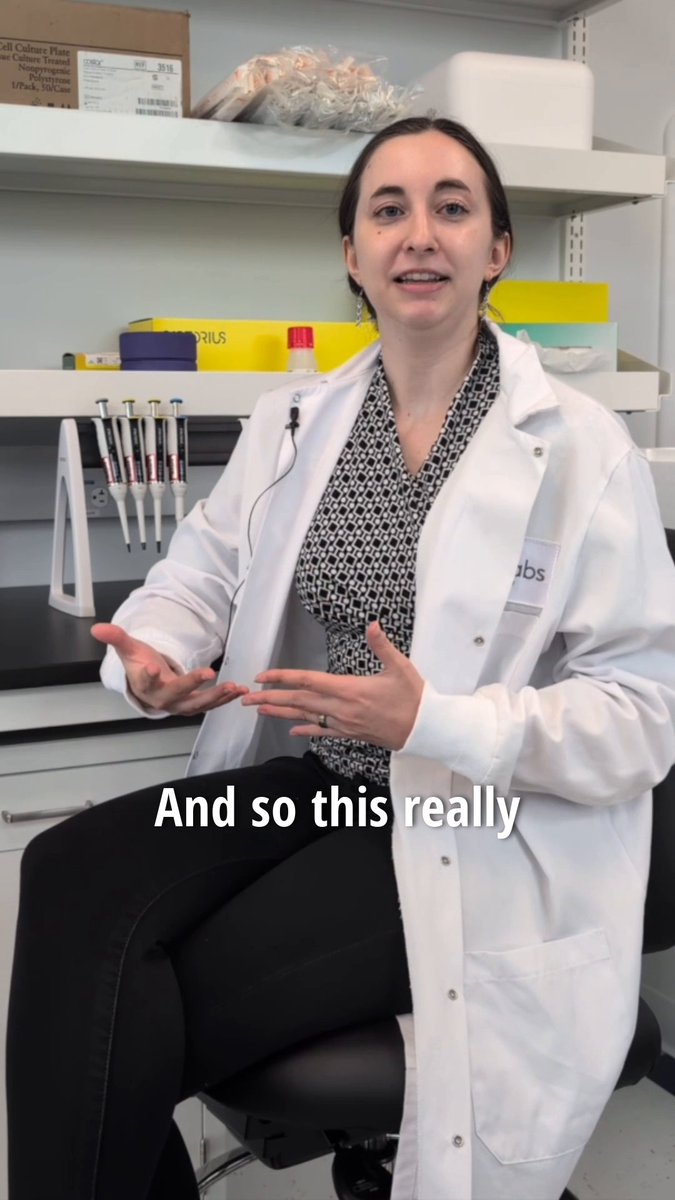
Today we introduce human neural loop #assembloids created from 4 parts derived from stem cells to study the cortico-striato-midbrain-thalamo-cortical pathway and to model neurodevelopmental disease Work led by the remarkable Ji-Il Kim and Yuki Miura in the lab. Also in collaboration with the Marius Pachitariu lab at HHMI |...

27,406 görüntüleme • 1 yıl önce •via X (Twitter)

10 Yorum

Sergiu P. Pasca profil fotoğrafı
Sergiu P. Pasca1 yıl önce

Preprint here:

Prof Peter Hotez MD PhD profil fotoğrafı
Prof Peter Hotez MD PhD1 yıl önce

Extraordinary work, really impressive!

Sergiu P. Pasca profil fotoğrafı
Sergiu P. Pasca1 yıl önce

Thank you, Peter!

Maria Robles profil fotoğrafı
Maria Robles1 yıl önce

This is incredible. Congratulations ...the implications here are mindblowing !

Maria Robles profil fotoğrafı
Maria Robles1 yıl önce

We at Robles BioCeutics are big fans of your work !

Carolyn Bertozzi profil fotoğrafı
Carolyn Bertozzi1 yıl önce

Amazing ! 🤯

Sergiu P. Pasca profil fotoğrafı
Sergiu P. Pasca1 yıl önce

Thank you 🙏

Ella Marushchenko profil fotoğrafı
Ella Marushchenko1 yıl önce

Impressive work! Congratulations, Prof. Pasca!

Sergiu P. Pasca profil fotoğrafı
Sergiu P. Pasca1 yıl önce

Thank you

Julio Aguado profil fotoğrafı
Julio Aguado1 yıl önce

wow, exciting work indeed! 🤯

Benzer Videolar

New Paper: Continuous Thought Machines 🧠 Neurons in brains use timing and synchronization in the way that they compute, but this is largely ignored in modern neural nets. We believe neural timing is key for the flexibility and adaptability of biological intelligence. We propose a new neural architecture, “Continuous Thought Machines” (CTMs), which is built from the ground up to use neural dynamics as a core representation for intelligence. By using neural dynamics as a first-class representational citizen, CTMs naturally perform adaptive computation. Many emergent, interesting behaviors arise as a result: CTMs solve mazes by observing a raw maze image and producing step-by-step instructions directly from its neural dynamics. When tasked with image recognition, the CTM naturally takes multiple steps to examine different parts of the image before making its decision. This step-by-step approach not only makes its behavior more interpretable but also improves accuracy: the longer it “thinks,” the more accurate its answers become. We also found that this allows the CTM to decide to spend less time thinking on simpler images, thus saving energy. When identifying a gorilla, for example, the CTM’s attention moves from eyes to nose to mouth in a pattern remarkably similar to human visual attention. I think this work underscores an important, yet often lost, synergy between neuroscience and AI. While modern AI is ostensibly brain-inspired, the two fields often operate in surprising isolation. By starting with such inspiration and iteratively following the emergent, interesting behaviors, we developed a model with unexpected capabilities, such as its surprisingly strong calibration in classification tasks, a feature that was not explicitly designed for. When we initially asked, “why do this research?”, we hoped the journey of the CTM would provide compelling answers. By embracing light biological inspiration and pursuing the novel behaviors observed, we have arrived at a model with emergent capabilities that exceeded our initial designs. We are committed to continuing this exploration, borrowing further concepts to discover what new and exciting behaviors will emerge, pushing the boundaries of what AI can achieve.

hardmaru

257,273 görüntüleme • 1 yıl önce