Video yükleniyor...

Video Yüklenemedi

Ana Sayfaya Dön

We recently crossed 10,000 GitHub stars on Rerun 😍 That's great and all, but something bigger is happening in robotics and Physical AI right now: The open-source ecosystem has seen real acceleration over the last few years. More teams are sharing real infrastructure: datasets, models, simulators, tooling, and the...

29,684 görüntüleme • 6 ay önce •via X (Twitter)

0 Yorum

Yorum bulunmuyor

Orijinal gönderinin yorumları burada görünecek

Benzer Videolar

a16z co-founder Marc Andreessen on why the shift from software AI to physical AI will create the biggest industry in human history: AI today is software. You open ChatGPT on your phone, and there's no manufacturing component, no real generator of middle-class jobs. But Marc Andreessen 🇺🇸 argues that a second, far more consequential turn is coming: the shift to embodied physical AI. "There's another turn on AI that's coming, which is the turn to embodied physical AI, which is robotics." This transition, he points out, has already begun. Drones went from human-piloted to fully autonomous. Cars went from purely physical products to rolling computers that drive themselves. "If you ever have the misfortune of finding yourself in San Francisco, take a Waymo. It's amazing to live in a cyberpunk future reality where you're in literally a state-of-the-art self-driving car that's literally out of the Jetsons." He makes clear: this isn't science fiction anymore. The self-driving car really works, and it's only the beginning. The next frontier is humanoid robots. "The general purpose robotics thing is going to happen. And it's going to happen in the next decade and it's going to happen at giant scale." Andreessen shares Elon Musk's view that robotics could become the single biggest industry in the history of the planet: "There's going to be billions, tens of billions, hundreds of billions of robots of all shapes, sizes, descriptions running around doing all kinds of things." And all of those robots need to be designed and built. Which brings Andreessen to his core argument: the real opportunity isn't in trying to recover what was lost. It's in leaning forward into what's coming. "We don't try to get the old manufacturing jobs back. What we should do is lean hard into the manufacturing jobs of the future."

Big Brain AI

35,113 görüntüleme • 1 ay önce

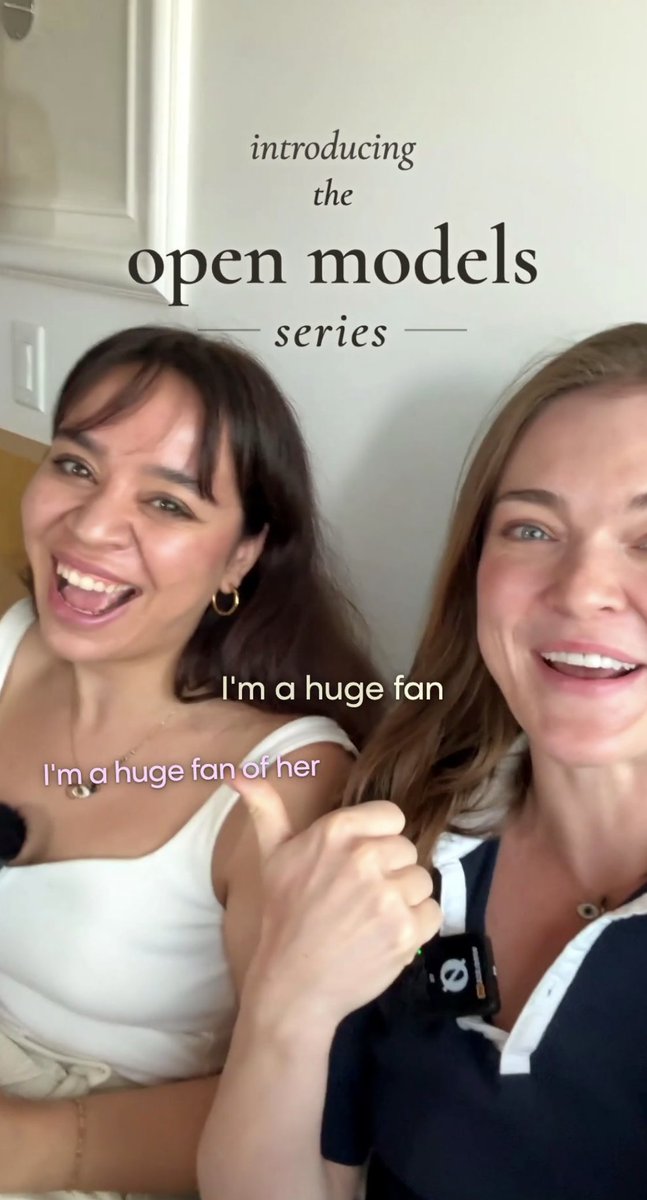
Just how capable are open source models? Below is the first in a new series where we go behind the scenes and pull back the curtain on interesting AI research / demos, making them fun and easy to understand. Here, we have a short visual demonstration from aizk ✡️ showcasing how Kimi K3 (a language model that operates primarily through text) is capable of building complicated 3D structures / moments in history in Minecraft, something that previously was not possible with other open source models, and why this matters. The crazy part? The model doesn't "see" the game like we do. The LLMs must reason in pure text, writing JavaScript, that later compiles down into commands placing each block, one at a time. Spatial reasoning is a very hard problem in AI, it's the same core challenge behind robotics and self-driving cars, where a model has to understand and act in physical 3D space. Watching a text model pull it off is nothing short of a miracle. The point isn't just Minecraft itself, rather, it's AI being able to generalize, not memorize, on things that are weird and beyond their training data. This is key to building true artificial general intelligence. These video game benchmarks (there are many different games actively being researched right now) provide a clear-cut end goal, challenges that are almost certainly not in the training set, and a fun, very fast, visual way to almost feel the increasing capabilities of various open source AI models over time. If you haven't given open source models a serious try yet, watch the video, it may shock you!

Featherless AI

39,769 görüntüleme • 15 gün önce