正在加载视频...

视频加载失败

When two cosmic forces collide, a supernova is born—Raider 18 HX AI A2XW. Like a supernova igniting the galaxy, it unleashes unrivaled power and dazzling RGB brilliance, shines as the extreme-level powerhouse in the gaming laptop universe. #MSIRaider

93,676 次观看 • 1 年前 •via X (Twitter)

0 条评论

暂无评论

原始帖子的评论将显示在这里

相关视频

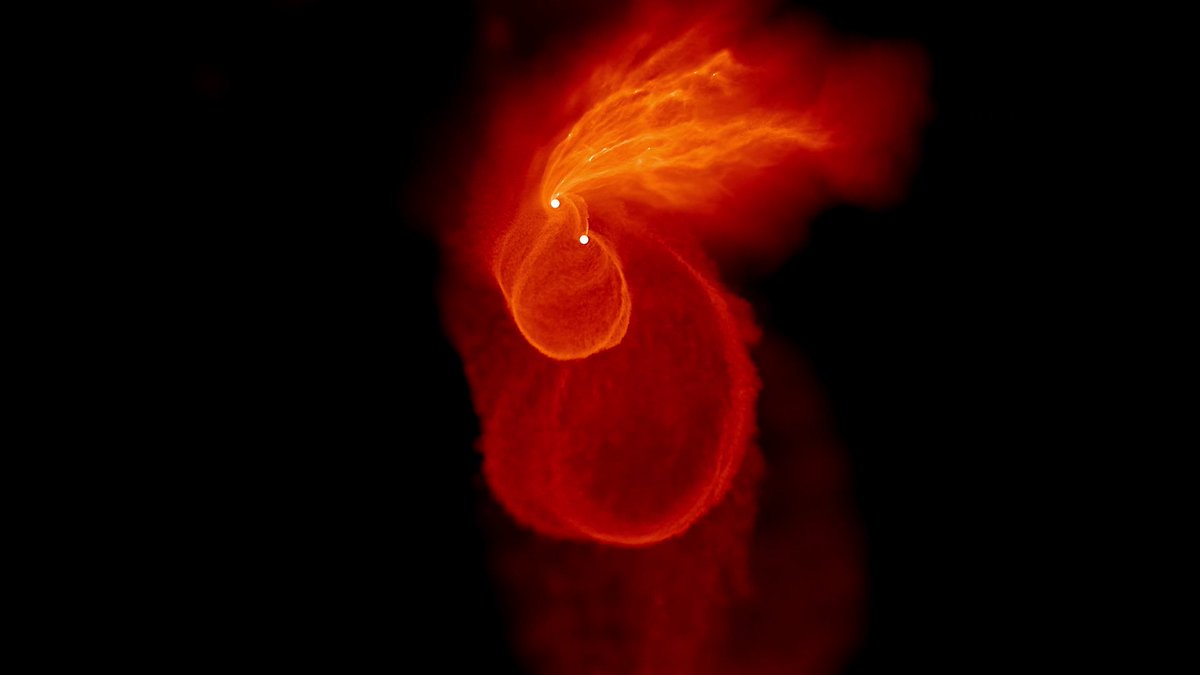
The question "what existed before the Big Bang" breaks physics at a grammatical level. "Before" requires time. Time didn't exist yet. Stephen Hawking's answer was the cleanest: asking what came before the Big Bang is like asking what's north of the North Pole. The question itself is malformed. Time is a property of the universe, not a container it sits inside. But physicists kept pushing. Neil Turok's CPT-symmetric model says the Big Bang didn't create one universe. It created two. Ours runs forward in time with matter. The other runs backward in time with antimatter. Same event, two directions. If true, there's a mirror version of everything that ever happened, playing in reverse on the other side of t = 0. Then there's the Big Bounce. Our universe is the rebound of a previous universe that contracted to near-zero size and exploded outward again. The Big Bang wasn't a beginning. It was a heartbeat in an infinite cycle. Alan Guth went further. His cosmic inflation theory says before our Big Bang, empty space was expanding exponentially and spawning pocket universes like bubbles in boiling water. Our entire observable universe, 93 billion light-years across, is one bubble. There could be an infinite number of others we will never see or contact. The wildest part: we might actually be able to test some of these. The cosmic microwave background, radiation left over from 380,000 years after the Bang, carries faint patterns that different theories predict differently. The answer to "what came before everything" might already be written in the oldest light in the sky.

Aakash Gupta

121,913 次观看 • 5 个月前