

Pascal Bornet
@pascal_bornet • 118,583 subscribers
Award-winning Expert, Author, and Keynote Speaker on AI and Automation
Shorts



Videos

👟 Japan just reinvented how we wear shoes — and it might change the entire footwear industry. A startup in Japan has unveiled a self-sizing sneaker pod that automatically scans your feet, adjusts its fit, and 3D-prints your perfect pair — all within minutes. No guessing sizes. No waste from mass production. Just personalized comfort, built precisely for you. The innovation: An integrated pod uses AI vision, pressure mapping, and robotic 3D printing to measure your foot shape, gait, and weight distribution — then prints a shoe that adapts as you move. Why it matters: The global footwear industry produces over 20 billion pairs a year — most in standardized sizes that don’t fit perfectly and generate enormous waste. This shift toward on-demand, personalized manufacturing could transform not just comfort, but sustainability. New possibilities unlocked: → Zero-inventory shoe stores → Custom footwear for athletes and medical use → Fully circular production powered by local pods To me, this is the kind of innovation that blends human design and AI precision — solving both personal and global challenges at once. Would you wear sneakers that are made for you, by a robot, in real time? #AI #Innovation #Technology #Design #Manufacturing #3DPrinting #Sustainability #Engineering #FutureOfWork #Japan
Pascal Bornet3,746,557 просмотров • 9 месяцев назад

China just turned the night sky into a masterpiece of precision and intelligence. 🌌 What struck me most about this is how seamlessly innovation turns into art. A drone show in Chongqing just broke the Guinness World Record with 11,787 synchronized drones, creating breathtaking 3D animations that looked closer to CGI than real life. No human pilots. No delays. No crashes. Every movement guided by AI and GPS, choreographed with perfect timing. To me, this is far more than a light show. It’s a glimpse into how technology, creativity, and coordination can merge to shape a new era of expression and innovation. When intelligence takes flight, it doesn’t just illuminate the sky — it redefines what’s possible. Could this be the moment where technology begins to turn the world itself into its stage? #AI #Innovation #Technology #Drones #Automation #Creativity #China #Engineering #FutureOfWork #DigitalArt Credits: longliveai
Pascal Bornet2,495,217 просмотров • 9 месяцев назад

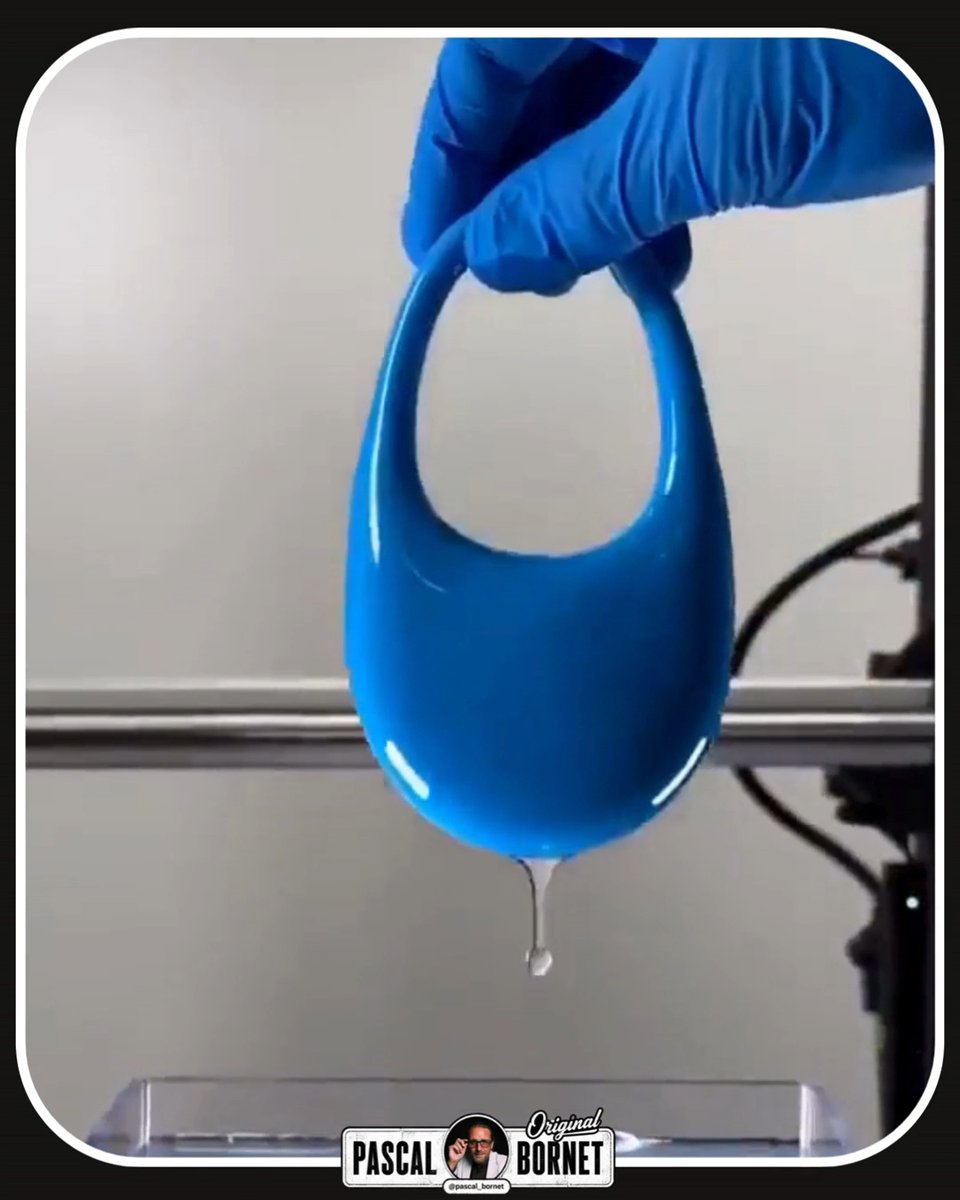
This one actually made me pause. Scientists built a robot made of liquid. Not flexible. Liquid. It can split, merge, squeeze through tiny spaces, and then re-form. When it breaks, it heals itself. No motors. No joints. No rigid body. I’ve spent years thinking about AI as the brain of machines. This feels like the first glimpse of something else. A body that does not have a fixed shape. Today it’s millimeter-scale. Tomorrow, it’s medicine moving through the body, or machines exploring places nothing solid can reach. That thought excites me. And honestly, it unsettles me too. So here’s the question. When machines no longer have a stable form, what does “control” even mean? #AI #Robotics #SoftRobotics #Innovation #Technology #FutureOfWork
Pascal Bornet2,019,760 просмотров • 8 месяцев назад

This is the kind of robotics progress I pay attention to. Toyota introduced Walk Me, a walking wheelchair that moves on mechanical legs instead of wheels. It can climb stairs, handle rough terrain, and adapt to environments that were never designed to be accessible. The point is independence. Getting from A to B without asking the world to be perfectly flat. I have long believed robotics will not be about humanoids. It will be about task shaped machines, designed around real human constraints. Walk Me is a good example of that shift. So here is the question. If robots are shaped by tasks, not appearances, what should we design next? #Robotics #AI #Accessibility #AssistiveTechnology #HumanCenteredDesign #FutureOfWork
Pascal Bornet1,411,811 просмотров • 8 месяцев назад

RIP Privacy — AI Glasses Can Now Recognize Anyone, Anywhere. A Dutch journalist just tested a pair of AI-powered glasses that can instantly identify strangers on the street. No government database. No police system. Just public data and off-the-shelf AI. You look at someone and in seconds, their name, LinkedIn, and background appear before your eyes. The scariest part? You can’t really stop it. You can ban it, regulate it, add blinking red lights… but once tech like this exists, someone will always find a way to use it. To me, this marks a turning point. We’ve officially blurred the line between seeing people and knowing them. Between being in public and being exposed. So here’s the question: When every face becomes a dataset, how do we protect the meaning of being human? #AI #Privacy #Ethics #Technology #Innovation #Data #Surveillance
Pascal Bornet1,528,768 просмотров • 10 месяцев назад

The smartphone just declared war on the camera industry Xiaomi just dropped a wild idea: a smartphone with a detachable pro-grade camera lens. A phone that snaps on a real lens with magnets. Yes, magnets. It’s a clever move at a strange moment in history. Camera sales keep falling. Smartphones keep rising. And the real arms race isn’t glass anymore — it’s AI-powered image processing. As an AI guy and a photographer, here’s my take: Hardware won’t save the camera industry. Software will. The future of photography is no longer in the lens… it’s in the algorithm. Phones will keep getting smarter. Cameras will stay for the purists. But detachable lenses? Feels like a bridge between two worlds that are already drifting apart. But maybe I’m wrong. Maybe this hybrid future has a place. What do you think — genius innovation or a beautiful dead end? #AI #Tech #Photography #Innovation #Smartphones #FutureOfTech
Pascal Bornet1,460,318 просмотров • 10 месяцев назад

🤖 Three Japanese innovators just proved that the future of robotics can be printed — not assembled. 🇯🇵✨ I find this incredible. Japan has always led the world in robotics, but this breakthrough feels different — more creative, more human. A team of three brilliant minds has built a fully functional 3D-printed robotic system, rethinking everything from the gears to the frame. The result? Robots that are lighter, faster to produce, and easier to customize than ever before. What fascinates me is how this blends engineering and imagination — where design isn’t constrained by parts, but shaped by possibilities. This could change how we build robots, how we teach automation, and how quickly we bring new ideas to life. Would you trust a 3D-printed robot to work alongside you? #AI #Innovation #Technology #Robotics #3DPrinting #Automation #FutureOfWork #Engineering
Pascal Bornet518,452 просмотров • 9 месяцев назад

A drone that flies through the sky — and swims underwater. Yes, you read that right. One student just built it. Andrei Copaci created this hybrid drone for his Bachelor’s project — 3D-printed, self-coded, and powered by variable-pitch propellers that adapt mid-flight to move seamlessly between air and water. And it actually works. To me, this isn’t just a cool gadget. It’s a wake-up call. We’re watching the line between “student projects” and “industry breakthroughs” disappear. One person, a laptop, and a printer can now do what once required millions in funding and government labs. So here’s the real question: If innovation is becoming this accessible — what happens to companies and industries that still think disruption comes only from big budgets? #AI #Innovation #Technology #Robotics #FutureOfWork #STEM
Pascal Bornet474,867 просмотров • 10 месяцев назад

I still remember the first time I saw a 3D printer at work. It felt like magic — objects appearing layer by layer, as if from thin air. But also limited. Flat, rigid, constrained. Now? The game has changed. 🤖 6-axis robotics × 500°C extrusion × multi-angle precision. No longer just printing layers — but printing in curves, angles, and forms nature itself would approve of. 💡 Here’s what most people don’t realize: this isn’t about size or speed. It’s about geometry. Printing along force lines instead of grids. Eliminating wasteful supports. Creating parts stronger, lighter, and closer to the way bones or shells are formed. That shift is massive. It means lighter aircraft parts. Smarter prosthetics. Custom furniture. Even buildings grown instead of built. Props to Massive Dimension × ABB Robotics for pushing the frontier. And to Florian Palatini for sparking the thought 👏 👉 Question for you: if factories can now print like nature grows, which industry gets disrupted first? #3DPrinting #Innovation #FutureOfManufacturing #Robotics
Pascal Bornet574,502 просмотров • 1 год назад

💻 The world’s first rollable PC is here — and I can’t stop thinking about what it means for the future of work. 🤯 Linus Tech Tips recently went on Jimmy Fallon to showcase something that feels futuristic yet surprisingly real - a Lenovo laptop with a rollable OLED display. When I first saw it, I couldn’t believe how seamless it looked. Closed, it’s a sleek 14-inch notebook. Press a button, and the screen extends upward, transforming into a taller, expanded workspace within seconds. What excites me most is what this signals for the future of personal computing: ➡️ Displays that reshape themselves around your workflow ➡️ Devices that adapt to your needs in real time ➡️ A step closer to technology that feels organic — not mechanical More space for code. More space for creativity. Or, as Linus joked, more room for TikTok and Instagram side by side. To me, this is what innovation should feel like - subtle, smart, and human. Would you trade your laptop for one that literally grows when you need more space? #AI #Innovation #Technology #Hardware #Lenovo #FutureOfWork #Design #Computing
Pascal Bornet416,682 просмотров • 9 месяцев назад

🚗 When your car becomes smarter than your survival instincts. I recently came across reports suggesting Tesla may be developing a system that automatically opens windows and the trunk if the car goes underwater. Not confirmed officially, but think about it — that’s real innovation. Not about speed or luxury, but about saving lives. Most cars become death traps when submerged. Doors seal shut. Power fails. Panic takes over. And yet, a simple line of code could change everything. I love seeing technology move beyond convenience — toward compassion. This is how we build a more human world with technology. But it also raises a question: If machines start making life-saving decisions for us, how much control should we keep — and how much should we let go? #AI #TechnologyForGood #Tesla #Innovation #HumanCenteredTech #Automation #FutureOfMobility
Pascal Bornet351,833 просмотров • 10 месяцев назад

We might be solving the wrong problem in robotics. That’s what this makes clear. UMI → Universal Manipulation Interface A simple $400 gripper that lets you teach robots by demonstration. You hold it like a tool. Show the task. The robot learns. No teleoperation. No expensive hardware. No robot-specific data. Stanford open-sourced everything → hardware, code, datasets. What stands out to me is the bottleneck. Not algorithms. Data. Teleoperation → ~35 demos/hour UMI → ~111 demos/hour And the data transfers across robots → UR5, Franka, others. The design is surprisingly practical: → GoPro fisheye lens (155° FOV) + mirrors for depth → SLAM + IMU for precise 6DoF tracking → latency matching for dynamic tasks → diffusion policies for multimodal actions Then it scales. Cheng Chi takes this further with Sunday Robotics (with Tony Zhao). A $200 glove → deployed in 500+ homes → ~10 million real-world interactions. Not lab data. Real human behavior. Their robot learns dishes, laundry, espresso → with zero robot-specific data. This is where the shift becomes obvious. From training robots in controlled environments → to learning directly from humans at scale So here’s the real question: Will robotics be unlocked by better models… or by unlocking data? #ArtificialIntelligence #Robotics #AI #Innovation #FutureOfWork
Pascal Bornet186,861 просмотров • 6 месяцев назад

🚁 We’ve taught drones to see what engineers once had to climb for. This fascinates me — combining drones and 3D modeling is transforming how we inspect and maintain the world’s infrastructure. Instead of slow, risky manual checks, drones now scan entire bridges in minutes — spotting even the tiniest cracks or signs of wear invisible to the naked eye. The result: faster insights, safer inspections, and data-driven maintenance that helps prevent failures before they happen. To me, this is what progress looks like — when technology doesn’t replace human expertise, but extends it. Could AI-powered drones become the new guardians of our cities’ infrastructure? #AI #Innovation #Technology #Drones #Engineering #Infrastructure #Automation #SmartCities #Data #FutureOfWork Credits: Marc Theermann
Pascal Bornet239,088 просмотров • 9 месяцев назад

Someone took this challenge very seriously. Programmers were asked to design the worst user experience imaginable, and apparently some of them approached it with the dedication of a Nobel Prize project. The goal was to make software confusing, frustrating, and almost impossible to use. Mission accomplished. And that is exactly what makes it so entertaining, because by exaggerating everything wrong with bad design, these creations become a perfect parody of user experience gone horribly wrong. The uncomfortable part is that after looking at a few of them, I started recognizing features from real workplace tools. At some point, parody and enterprise software become difficult to tell apart. Which workplace tool have you used that feels like it was designed for this challenge? #Productivity #UserExperience #DigitalWorkplace #WorkplaceHumor
Pascal Bornet89,362 просмотров • 4 месяцев назад

China is turning fire trucks into drone launch systems. And that is a much bigger shift than it sounds. What interests me here is not just the hardware. It is the new logic of emergency response. Instead of relying only on ladders and human entry, these systems pair fire trucks with drones that can reach high-rise fire zones quickly, fly into smoke, and send live intelligence back to crews. That is what is new. The truck is no longer just transport. It becomes a mobile aerial response base. And that matters because in dense high-rise environments, access is often the real bottleneck. To me, this is where the story gets interesting. This is not just about fighting fires better. It is about changing who gets exposed to danger first. → drones go where ladders cannot → commanders get visibility earlier → crews make faster decisions → fewer firefighters enter blind conditions That is a serious innovation. And it opens up important use cases: → faster high-rise reconnaissance → targeted suppression from outside upper floors → better coordination in smoke-heavy environments → safer response where humans cannot reach quickly That is why I would not dismiss this as just another drone demo. It is a glimpse of what emergency response looks like when robotics, data, and frontline operations finally converge. What do you think matters more here: faster firefighting, or the fact that robots may now take the first risk instead of humans? #AI #Robotics #Drones #Firefighting #Innovation #EmergencyResponse #SmartCities #FutureOfWork #Technology
Pascal Bornet96,812 просмотров • 5 месяцев назад

It’s easy to overlook this… but everything in AI depends on something almost invisible. Modern transistors are measured in nanometers — where thousands fit across a single human hair. And yet, your phone contains tens of billions of them, packed into a space smaller than your fingernail. The first time you really think about it, it’s striking. Because at its core, a transistor is simple. Just a switch. On or off. 1 or 0. But when billions of these switches flip billions of times per second, they power everything: Computing. Graphics. Artificial intelligence. The contrast is fascinating. The most advanced systems we build today… rely on the simplest action, repeated at extreme scale. So here’s something I’d be curious to hear from you: As we reach atomic limits, where will the next breakthrough in computing come from? #ArtificialIntelligence #Technology #Innovation #Semiconductors #FutureOfAI
Pascal Bornet103,747 просмотров • 6 месяцев назад

A few self-driving taxis in San Francisco just demonstrated the real problem with autonomy. They were too rational. For a brief moment, several robotaxis aligned at an intersection and created a perfectly polite deadlock. No aggression. No improvisation. No human-style “you go, I’ll go.” Just algorithms waiting for clarity. And that is exactly why this moment matters. What interests me is that this was not a failure of sensing. The vehicles could see. The problem was social judgment. Because cities are not just physical systems. They are negotiation systems. They run on: → tiny signals → hesitation → assertiveness → eye contact → imperfect timing That is where autonomy gets much harder than people think. We are not only teaching machines how to detect objects and follow lanes. We are asking them to operate inside messy human environments where the right move is not always the most logical one. To me, that is the deeper lesson. The next frontier in self-driving is not just better perception. It is better judgment under uncertainty. And that is a much more difficult problem. What do you think matters more for autonomous vehicles now: seeing the road better, or learning how to navigate human ambiguity? #AI #AutonomousVehicles #SelfDrivingCars #FutureOfMobility #Innovation #Technology #SmartCities #MachineLearning #FutureOfWork
Pascal Bornet81,430 просмотров • 5 месяцев назад

This video made me smile… and wince at the same time. Client → Business Analyst → Developer → Code. Same message. Four interpretations. One completely different output. We laugh because it’s funny. We cringe because it’s true. In many companies, this is how “communication” still works. Not because people are bad at their job — but because every layer introduces assumptions, translation, and context loss. 💡 My take Most people don’t know this, but miscommunication isn’t the biggest problem — missing shared context is. Teams think they speak the same language, but they actually speak four different dialects of “business logic.” What changes everything? A shared model of the truth: clear data structures, shared definitions, examples, edge cases, user stories connected to real business data… This is why AI agents, knowledge graphs, and semantic layers matter so much. They reduce interpretation and increase fidelity from idea → execution. In other words: If the context is aligned, the code stops guessing. I’m curious: Have you lived through this “telephone game” in real projects? What was the funniest (or most painful) misunderstanding you saw between a client and a dev team? #communication #productmanagement #softwaredevelopment #businessanalysis #developerlife #innovation #AI #context #digitaltransformation #teamwork
Pascal Bornet114,059 просмотров • 10 месяцев назад

I watched Jensen Huang being asked who the smartest person he’s ever met was. He smiled — and refused to answer. Instead, he questioned the question itself. He said what we call “smart” — coding, solving complex problems, optimizing systems — is quickly becoming commoditized. AI already does that better. That struck me. Because it means intelligence is no longer about how fast we think — but how deeply we understand. Jensen said the future belongs to those with emotional depth, adaptability, critical thinking, and the ability to navigate ambiguity. I couldn’t agree more. In a world where machines learn patterns, humans must learn perspective. Maybe being smart isn’t about knowing more… It’s about feeling and deciding better. What do you think — are we ready to redefine intelligence for the AI age? #ArtificialIntelligence #AI #Leadership #Technology #FutureOfWork #EmotionalIntelligence #Innovation #Mindfulness #HumanInTheLoop #AIandHumanity
Pascal Bornet80,262 просмотров • 8 месяцев назад

🤖 When wheels and legs fail, evolution takes over. I find this fascinating — Ground Control Robotics, in collaboration with the Georgia Institute of Technology, is rethinking how robots move through the world. Instead of wheels or rigid legs, they’ve developed elongated multi-legged robots that can navigate cluttered, uneven, and confined spaces — places where traditional machines simply can’t operate. The potential is enormous: 🌾 Agriculture — working across unstructured farmland 🛡️ Defense — operating in complex terrain 🚨 Search and Rescue — reaching areas humans can’t 🐜 Pest Control — precise movement through tight environments It’s a reminder that innovation often begins where limitations appear — when we stop forcing machines to move like us, and start letting them move better than us. Could this be the next big leap in robotic mobility? #AI #Innovation #Technology #Robotics #Engineering #Automation #Agriculture #FutureOfWork Credits: Supriya Rathi
Pascal Bornet87,158 просмотров • 9 месяцев назад