EARTH HAS A COSMIC CLOCK. Earth's climate doesn't stay... exactly the same forever. Over thousands to hundreds of thousands of years, Earth's orbit and orientation in space slowly change. These changes are called the Milankovitch cycles. There are three major cycles: ECCENTRICITY Earth's orbital shape changes from more circular to more elliptical over roughly 100,000 years. OBLIQUITY Earth's axial tilt varies between about 22.1° and 24.5° over roughly 41,000 years. PRECESSION Earth's rotational axis slowly wobbles like a spinning top over roughly 26,000 years. Together, these cycles change where and when sunlight is distributed across Earth, particularly at high latitudes. Over geological timescales, these orbital changes are an important factor in Earth's long-term climate variations and the timing of many glacial and interglacial periods. Think about the scale: Earth's orientation changes over tens of thousands of years... while a human lifetime is only a tiny moment on that clock. The planet isn't just traveling around the Sun. Its entire orbital geometry is slowly changing too. Which cycle surprised you most: eccentricity, obliquity, or precession?show more
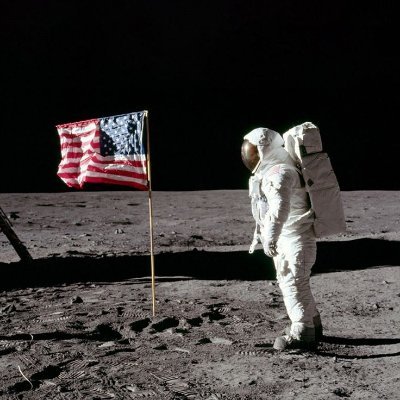
cosmic pulse
46,714 views • 2 days ago
Here’s how the Book of Enoch tells you when... judgment, or the Geophysical Event, is near: The years become shorter, the rain is withheld, fruit ripens late, and the Moon and stars depart from their established order. This section is among the oldest parts of the book, and copies of it were found in Cave 4 at Qumran. So, what does this mean that even an AI like Grok fails to understand? Let me explain it to you... The Moon and stars going “out of order” is connected to axial and apsidal precession. The rising of the stars that once announced the seasons gradually ceases to align with the same seasonal events. For example, in ancient Egypt, the heliacal rising of Sirius, its first appearance in the dawn sky after a period of invisibility, announced the approaching annual flooding of the Nile and the beginning of the Egyptian New Year. However, because of axial precession, this rising would eventually no longer announce the flooding at the same time. The celestial markers slowly shift in relation to the seasons. Because of this slow change in the Earth’s orientation toward the Sun, along with small changes in the distance between the Earth and the Sun, the climate begins to change and shift gradually. However, these changes build toward a tipping point, after which the climate completely collapses and reorganizes. That is how the Sahara became a desert around 6,000 years ago. These climatic cycles are known as Bond events. Hapgood suggested that these slow changes affect the buildup and melting of ice, which could then potentially cause the Earth’s outer crust to slip, triggering the biblical flood or causing the oceans to spill across the continents! Today’s climate change is connected to axial and apsidal precession and the approach toward a tipping point. The Book of Enoch is correct. We are close to Judgment! I made a short video to show you how the stars change their positions relative to the Moon, the Sun, and the five visible planets over a long period of time. That is why the Book of Enoch has been sidelined by the elites. They do not want you to know the truth!show more

Open Minded Approach
156,513 views • 1 month ago
The 7 astrological bodies affect us and life on... this planet more than you think. The gravitational interactions between the planets, the Moon, and the Sun create the axial and apsidal precessions, and these directly affect Earth's climate and life on the planet. In other words, the Geophysical Event is caused by this interplanetary interplay. If the planets, the Sun, and the Moon govern the short and long cycles, then they also have an immense influence on our individual lives. Just as the Moon causes the ocean tides, it also affects us. Even a small change in the size or distance of a planet like Mars would completely change life on Earth. So now do you understand why the planets have long been associated with gods and regarded as the rulers of the aeons?show more
Open Minded Approach
10,874 views • 2 months ago
Let’s talk about the four Ages of Man: the... Golden Age, the Silver Age, the Bronze Age, and the Iron Age—or the four Yugas. They are essentially the four seasons of the Great Year, which lasts approximately 26,000 years. Just as there are four seasons in our regular year around the Sun, there are four long seasons: Spring (Golden/Satya), Summer (Silver/Treta), Autumn (Bronze/Dvapara), and Winter (Iron/Kali). According to my calculations and ancient texts, we are currently in the Iron Age—or Kali Yuga—which is associated with Winter. At present, during winter in the Northern Hemisphere, there are only about 8 hours of daylight—due to the tilt of Earth’s axis pointing away from the Sun at this time of year. While the tilt angle itself remains constant, the axial precession gradually shifts the orientation of this tilt relative to Earth’s orbit. Over thousands of years, this wobble causes the seasons to align differently with Earth’s position around the Sun. Eventually, this will result in more balanced solar exposure for the hemispheres over the course of the year—an event associated with the return of Spring, or the Golden Age. This is a deep rabbit hole with profound consequences for life and the survival of the species on Earth. (1/10)🧵show more
Open Minded Approach
110,707 views • 1 year ago
There are zero logical reasons to build a 10,000-year... clock that tracks the precession of the equinoxes inside a mountain over 4,000 feet in elevation, along with plans for another copy to be placed at 10,000 feet. If that were not enough, why would they place in the same location the Rosetta Disc, containing over 1,500 preserved languages and a manual for rebuilding civilization? The 500 feet tall clock is built from materials designed to last thousands of years. It’s powered by the Sun and engineered to function without human maintenance. But did you know that the clock is synchronized with the Sun? It tracks solar noon, the Sun’s position, moon phases, and stellar precession. Most importantly, it displays the movement of the five visible planets, the 'fixed stars' within the constellations, and tracks the precession of the equinoxes—a 26,000-year cycle. This precession is the foundation of the astrological ages (e.g., the transition from the Age of Pisces to the Age of Aquarius). The clock is designed to preserve the antediluvian knowledge and transmit it to the next cycle after the geophysical event.show more
Open Minded Approach
430,205 views • 9 months ago
This is the real cause of climate change: a... cycle connected to glaciation periods, driven by axial precession and apsidal precession. This cycle lasts between 19,000 and 23,000 years, which is very close to the ancient 24,000-year cycle, divided into 12,000 years of light/day and 12,000 years of darkness/night. Believe it or not, we are currently in the dark part, when summers are cooler and glaciation is more likely. That is why there were so many 'ice age' periods, such as the Little Ice Age (1300–1800), the Late Antique Little Ice Age (536–660 AD), and the Iron Age Cold Epoch (900–200 BC). All of these periods correspond to dark ages, such as the Greek Dark Ages and the Medieval Dark Age, marked by civilizational collapses, plagues, brutal wars, mass death, and natural catastrophic events like major volcanic eruptions. The elites are preparing their doomsday bunkers for the next abrupt cooling period! (1/6)🧵show more
Open Minded Approach
86,371 views • 7 months ago
In the chapter about the Heavenly Tablets, Uriel teaches... Enoch the signs that the judgment of the sinners is near: The years appear shortened. The rains fail. Crops no longer grow in their expected seasons. The Moon alters its order, and the stars that once announced the seasons no longer appear at their prescribed times. This is connected to axial and apsidal precession! Axial + apsidal precession → the celestial clock slowly shifts → the stars no longer align with the same seasonal markers → long-term climate patterns slowly change → a tipping point is reached → rainfall and growing seasons become disrupted → the geophysical event occurs! What Enoch describes as disorder in the heavens becomes disorder on Earth. This is what we are observing today—we are getting closer to the tipping point.show more
Open Minded Approach
61,529 views • 1 month ago
Marjorie Taylor Greene tried explaining away Climate Change by... arguing that no one paid taxes during the Ice Age: Let me break this down a little bit for you: - The last ice age began approximately 2.6 million years ago and peaked approximately 20,000 years ago. - At its peak, temperatures were estimated to be approximately 10°F cooler than they are today. - That equates to a temperature rise of 0.05°F per century over 20,000 years. - Over the last 100 years (1 century) alone, the average surface temperature has increased by 1°F - This is 20 times faster than it had gained on average over the 190 centuries prior. - What changed? Industry and the burning of fossil fuels. Carbon dioxide causes a greenhouse effect, keeping heat in the Earth's atmosphere and surface. The levels of CO2 have increased drastically over the last century. FACTS matter and so do educated politicians.show more

Brian Krassenstein
5,300,634 views • 3 years ago
One famous Hadith says that when the desert starts... turning green and returns to meadows and rivers, the time for Judgment is near. This entire region in Africa and Arabia turned into desert about 6,000 years ago, and now, due to axial and apsidal precession, the climate is changing again. We are approaching the tipping point of a geophysical event, and the early signs of a geomagnetic excursion, which began around 1850. Climate change and the weakening of the Earth’s magnetic field are all signs of pressure building up. This event has reset many civilizations, is described in the Bible and ancient texts, and will continue to do so in the future.show more
Open Minded Approach
139,253 views • 7 months ago
One famous Hadith says that when the desert starts... turning green and returns to meadows and rivers, the time for Judgment is near. This entire region in Africa and Arabia turned into desert about 6,000 years ago, and now, due to axial and apsidal precession, the climate is changing again. We are approaching the tipping point of a geophysical event, and the early signs of a geomagnetic excursion, which began around 1850. Climate change and the weakening of the Earth’s magnetic field are all signs of pressure building up. This event has reset many civilizations, is described in the Bible and ancient texts, and will continue to do so in the future.show more
Open Minded Approach
108,683 views • 5 months ago
Climate change is here declares Mark Carney. "Climate change... is no longer a warning, it's here. Canada last year, forests larger than Ireland burned in the drought and heat." Climate has been changing since the formation of earth. Canada has the 3rd largest forest area in the world so of course when fire spread because of poor forest management, like Jasper wildfires, they grow big. Over 50% of our wildfires are human caused and the Liberals have campaigned on buying more water bombers for years and have done nothing. Bad policies destroying more forests in Canada than "climate change" but they need an excuse.show more

Kirk Lubimov
15,676 views • 3 months ago
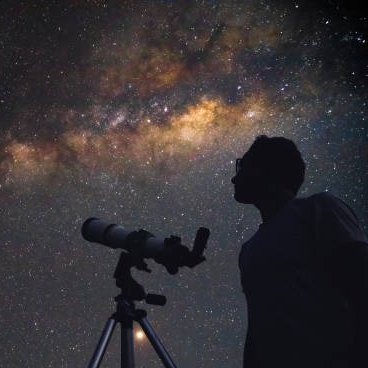
Space objects such as meteoroids and asteroids move across... the solar system and can collide with both Earth and the Moon. However, the Moon shows far more visible impact marks on its surface. One main reason is that Earth has a thick atmosphere that protects the planet. When many meteoroids enter Earth’s atmosphere, they burn up due to friction before they can reach the ground. This process creates the bright streaks of light we call shooting stars. The Moon, however, has almost no atmosphere, so incoming space rocks are not slowed down or burned up. They travel directly to the lunar surface and strike it at very high speed. Each collision creates an impact crater, throwing dust and rocks outward from the impact point. Over billions of years, thousands of these impacts have covered the Moon with craters. Unlike Earth, the Moon also has no wind, water, or weather to erase these craters, so they remain visible for millions or even billions of years. This is why the Moon looks heavily cratered when we observe it from Earth through telescopes.show more
The Astronomy Guy
17,500 views • 5 months ago
This is the kind of force it would take... to transport giant boulders thousands of miles across continents. It also helps explain why we find mixed graveyards of marine and land animals in Alaska—and why Antarctica remains one of the most restricted and mysterious places on Earth. By the 1940s, theories of catastrophic Earth changes were already being seriously discussed. Einstein knew about them. Yet from the 1970s onward, the dominant narrative increasingly shifted toward gradualism, pushing catastrophic resets further to the margins. Modern humans have existed for roughly 300,000 years, yet the civilization recorded in our written history represents only a tiny fraction of that timeline. Civilization is not a straight line, it rises, it collapses, it is buried and it begins again.show more
Open Minded Approach
203,842 views • 4 days ago
The Sun feels warmer at noon than in the... morning or evening, because it is physically right above you at local noon 🌞 Its heat is not traveling 93 million miles though a vacuum to get to you. This preposterous distance was made up to block you from understanding that it's a local luminary that was put here by God, circuiting above our Earth in perfect circles every day, its path narrowing and widening over the course of the year, which creates SEASONS. This geocentric model of how the Sun interacts with Earth makes complete sense. Unlike the heliocentric model, which makes zero sense, but everyone believes it anyway since they were taught it when they were too young to ask discerning questions like, "If the Sun and Moon are radically different sizes and distances, how come they've looked the EXACT same size in the sky to us here on Earth, for thousands of years of recorded history?" The deceivers in control of the modern matrix don't want you asking these questions, because it leads to you waking up on where you are, and therefore WHO you are, and why you're actually here inside God's creation.show more

Ben Wehrman
22,789 views • 3 months ago
Elon Musk is building a data center that no... grid has to power and no county has to approve. Musk: “Think of it as a rack of compute in space.” Orbital hardware has always been custom. Each satellite is its own program, its own team, its own decade. SpaceX’s AI1 satellites are copies of each other. Each is built around a single Nvidia NVL72, the same rack-scale architecture running the largest data centers on the ground, redesigned to fly. Space stops being a program and becomes an inventory. Designing for orbit made the rack simpler and cheaper than the ground version, so SpaceX plans to run the space design in terrestrial data centers too. Racks alone have never made a data center. A thousand of them in a building with no network between them is a thousand computers. The interconnect is what turns them into one machine. Training a frontier model means moving enormous volumes of data between processors without pause, and the whole system runs at the speed of its slowest link. That is why the fabric between chips is fought over as hard as the chips themselves. Musk: “And then you can connect these racks of compute to either each other by the laser links, or directly to the Starlink constellation.” Light moves through glass at about two thirds of its speed in a vacuum, and fiber optic cable is glass. Every backbone route and undersea cable on Earth pays that tax. A laser between two satellites pays nothing. Over long distances, an orbital link arrives sooner than the same run in fiber. Orbit was supposed to be a trade, unlimited power in exchange for a worse network. The network is faster. The compute plugs into a delivery layer that is already finished. Thousands of satellites are up there right now carrying laser links, terminating at ground stations and dishes across most of the planet. The last mile was built years before the thing it delivers existed. Anyone else attempting this needs the rocket, the satellite bus, the solar manufacturing, the laser mesh, the ground network, and a supply line to a chipmaker. SpaceX had five of them before the project had a name. None of it was built for this. Starlink existed to sell internet subscriptions. The lasers existed so those subscriptions would work over open ocean. Starship existed for Mars. Nobody planned this. It assembled itself out of problems solved for other reasons. That is what twenty years of hard engineering leaves behind. Every previous expansion of human capability ran on a resource sitting inside somebody’s borders. Coal, oil, water, land. Sunlight in orbit belongs to nobody and never runs out. Compute still has an address. A building in Virginia, a substation, a county that had to approve it, a grid connection someone waited four years for. He is describing a version that only has an altitude.show more

Dustin
13,444 views • 1 month ago
The Milky Way and Andromeda are currently separated by... about 2.5 million light-years. Drawn together by gravity, Andromeda approaches us at roughly 110 km/s. Though this speed is immense, the vast cosmic distances mean the process will unfold slowly over billions of years. Recent studies using data from Hubble and Gaia suggest the long-predicted merger is not certain: there's roughly a 50% chance the galaxies will collide and merge within the next 10 billion years, with only a small probability of it beginning in the classic ~4–5 billion-year timeframe. As the galaxies interpenetrate, powerful gravitational tides would eject enormous streams of stars, gas, and dust—forming glowing tidal tails that trail across space like celestial ribbons. New star formation would flare in compressed gas clouds, lighting up the chaos with brilliant nebulae. Despite the dramatic term "collision," individual stars are so sparsely distributed that direct crashes would be exceedingly rare. Instead, gravity would gently reshuffle orbits: some systems flung to the outskirts, others spiraling toward a shared center. At the hearts of both galaxies lie supermassive black holes—ours at ~4 million solar masses, Andromeda's far larger. Over eons, they would inspiral and coalesce in a cataclysmic union, unleashing ripples of gravitational waves across the cosmos. In the end, the spirals we know would dissolve into a single, grand elliptical galaxy—a transformed beacon in the Local Group, born from one of the universe's most patient spectacles. 🎥 skywolf400show more

Dreams N Science
366,005 views • 9 months ago
The information about the underground chambers beneath the Vatican,... or how deep they extend, is not publicly available. Some speculate that there is an entire city beneath the city. One thing is certain: the site on which the Vatican was built has a history spanning thousands of years and was constructed over the remains of ancient ruins and temples. The Vatican Library holds more than 1.6 million books, primarily manuscripts. Only a fraction of its collection has been digitized and made available to the public; the rest remains largely inaccessible. Among its holdings are ancient texts dating back to civilizations such as Sumer and Ancient Egypt.show more
Open Minded Approach
39,004 views • 2 months ago
Across most of history, there are continuous reports of... weird ass aquatic beings appearing for a time and then vanishing again. These accounts show up in different cultures and eras, from fish like teachers in ancient stories to modern sightings of objects entering and leaving the ocean. One idea that has started to surface is some of these beings, if real, may not be constantly active at all. They may follow a cycle more like certain animals on Earth, appearing briefly and then disappearing for super long periods. In nature, there are species like the lungfish that can enter a state of deep dormancy called estivation, slowing their systems down and surviving for months or even years with almost no activity. If something similar exists, it could help explain why these reports come in waves. Instead of constant presence, these beings may operate in cycles of activity and deep rest, possibly tied to environmental conditions we do not fully understand. The ocean, especially at great depth, offers stable and hidden spaces where long term dormancy could occur without disturbance. This idea does not require advanced speculation on its own. It follows a pattern already seen in life on Earth, where survival often depends on timing, conservation of energy, and long periods of stillness between moments of movement.show more

Jason Wilde
12,340 views • 6 months ago
This is Croatia right now… Everyone needs to know... what is happening in our world right now: Our planet has been experiencing the most extreme heat event in world history. This is the coldest summer of the rest of your life. July was the hottest month in the United States since we records began in 1895—Washington, USA burned to the ground. June was the hottest month in Europe, exceeded 40 degrees Celsius, shattering all heat records—caused over 25,000 deaths across the continent. Venezuela, Columbia, Indonesia, and Malaysia earthquakes crashing. The planet has recorded exactly 10 major earthquakes of magnitude 7.0 or higher—Earthquakes are not caused by CO2, but climate change can modulate them by secondary effects. Rivers in China and Europe are drying up, reaching historically low levels—Just for perspective, the drying of these rivers will impact shipping routes, leading to a skyrocketing in the prices of food, fuel, and energy. El Niño has begun, driving ocean temperatures to record-breaking highs—Nearly three decades ago, a catastrophic El Niño claimed 23,000 lives and inflicted billions of dollars in global economic damage. Canada burned to the ground, and Greenland's ice sheet is collapsing—slowing down the overturning of heat in the North Atlantic, pushing the whole monsoon system down further south, causing droughts and forest fires over the Amazon rainforest. The severity of this heatwave is truly hard to comprehend. What's going on there is a foreshadowing of our future. Scientists confirmed that heatwaves driven by climate change. Climate change is not a "hoax." It’s real and it’s happening. If you are not a scientist, and you disagree with scientists about science, it’s actually not a disagreement. You're just wrong. Science is not truth. Science is finding the truth. When science changes its opinion, it didn't lie to you. It learned more. This is no longer just a climate crisis. Climate chaos is inevitable. This is a humanitarian crisis. Just because you do not take an interest in climate change, doesn't mean climate change won't take an interest in you. We should start naming heatwaves after fossil fuel and oil companies, and wildfires after arms and defense industries. And Could reporters stop asking if leaders believe in climate change and start asking if they understand it instead. The world must remember that we live in a society, not an economy.show more

Mohamad Safa
247,881 views • 1 month ago
This is the mechanical heart of every flight deck.... At the core of this instrument is a high-speed mechanical gyroscope held within a series of gimbals. It relies on the physics of rigidity in space, meaning the spinning disc stays perfectly aligned with the Earth's horizon regardless of how the aircraft moves around it. When you see the outer casing tilt and dive, you are actually watching the plane move while the instrument stays perfectly still. For decades, this was the primary way pilots survived flying through thick cloud cover or at night. Without a visible horizon, the human brain can easily become disoriented, leading to a deadly condition called the graveyard spin. This device provides an objective visual reference that never fails, even if the entire electrical system of the plane goes dark. While modern airliners have transitioned to digital screens and solid-state sensors, these analog units remain critical. Many pilots still prefer them as a fail-safe backup because they operate on pure physics rather than software. It is a masterclass in engineering that remains just as relevant in the age of automation as it was eighty years ago. It is a timeless piece of safety technology. Would you trust a mechanical dial over a digital screen? Follow for more Technology updates Video: alternateb747show more

Mechanical Knowledge
68,004 views • 6 months ago
STORY | Study traces shrinking of Yamuna over 225... years in Delhi with 1799 map, reports 89% drop in volume The map of a wider, freer Yamuna from 1799 has opened a window into the river's past, helping researchers reveal the toll exacted by time, human intervention and urbanisation over more than 200 years in Delhi in a first-of-its-kind study. The research found that Yamuna flowing through Delhi has narrowed by about 68 per cent, and its discharge – the volume of water flowing through it – has dropped by around 89 per cent since the late 18th century. The study, accessed by PTI, was carried out by researchers from the Department of Geology, University of Delhi, and the Indian Institute of Science Education and Research (IISER), Bhopal. They reconstructed the river's past using an archival map prepared by Upjohn in 1799 and preserved in the National Archives of India, along with historical maps and modern satellite images. The findings have been published in the paper, 'Two Centuries of Hydrogeomorphic Changes: Width-Discharge Dynamics of the Urbanised Yamuna River in Delhi'. "People have talked about changes in the Yamuna River in the Delhi stretch, but no one has talked about the changes in its discharge in the stretch on this timescale," Professor Vimal Singh, one of the researchers, said. The researchers said the 1799 map captured the Yamuna before any barrages were built across the river, offering a rare glimpse of its natural state. They found that the average bankfull width – the width of the river when it is full but not overflowing its banks – has reduced from about 658 metres in 1799 to around 210 metres in 2024. Using this width, the researchers estimated that the river's discharge has fallen from about 30,000 cubic metres per second in 1799 to roughly 3,900 cubic metres per second in 2024. READ: (Reported by Varsha Sagi) Note: Visuals used for representational purposes only; they track changes in the shape of the Yamuna River in Delhi between 1985 and 2022show more

Press Trust of India
19,228 views • 2 months ago