Leg Extensions Isolation movements targeting quads. Tips: -Put the... back rest a little further back. Being slightly reclined increases stretch on the quad -Keep tje foot flexes up, dosiflexion -Don't use momentum, avoid a swinging motion and avoid slamming weights between reps -Avoid partial reps Important: if you have knee discomfort, make sure your knee is aligned with the pivot point of the machine. Otherwise, unnecessary stress can be placed on the knee. Stay Stronk!! #strength #fitness #gaymenshow more

Dad Stronk
41,296 次观看 • 3 个月前
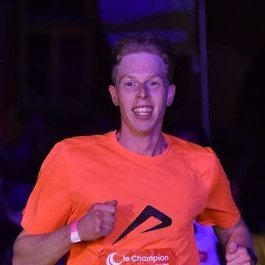
Strong hip flexors keep your knee drive holding up... when the late-race fatigue sets in. The kettlebell hip flexor march is a running-specific way to train them. Single leg, upright, knee driving up with load. Focus points: → Stand tall on one leg → Place a light kettlebell on top of the opposite foot → Brace your core before you lift → Drive the knee up to 90°, hold the kettlebell balanced → Lower slow and controlled, don't let the foot touch down between reps → Stay tall through the standing leg, no leaning back 3 x 8-12 per leg. Aim for RPE 7. The standing leg gets a stability challenge. The driving leg gets loaded hip flexion. And your shin works isometrically to keep the kettlebell from sliding off. Bonus tib anterior work most runners never train.show more
Tim Roozendaal
17,546 次观看 • 4 个月前
I like the Hammer Strength iso-lateral chest/back machine as... a change-up for lat pull downs. I keep the weight a little lighter. Go for a big stretch at the top (I don't do this on regular lat pull down) but the weight needs to be light enough you can retract and pull the weight down when you transition. If in doubt, don't go for a big stretch at the top and stick with normal lat pull down movement! Stay Stronk!show more
Dad Stronk
18,740 次观看 • 3 个月前
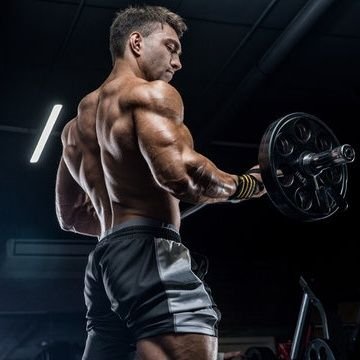
FULL BODY DUMBBELL WORKOUT A complete full-body session using... dumbbells. Split it into 2 circuits of 4 exercises. Complete 3 rounds of Circuit 1, then 3 rounds of Circuit 2. Rest 30–60 seconds as needed. 1. Reverse Lunge into Dumbbell Swing — 8–10 each leg Hold a dumbbell in each hand at your sides. Step one foot back into a reverse lunge. Lower until both knees are bent comfortably, keeping your front knee aligned with your foot. Push through your front foot to stand back up. Hinge at your hips and swing the dumbbells forward to about chest height. Control the weights back down, then repeat on the other leg. Targets: Quads, glutes, hamstrings, and core.show more
Muscle Freak
18,301 次观看 • 6 天前
Leg curls go first in the session. Not last,... not as a finisher, not squeezed in if there is time. The knee is held together by an argument between two muscles. The quads pull the shin forwards, the hamstrings pull it back, and when those two are anywhere near matched the joint tracks properly and the load goes where it should. Now look at how the average leg day is arranged. Squats, presses and extensions while you are fresh, hammering the quads. Then curls at the end, two half-hearted sets, done in a state where you could not produce real force if you tried. Run that for a few years and it stops being an argument. One side has been training. The other has been turning up late. Put the curls at the front and you fix both halves at once. The hamstrings arrive at your heavy squats already switched on, which is the cheapest knee insurance in the building. And they finally get trained fresh, so they actually progress instead of living off the scraps. Four to six reps, heavy, two sets, then go and squat. If your knees already complain, start here. If they don't, this is how they stay that way.show more

Sama Hoole
30,931 次观看 • 1 个月前
Have knee pain? These might help… Slantboard reverse step... downs - these help strengthen the back of the knee. Start with 8-10 reps on each side x 3-4 sets. Our knees are should be ok with going past our toes, think of going down the stairs. If you don’t have a box or Slantboard you can do backwards walking for 5 min. That will also help. I incorporated these into my routine to help my knees and they both helped wonders!show more

Margaux Alvarez
26,349 次观看 • 2 个月前
Carve-your-Body: 1 Arm Cable Rows Step 1: Use the... Same Leg and Rest your Knee right Behind the Bench. Step 2: Next you want to Grab the Handle with a Neutral Grip, so you can tuck your body into your Body. Step 3: Use a Thumbless Grip to Create a Greater Mind-to-Muscle Connection with your Back. Step 4: Instead of Keeping your Bod Upright, Slightly Lean Forward, so you can get a greater Stretch and Contraction in the movement. Save This for Next time you do 1 Arm Cable Rows Keep crushing itshow more

Gym Workout | Strength Training | Clean Form
11,909 次观看 • 1 个月前
Did you know? Your calf has a muscle that... helps pump blood back to your heart. It’s called the soleus, and it’s part of your peripheral heart. When it contracts, it squeezes the deep veins in your calf and pushes blood up against gravity. Valves stop it falling back. But if you sit still all day, this pump sits idle while blood pools in your legs. Mind you, standing calf raises won't fully challenge it. With the knee straight, the gastrocnemius (the muscle on the surface) is free to share the load, because it crosses the knee. So the soleus always gets help and never works at its limit. But if you bend the knee, that flips. A bent knee shortens the gastrocnemius until it goes slack and can barely produce force. Also called ‘active insufficiency’ in exercise science, where a two-joint muscle, shortened at one end, drops out of the movement. So the gastroc switches off, and the soleus, which only crosses the ankle, has to carry the whole thing on its own. That's why the best way to hit it is a bent knee: seated calf raises, or this deep squat version. It’s nearly 80% slow-twitch, so it loves volume and barely fatigues. Sustained work here has even been shown to improve blood sugar control for hours. Train it deep, slow, and often.show more

Dr Neha Chawla || FreeGym
79,042 次观看 • 2 个月前
The best change I have made to leg day... in months is an order change. Nothing else. Seated leg curls and leg extensions go first. Before the press. Before the squats. Start with the knees, because that is the part people feel immediately. Both machines take the joint through its full range under light, controlled load with nothing to stabilise. The quad and hamstring tendons get loaded properly before anything heavy turns up. So you walk to the press with warm, prepared tissue instead of asking a cold knee to absorb a compound lift straight off the mark. Mine have stopped complaining entirely. Now the tension, and this runs the opposite way to what everyone assumes. Do the press and the squats first and you arrive at the isolation work already flattened. Fatigue is in. Your capacity to recruit hard has dropped. The curls and extensions get performed by a degraded version of you. Which is madness, because those are the two exercises that load the target muscle most directly. You spent your best effort on the movements with the most leak in them, then handed the leftovers to the ones that actually aim. Put them first and they get everything you have. The order costs nothing to change and there is no version of it that leaves you worse off.show more
Sama Hoole
236,432 次观看 • 1 个月前
"How long should I rest between sets?" Until you... can hit the same weight for the same reps with the same quality. That is the answer. That has always been the answer. The answer is not 60 seconds. The answer is not 90 seconds. The answer is not whatever the timer on your watch app says. If you are doing heavy compounds, that might be 3 to 5 minutes. Sometimes longer. The exercise does not care about your podcast schedule. It needs the central nervous system to be ready and the muscles to be loaded again. Rushing rest periods is one of the great unforced errors in training. You sacrifice load, sacrifice reps, sacrifice tension, and convince yourself you have done a hard session because you sweated. You have done a cardio session with weights. They are not the same. Sit down. Breathe. Let the heart settle. Then lift the next set heavy enough to justify the wait.show more

Sama Hoole
26,463 次观看 • 4 个月前
I have been busy working on other things like... my comms opening and finally got time to be back working on my first full scratch 3D model! Did some rigging and tried out some other stuff that I’ve always wanted to try 🤩 Like knee bones that help to keep the knee caps from deforming too much when the legs bend, and also butt bone to keep the cheeks still round and nice when lifting up the leg! They’re just small details but I LOVE details(๑ ᷇ 𖥦 ᷆๑)♡ Also planning to attempt adding a little bit of butt & thigh physics 👀 Currently in the midst of UV unwrapping the head so that I can first texture the most exciting part I’ve been looking forward to, the face!!!!💖show more

𝗞𝗔𝗥𝗜𝗛𝗔 🌘🍀 3D Artist ☻
14,682 次观看 • 7 个月前
Fitness twitter is filled with retards Risk reward bros... - idiots that don’t understand that the very movements they deem risky are the ones that have the most profound impacts on long term health, durability, and injury prevention Hypertrophy bros - idiots that can’t comprehend that being stronger is never a detrimental life characteristic. You will never do a task and be like: “damn, wish I was weaker” Strength specialists - this niche barely exists in any meaningful sense, like they are the ones that think you need to train near failure all the time but also refuse to use the barbell which is the only objective strength measure… then they think they are hypertrophy experts and really just learned about the effective reps model and thought it was the holy bible or Quran Want a good coach? Hire someone that understands nuance Here’s 3 reps of force development bench… stuff that your coach doesn’t think does anything… followed by 315 for 20 reps… Suck my dickshow more

JackedBasedMgr
16,229 次观看 • 3 个月前
Watch the difference in the practice swings and the... shot. See the head dip & knee buckle? Have seen this from Lexi before. Can’t remember which major it was, but it was last season in the closing stages of the final round and tight lies. It’s a classic move from those who have anxiety with their pitching and are trying to help the ball in the air. I know it well. I had the chipping / pitching yips for a few years and was a complete mess. Head moving down & leaning back to the right shifts the low point of the club to an earlier spot. Club hits the ground too early. When you look at great pitchers they are usually shifting a little left, and slightly extending up after impact. Not dipping down and back. Imagine standing side on to the target and tossing to the landing spot with your trail arm. The dip down and knee buckle is completely at odds with how you would move. I am confident an expert short game coach could really help her with this. I reckon she is in the horrors mentally standing over these shots. No disrespect to Lexi, she’s obviously a great player. Yes, I’m just an armchair fan sitting on my couch 😎.show more

Fit For Golf - Mike Carroll
4,076,743 次观看 • 3 年前
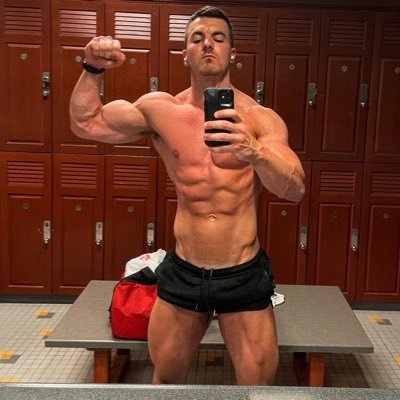
Incline Smith Machine Press Tips: 1) Set the bench... to roughly 15-30°….steeper angles generally increase front delt involvement and reduce pec involvement 2) Position yourself so the bar tracks toward the upper chest / lower clavicle region at the bottom of each rep 3) Retract and depress the shoulder blades (“chest up, shoulders down and back”) before unracking to set your base but allow scapula to move freely during the set 4) Keep feet planted firmly on the floor and maintain a stable base 5) Lower the bar under control until you come into contact with your chest (if you cannot do this without pain, just shy of chest is fine) 6) Allow the elbows to travel roughly 45-60° away from the torso…neither excessively tucked nor excessively flared 7) Keep wrists stacked directly over elbows throughout the rep 8) Avoid excessively bouncing the bar off the chest or relaxing at the bottom position 9) Use a grip width that allows the forearms to remain approximately vertical from the front view near the bottom of the rep 10) Full lockout is optional for hypertrophy…stopping just short of lockout can sometimes help maintain continuous tension 11) Control the eccentric and perform the concentric with intent and aggression while maintaining technique 12) If shoulder discomfort occurs, experiment with: - A lower incline angle - A slightly narrower grip - Bringing the touch point slightly lower on the chest - Reduced ROM The Smith machine’s fixed bar path will improve stability and allow greater focus on loading the target musculature close to failure safely….making it a strong hypertrophy option As always, ensure progressive overload is occurring on a regular basis!show more
Dean Turner
44,032 次观看 • 3 个月前
Your investment portfolio needs muscle I used to think... strength peaks around age 30. For 99.9999% of people, that’s nonsense. The only strength that truly peaks early is for world champions. Everyone below that level can keep getting stronger for their entire life. Between 40 and 60, you lose about 1% muscle mass and 1% strength per year if you do nothing. But if you train, you can more than make up for that 1%. After 60, the decline accelerates. That does not mean you cannot train it back. Just look at the 70 plus world records. Those athletes are all far stronger than me. I’m 44 now and I just set a new PR: 3 sets of 6 reps strict press at 80 kg (176 lbs), with two minutes of rest between sets. This helps my investing more than you’d think. Muscle absorbs glucose. More muscle means lower blood sugar. Aging without training slowly pushes blood sugar up, which increases the risk of all kinds of diseases. A fit body is a fit mind.show more

Karel Mercx
33,083 次观看 • 6 个月前
🚨 Want glutes that actually function—not just look good?... The single-leg glute bridge is one of the smartest moves for building real posterior chain strength, fixing imbalances, and protecting your hips, knees, and lower back. Here’s why they're an elite movement: • Unilateral power: Forces each glute and hamstring to work independently. No more stronger side compensating for the weaker one (most people are shocked how weak one side feels). • Injury-proofing & rehab gold: Excellent for knee/hip issues. Strengthens stabilizers without heavy spinal loading. • Longevity-friendly: Improves hip extension, pelvic stability, and movement mechanics, key for staying strong and mobile as you age. • Highly scalable: Beginners progress from standard bridges. Advanced? Add dumbbells, bands, or elevate your foot. How to do it: 1. Lie on back, knees bent, feet flat. 2. Engage core, lift one knee to tabletop. 3. Drive through the planted foot, squeeze glute, lift hips while keeping them level. 4. Lower with control. 10+ reps per side. Start simple. Master form. Then progress. Your glutes, hamstrings, and lower back will thank you. Drop a 🔥 if you’re in. #GluteTraining #StrengthTraining #FunctionalFitnessshow more

Kristie Leong M.D.
14,418 次观看 • 1 个月前
The body movements of Anime characters in Seedance doesn’t... has to be always rigid and constrained. They can be as expressive as the real anime too. Here’s a quick tips on how to achieve the cartoony acting style for your anime characters: Special shoutout to Ameilo for sharing the prompt that unlocked this acting style. This tips sharing is made possible by Try ArtCraft Add this Key Prompt above your prompt: Emphasize snappy animation with lively energy, pose-to-pose, strong anticipation, overshoot, squash and stretch, quick switches in facial expressions, and follow-through on hair and sleeves. Give the movements a distinctive rhythm with variation in pacing: Hold still poses firmly for a split second, then transition to the next movement with a quick, bouncy snap. Make it comical and well-timed, but keep the actions easy to read. Movements follow: "stillness → preparatory action → sudden acceleration → large overshoot → sharp stop → hair and sleeves sway delayed." Facial changes are exaggerated and comical. Poses are clear in silhouette, with a solid hold of 0.1–0.2 seconds at the end of each action. Use cartoonish squash & stretch, motion blur, short afterimages, dramatic smear frames and speed lines sparingly. Physics are slightly exaggerated beyond reality, but the character's footing and center of gravity don't break.show more

SujiPop
29,677 次观看 • 2 个月前