Most runners under-load their calves. Heavy calf raises fix... that. Runners usually do bodyweight single-leg raises and call it done. But your Achilles tendon takes massive load every stride. Bodyweight isn't enough stimulus to make it stronger. Heavy load is what drives the adaptation. I do these on leg day. 50kg in the hands, standing on a plate so my heels can drop below the toes. Focus points: → Full range of motion. Heels drop below the plate at the bottom, full extension at the top → Slow on the way down. (~2 seconds.) → Go bilateral when loading heavy. Single-leg has its place, but two legs lets you put real weight through the tendon → Don't rush the rep. This isn't a calf burner, it's a strength lift 3 x 8-10 reps. Train your calves in the gym so they can handle what running demands.show more

Tim Roozendaal
31,153 Aufrufe • vor 4 Monaten
Most runners have underdeveloped internal rotation. That's why stretching... your hips never seems to fix anything. 90/90 heel lift trains the exact range that's missing. → Front leg in flexion and external rotation → Back leg in extension and internal rotation → Lift the back heel against gravity, that's the hip IR working → Can't lift it? Lean your torso slightly away from the working leg → Move slow. 2-3s up, 2-3s down I'm using a 1kg weight here. Start without load and build up. I'm adding this exercise in my routine because just like most runners, my adduction and internal rotation strength is lacking. 3 x 8-10 each side. If your pelvis is rotating, drop the weight. Quality over quantity.show more
Tim Roozendaal
19,915 Aufrufe • vor 4 Monaten
"Lift lighter as you get older. Protect your joints."... The standard advice. The wrong advice. What heavy lifting actually does for an ageing body: - Builds tendon stiffness, which protects joints rather than wearing them - Maintains the high threshold motor units that are first to disappear with age - Stimulates bone density, the thing osteoporosis attacks - Develops the strength reserve that keeps you independent at 80 What high reps do for an ageing body: - Generate more total fatigue per session - Take longer to recover from (a problem that compounds with age) - Do nothing for tendon stiffness - Do nothing for fast twitch preservation - Make you tired without making you strong Recovery capacity declines with age. The worst thing you can do is pick the more fatiguing option and call it gentle. The actual protocol: - Heavy enough to challenge the muscle (4-6 reps, near failure) - Machines for most of the work (less spinal load, less balance demand, more stimulus to the muscle, less risk) - Skip the 1RM testing, skip the maxing out on barbell squats and deadlifts - That isn't where the magic was anyway You don't need to max out a barbell to lift heavy. You need to challenge the muscle with a load it respects. The leg press at 200kg does this. The hack squat does this. The chest-supported row does this. None of them are ego lifts. All of them are heavy. Lifting lighter to "protect" your joints is how you arrive at 75 unable to stand up from a chair. Lifting heavy on machines is how you arrive at 75 carrying your own shopping.show more

Sama Hoole
35,515 Aufrufe • vor 3 Monaten
Did you know? Your calf has a muscle that... helps pump blood back to your heart. It’s called the soleus, and it’s part of your peripheral heart. When it contracts, it squeezes the deep veins in your calf and pushes blood up against gravity. Valves stop it falling back. But if you sit still all day, this pump sits idle while blood pools in your legs. Mind you, standing calf raises won't fully challenge it. With the knee straight, the gastrocnemius (the muscle on the surface) is free to share the load, because it crosses the knee. So the soleus always gets help and never works at its limit. But if you bend the knee, that flips. A bent knee shortens the gastrocnemius until it goes slack and can barely produce force. Also called ‘active insufficiency’ in exercise science, where a two-joint muscle, shortened at one end, drops out of the movement. So the gastroc switches off, and the soleus, which only crosses the ankle, has to carry the whole thing on its own. That's why the best way to hit it is a bent knee: seated calf raises, or this deep squat version. It’s nearly 80% slow-twitch, so it loves volume and barely fatigues. Sustained work here has even been shown to improve blood sugar control for hours. Train it deep, slow, and often.show more

Dr Neha Chawla || FreeGym
79,042 Aufrufe • vor 2 Monaten
Heavy isometrics are the lowest-hanging fruit when it comes... to strength training for runners. There is no muscle damage, so they don’t make you sore. There is no technique or skill required, especially when you use a machine. Here I’m using the hamstring curl machine. After squeezing a relatively heavy weight for about 30 seconds, the hamstring muscle relaxes and the strain shifts to the tendon. Stronger tendons equal more force production, fewer injuries, and better running performance. It’s super simple. Hold a heavy fixed position for 30-60 seconds, then repeat for multiple sets if it’s a problem area. You can do these every day, multiple times a day. Isometrics are a game changer.show more

David Abbott
32,488 Aufrufe • vor 3 Monaten
Hip airplanes might be the single best exercise for... runners. They've been in my routine for over a year now. I've been using them as a mobility drill. Bodyweight, slow, pushing the end range before a run. When my hip starts acting up, I hit a few reps of this goat mobility drill and usually find immediate relief after a few sets. One movement. Multiple benefits: → Foot splay → Lower leg rotation → Hip stability → Hip strength in multiple planes of motion Make this a staple in your exercise routine. Doesn't matter if you do it before or after your run or during your leg day routine.show more
Tim Roozendaal
75,573 Aufrufe • vor 4 Monaten
This is an example of how NOT to do... lateral raises, and why light weight wins. - Too heavy = momentum takes over The swing/heave does the work, not the delts - Traps steal the rep Once the weight’s too heavy, your traps jump in to shrug it up instead of your side delts doing the work - No time under tension Delts grow best from slow, controlled reps, not swinging weight up and dropping it - Bad leverage, made worse This lift is already hard on leverage (long arm, small muscle) Heavy weight just forces you to cheat it - Shoulder risk That raised-arm position is already rough on the rotator cuff Heavy + swinging adds unnecessary strain Simple Fix: Go lighter, keep your torso still, control the way down If you have to heave it, it’s too heavyshow more

Fithub
696,679 Aufrufe • vor 26 Tagen
Leg curls go first in the session. Not last,... not as a finisher, not squeezed in if there is time. The knee is held together by an argument between two muscles. The quads pull the shin forwards, the hamstrings pull it back, and when those two are anywhere near matched the joint tracks properly and the load goes where it should. Now look at how the average leg day is arranged. Squats, presses and extensions while you are fresh, hammering the quads. Then curls at the end, two half-hearted sets, done in a state where you could not produce real force if you tried. Run that for a few years and it stops being an argument. One side has been training. The other has been turning up late. Put the curls at the front and you fix both halves at once. The hamstrings arrive at your heavy squats already switched on, which is the cheapest knee insurance in the building. And they finally get trained fresh, so they actually progress instead of living off the scraps. Four to six reps, heavy, two sets, then go and squat. If your knees already complain, start here. If they don't, this is how they stay that way.show more
Sama Hoole
30,931 Aufrufe • vor 1 Monat
The best change I have made to leg day... in months is an order change. Nothing else. Seated leg curls and leg extensions go first. Before the press. Before the squats. Start with the knees, because that is the part people feel immediately. Both machines take the joint through its full range under light, controlled load with nothing to stabilise. The quad and hamstring tendons get loaded properly before anything heavy turns up. So you walk to the press with warm, prepared tissue instead of asking a cold knee to absorb a compound lift straight off the mark. Mine have stopped complaining entirely. Now the tension, and this runs the opposite way to what everyone assumes. Do the press and the squats first and you arrive at the isolation work already flattened. Fatigue is in. Your capacity to recruit hard has dropped. The curls and extensions get performed by a degraded version of you. Which is madness, because those are the two exercises that load the target muscle most directly. You spent your best effort on the movements with the most leak in them, then handed the leftovers to the ones that actually aim. Put them first and they get everything you have. The order costs nothing to change and there is no version of it that leaves you worse off.show more
Sama Hoole
236,432 Aufrufe • vor 1 Monat
Rest periods under 90 seconds serve exactly one purpose:... keeping your heart rate up so the session feels productive. Your muscles do not care about your heart rate. They care about mechanical tension. Which requires being fresh enough to lift a challenging weight on the next set. Rest 3 minutes. Lift heavy. Grow. Or rest 60 seconds, stay half-cooked, lift lighter than you should, and tell yourself the burn is the point. One is training. The other is cardio with a barbell prop. The man pacing the gym in compression shorts, panting between sets, glancing at his watch every fifteen seconds, has confused tiredness with progress. He's done a great job at being tired. The man on the next machine, sat on a bench scrolling his phone for three minutes between heavy sets of six, is the one whose shirt has stopped fitting in the shoulders. The body responds to the load on the bar. The body does not respond to your stopwatch.show more
Sama Hoole
49,492 Aufrufe • vor 3 Monaten
The thing I help hitters with the most.. (1... good way to train it👇🏼) They start on time but never actually get loaded to GO. They think they’re ready. They’re not. So they start earlier next time. Same problem. —— This is a conversation I have with almost every hitter. When is the right time for you? - Based on your load style - Based on how long your load takes - Based on the pitcher’s velo, windup, or slide step —— If that’s you, try a “loaded at release” type load. Bobby Witt. Judge. Get your hip and elbow loaded early. Then stride with it ready to fire. “The pitcher is up there for 20 seconds telling you to get ready. Shame on you if you’re not ready to swing.” ____ If I have you in the cage, what I’ll do is have you get into a no stride position, get ready to swing and I stand there for 1-4 seconds… Holding my hand out over the plate ready to snap my fingers. When I snap, you swing. Do that 4-5x. You get the quickness, readiness feeling. Then we go back to stride with moving ball and you’re trying to time up that same GO move with the ball With your foot up in the air and the GO will make the foot go down. Not foot down then swing. That typically kills quickness. This works 95% of the time I’d say! —— > Send this to a hitter who needs it > Save it for when you need it.show more

Trey Hannam
39,339 Aufrufe • vor 4 Monaten
"My arms aren't growing no matter how hard I... train them." No matter how hard. Yes. That will be it. Because clearly the missing ingredient is effort. Twenty sets was not enough, the four angles were not enough, the drop set at the end was not enough, and the answer is presumably a fifth angle and a whole additional evening. What your arms actually get in a normal week: - Heavy tension from every row, chin and pulldown - Heavy tension from every press, dip and close-grip - Twenty isolation sets piled on top of that - All of it at the end, when the weight has to be light - All of it at length, where damage is highest - A drop set, because they are stubborn - Four days of soreness - One training exposure, seven days later Biceps and triceps are the most damage-sensitive tissue in the building. Two small muscles with almost nothing there to absorb the work. Damage is not a growth signal. It is a repair bill, and repair spends the exact recovery you were hoping to build with. So no, they are not growing no matter how hard you train them. They are not growing because of how hard you train them. What they need instead: - One or two hard sets - Early in the session, while you can still load them properly - Twice a week - Add weight when you can Two of those sets are all the direct arm work I do. The bloke on his eleventh set of pushdowns has been at that machine since I walked in.show more
Sama Hoole
32,804 Aufrufe • vor 1 Monat
Somewhere around sixty you get handed a new set... of instructions. Lift lighter. Keep the reps high. Do not tax yourself too much. Put the saved effort into cardio. It is the exact reverse of what an ageing body needs, and the people handing it out have the mechanism sitting right in front of them. Recovery gets worse with age. Nobody argues with that. The older body clears fatigue more slowly, repairs more slowly, and tolerates far less accumulated work before progress stops entirely. Every GP, every physio, every trainer will nod along to that sentence. Then watch what gets prescribed on the back of it. High reps. Long burning sets. Circuits. Three sessions of cardio stacked on top. A protocol whose main product is fatigue, given to the person with the least capacity left to absorb any. They identified a recovery problem and prescribed more recovery cost. The answer runs the other way and it is not complicated. If your recovery budget has shrunk, you spend it on whatever returns the most growth per unit of fatigue, and that is a heavy set of five. Four to six reps, a handful of lifts, three minutes between sets, done inside the hour. Nearly every rep is a growth rep. Almost nothing goes on the burning, the sweating and the gasping, which build nothing at all and then bill you for four days. Twenty-five reps taken to failure is a fortnight of fatigue for a fraction of the stimulus. That is not the cautious option for a sixty-five-year-old. It is the most reckless thing on the timetable. Now the part that actually matters. Ageing is not one process. It is a list. Muscle wastes. Bone thins. Tendon softens. The fast fibres that catch you when the pavement arrives early vanish first while the slow ones sit there in perfect health. Motor units drop out. The nervous system stops asking for full effort because nothing has demanded full effort in fifteen years. Read that list back and tell me what heavy resistance training does. It builds muscle. It loads bone, which is the only language bone speaks. It stiffens tendon. It recruits the fast fibres, because that is what heavy means physiologically and there is no other route in. It forces the nervous system to ask for everything again. Every item on the list of what ageing takes is on the list of what a heavy set gives back. Nothing else on earth does that. Not a walk, not a class, not a pill, not twenty minutes on a machine with the paper open. You were told to go gently because somebody quietly decided you were finishing. Go heavy, because you are not.show more
Sama Hoole
16,526 Aufrufe • vor 1 Monat
"I only got 3 reps. I should have gone... lighter." This is the most common mistake in the gym. Heavy set, three productive reps, and the lifter walks away thinking they failed. What actually happened: - The first three reps were near maximal motor unit recruitment - High threshold fibres were doing the work - The set ended where the stimulus ended - No fatigue reps were tacked on the back - No junk volume to recover from before next session What didn't happen: - You did not ego lift - You did not waste a set - You did not need to drop the weight by 10kg and grind out twelve The 4-6 rep set has a maximum of five productive reps before fatigue starts compromising the quality. Getting three is 60% of the available stimulus in that range, delivered clean. The lifter next to you doing 12 reps to mild discomfort thinks they had a great set. They got two stimulating reps at best, buried under ten reps of submaximal warm-up under load. You got three. They got two. Add a little weight next session. Try for four. Hit three again, you're still ahead of where the high-rep crowd will ever be.show more
Sama Hoole
149,336 Aufrufe • vor 3 Monaten
The bros will tell you to lower every weight... over five slow, meaningful seconds. Big mistake. You are a third to a half stronger lowering a weight than lifting it. That is just how the body works. So if you can press the thing up at all, you own it on the way down. Easily. However slowly you lower it, you are babysitting a load the muscle already handles with room to spare. You cannot challenge a fibre that finds the weight comfortable. Take ten seconds if you like. It stays completely unbothered. And it gets worse, because the slow negative does not just fail to grow you, it actively costs you. Every long descent drains your energy, so you reach the concentric, the part that actually builds muscle, with fewer good reps left in you. You have spent yourself on the phase that stimulates nothing. Slow eccentrics are not a weak hypertrophy technique. They are hypertrophy in reverse. Lower it under control in two seconds. Then drive hard, where the muscle is weakest and the growth actually happens. The weight was never listening on the way down.show more
Sama Hoole
48,342 Aufrufe • vor 2 Monaten
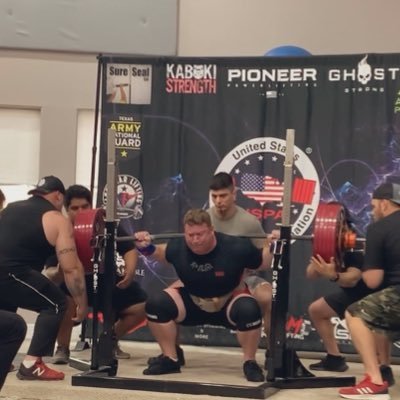
A lot of You People need to understand how... much bad information about lifting comes from Bodybuilding. Not every bodybuilder, but a lot. Here is one great example. Clip 1: Bodybuilding legend Robby Robinson explains how to avoid injury in the deadlift, you need to bend your arms. Yes, you heard that correctly. The literal exact opposite of the truth, the exact mechanism which greatly increases the likelihood of tearing a biceps tendon in the deadlift (which ~never happens for people who do a controlled pull with straight arms) is what Robinson claims you MUST do to avoid injury. This isn't just a small disagreement. This is comically absurd levels of delusion. If it came from some random gym bro that would be one thing, but the important lesson here is that you can ascend to the highest levels of bodybuilding success and fame without knowing the most basic things about training that us mere mortals who have normal genetics and aren't blasting gear HAVE TO LEARN or else we won't succeed. Bent arms facilitating biceps tendon tears is easily understandable via mechanisms: The deadlift is a heavy lift that, if done at a weight heavy enough to spur adaptive stimulus, must be with much more weight than you can curl, then it will tend to forcibly straighten out the arms under load as you lift, which increases the chances of a rupture. But as a real lift demonstration of this phenomenon, I offer you Clip 2 which shows this happening in action: A lifter tearing a biceps tendon on a deadlift which you can literally see happening because of the bent-arm pull. I've never seen this happen in less than the 550-600 range EXCEPT in cases of bent arm pulls exactly like this one. If Robinson hadn't said what he said but I claimed bodybuilders say this, I would be accused of making up things to hate on bodybuilding. But this is just one example of a pattern I've observed over 25 years doing this. I have taught the deadlift to IFBB pros who have stood on the Olympic stage, who told me after the session that they had no idea how to do them until working with me, they just winged it and sort of copied what they saw other people do. If you want to learn how to achieve a bodybuilding look, most bodybuilders know a lot. If you want to understand proper technique for complex lifts and loaded human movement patterns, the bodybuilders who know and understand that are the exception, not the rule.show more
Deep Squats, Shallow Thoughts
26,730 Aufrufe • vor 3 Monaten
The lats are not a nervous rescue dog. "Depress... the scapula first." It's welded to my spine. Where's it going? "Now retract, but don't over-retract." So retract the correct amount. Cheers. "Think about pulling with your elbows, not your hands." My elbows are attached to my hands. This has been the arrangement for some time. "Imagine your hands are just hooks." Imagining. "Now feel the stretch and visualise the lat spread." Visualising. Bar hasn't moved. "You're not connected to it yet. We'll do some band work first." Brother in christ. It is the biggest muscle in my upper body, it is bolted to my pelvis, and it has one job: pull the arm down. That is its entire personality. Put your hands on the bar. Make the bar go down. Heavy. Don't turn it into a row. The lat has no choice. It's the only thing in there that can do it.show more
Sama Hoole
31,953 Aufrufe • vor 2 Monaten
Strength work for Leadville 100 💪 Over the years,... I have felt judged by the research--my strength routines were limited to a few minutes at a time, while everyone was screaming at me from their Abstracts that I needed to do way more. I noticed two big problems whenever I committed to more resistance training: 1. I'd carry around soreness even after the initial adaptation window, likely corresponding to high CK levels and some background inflammation. Either way, it would reduce running economy on subsequent running training days, and every training day counts. Split squats are the ultimate offender--an exercise that I know I should be doing, but I can't without feeling like Forrest Gump after he was shot in the butt. 2. I just wouldn't do it. Oops. With lots of guessing and testing, I developed this routine, which I'd do after my easy run on Sunday (before a Monday rest day), and sometimes after my workout on Wednesday (if I felt like it): 1. Three Minute Mountain Legs, working up to 100 single-leg step-ups (I think step-ups in particular are a magic exercise for running uphill. But remember, magic is not equal to science): 2. Back squats, 2 sets of 10 (135 pounds for me, which I make look like 800 pounds in this video. The 17-year old me who played football would laugh so hard) 3. Back extensions, 2 sets of 30, engaging glutes and hamstrings 4. Single-leg calf raises, 1 set of 100 on each leg, with a 35 pound dumbbell 5. Every day, I do the 2-minute Core Snack routine 1-3 times. My core strength is one of my best attributes for ultras, and I can do the Core Snack with our toddler Leo. I also do daily band work before running (bandz a make me dance): That's it! I also foam roll and stretch daily (don't tell the researchers, but I am a tight boi and as soon as I stop stretching, I get hurt). The lesson is not to do this particular routine, but that strength training for runners can be based on individual needs. And I personally think that routines should be short and efficient for both performance (limiting breakdown) and adherence (limiting me from being a lazy little punk). Find what works for you, do it 1-2 times per week year round (on top of some daily supportive work), and don't feel the need to pursue progressive overload. It's not about getting stronger and stronger (unless you're into that sort of thing for its own sake, which I think will sacrifice some running growth). It's about supporting performance and health 🧡show more

David Roche
66,419 Aufrufe • vor 2 Jahren
This post about bench press safety escaped containment and... got a lot of people commenting in disagreement that safeties/spotter arms would've saved him. And in truth, my language below was a little too absolute: safeties MIGHT have saved his life (though even if so, would not have prevented all damage), but it's far from certain that they would have, so I stand by the overall sentiment. I will explain in detail below. The spotter arms have to be set below the top of your arched chest or else they’ll interfere with every rep - you'll clang the bar on the safeties, which not only severely interrupts proper technique and performance, but can also be potentially injurious in its own right as the clanging against the safeties takes you out of the rhythm of the rep and leads to uneven and chaotic force application demands mid-rep. The safeties can’t be set a mere milimeter or even a half inch below the chest: both because most racks have 2-3 inch hole spacings that don't allow such finely calibrated setting, but even if they do - also because as a gross movement pattern, not a fine movement pattern, you can’t control the movement of the bar precisely and accurately enough not to clang the safeties if they’re so close to your chest. Human beings performing gross movement patterns simply lack such fine control: on heavy sets, the bar might be slightly uneven on one side, you might lose a touch of your arch over the course of the set, etc... and end up clanging the safeties anyway, if they're set so close to the top of your arched chest. These issues are not form errors that can be prevented with proper training, but are inherent limitations in the human capability to control gross motor pattern movements at a heavy weight. Thus, the safeties have to be far enough below your chest in order to not interfere with the set itself, such that they can’t possibly catch the bar before it hits your chest in the case of a sudden catastrophic drop. The proper placement for the safeties is far enough below your chest so as not to interfere with the normal execution of the set and so the bar never touches the safeties at all during the set, even with the inherent human limitations of gross motor pattern control. But high enough such tha - if you find yourself unable to successfully press the bar to lockout - you can bring the bar under control back down to your chest, exhale and drop your arch, and the bar will ideally now rest on the safeties instead of your chest and you can crawl and slither out from under it. Worst case, you can roll the bar slightly upwards and the safeties will soon take it, well before it would lie on your neck. I have an example of using the safeties this way in the video below, with 485 lbs. The ability to set this position with precision and accuracy depends on the equipment you're using: Some racks/benches have 1 inch spacings for this purpose, which is excellent and allows greater precision in safety placement, but most common racks have 2-3 inches between holes and thus people must often have the safeties a little lower than they'd ideally be. The main point is the proper use and purpose of safeties in the bench press is not really to catch a very rare catastrophic sudden drop onto your chest, but to allow you to survive the much more common situation of a normal failed rep. Could they theoretically save your life in such a situation where you drop it? Yes, they might. They won't stop the bar before it hits your chest but they might reduce the impact by stopping the bar from going further down and reducing the impact. This may or may not save your life in this rare catastrophic drop situation - it's good to have them there, set up anyway, but it's far from a sure bet. The most important things you can do are to learn and practice good technique, which involves stiff wrists in a very slightly bent back position, and thumbs around the barbell - NO SUICIDE GRIP. The safeties won't catch the bar and stop it from hitting your chest, so it's best to reduce the chances of dropping the bar on your chest from almost zero to even closer to almost zero. I've been bench pressing regularly for well over 20 years, always put my thumbs around the bar, and have never dropped it on myself. Nor has anyone I have coached to the best of my memory, over tens of thousands of sets and hundreds of thousands of reps. I have used safeties to successfully avoid getting trapped under the bar after a failed rep. In the video below, I tweaked my pec while pushing through a rep at 485 and had to set the bar on the pins to avoid getting trapped under it. This kind of situation is the primary use for the safeties. It's good to have them set up regardless - they might indeed save you if you somehow still manage to drop the bar, but they also very well might not.show more
Deep Squats, Shallow Thoughts
924,853 Aufrufe • vor 9 Monaten
A converging chest press builds more pec than a... barbell bench, and the barbell crowd has been too busy defending the barbell to check. The pec has one job. It pulls the upper arm across the body. That is the movement. That is the whole muscle. The barbell locks your hands 60cm apart and forbids it. Every rep, the pec is asked to shorten and told it may not. It spends the set stabilising a stick while the front delt and triceps do the pressing. The converging machine lets the hands travel in. The pec shortens through its actual function, under load, to failure, with nothing to balance and nothing to drop on your neck. - Barbell: a fixed width, a balancing act, and a spotter - Converging press: the pec doing the thing it exists to do, heavy, to the last rep Want a bigger bench? Bench. Want a bigger chest? Stop training the bar and start training the muscle.show more
Sama Hoole
13,110 Aufrufe • vor 9 Tagen
"How long should I rest between sets?" Until you... can hit the same weight for the same reps with the same quality. That is the answer. That has always been the answer. The answer is not 60 seconds. The answer is not 90 seconds. The answer is not whatever the timer on your watch app says. If you are doing heavy compounds, that might be 3 to 5 minutes. Sometimes longer. The exercise does not care about your podcast schedule. It needs the central nervous system to be ready and the muscles to be loaded again. Rushing rest periods is one of the great unforced errors in training. You sacrifice load, sacrifice reps, sacrifice tension, and convince yourself you have done a hard session because you sweated. You have done a cardio session with weights. They are not the same. Sit down. Breathe. Let the heart settle. Then lift the next set heavy enough to justify the wait.show more

Sama Hoole
26,463 Aufrufe • vor 4 Monaten