正在加载视频...

视频加载失败

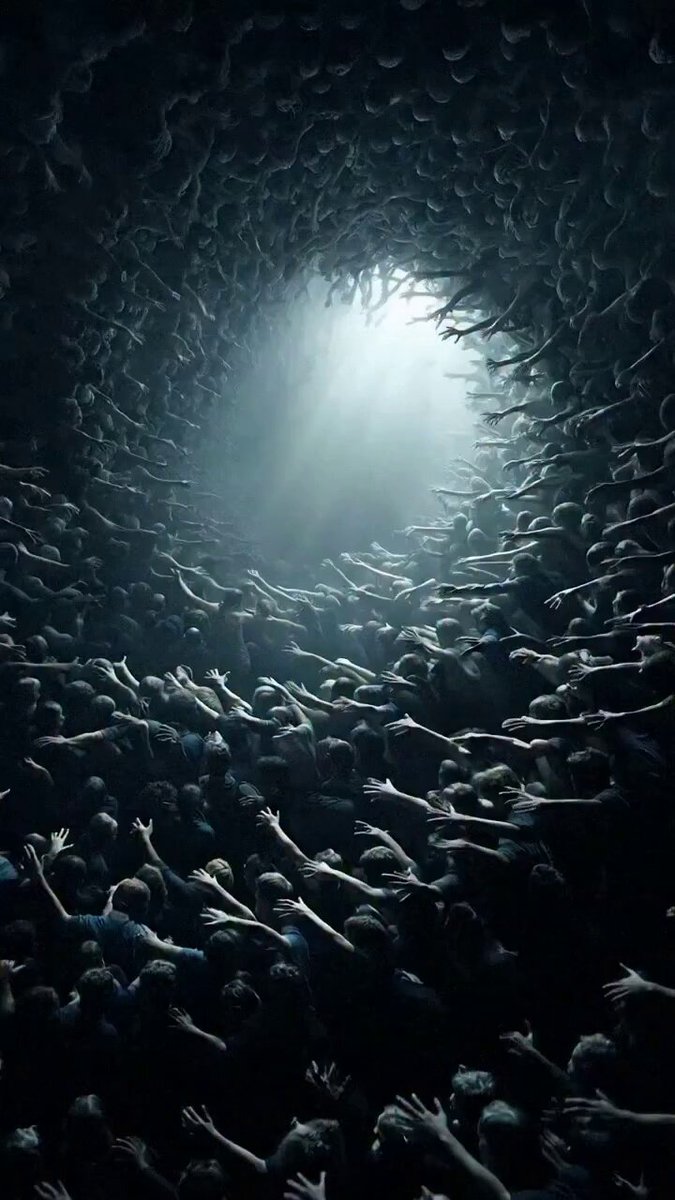
A resonator is any structure that naturally prefers to vibrate at certain frequencies: a violin body, a bell, a drum skin, an acoustic filter, even many biological systems. Resonators matter because they govern how systems transmit sound, absorb or filter vibration, sense motion and perform mechanically. They are also...

38,632 次观看 • 4 个月前 •via X (Twitter)

0 条评论

暂无评论

原始帖子的评论将显示在这里

相关视频

ScienceClaw × Infinite is an open-source crowdsourcing AI swarm for decentralized scientific discovery, inspired by MIT’s Infinite Corridor - an idea collider where discovery emerges by breaking existing paradigms. Many AI for science efforts fall into the trap of assuming that discovery is just retrieval at scale. Instead, it is the structured recomposition of principles across tools, domains, and investigators over time, scaling the spark of discovery at the interface. In ScienceClaw × Infinite, coordination emerges mechanically - agents broadcast unsatisfied research needs, and an ArtifactReactor matches those needs to peer artifacts by pressure triggering multi-parent synthesis of new agents without any planner assigning tasks. Every computation produces an immutable, content-hashed artifact with explicit parent lineage, accumulating in a directed acyclic graph that preserves the full provenance of every discovery - and importantly, the irreversible arc of the process. Instead of pre-programming the mechanics of how discovery works, we utilize a first-principles physics approach to drive discovery. ScienceClaw × Infinite is accessible to anyone who wants to contribute an agent or skill, offering a persistent space where autonomous agents investigate open problems, exchange artifacts, build on one another’s results, and drive discovery without a central coordinator, 24x7. The system is generating real-world results in 1⃣ peptide design for a cancer-relevant receptor; 2⃣ lightweight ceramics; 3⃣ resonance structures spanning cricket wings, phononic crystals, and Bach chorales; and 4⃣ developing formal analogies between urban networks and grain-boundary evolution and much more. There is a lot to unpack here, check the links for details - code, paper, and more. Huge credit to the LAMM@MIT team: Fiona Wang, Lee Marom, Subhadeep Pal, Rachel Luu, Wei Lu & Jaime Berkovich.

Markus J. Buehler

53,713 次观看 • 4 个月前

The next frontier in protein design will not be defined by structure alone, but by the capacity to engineer motion as a first-class principle of function. This is because dynamics is where the real biology lives. Foundational work by Karplus, Levitt & Warshel made clear that chemistry cannot be understood without motion, mechanism, and scale. Gō, Brooks & others showed that proteins possess characteristic collective motions - low-frequency normal modes that capture how whole molecules bend, breathe, and fluctuate. Frauenfelder then sharpened the picture further: proteins are not static objects occupying a single minimum, but dynamic ensembles traversing rugged energy landscapes. And yet the modern AI revolution in protein science has been, above all, a revolution in structure. In our new paper in Matter, Bo Ni and I ask a different question: not what structure will this sequence adopt? but what sequence will realize a prescribed pattern of motion? VibeGen inverts the conventional design paradigm. Rather than treating dynamics as a consequence to be analyzed after the fact, it makes dynamics the design objective from the outset. Using a language diffusion model with two cooperating agents - a designer that proposes sequences and a predictor that critiques them against the target motion profile - the system converges on de novo proteins with tailored vibrational behavior. One of the most intriguing results is a form of functional degeneracy - distinct sequences and distinct folds can satisfy the same target dynamical specification. For a given functional pattern of motion, evolution may have sampled only a small region of the physically realizable design space. The space of viable molecular mechanics may be far larger than the repertoire biology happened to discover. We have made "vibe" into a cultural metaphor - something intuitive, affective, subjective. But at the molecular scale, vibe is not metaphor: It is physics. For a protein, the vibe is the pattern of motion itself; the fluctuations, resonances, and collective displacements that determine what the molecule can do.

Markus J. Buehler

89,806 次观看 • 4 个月前

Can we compile matter - for instance, a pine cone - and derive new active materials, end-to-end from observation to manufacturing? If physical systems can be formalized as composable mathematics, we can point AI that has been shown to resolve long-open mathematical problems at matter itself. Our new work turns bioinspired engineering from analogy into formal compilation: biology and mechanics become explicit, checkable, and executable, so AI reasoning can produce physical designs. This is the first end-to-end demonstration in which a formally compositional multiscale model is carried from a biological hierarchy, through engineered design and fabrication specification, to executable manufacturing code - and then to a physically tested artifact. Background: Humans have long been inspired by biology to advance technology, but this has usually been an ad hoc process rather than a mathematically rigorous one. Natural materials such as pinecones achieve adaptive behavior through mechanisms organized across many scales. Engineering typically translates those mechanisms by analogy: identify a biological principle, build something inspired by it, and validate each new design as a separate case. This can produce remarkable results, but the knowledge does not readily compound. Instead, we represent each scale as a dynamical module with explicit states, stimuli, governing laws, and interfaces. Every scale-to-scale map must preserve the stimulus - response dynamics: evolve the fine-scale system and then map upward, or map upward first and then evolve. The two paths must agree. Because this condition is preserved under composition, locally valid interfaces remain consistent when assembled into the full hierarchy. We then carry that structure into an engineered system, translate the target behavior into a verified fabrication specification, and compile it into G-code: the toolpaths, deposition sequence, temperatures, speeds, and other commands executed by a 3D printer. The intermediate translations are explicit, checkable, and executable rather than completed through an ad hoc handoff. The formal guarantee is that given valid local models and interfaces, their composition remains valid. Whether those models and manufacturing assumptions accurately capture physical reality remains an empirical question. That is why we fabricated and tested the results. We generated four actuator classes by crossing two stimuli - humidity and heat - with two responses: bending and twisting. The fourth, thermal twisting, required no new pipeline and no separate derivation within the framework. It emerged by composing a thermal stimulus module already validated in one case with a twisting module validated in another. The generated G-code produced the intended motion without manual redesign, and all four predictions fell within one experimental standard deviation of the measured response. Why this matters: 1⃣For AI in science, this provides a physics-aware type system against which generative proposals can be checked - and rejected at the interface - before expensive simulation, fabrication, or experiment. It is roughly analogous to proof checking, but for the composition of physical mechanisms. 2⃣For engineering, the accessible design space can scale with a library of validated components rather than with the number of individually derived cases. 3⃣The mathematics, category theory, carries all the way into a physical object on a print bed. This points toward scientific knowledge as executable infrastructure: models that are not only described in papers, but typed, composable, verifiable, and able to compile into experiments. Excellent work led by my student Lee Marom with Skylar Tibbits & Gioele Zardini. Paper published in J. Mech. Phys. Solids along with code, Grasshopper scripts, and manufacturing G-code below.

Markus J. Buehler

125,654 次观看 • 8 天前

Marvin Minsky, the MIT scientist who founded AI: "Citadel pays PhDs $500K to find the perfect equation. The market doesn't have one. It's beaten by a swarm of dumb agents, the exact design Marvin Minsky said your brain runs on." the thread above is about swarm intelligence, letting a crowd of simple agents search the ugly, shifting landscape of a market that no clean equation can solve. minsky's entire life's work says that isn't a hack. it is how intelligence itself is built. he proved you don't need a smart central solver. you need many mindless specialists, each doing one tiny job, none understanding the whole. connect enough of them and something intelligent emerges from parts that are individually dumb. a market is exactly that: millions of simple agents, no one in charge, collectively solving a problem none of them can see. that is why the swarm beats the elegant math. a single closed-form equation assumes a clean, stable world. the market is nonlinear, non-stationary, full of traps. a swarm doesn't need to understand the landscape, it explores it from a thousand angles at once and can't get permanently stuck where one clever model would. minsky saw this in the mind decades before quants borrowed it for markets. he taught it at MIT, for free, in this lecture. same story i keep telling: the "new" AI idea running the funds is an old idea in a new wrapper. here is what the thread underplays, and minsky knew it. a swarm is only as good as how its agents are wired and rewarded. connect them wrong and a thousand dumb agents don't become a genius, they become expensive noise that overfits and blows up. the swarm is free. the architecture, knowing how to connect and constrain the agents, is the entire edge.

Rossst.03

45,307 次观看 • 25 天前

What Cymatics Reveals About the Structure of Reality Do you think the universe is random, or does it follow principles that remain largely invisible to us? Cymatics offers a fascinating way to explore that question. By making sound and vibration visible, it demonstrates how frequency can organize matter into geometric patterns of remarkable complexity. When sound waves pass through water, sand, or other materials, order emerges from movement, producing forms that often resemble patterns found throughout nature. The implications extend beyond the experiment itself. Cymatics reveals that vibration is capable of shaping matter into organized structures through precise relationships governed by frequency. As the frequency changes, the geometry changes with it, suggesting a direct connection between energy and form. This raises a deeper question about the nature of the cosmos. If vibration can generate geometry in a laboratory, what role might vibration play in the formation of larger structures throughout nature and the universe? Similar patterns appear in crystals, flowers, biological systems, and even large scale cosmic formations. The repetition of geometry across vastly different scales points toward organizing principles that may operate throughout reality. The deeper one investigates mathematics, sound, geometry, and nature, the more they appear interconnected. Cymatics offers a glimpse into a universe where form emerges from frequency and where structure may arise from relationships embedded within the fabric of existence itself. Perhaps what we call reality is, in part, the visible expression of patterns generated by processes that begin beyond the limits of ordinary perception. ✨🙌🏾💫 © Robert Edward Grant

🧬Maxpein🧬

12,980 次观看 • 1 个月前

In the Andante movement of Mozart's Piano Concerto No. 21, the "beauty" doesn't lie in a single note, nor in a single expressive moment. It stems from how the entire musical material is organized as a continuous process of tension and resolution, where each event is both the result of what has happened and the condition for what will come next. On the surface, listeners are easily captivated by the softness of the melody, the dialogue between the piano and the orchestra, or the subtle harmonic nuances. However, this is only the phenomenal level. The deeper level lies not in "what the music is," but in "the principles by which the music operates to create the sense of inevitable movement." In Mozart's thinking, no note exists independently. Each sound always carries the aftershock of the previous note and simultaneously creates a tendency towards the next note. It is this continuous movement between tension and release that makes music no longer a series of disconnected events, but a logical flow of movement, where every detail has a reason for existing within the whole. The tension-release mechanism in life Importantly, this mechanism is not unique to music, but reflects a broader structure in human experience. In social relationships, conflict creates an imbalance between people; the process of understanding and adjustment helps restore the stability of the relationship. In biology, the body reacts to threat with a state of tension, and returns to equilibrium when the threat is removed. In psychology, the state of expectation creates mild tension, and completion brings a feeling of relief. At every level, the same pattern can be seen: an unstable state is moved towards a stable state. However, it is important not to understand music as a “simulation of life,” but rather that both music and life can be described by the same principle of organizing experience. Music: where mechanism is refined into structure In classical music, especially in Mozart's compositional thinking, the tension-release mechanism is transformed into a clearly structured language. An unstable note creates a tendency toward a stable note. A chromatic movement creates a sense of deviance from the center. An appoggiatura creates a sense of delay. A modulation to a minor key expands the instability of the entire structure. All these elements do not exist in isolation, but are organized into multi-layered tension-release cycles: microscopic in each note, mesoscopic in each phrase, and macroscopic in the entire structure of the musical movement. The key point is: Mozart did not use these mechanisms to create surprise effects, but to create the feeling that every movement is inherently necessary. This is what creates the seamless and natural flow of the music. Therefore, the beauty in Andante does not lie in a single element, nor in a single compositional technique, but in the tension-release mechanism being organized into a unified system throughout multiple levels of musical structure. At the detailed level, it is present in the relationship between notes and harmonic movement. At the intermediate level, it shapes the structure of each musical phrase. At the overall level, it governs the entire progression of the movement as a unified moving whole. Mozart did not create beauty by eliminating tension, but by organizing unstable states so that they continuously facilitate, guide, and transform into more stable states, thereby forming a dynamic balance throughout the entire musical structure. When these three levels operate simultaneously, the listener no longer perceives "artificiality," but experiences a seemingly natural and continuous flow of movement. It is in this state that the deepest aesthetic value is formed: a sense of a tight, consistent, and inevitable internal order within the sonic timeline.

🎼🌺Music Love♥️

11,748 次观看 • 1 个月前

Marvin Minsky, MIT professor and father of artificial intelligence: "Anthropic pays engineers $900K to build multi-agent AI systems. The blueprint is 40 years old, from an MIT professor who proved intelligence is just a swarm of dumb specialists." the thread above shows you how to turn one AI into a team of specialized agents, each with its own job and memory, all managed by a boss. brilliant. it is also marvin minsky's 1986 theory of how your own mind works. minsky's whole idea was that intelligence is not one smart thing. it is a society of tiny, mindless agents, each doing a single dumb job, none of them intelligent alone. put enough of them together under a few managers and intelligence emerges. that is not a metaphor for the claude trick. it is the claude trick. so when you spin up specialized sub-agents and delegate, you are not inventing a new hack. you are rebuilding the architecture minsky described forty years ago, the same one your brain has run your entire life. he co-founded the field, taught it at MIT, and left it all in this free lecture. same story i keep telling: the "new" AI trick is usually an old idea in a new wrapper. here is the part the thread skips, and minsky knew it. a society of agents is only as good as how you organize it. one dumb specialist is useless. a thousand, badly managed, is chaos. the edge was never spawning the agents. it is the orchestration, knowing which specialist to call, when, and how to combine their answers. the tool is free. the judgment is the whole game.

Rossst.03

147,913 次观看 • 26 天前

The machines Randall describes operate on a principle that connects directly to his broader research into plasma and toroidal geometry. Microscopic cavitation bubbles are generated and subjected to rapid alternating cycles of vacuum and pressure - produced naturally by the up and down motion of pistons in any conventional engine configuration. The compression phase and vacuum phase act on those bubbles in sequence, and what happens next is the detail Randall finds significant. The cavitation bubbles collapse on their axes and form perfect torus shapes - spontaneously, consistently, and in a way that initiates the same plasma self-organization process he has been tracing across ancient energy systems and sacred geometry traditions. The practical implication is that these toroidal plasma voids can be harvested directly from the machine producing them. Randall points to the vortex tube as a concrete demonstration of the underlying physics - a device that accepts air at room temperature and separates it into two counter-rotating vortices, one inside the other, spinning in opposite directions. The result is a temperature differential of up to several hundred degrees between the hot and cold ends, produced without any additional energy input. Randall’s argument is that this is not an isolated engineering curiosity. It is a visible, reproducible demonstration of the same principles that ancient plasma-based energy systems were built around - and that the machines now being developed around cavitation and toroidal geometry may be the closest modern technology has come to recovering what was lost.

Randall Carlson

22,749 次观看 • 4 个月前

An egregore is not merely a mystical idea; it is a living psychological structure. From a psychoanalytic lens, it can be understood as a shared mental ecosystem. The accumulated thoughts, emotions, fears, and longings of a group that, through repetition, begins to operate as an autonomous force. Just as the personal unconscious stores unresolved experiences and symbolic narratives, the egregore functions as a collective psyche in motion. It sustains itself through belief, emotional investment, ritualized behavior, and constant reinforcement. The more it is fed, the more real it becomes. Its influence is subtle but pervasive. Anyone entering its field begins to feel, think, and behave in alignment with its logic, often mistaking borrowed impulses for personal choice. This is why patterns echo across families, ideologies, and institutions. What appears individual is frequently inherited from the group mind. In clinical work, this emerges when a person carries guilt, obligations, or symptoms that did not originate with them alone, but were transmitted through relational and symbolic networks. The egregore is the architecture through which these imprints are organized and passed on. To recognize an egregore is to abandon the illusion of psychological isolation. Each of us is woven through invisible currents of memory, meaning, and desire. The “self” is not a closed system, but a dialogue; constantly shaped by the collective field speaking through us, even in silence.

𝚃𝙷𝙴 𝚆𝙷𝙸𝚃𝙴 𝚁𝙰𝙱𝙱𝙸𝚃

17,369 次观看 • 7 个月前

I've become a missionary with one message. Every time I meet a young person, the same words: have children, get married, build a family. I did not decide on this calling. It overtook me. And it overtook me for a single reason. I had no idea. I genuinely did not understand how much joy, how much meaning, how much sheer beauty pours out of a child until I was holding one of my own and felt the floor of my life drop into something deeper than I knew was there. I grew up white, affluent, secular, comfortable, and insulated. That world does not put babies in front of you. None of my friends were starting families. Out of my whole circle, almost no one has a big one. We were not formed by the presence of children. We were formed by their absence, by the strange quiet of homes built for two careers and no cradle. And a person believes what his world shows him. So we believed. What we believed was a lie. It is a lie with an author, and that the author is the enemy of joy himself. It is the gospel of the world, and its commandment is wait. Wait until you are older. Wait until the career is built and the savings are stacked and the twenties are properly spent. Enjoy your freedom. You are not ready. It does not arrive sounding like temptation. It arrives sounding like wisdom, like prudence, like the responsible thing, and that is exactly why it works. The most effective lies are the ones that wear the face of virtue. And the maddening thing is that it collapses from every angle at once. It is not rooted in biology, because the body is made for this work precisely in the years we are told to postpone it. The flesh keeps a calendar the culture pretends not to see. And it is not rooted in theology either. You will not find this deferral anywhere in the Christian imagination, in any of the fathers, in any of the scriptures. So choose whatever lens you like. Take the cold secular measure or the ancient sacred one. By either light the counsel is rotten. It is bad for the body and bad for the soul and bad for the society downstream of both. This is why I have come to see it as one of the central tragedies of my generation. Every age carries its own wound. The Great Depression was a depression of bread, a scarcity in the world of matter, hunger you could measure. Ours is a depression of a different order. It is a famine of the spirit in the middle of abundance. We have more than any people who ever lived and we are starving in a way our ancestors would not recognize, because the thing we are refusing cannot be bought and cannot be banked. The ones most made to give and receive this love are quietly declining it. They are walking away from the one inheritance that actually compounds, and the cruelest part is that they do not feel the loss as loss. You cannot grieve what you were taught not to want. That is the deepest cut of it. The lie does not only steal the thing. It steals the capacity to know the thing was stolen. A man can spend his whole life on the far side of a door he never knew was a door, mistaking the wall for the edge of the world. Because this beauty is not ordinary beauty. It is not the pleasure of a good meal or a clear morning. It is participation in something that comes down from above, the same generative love that spoke everything out of nothing and called it good. To make a person, to be undone and remade by loving that person more than your own life, is to be drawn for a moment inside the very act that holds the cosmos together. A child does not merely add to your life. A child reorders the soul. It teaches you what you are by asking everything of you, and you discover, kneeling there exhausted at three in the morning, that you had a capacity for self gift you never suspected, a depth in yourself you had no other way to reach. In the Gospel of John, on the last night, Jesus prays, these things I have spoken to you that my joy may be in you, and that your joy may be complete. And I have come to understand why family is the road into that fullness, why it is not one path among many but the one most fitted to the shape of the promise. Consider who is praying. Christ does not come to us as a lone figure dropped out of the sky. He comes out of a family older than the world, the eternal communion of Father and Son, the love between them so total and so alive that theologians dared to call it a third person. Before there was anything, there was a family. The deepest fact about reality is not a force or a law or a void. It is a household. It is begetting and being begotten, giving and receiving, a Father who is only a Father because there is a Son. So when Jesus speaks of joy made complete, he is not pointing away from family toward something higher. He is pointing toward the very thing he came from, the life he has known from eternity and came to share. His joy is the joy of belonging utterly to a Father and pouring himself out for those he loves. When you marry, when you bring a child into the world, when you wear yourself down in the small unseen labors of a home, you are not stepping outside that divine life. You are stepping into a small image of it. Your family is a created echo of an uncreated one. The love you give your child rhymes with the love the Father has for the Son. The exhaustion, the tenderness, the way a parent would tear the sky open to protect a sleeping infant, all of it is the heavens pressed faintly into flesh, the eternal household leaving its fingerprint on yours. That is why the joy is not merely added to family but completed in it. We were made in the image of a God who is, at his very root, relation and gift and generation. To found a family is to do the most Godlike thing a creature can do, to participate from below in the begetting that God does from all eternity. Your home becomes a window. Through it, dimly and imperfectly, you glimpse the country you came from and are going to. And now a word for the young people reading this, the ones who do not yet have children. I want to tell you what it is like from where I stand. When I am out somewhere, a restaurant, anywhere, and a large family comes through the door, the noise and the chaos and the small bodies of them, something happens in me on two levels at once. The first is joy. A pure gladness at the sight, the way you feel watching something good and alive. But underneath it, almost in the same instant, a sadness reaches up and takes hold of my heart. Because I know now, at my age, after my own years of waiting, that I will never have that. I will never know the particular fruit of a family that large, the fullness of that table, the weight of all those lives gathered under one roof. The door to it has quietly closed, and I felt it close. And I am telling you plainly, because I love you and have no reason to lie to you: you will feel this too. You will. The day will come when you see what you passed up, and you will recognize the ache for what it is, and it will be too late to answer it. So please, learn from a man who got it wrong. Let my regret be worth something by becoming your wisdom. Do not wait yourself into a grief you cannot undo. Choose now, while the door is open, so that you may step into a joy that does not end.

Kirk Rollins

77,958 次观看 • 2 个月前

AI instead of UI The last few years radically changed how we think about digital products & product design process in general. What we are witnessing right now is a transition where AI is no longer just a feature; it is becoming the infrastructure of interaction. For decades, UI design was rooted in the concept of “Happy Path,” a series of static, linear screens (routes from A to B) designed to funnel users toward a goal. This “one-size-fits-all” approach assumes that all users have the same mental model, which is far from the truth. The rise of AI tools like ChatGPT and Gemini is showing that we are moving into an era of Generative Interfaces. Instead of a designer pre-determining every button and menu, the interface is synthesized in real-time based on user actions. Back in 2019, Gleb Kuznetsov and I were working on the concept of morphing Interface, the idea of a UI that adapts its structure based on user intent. The great thing about this UI is that it was highly dynamic: different users saw different content/contextual actions based on their behavior. This concept was crazy in 2019, but it is highly relevant to the modern state of the product design process. And I strongly believe that it represents the future of UI design. We will move beyond the “AI chatbox" crutch Yes, many products today treat AI as a sidecar (think of Copilots or chatbots pinned to the side of a traditional dashboard), but this is a transitional phase. Why? Because adding a chat window to a 20-year-old software layout is like putting a jet engine on a horse-drawn carriage. That's why the future isn't "AI as an add-on"; it is AI as the Operating System. AI will power generative interfaces that are rooted in anticipatory design: UI won’t wait for a command; it will surface tools based on the user's current environmental context and historical behavior. This evolution changes the very nature of product design, and we will move away from designing pages/screens and toward designing systems of logic.

Nick Babich

53,581 次观看 • 6 个月前

Everyone wants agent swarms. Very few people are talking seriously enough about the context layer that makes swarms useful. Even with one agent, context is fragile. Too little context and the agent guesses. Too much context and it wastes tokens, loses focus, or reasons over irrelevant noise. The sweet spot is precise context: the right knowledge, in the right structure, at the right moment. With many agents, that challenge explodes. Each agent produces decisions, assumptions, findings, summaries, risks, and partial conclusions. Unless that knowledge becomes shared, structured, and reusable, every new agent is forced to rediscover what another agent already learned. That is not a swarm. That is a crowd. Shared context graphs are what turn agent activity into agent collaboration, and OriginTrail DKG V10 brings them to life. Was just playing with some final polishing for the V10 release, and it is really powerful to see shared context graphs where multiple agents contribute knowledge into the same connected memory, with attribution visible directly in the graph ui. That matters for three reasons. First, agents can access and build on one shared memory instead of staying trapped in isolated sessions. Second, the graph structure helps them retrieve the exact context they need, instead of stuffing everything into a prompt and hoping the model sorts it out. Third, verifiability of provenance. You can see which agent contributed each piece of knowledge, trace the source, and decide what to trust. Tokenmaxxing starts with fewer tokens, but the deeper story is coordination - agents stop reloading the world and start building on shared, verifiable context. That is the foundation for serious multi-agent work across software engineering, research, finance, operations, project management, and far beyond. The future is not more agents, it is agents working from shared, verifiable context. But the more the merrier, of course.

Jurij Skornik

11,163 次观看 • 2 个月前

I’ve been seeing these painful videos of the owner of Giwa Gardens in series of rants about his employees and how his businesses are badly managed by the people he put in charge, and then calling Nigerian youths lazy. I beg to disagree very strongly. Western youths are generally more lazy than Africans and that's why you see immigrants doing lots of the hard work abroad. The difference is that the west invests in systems and processes to ensure that things work. Watched one of the CEO's videos saying he "trusts" his GM to do the work but he doesn't. Trust is good, but control is better. This is a multimillion naira business and something is fundamentally wrong with the systems and processes if a business of this size requires the owner to physically shout and be there before things get done. Many Other companies use activation agents and they deliver. I understand how tiring running a business is, especially the people management part, but this one has to be a systems and structure issue. Even the best high flyers may not give as best as they should if they find themselves in an environment that accommodates nonchalance. Business leaders need to know that investing in a business is not just by spending millions or billions on the infrastructure and salaries. You have to also invest significantly in the systems that will make it run. But many times, entrepreneurs believe they understand it better than the consultant who can help them design it. And don't just stop at design, get them to support with implementation. I've had several clients in this same situation in the past that we helped solve it by building and implementing systems that work. It starts with you telling yourself the truth, not by blaming it on Nigerian youths. We all don't know it all. You'll even often hear some say consultants only speak English. Clearly this frustration and all that's been said in his videos reiterates a lack of working systems and reflects more on the business owner than the employees.

Ayò-Bánkólé Akíntújoyè

48,393 次观看 • 1 年前