正在加载视频...

视频加载失败

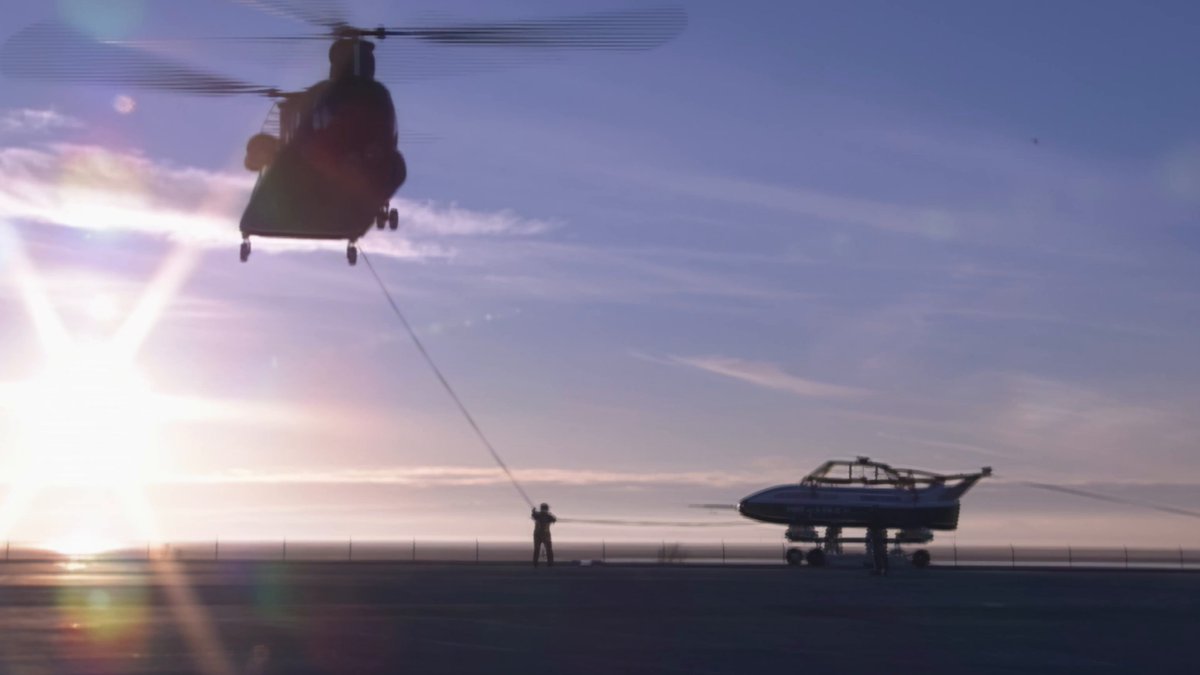
Airbus Helicopters Research on Fluid-Structure Coupling in Hover and Low-Speed Flight Airbus Helicopters has conducted advanced simulations to study fluid-structure interactions between the main rotor and airframe under hover and low-speed conditions. These interactions are critical to understanding and improving rotorcraft performance and design. The simulation results were validated...

10,907 次观看 • 1 年前 •via X (Twitter)

3 条评论

Diego Artista 的头像
Diego Artista1 年前

Esto es el tipo de simulación que marca la diferencia. Si este avance se combina con el ecosistema innovador de EAU, podríamos ver un salto increíble en talento y resultados.

Page to Pixel Publishing 的头像
Page to Pixel Publishing2 年前

The Art of Flight is a homage to 80s/90s arcade action shmups with a fresh twist on the genre. Pilot multiple ships at the same time to take on oncoming waves of enemies in this fast paced space shooter. Wishlist on Steam today!

Laurent Sierra 的头像
Laurent Sierra1 年前

Interesting

相关视频

The Brake-To-Vacate (BTV) function on the Airbus A350 is nothing short of revolutionary for aviation enthusiasts and professional pilots alike. This advanced autobraking system transforms the landing experience by allowing pilots to choose a specific runway exit prior to landing, managing the braking process to achieve an optimal deceleration profile. This not only enhances safety but also significantly reduces Runway Occupancy Time (ROT), leading to more efficient air traffic flow. What makes the BTV system particularly impressive is its integration with other aircraft systems such as Auto Thrust Idle, Spoilers, and Reversers. This ensures that the deceleration is controlled smoothly and efficiently, adapting in real-time to any changes in conditions such as tailwinds or reduced braking action. Pilots can override the system via the red instinctive push buttons on the ThrustLevers or via the manual selection of toe braking. The accuracy and innovation of the BTV feature is mirrored in the @inibuildsofficial A350 Airliner Microsoft Flight Simulator (MSFS) add-on. This add-on captures the intricate details and functions of the real-life BTV system, providing an unparalleled simulation experience. It accurately models the pre-landing setup process, allowing virtual pilots to input their chosen runway exit via the Multi-Function Display (MFD) and experience the precise and efficient braking that the system offers. For flight simulation enthusiasts, the IniBuilt A350 add-on brings the cutting-edge technology of the A350 into the virtual world, allowing users to appreciate the intricacies and benefits of the BTV system. It’s a testament to how advanced these simulations have become, reflecting the high standards of accuracy and detail that modern flight sim add-ons strive for. In essence, the BTV function on the A350, both in real life and in the IniBuilds add-on, showcases a leap forward in aviation technology, enhancing the landing experience through precision and efficiency, and providing a realistic and engaging experience for users of the flight simulator. 📸 by ig/captainchris

aircraftmaintenancengineer

82,572 次观看 • 1 年前

The Fluid Aerodynamics Behind The Mercedes-AMG GT With Wind Tunnel Test Aerodynamic precision remains a core pillar of elite automotive development, a reality clearly demonstrated by the Mercedes-AMG GT during intensive wind tunnel testing. The management of fluid dynamics dictates how high-performance cars interact with extreme atmospheric forces, balancing drag reduction with high-speed stability. Through advanced design innovation and engineering technology, the vehicle utilize precise airflow manipulation to maximize downforce across its bodywork. This meticulous execution of physics ensures optimal surface adhesion and handling limits, setting a benchmark for modern car culture and performance-driven design that resonates deeply with dedicated car enthusiasts. Beneath the structurally optimized exterior lies a powertrain engineered for uncompromising durability and long-term reliability. True mechanical excellence demands an intricate understanding of diverse engine architectures-whether managing the raw torque and massive horsepower of a signature V8, the complex packaging of a W16, or the unique high-revving thermal dynamics of a Rotary system. By subjecting the chassis to rigorous wind tunnel simulation, German engineering ensures the platform sustains structural integrity under immense performance loads. For those focused on the technical realities of precision tuning and automotive development, this baseline integration of physics and mechanical power represents the definitive future of engineering excellence.

Mechanical Knowledge

32,338 次观看 • 7 天前

Let’s talk about Zipline’s test sites and who we’re hiring for 🧵 They are where elite talent meets 24/7 large scale high volume testing. They’re the engine that helped scale Zipline to the largest autonomous delivery service on earth, 5,000+ autonomous trips around the world and we’re just getting started. Zipline's testing in 2025: 315,000+ test flights 🚀 35,000+ flight hours (480+ straight days of nonstop flying) 🙂‍ 3,000+ flights per day 📈 Our test sites are built to push our system to the max so that we de-risk tomorrow. Each one tackles a different brutal edgecase to make sure the system’s reliability is bulletproof. Our 'engineering test site' in the video I posted is reconfigured every few weeks: new obstacles are added, new flight apps reviewed, new edge cases are tested in any weather condition. Every new software build deploys here first, into live airspace. Our other sites are placed around the U.S. and are focused on testing in severe conditions that ground most if not all other forms of transport. They operate in scorching heat of up to 125 degrees, high-altitudes, intense rainstorms, 60+ mph winds, hail, sleet, and extreme cold-weather, down to -20F. Heavy ice and snow accumulation on propulsion and sensors is the norm. We aggressively chase these conditions in test so we dominate when it really matters. We are now developing 5+ new test sites, each one dialed in to push even more extreme weather and edge conditions. What I am especially proud of is that our safety has kept improving even as flight volume, complexity and environmental hostility increases. We’ve been able to test and develop at a scale that’s unprecedented in aviation history because our teams own a 100% fully vertical tech stack, built hand in hand with our flight and application software teams. We have to have the most robust airspace and fleet management tools on earth because Zipline will soon operate the largest fleet of aircraft on earth. Now to the fun part, we're hiring! DM me or send me an email to marcusZipline.com if you want to join Zipline Test Operations! We're hiring Flight Test Operators, Test Site Operators, Flight Test Electricians, Flight Test Construction Staff, Flight Test Project and Program Managers, Flight Test Engineers, Flight Test Safety Managers, Flight Test Security and, most importantly, Flight and Fleet Application Software Engineers. Please, cut to the chase. We have zero requirements on degrees, formal education or tenure. What counts is what you can do, merit, and what you’ve shown you’re capable of. Highlight that. Let's go!

Marcus Mueller

311,452 次观看 • 4 个月前

WHY IS THE PRATT & WHITNEY GTF ENGINE CRISIS STILL HAPPENING? The root of the problem traces back to contaminated powdered metal used in manufacturing critical engine components between 2015 and 2021. Microscopic impurities were accidentally introduced into the metal powder used to forge high-pressure turbine discs and other rotating parts. Those tiny contaminants created weak spots within the metal structure itself. Under the extreme heat, pressure, and rotational forces inside a jet engine, those weak spots can develop into micro-cracks far earlier than expected. And in aviation, even a tiny crack in a turbine component is a major safety concern. If a crack grows and a piece breaks loose, metal fragments can severely damage the engine’s internal components within seconds. That discovery triggered one of the largest inspection and recall campaigns in modern aerospace history. Hundreds of engines powering Airbus A320neo-family aircraft and A220s had to be removed, stripped apart, and inspected using specialized imaging techniques. The crisis then snowballed into a global supply chain problem: • Engines removed faster than replacements could be built • Spare engines depleted worldwide • Repair shops overwhelmed • Airlines forced to ground aircraft for months waiting on inspections and rebuilt engines Pratt & Whitney halted production of affected parts while fixing the manufacturing process and has been covering repairs and replacements under warranty at enormous cost. But economically and operationally, the GTF crisis has become one of the most disruptive engine issues the aviation industry has seen in decades. At the start of last year, 2025, Wizz Air was forced to ground around 40 Airbus A320neo family aircraft in its fleet due to the GTF issue. The video attached shows the state of aircraft parked, then during take-off.

Turbine Traveller

82,023 次观看 • 1 个月前

Agents have reached hardware. We are launching Flow v3, the Agentic Platform for Physical Engineering. We've spent over a year building it in secret, alongside the best hardware companies and AI research labs. An agent can now do real engineering work: change a requirement, push the update into your CAD and simulation tools, and flag every test that needs to rerun. Iterations/learning cycles that took months are being reduced to days. Agents are the biggest shift in how we engineer hardware since CAD. The core innovation for the CAD era was the parametric model. The core innovation for the Agentic Era is Flow's Systems Graph. The systems graph is a living model of every requirement, design model, test, analysis and every connection between them. It gives every agent the full context of the system, so every change stays consistent across the whole design. Engineers and agents work side by side on the same system. Engineers get to focus on architecture - the decisions that matter -while thousands of agents churn through rewriting reports, rerunning analysis and simulation, and triggering tests. Reusable rockets, self-driving cars, small modular reactors, robots that make decisions, the most complex machines ever built, are defined by millions of interconnected requirements, far beyond what any human team can keep aligned on its own. Rivian, Joby, Astranis, Skydio, Radiant, and the most ambitious hardware programs already build on Flow. More on the launch in the comments. Flow Engineering

Pari Singh

38,826 次观看 • 1 个月前