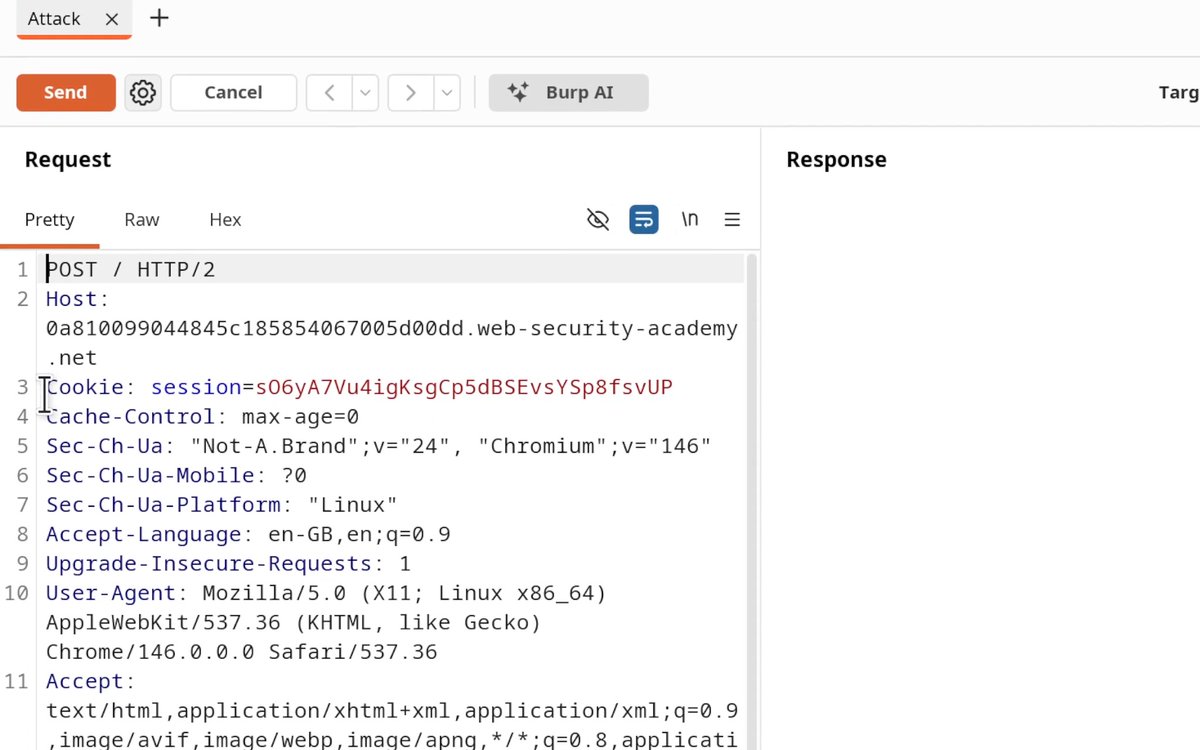
CL.TE request smuggling works when front-end and back-end disagree on where your request ends.

Web Security Academy
在 X 上查看@WebSecAcademy15万 位关注者
18,013 次观看
CL.TE request smuggling works when front-end and back-end disagree on where your request ends. The attacker hides a second request in the body of the first.
Here's a demo 👇
Practice with PortSwigger's Web Security Academy.
3 条评论
评论来自 X (Twitter) 上的原帖

@rabixSecurity
A good reminder that web security isn't only about writing secure code—it's also about understanding how every component processes requests.

@obsesivoazul
Solid demo. CL.TE gets overlooked in telecom security audits but with layered proxy setups in 5G cores, it's critical we test for this.

@AMIABLESTEVE
Web security starts where protocol assumptions break. If your proxy and origin server disagree on request boundaries, attackers will gladly take advantage. Great demo.