Загрузка видео...

Не удалось загрузить видео

На главную

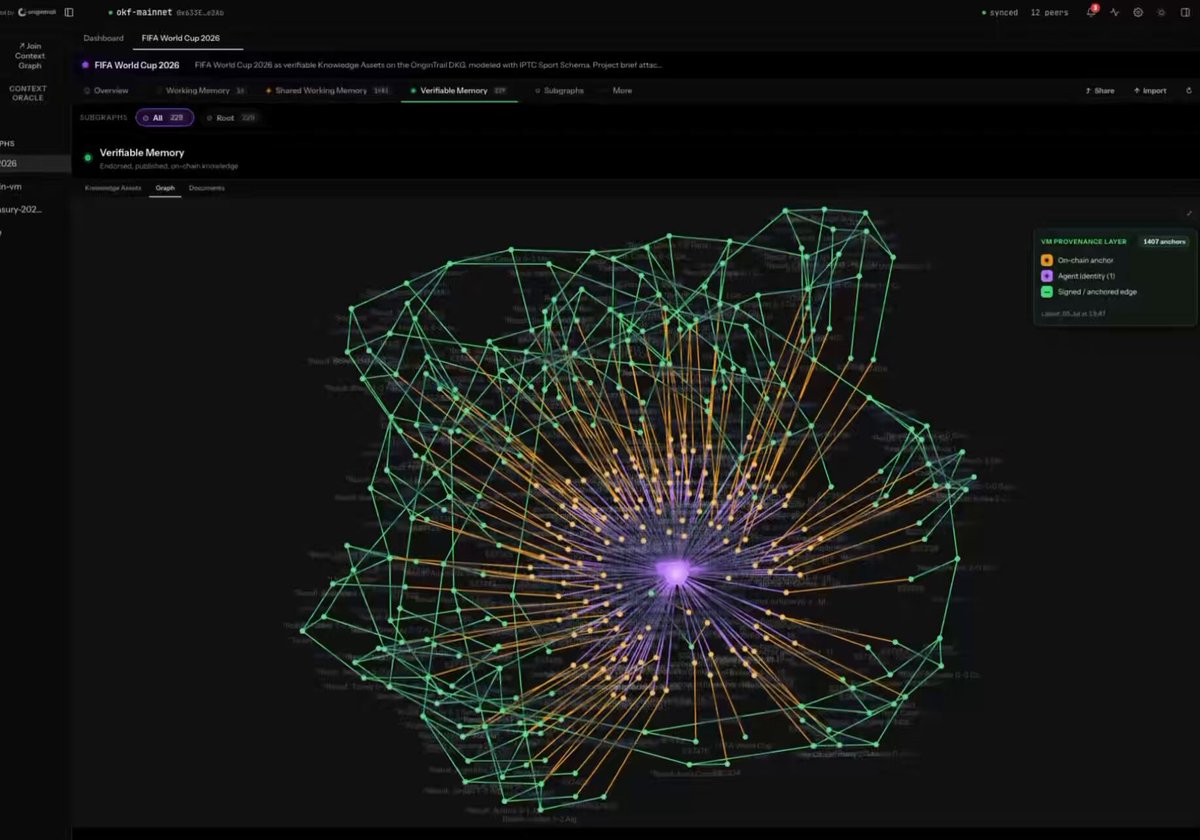
Context is power. Context shared is power multiplied. Every AI agent today builds context, then loses it. Work doesn't compound. OriginTrail is built differently: three memory layers, one shared graph, provenance baked in. DKG v10 now integrates with Hermes of Nous Research, OpenClaw🦞, Claude (Code & Desktop), Cursor, Codex...

1,723,329 просмотров • 2 месяцев назад •via X (Twitter)

Комментарии: 0

Нет доступных комментариев

Здесь появятся комментарии из оригинального поста

Похожие видео

Everyone wants agent swarms. Very few people are talking seriously enough about the context layer that makes swarms useful. Even with one agent, context is fragile. Too little context and the agent guesses. Too much context and it wastes tokens, loses focus, or reasons over irrelevant noise. The sweet spot is precise context: the right knowledge, in the right structure, at the right moment. With many agents, that challenge explodes. Each agent produces decisions, assumptions, findings, summaries, risks, and partial conclusions. Unless that knowledge becomes shared, structured, and reusable, every new agent is forced to rediscover what another agent already learned. That is not a swarm. That is a crowd. Shared context graphs are what turn agent activity into agent collaboration, and OriginTrail DKG V10 brings them to life. Was just playing with some final polishing for the V10 release, and it is really powerful to see shared context graphs where multiple agents contribute knowledge into the same connected memory, with attribution visible directly in the graph ui. That matters for three reasons. First, agents can access and build on one shared memory instead of staying trapped in isolated sessions. Second, the graph structure helps them retrieve the exact context they need, instead of stuffing everything into a prompt and hoping the model sorts it out. Third, verifiability of provenance. You can see which agent contributed each piece of knowledge, trace the source, and decide what to trust. Tokenmaxxing starts with fewer tokens, but the deeper story is coordination - agents stop reloading the world and start building on shared, verifiable context. That is the foundation for serious multi-agent work across software engineering, research, finance, operations, project management, and far beyond. The future is not more agents, it is agents working from shared, verifiable context. But the more the merrier, of course.

Jurij Skornik

11,070 просмотров • 2 месяцев назад

HERMES AGENT VS OPENCLAW. a local ai onboarding flow test. a 3.9gb bonsai served on localhost, both agents upstream and latest, i point each one at the endpoint and watch which one even finds it. > hermes opens a provider menu, thirty plus options, local servers sitting right there next to the cloud ones, i hand it 127.0.0.1:8899, it verifies the endpoint, one model visible, auto-detects the model by name, bonsai-27b-q1_0, reads the context length straight off the server, saves it, and starts reasoning and firing real tool calls on my local model. no key. no friction. > openclaw has no menu. it goes hunting for a codex login, an openai key, finds none because there are none, prints no models available three times, defaults to openai/gpt-5.5, a cloud model it cannot reach, and dead ends on run auth login --provider openai. read that back. it asked me for an openai key. to run a model already running on my own machine. it never once looked at localhost. to be fair, openclaw can run local if you hand wire endpoint yourself. what it will not do is find the model already sitting on your box. hermes agent found it in one line. now the part i owe you. the auto-detect that just won, the model name read, the .gguf strip, the context length probe off the server, that is my code, it is in hermes agent main right now, authorship preserved, #2051 and #4218. the wizard fix that stops an agent from silently routing you to someone else's creds, the exact trap openclaw still falls into, mine too, #4210. i contribute to hermes agent, i told you that going in. one agent is built to talk to whatever you are running, the other is built to talk to a cloud api, so one found my model and ran it and the other asked me to log into openai. onboarding flow of both, mapped, below.

Sudo su

23,816 просмотров • 12 дней назад