Загрузка видео...
Не удалось загрузить видео
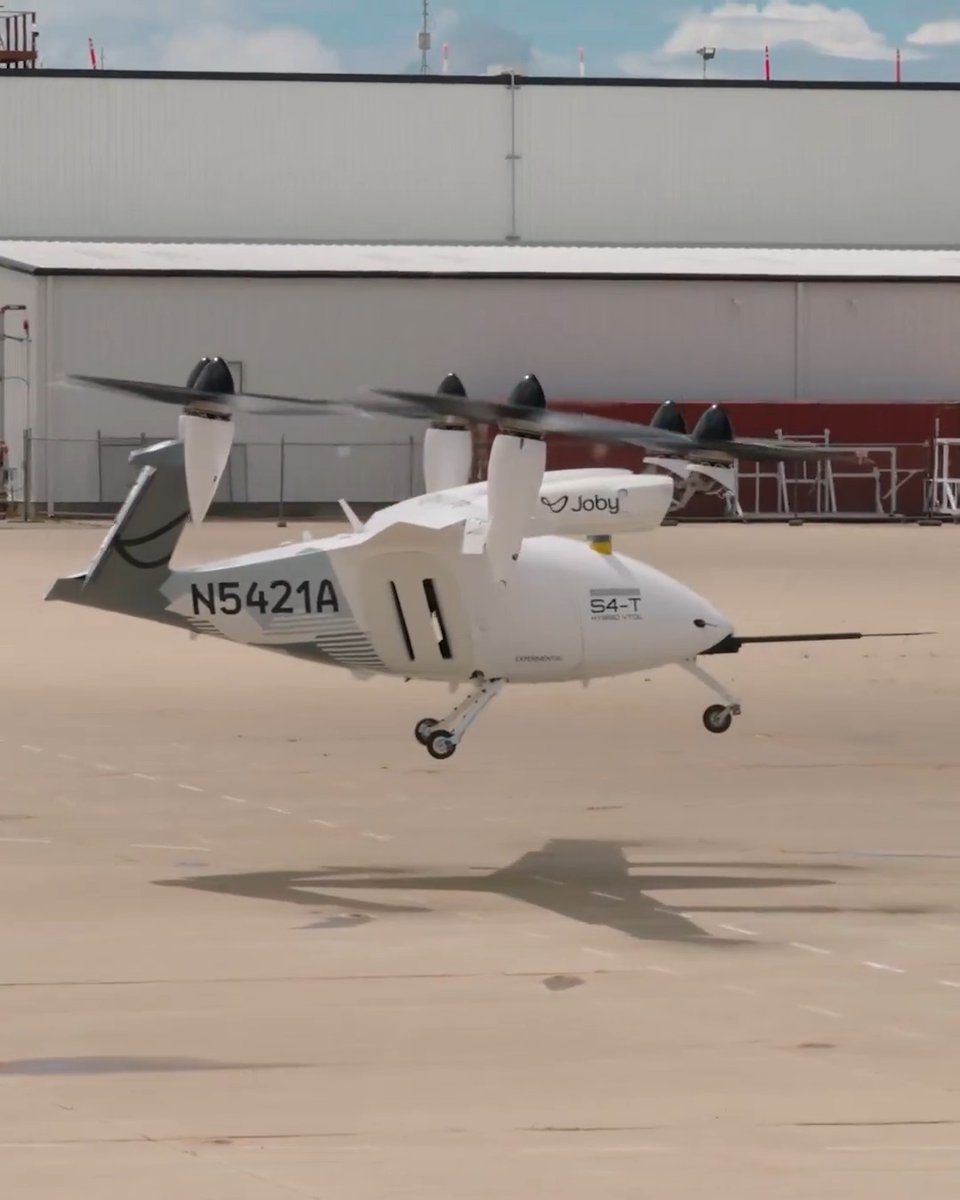
Flywing has developed the X-WING, a compact VTOL FPV aircraft that combines vertical takeoff with fast fixed-wing flight. It can take off vertically, hover, and switch to forward flight with a single command for smooth and stable performance. With long flight time and a foldable design, it blends the... show more

276,651 просмотров • 5 месяцев назад •via X (Twitter)
Комментарии: 31

You could put something like the b-17 ball turret on this thing for a full-sized transitional cockpit, where when sitting vertical, it could auto level for landing/takeoff orientation. It could potentially come out of the top and bottom. If you’d like a drawing, let me know.

***Chinese-made product with U.S. distribution and support. If you’re specifically looking for fully U.S.-manufactured RC aircraft or VTOL FPV models, this one doesn’t qualify.

@aerovironment did it first with the Quantix, about 12 years ago...

Who is the cockpit for? A chipmunk??

To anybody wondering, this is not just a concept. Flywing has real flying prototypes (CES demos show full VTOL/hover to fixed-wing cruise). Pre-orders are open now with a $50 refundable deposit to lock in early-bird pricing starting at $1,599 (retail ~$2,500). Fun albeit expensive FPV RC toy from the looks of it! Would hate to encounter the TIE fighter version when out shooting scenery 😬

Just use four of these and upscale it using a 3d printer & make a working xwing already.....

The Last Starfighter!!!

now do tie fighter

La France avait développé le Coléoptère y a 60ans. Un avion de chasse a décollage verticale qui était posé à la verticale et se mettait à l'horizontale pour avancer.

@octal Soooo close

Obvious use cases seem to be inspection, agriculture, and emergency response that require long-range transport but can't rely on a runway.

Does it rely on the propellors for yaw control? Or does it have yaw control surfaces that my old eyes just aren't spotting?

Missed the chance to use X' gona give it to you background music

Scale it up enough to carry me into work and back.

Looks like the last starfighter but with props. No?

When you all do Starwars X-Wing and Tie-Fighter special editions I will send you my bank account routing number and account number and you can empty everything in there and send me however that many gets me.

Just blow me.

Can't afford 20 million dollar plane make a 20k drone we still can't afford 😂😭

Christmas is only 8 months away, in case anyone was wondering what to get me...

I thought that was a piloted plane for a moment… still super cool though 👍🏻

fucking cool

1/2 Producing 1 billion Flywing-style X-WING drones per year in the U.S. is an audacious but theoretically achievable goal—equivalent to ramping up from today’s global small-drone output (roughly 1 million units annually across all consumer and small commercial models) to smartphone-scale manufacturing. The X-WING is a ~2 kg, 1-meter wingspan foldable VTOL FPV hybrid (EPP foam/ABS body with aluminum spars, ~160 Wh LiPo battery, brushless motors, FPV camera/goggles kit) currently priced at $1,500–2,000 in pre-launch/early kits. It’s a premium hobbyist product today, not a commodity. Hitting 1 billion/year (~3 million/day, or ~114,000/hour on 24/7 lines) would require treating it like iPhones or consumer electronics: fully automated, vertically integrated, and cost-optimized down to perhaps $100–300/unit through extreme scale. Here’s a realistic roadmap grounded in current U.S. strengths (automation leadership, CHIPS Act/IRA momentum, robotics/AI) and lessons from onshoring efforts: ### 1. **National Strategic Mandate + Massive Public-Private Investment** - Invoke or expand tools like the Defense Production Act, CHIPS and Science Act, and Inflation Reduction Act (IRA) into a “Drone Manufacturing Act” or national security/civilian mobility initiative. Frame it as dual-use: civilian recreation + military drone swarms (DoD’s Replicator program already aims for thousands; scale that mindset 1,000x). - Provide $100B+ in subsidies, tax credits, and low-interest loans over 5–7 years (comparable to semiconductor onshoring). States like Texas, Arizona, Ohio, and the Southeast (already attracting battery/EV plants) become hubs. - Seed demand via government procurement (e.g., 10–20% of output for defense/civilian first-responder fleets) to guarantee early revenue. ### 2. **Redesign for Extreme Manufacturability** - Simplify: Snap-fit modular assembly (fewer screws/fasteners), standardized components (common brushless motors, ESCs, FPV boards), recyclable EPP/ABS frames, and integrated electronics (embed sensors during printing). - Leverage U.S. advantages in additive manufacturing (e.g., selective absorption fusion for drone airframes at injection-molding costs) and AI-driven design optimization. - Target 50–70% fewer unique parts than the current prototype. Open-source non-core IP or partner with U.S. firms (e.g., via Manufacturing USA institutes) to accelerate iteration. ### 3. **Build a Domestic Supply Chain from Raw Materials to Final Assembly** - **Batteries**: Each drone needs ~160 Wh. One billion/year = ~160 GWh annual demand—exactly what the U.S. is adding in new gigafactory capacity in 2025 alone. Expand existing momentum (160 GWh new capacity coming online this year; total U.S. Li-ion output already up 140% since 2020) with dedicated “drone battery” lines using IRA incentives. Shift to sodium-ion or LFP chemistries where possible to reduce lithium dependence. - **Motors/Electronics**: Onshore brushless motor production (e.g., expand facilities like EU Motors’ new Florida plant) and PCBs/flight controllers via TSMC/Intel Arizona fabs and CHIPS-funded facilities. Use U.S./allied chip designs for flight controllers and FPV systems. - **Airframes/Materials**: Domestic chemical plants for EPP foam and ABS; aluminum spars from U.S. mills. Recycle programs for end-of-life drones. - Vertical integration: One company (or consortium) owns the stack—like Tesla’s approach to EVs—to eliminate margins and delays. ### 4. **Deploy Hyper-Automated “Gigadrone” Factories** - Build 20–50 fully robotic mega-plants (each producing 20–50 million/year) modeled on Tesla Gigafactories or Foxconn iPhone lines, but 10x more automated with AI vision, cobots, and predictive maintenance. - Examples already exist at smaller scale: NIDE-style UAV automation lines, SAF additive manufacturing for thousands of drones/year, and high-density SMT electronics assembly.

what's the real world use case for this device or is it just a fun toy?

Now pack them with explosives make them swarm and sell them to the Pentagon

Cc @be_rosebee 😳👀

Why did they give it a cockpit? Are the Chingers about to deploy?

🕶️

I wonder if my cat will like flying?

The Ukranians are gonna LOVE this thing.

It looks like something out of Star Wars.

Cool