Loading video...

Video Failed to Load

Go Home

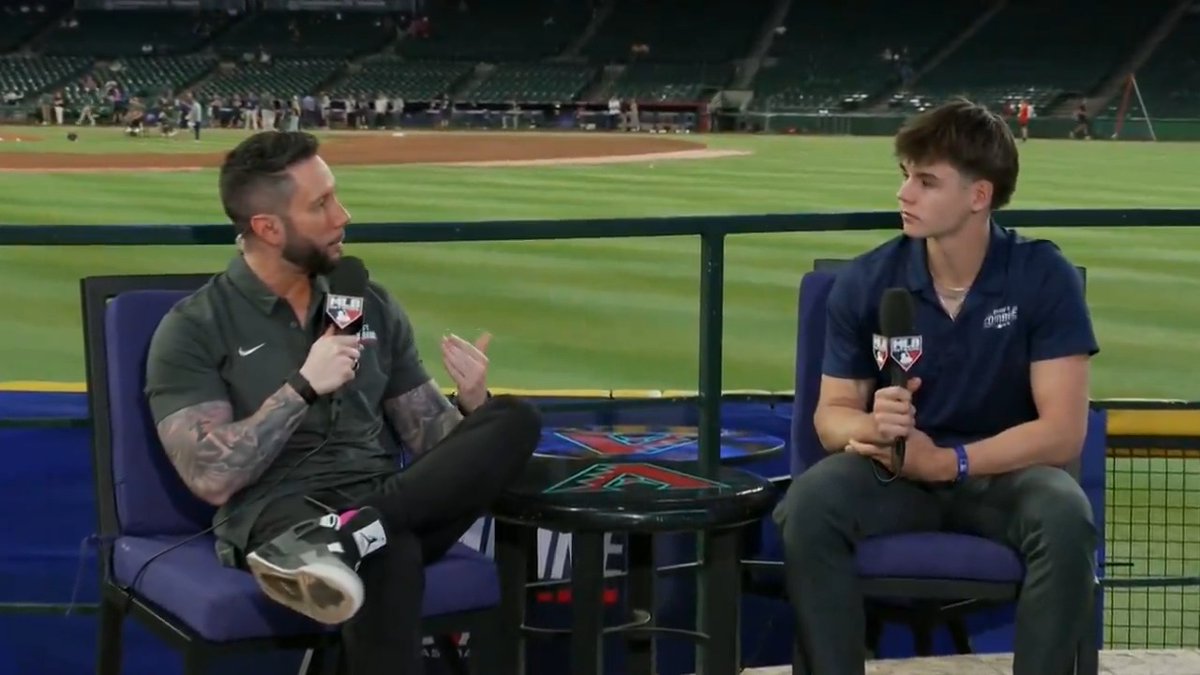
📢 Michael Beale on Coaching Ratios & Bespoke Training In the "Voices from Elite Development" webinar by FIFA High Performance, Beale highlighted how NBA & NFL use lower coaching ratios than football, leading to more bespoke training & faster development.

17,271 views • 1 year ago •via X (Twitter)

5 Comments

Futbol Nothing Else's profile picture
Futbol Nothing Else1 year ago

Where's the link please?

Noah Basketball's profile picture
Noah Basketball2 years ago

Train your shooters on the same technology the top coaches use for player evaluation. #MakeMoreShots #WinMoreGames

Mark Lee's profile picture
Mark Lee1 year ago

@PeterPrickett This is superb! Where is the footage from?

Diogo Laranjeira's profile picture
Diogo Laranjeira1 year ago

olá, Jorge. Tens link para o webinar?

Thomas Cryan's profile picture
Thomas Cryan1 year ago

Had a look on their site but can’t find it, would love the link!

Related Videos

New Course: Post-training of LLMs Learn to post-train and customize an LLM in this short course, taught by Banghua Zhu, Assistant Professor at the University of Washington University of Washington, and co-founder of @NexusflowX. Training an LLM to follow instructions or answer questions has two key stages: pre-training and post-training. In pre-training, it learns to predict the next word or token from large amounts of unlabeled text. In post-training, it learns useful behaviors such as following instructions, tool use, and reasoning. Post-training transforms a general-purpose token predictor—trained on trillions of unlabeled text tokens—into an assistant that follows instructions and performs specific tasks. Because it is much cheaper than pre-training, it is practical for many more teams to incorporate post-training methods into their workflows than pre-training. In this course, you’ll learn three common post-training methods—Supervised Fine-Tuning (SFT), Direct Preference Optimization (DPO), and Online Reinforcement Learning (RL)—and how to use each one effectively. With SFT, you train the model on pairs of input and ideal output responses. With DPO, you provide both a preferred (chosen) and a less preferred (rejected) response and train the model to favor the preferred output. With RL, the model generates an output, receives a reward score based on human or automated feedback, and updates the model to improve performance. You’ll learn the basic concepts, common use cases, and principles for curating high-quality data for effective training. Through hands-on labs, you’ll download a pre-trained model from Hugging Face and post-train it using SFT, DPO, and RL to see how each technique shapes model behavior. In detail, you’ll: - Understand what post-training is, when to use it, and how it differs from pre-training. - Build an SFT pipeline to turn a base model into an instruct model. - Explore how DPO reshapes behavior by minimizing contrastive loss—penalizing poor responses and reinforcing preferred ones. - Implement a DPO pipeline to change the identity of a chat assistant. - Learn online RL methods such as Proximal Policy Optimization (PPO) and Group Relative Policy Optimization (GRPO), and how to design reward functions. - Train a model with GRPO to improve its math capabilities using a verifiable reward. Post-training is one of the most rapidly developing areas of LLM training. Whether you’re building a high-accuracy context-specific assistant, fine-tuning a model's tone, or improving task-specific accuracy, this course will give you experience with the most important techniques shaping how LLMs are post-trained today. Please sign up here:

Andrew Ng

125,146 views • 1 year ago