Video yükleniyor...
Video Yüklenemedi
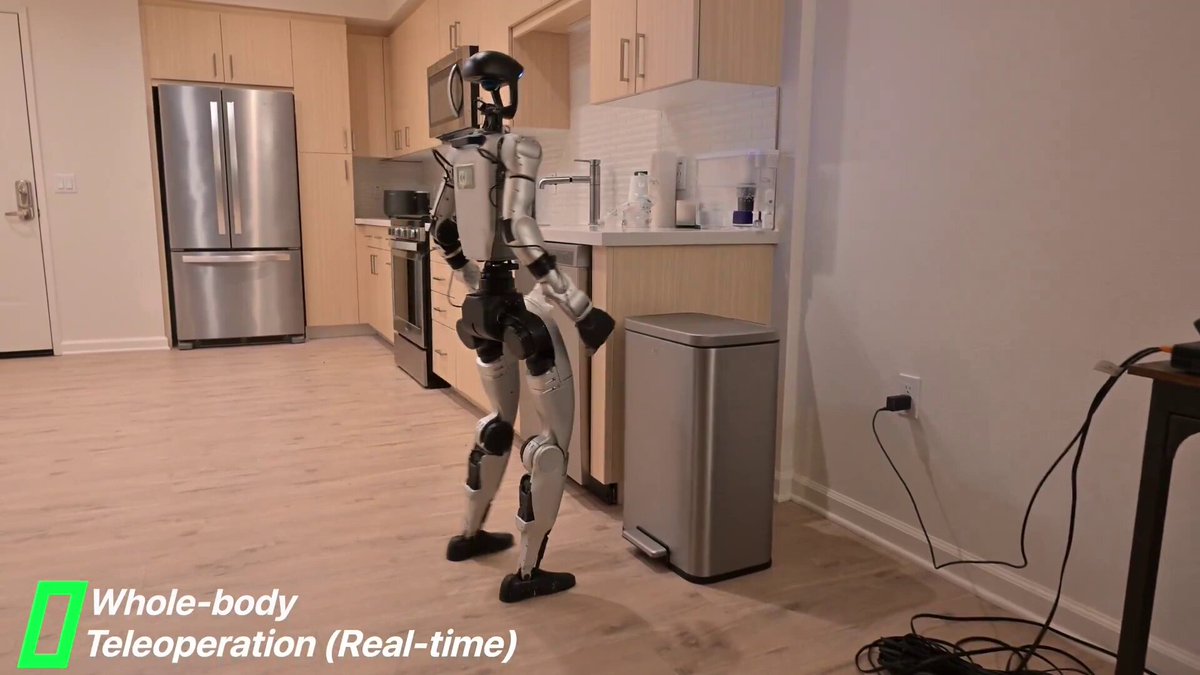
NVIDIA has released MotionBricks, an AI that generates character motion at a reported 15,000 frames per second with just 2ms latency on an RTX 5090. Trained on 350,000+ motion clips, it lets developers build new interactions for game characters and humanoid robots without retraining.

66,990 görüntüleme • 22 saat önce •via X (Twitter)
32 Yorum

gaming with AI is going to be revolutionary.

yes, and i am so super duper ready for it!

game characters finally moving without that awkward robot shuffle

This was fancy proprietary motion matching tech not that long ago.
#accelerate

15k fps motion gen at 2ms on a 5090? robotics and games folks eating good

15,000 frames a second of an NPC walking face first into a wall.

This is so sick. I wonder if it can do animals
NVIDIA is cooking rn

My buddie at a major game publisher last month: "Everyone's shaken. We all see what AI can do. We know it's what we do. We're all wondering if we have jobs in a year." When asked how long he thought it would be until AI creates AAA titles via prompt, he said: "Oh, 1 maybe 2 years tops."

2ms per motion frame changes where this runs. At that latency you can do motion on the game server or robot controller itself instead of baking animations ahead of time, and the real constraint becomes how many characters you can pack onto one GPU before frame budgets slip.

motion keeps getting solved faster than the what am i even holding part. a robot that moves perfectly and still can't tell a sock from a charging cable is basically my living room

The 15,000 fps number is nuts but the robot part is what gets me. Games were always the easy sell. Who's first to put this on an actual humanoid?

now do one that keeps a face consistent between angles

2ms on a 5090 is the lab number. in a real game the same gpu is busy rendering too, and most players are nowhere near a 5090

2ms is like 12% of a single 60fps frame. and 15k fps is 250x what a 60fps game needs, so one 5090 could in theory drive a whole crowd of characters live

That latency number is pretty wild.

15k fps of motion and my coding agent still trips over a simple migration

15,000 fps at 2ms latency means motion generation stops being the bottleneck for humanoids. You could sample dozens of candidate motions per control tick and keep the safest. The gap moves to physics: 350k mocap clips rarely include slips, falls or uneven loads.

The 2ms latency is the part that turns this from a cool demo into something developers can actually build around.

Are you deeping how 15k FPS at 2ms is crazy?

AI moving beyond content generation into physical-world intelligence.

2ms fits inside a game frame budget, so this could run live. 'no retraining' for humanoid robots is the part i'd want to see tested

the 2ms is the real number. a 60fps frame is 16.7ms, so motion gen fits in ~12% of the budget. and 15,000 fps on one 5090 is ~250 characters at 60fps from a single card on paper. crowds stop being canned loops

15k fps at 2ms basically makes motion generation free per frame. the hard part moves to contact. kinematic clips that look great on screen still slide feet and lose balance once a real humanoid has to execute them under physics

15k fps motion means npcs are now bottlenecked on the writing, not the animation

@grok does this generate animations that can be imported into games or just video clips?

350,000 motion clips and the character I make will still crouch repeatedly at strangers.

Didn’t we see this video a few weeks ago?

based on the repo the code is apache 2.0, the weights are under nvidia's open model agreement, which allows commercial use. but checkpoints only exist for two skeletons right now, nvidia's soma body model and the unitree g1. and the sample motion clips are evaluation-only.

Now people can just point Claude at this, and all those AI slop games can have great movement.

15,000 fps on a 5090, nice. Now try it on a real robot standing on a rug.