正在加载视频...

视频加载失败

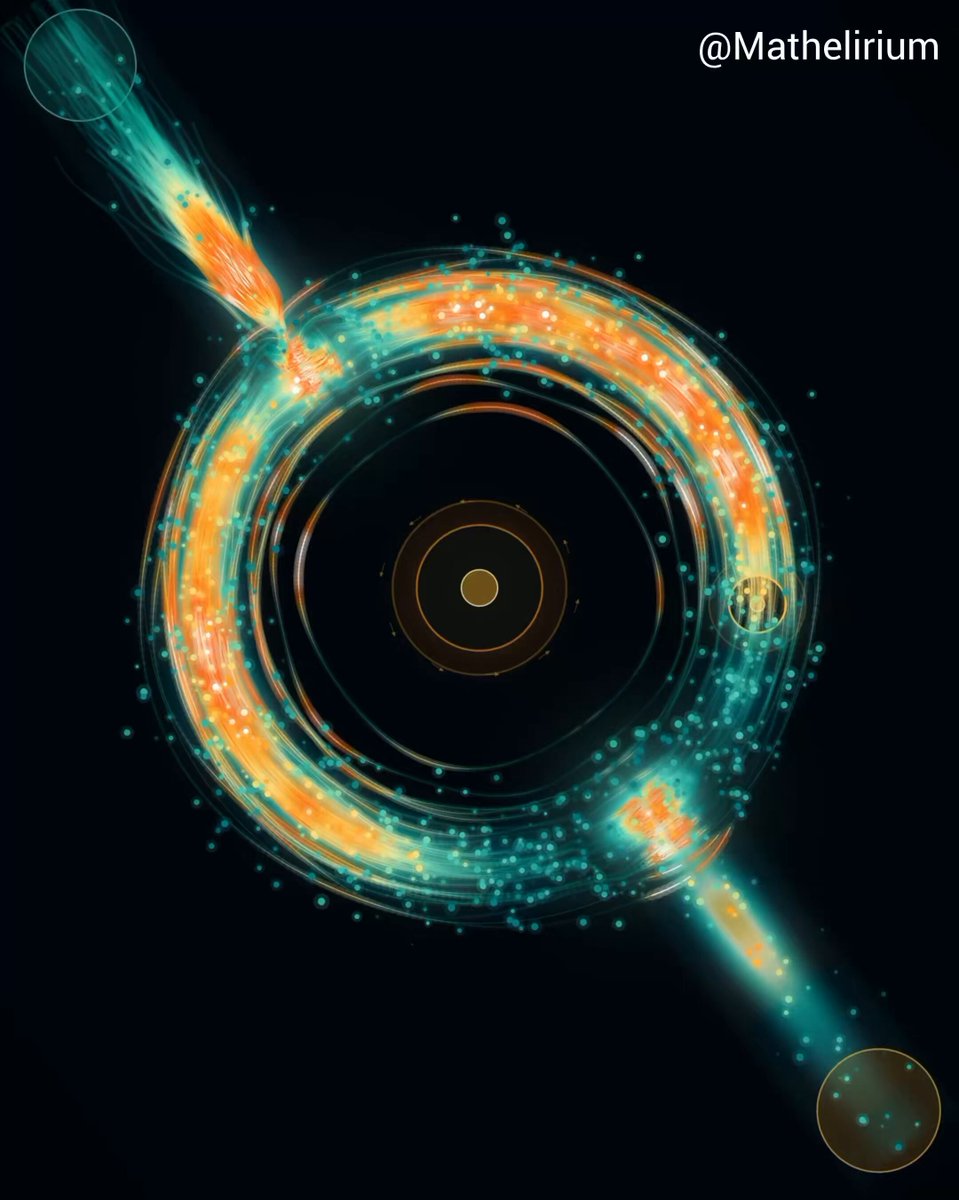
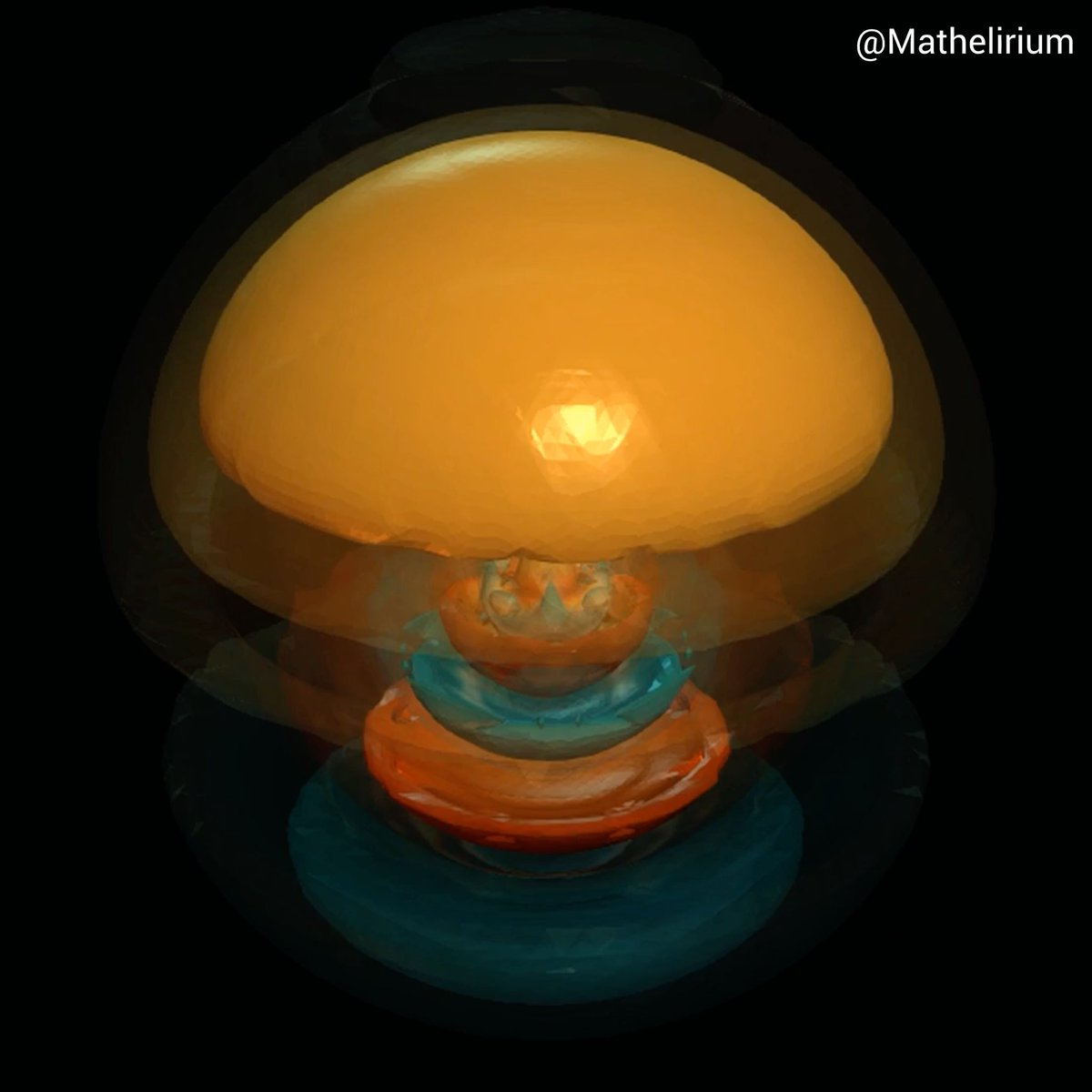
Quantum Probability Surface Goes Negative A Schrödinger-Cat state is built from two separated coherent wavepackets, |ψ⟩=N(|α⟩+|−α⟩), and its Wigner function reveals the part of Quantum Mechanics that ordinary probability cannot show. The two bright lobes behave like classical possibilities, while the interference between them carves negative valleys into phase...

12,603 次观看 • 3 天前 •via X (Twitter)

0 条评论

暂无评论

原始帖子的评论将显示在这里

相关视频

Quantum Mechanics Series Lecture 4 Lecture 1 established that ρ(x,t) = |ψ(x,t)|² behaves like a conserved probability density. Lecture 2 showed what drives that flow. We also saw that writing ψ = r exp(iθ) makes the probability current proportional to the phase gradient, making it clear that phase geometry literally steers the motion. Lecture 3 then showed that the centroid of that flow can move almost classically when the packet is tight and the external potential is smooth. However, that raises yet another question. If the centroid can look classical, why does the full wave still spread, bend, split, and interfere in ways no classical particle cloud would? This is because the wave is not driven only by the external potential. It is also driven by its own curvature. Write ψ(x,t) = r(x,t) exp(iθ(x,t)) with ρ = r². Then Schrödinger’s equation gives two coupled real equations. One is the continuity equation you already know. The other looks like a Hamilton-Jacobi equation, but with one extra term: Q = −(1/2m) ∇²r / r This is the so-called Quantum Potential. It depends entirely on how the amplitude bends across space. So, the wave is being shaped not only by V(x,t), but also by the geometry of its own envelope. In the animation, the upper surface is still |ψ| and its skin is still colored by arg(ψ). The glowing threads still trace the probability current. But now a second membrane hangs underneath. That lower membrane encodes the quantum potential Q itself. The porcelain bead marks the quantum centroid. The amber bead follows a classical centroid under the same external V. When those paths separate, the lower membrane tells you why. The difference is not magic but the extra term classical mechanics does not have. The math breakdown: Start from Schrödinger evolution in units with ħ = 1: i ∂ψ/∂t = [ −(1/2m) ∇² + V(x,t) ] ψ Write the state in polar form: ψ = r exp(iθ) Then ρ = |ψ|² = r² From the imaginary part, you recover probability conservation: ∂ρ/∂t + ∇·j = 0 with j = (1/m) Im(ψ* ∇ψ) = (ρ/m) ∇θ So the local velocity field is v = j / ρ = ∇θ / m Now take the real part of Schrödinger’s equation. That gives ∂θ/∂t + |∇θ|² / (2m) + V + Q = 0 where Q = −(1/2m) ∇²r / r This is the classical Hamilton-Jacobi equation with one extra term. That extra term is what makes quantum motion locally different from classical motion. Take a gradient of that phase equation and use v = ∇θ / m. Then the flow obeys an Euler-like equation: ∂v/∂t + (v·∇)v = −(1/m) ∇(V + Q) In other words, there are really two forces in the problem. One comes from the external potential V. The other comes from the wave’s own curvature through Q. That is why Ehrenfest is only approximate. The centroid can still satisfy d⟨x⟩/dt = ⟨p⟩/m d⟨p⟩/dt = −⟨∇V⟩ but the internal shape of the packet evolves under the combined influence of V and Q. When the packet stays broad and smooth, Q is gentle and the motion looks more classical. When the packet develops sharp curvature or interference structure, Q becomes strong and the classical picture breaks down. That is what this scene is designed to show live. #QuantumMechanics #Wavefunction #SchrodingerEquation #BornRule #ProbabilityCurrent #ContinuityEquation #Phase #EhrenfestTheorem #QuantumPotential #Madelung #HamiltonJacobi #MathematicalPhysics #Mathematics #Physics

Mathelirium

20,307 次观看 • 2 个月前

Why Does Quantum Mechanics Use a Complex Wavefunction? Schrödinger’s equation doesn’t start from mystery. It starts from a very specific bet. The state of a particle is a complex field ψ(x,t), and whatever time-evolution rule we choose has to move ψ forward while preserving total probability. So the basic question is simple. What equation should ψ satisfy so that |ψ|² behaves like a conserved density, the way mass density does in fluid flow? What is ψ? Think of ψ(x,t) as an amplitude attached to the statement the particle is at position x at time t. It’s not a probability. It’s the thing you add first, and only at the end do you square it: p(x,t) = |ψ(x,t)|² Because ψ is complex, it has magnitude and phase. Write it as ψ(x,t) = r(x,t) exp(i θ(x,t)) Then r² = |ψ|² is the density, and the phase θ ends up controlling the flow through the probability current. Where does Schrödinger’s equation come from? Start with two empirical inputs that tie waves to particles: E = ħ ω p = ħ k Here ħ is Planck’s constant divided by 2π. It’s the conversion factor between frequency and energy, and between wavenumber and momentum. A plane wave with angular frequency ω and wavevector k is ψ(x,t) = A exp(i(k·x − ωt)) Now watch what derivatives do to this wave: ∂ψ/∂t = −i ω ψ ∇ψ = i k ψ ∇²ψ = −|k|² ψ Multiply by ħ and you get: i ħ ∂ψ/∂t = ħ ω ψ = E ψ −i ħ ∇ψ = ħ k ψ = p ψ −ħ² ∇²ψ = ħ² |k|² ψ = p² ψ So for plane waves, the operators Ê = i ħ ∂/∂t p̂ = −i ħ ∇ act like energy and momentum. Now bring in the classical, nonrelativistic energy bookkeeping: E = p²/(2m) + V(x) Kinetic plus potential. That’s it. Turn it into an equation for ψ by replacing E and p with the operators above: Ê ψ = (p̂²/(2m) + V) ψ Since p̂² = (−i ħ ∇)·(−i ħ ∇) = −ħ² ∇², this becomes i ħ ∂ψ/∂t = ( −ħ²/(2m) ∇² + V(x) ) ψ That’s the time-dependent Schrödinger equation. This derivation is a controlled heuristic. Match the plane-wave identities to the measured relations E = ħω and p = ħk, then impose the same energy bookkeeping you trust in classical mechanics. Why this is the right kind of rule If ψ is the state, we need a rule that preserves total probability: ∫ |ψ(x,t)|² dx = 1 Schrödinger evolution does, and you can see it by deriving a continuity equation. Let ρ(x,t) = |ψ|² = ψ*ψ. Differentiate: ∂ρ/∂t = ψ* ∂ψ/∂t + ψ ∂ψ*/∂t Use Schrödinger and its complex conjugate. The potential terms cancel, and what’s left can be rearranged into ∂ρ/∂t + ∇·j = 0 with probability current j = (ħ/(2mi)) ( ψ* ∇ψ − ψ ∇ψ* ) That’s the cleanest way to say what ψ is. |ψ|² behaves like a conserved density, the phase drives a current, and the time evolution is fixed, up to V, by combining wave relations with energy bookkeeping: i ħ ∂ψ/∂t = ( −ħ²/(2m) ∇² + V ) ψ #QuantumMechanics #SchrodingerEquation #WaveFunction #BornRule #Physics #MathematicalPhysics

Mathelirium

19,836 次观看 • 4 个月前

Lecture 3 of our Quantum Mechanics series. Lecture 2 gave us the one clean privilege quantum theory offers: treat ψ(x,t) as the state and ρ(x,t) = |ψ(x,t)|² as probability, because Schrödinger evolution forces ρ to obey a continuity equation. Lecture 3 is what that continuity equation is really telling you. If ρ behaves like a fluid, then the only question that matters is: What is the velocity field? Write ψ(x,t) = r(x,t) exp(i θ(x,t)). The magnitude r sets how much probability is sitting there. The phase θ sets where it tries to go. When you unpack the current j = Im(ψ* ∇ψ), it collapses to j = (ρ/m) ∇θ, which means the flow lines you draw are literally contours of phase geometry. Then the constraint that makes the picture bite: ψ has to be single-valued, so θ can’t wind by an arbitrary amount. Around any closed loop the total phase change must be 2π n, with n an integer. That’s why vortices aren’t features you add...they’re defects the math permits, in quantized units. In the render you see both layers at once...the 3D surface shows |ψ| breathing while the phase skin slides, and the 2D panel exposes the engine...current lines steering around discrete vortex charges. The math breakdown We write the state as a complex field ψ(x,t) on the plane (x in R²). The Born rule defines the probability density ρ(x,t) = |ψ(x,t)|² Schrödinger evolution (ħ = 1 units) is i ∂ψ/∂t = [ −(1/2m) ∇² + V(x,t) ] ψ Now derive conservation of probability. Start with ρ = ψ*ψ: ∂ρ/∂t = ψ* (∂ψ/∂t) + ψ (∂ψ*/∂t) Use Schrödinger and its complex conjugate: ∂ψ/∂t = (1/i) [ −(1/2m) ∇²ψ + Vψ ] ∂ψ*/∂t = (−1/i) [ −(1/2m) ∇²ψ* + Vψ* ] Substitute. The V terms cancel, and the remaining terms rearrange into the continuity equation ∂ρ/∂t + ∇·j = 0 with probability current j = (1/2mi) ( ψ* ∇ψ − ψ ∇ψ* ) = (1/m) Im(ψ* ∇ψ) So "probability density" really behaves like a conserved fluid density with flux j. Now expose the phase mechanism. Write ψ in polar form ψ(x,t) = r(x,t) exp(i θ(x,t)) Compute the gradient ∇ψ = exp(iθ) (∇r + i r ∇θ) Then ψ* ∇ψ = r (∇r + i r ∇θ) Taking the imaginary part gives Im(ψ* ∇ψ) = r² ∇θ = ρ ∇θ So the current becomes j = (ρ/m) ∇θ That’s the steering-wheel statement: Phase gradient sets the flow direction and speed (modulated by density and m). Finally, quantized vortices. Because ψ must be single-valued, going around any closed loop must return the same complex value. That forces the phase winding to be an integer multiple of 2π: ∮ ∇θ · dl = 2π n with n in Z n is the vortex charge. Vortex cores sit where ρ ≈ 0 (phase is undefined), and the current streamlines circulate around them. #QuantumMechanics #Wavefunction #SchrodingerEquation #BornRule #ProbabilityCurrent #ContinuityEquation #Phase #Vortices #TopologicalDefects #ComplexAnalysis #MathematicalPhysics #Mathematics #Physics

Mathelirium

37,998 次观看 • 5 个月前

Quantum mechanics has a reputation for being mystical mainly because people skip the rules and jump to interpretations. In this lecture series, we’re doing the opposite. We start from the rules, follow the algebra, and let the picture be the calculation. Classical Probability Theory combines alternatives by adding their probabilities. Quantum Theory combines them one step earlier…add complex amplitudes first, then square at the end. That swap in order is everything. Expand |a₁ + a₂|² and you don’t just get |a₁|² + |a₂|²…you get a cross-term, 2 Re(a₁ a₂*). Its sign is set by phase, so the same two contributions can reinforce or cancel. Interference is just the algebra of squaring a sum. In the 3D render, the surface height is proportional to |a(x)| (so peaks become bright bands after squaring), while the surface skin is colored by the local phase arg(a(x)). As the phase knob φ(t) is swept on path 2, the cross-term oscillates, and you literally watch the interference ridges slide across the screen. We model a detector screen with coordinates x in R² (think x = (x,y)). A quantum state assigns a complex amplitude a(x). The rule for outcomes is p(x) = |a(x)|² Now the key situation: two coherent alternatives contribute to the same outcome x. Let their amplitudes be a₁(x) and a₂(x). Quantum says a(x) = a₁(x) + a₂(x) So the probability density becomes p(x) = |a₁(x) + a₂(x)|² Expand it (this is the whole episode): p(x) = (a₁ + a₂)(a₁* + a₂*) = |a₁|² + |a₂|² + a₁ a₂* + a₁* a₂ = |a₁|² + |a₂|² + 2 Re(a₁ a₂*) That last term is the interference term. It can be positive or negative. To see phase explicitly, write each contribution in polar form: a₁(x) = r₁(x) exp(i θ₁(x)) a₂(x) = r₂(x) exp(i θ₂(x)) Then a₁ a₂* = r₁ r₂ exp(i(θ₁ − θ₂)) So the cross-term is 2 Re(a₁ a₂*) = 2 r₁ r₂ cos(θ₁(x) − θ₂(x)) That’s the fringe engine: p(x) = r₁² + r₂² + 2 r₁ r₂ cos(Δθ(x)) Now the phase knob we animate: Add a controllable phase shift φ to path 2: a₂(x) → a₂(x) exp(i φ) Then Δθ(x) → Δθ(x) − φ, so p(x; φ) = r₁² + r₂² + 2 r₁ r₂ cos(Δθ(x) − φ) As φ changes smoothly, the bright/dark pattern slides continuously. Same setup, same geometry, same magnitudes r₁,r₂, only phase changed. #QuantumMechanics #WaveInterference #ComplexAmplitudes #DoubleSlit #Physics #Mathematics

Mathelirium

81,405 次观看 • 5 个月前

Warmup to Statistical Mechanics What Exactly is a Hamiltonian A System? In ordinary Mechanics, you might begin with position and velocity. Hamiltonian Mechanics rewrites the same motion in a different language. Instead of position and velocity, it uses position and momentum. We write the position variables as q and the momentum variables as p. Then the full state of the system at one instant is (q, p) That pair is one point in phase space. Why do we do this? Because in these variables, the equations of motion take a remarkably clean form. Everything is generated by one single function, the Hamiltonian H(q, p) and in the simplest cases this Hamiltonian is just the total energy written in terms of position and momentum. So if you know H, you know the dynamics. You might wonder, but how can one function generate motion? The rule is dqᵢ/dt = ∂H/∂pᵢ dpᵢ/dt = −∂H/∂qᵢ These are Hamilton’s equations. Now read them slowly 😄 The rate of change of position comes from differentiating H with respect to momentum. The rate of change of momentum comes from differentiating H with respect to position, with a minus sign. This constitutes the whole engine. A simple example makes this less abstract: Take one particle of mass m moving in a potential V(q). Then the Hamiltonian is H(q, p) = p²/(2m) + V(q) The first term is kinetic energy. The second term is potential energy. Now apply Hamilton’s equations. First, dq/dt = ∂H/∂p = p/m So momentum tells you how position changes. Second, dp/dt = −∂H/∂q = −dV/dq Thus, momentum changes because of force. If you now combine these two equations, you recover ordinary Newtonian mechanics. Since p = m dq/dt, we get m d²q/dt² = −dV/dq So, Hamiltonian mechanics is not a different theory. It is the same mechanics, written in a form that exposes its geometric structure much more clearly. The animation The full 3D surface is the Hamiltonian itself, the energy landscape H(q, p). The floor underneath is phase space, marked by energy contours and the local flow field. The bright moving point is one actual state (q(t), p(t)) evolving under Hamilton’s equations. Its trail shows that the motion is not arbitrary. It is guided everywhere by the geometry of the same single function H. The render is doing more than illustrating a particle moving, it is showing how one function organizes the whole phase-space motion. The math breakdown: Start with one degree of freedom. The state is described by position q and momentum p. So the system lives in a two-dimensional phase space with coordinates (q, p) Now choose a Hamiltonian H(q, p) Think of H as the energy function. In many standard systems, H(q, p) = kinetic energy + potential energy For a particle of mass m in a potential V(q), this becomes H(q, p) = p²/(2m) + V(q) Hamilton’s equations say dq/dt = ∂H/∂p dp/dt = −∂H/∂q Now substitute this specific H. First compute the p derivative: ∂H/∂p = ∂/∂p (p²/(2m) + V(q)) = p/m So dq/dt = p/m Now compute the q derivative: ∂H/∂q = ∂/∂q (p²/(2m) + V(q)) = dV/dq So dp/dt = −dV/dq These two first-order equations completely determine the motion. Now, connect this back to Newton’s law. From dq/dt = p/m we get p = m dq/dt Differentiate both sides with respect to time: dp/dt = m d²q/dt² But Hamilton’s second equation gives dp/dt = −dV/dq So , together they imply m d²q/dt² = −dV/dq This is exactly Newton’s second law for motion in the potential V(q). Thus, Hamilton’s equations do not replace mechanic, they reorganize it. #HamiltonianMechanics #PhaseSpace #ClassicalMechanics #MathematicalPhysics #DifferentialEquations #Mathematics #Physics

Mathelirium

50,370 次观看 • 2 个月前