Video wird geladen...

Video konnte nicht geladen werden

Zur Startseite

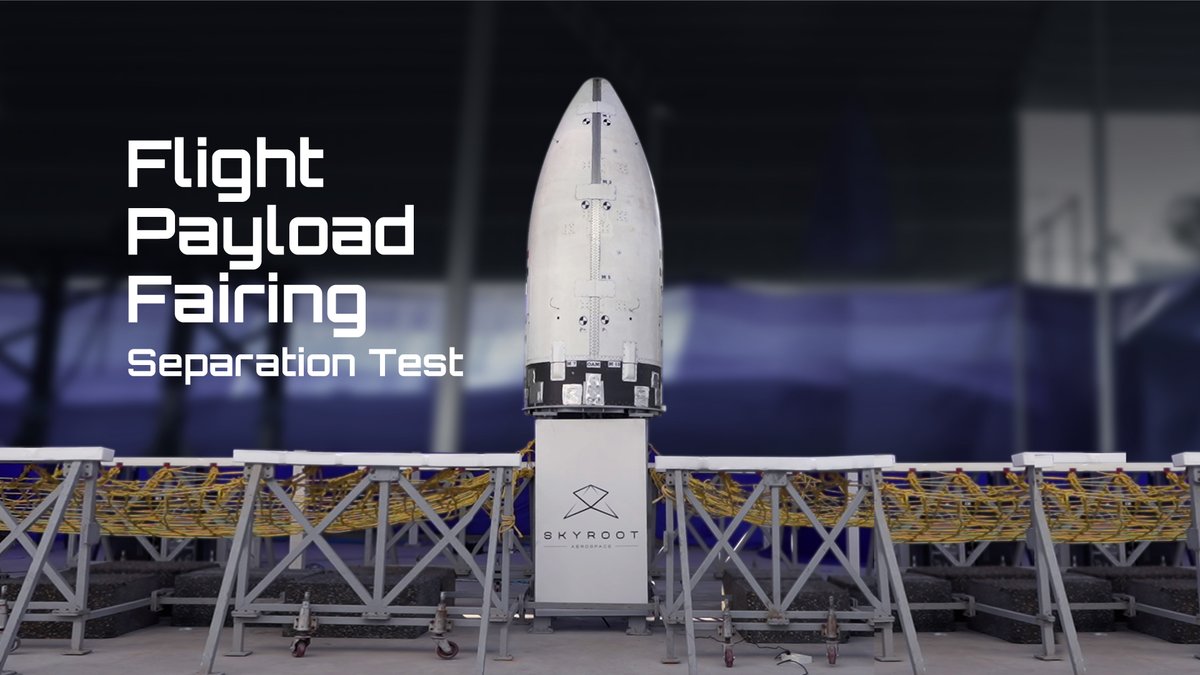
Successful stage separation test campaign ✅ We're validating stage separation for Neutron, one of the most novel rocket separation systems ever designed. From sep system design, component testing and qualification, GSE design, manufacturing, commissioning, and operations planning through to test execution - we're proving out the technology behind one...

235,377 Aufrufe • vor 3 Monaten •via X (Twitter)

0 Kommentare

Keine Kommentare verfügbar

Kommentare vom Original-Post werden hier angezeigt
Ähnliche Videos

Canada's first orbital-class rocket engine is now being manufactured! Our patent pending Hadfield-150 engine is the largest and most powerful rocket engine ever built in Canada, and the first known Canadian orbital-class engine to make it to this stage. The Hadfield-150 builds on everything we learned after years of painstakingly designing, manufacturing, and testing the Hadfield-10 series, our first regeneratively cooled and additively manufactured liquid rocket engine. Every engine test, both successful and unsuccessful on our Darkhorse test stand at Area 66, retired risk that's now carried straight into Hadfield-150 and sovereign orbital launch for Canada. A few details about the Hadfield-150 engine series: ✅ Designed to power Tundra and Tundra+, our light and medium-lift launch vehicles, and built to scale to Tempest, our larger reusable medium lift vehicle ✅ Manufactured entirely in-house, from design to print to test, for true sovereign launch capability ✅ Produced at Rocket Factory 1, on our expanding fleet of metal additive manufacturing systems at the AMA Lab, including the largest known metal 3D printer in Canada ✅ Designed for reusability and medium-lift scale from the outset, and built to significantly cut the time, infrastructure, manufacturing and cost iterative engine testing usually requires, with room to scale to even larger engines by leveraging the same design ✅ Capable of engine-out functionality, so losing one on an early flight doesn't have to mean losing the mission ✅ Optimized for Canada's Launch the North initiative, to deliver sovereign operational capability in a time and cost efficient manner Initial testing starts later this year at our new Blackhawk orbital engine test cell at Area 66, our private test range in Ontario. Stacked, integrated vehicle testing comes later at the Atlantic Spaceport Complex, our spaceport in Newfoundland and Labrador. Stay tuned for some exciting and fiery milestones ahead! 🚀🇨🇦 National Defence Defence Research and Development Canada Canadian Space Agency Transport Canada NGen Canada

NordSpace 🇨🇦

27,495 Aufrufe • vor 1 Monat

𝐒𝐩𝐚𝐜𝐞𝐗 𝐬𝐚𝐲𝐬 𝐢𝐭𝐬 𝟐𝐧𝐝 𝐒𝐭𝐚𝐫𝐬𝐡𝐢𝐩 𝐭𝐞𝐬𝐭 𝐟𝐥𝐢𝐠𝐡𝐭 𝐜𝐨𝐮𝐥𝐝 𝐥𝐚𝐮𝐧𝐜𝐡 𝐨𝐧 𝐍𝐨𝐯. 𝟏𝟕 SpaceX, under the leadership of CEO Elon Musk, is on the verge of conducting its second Starship test launch, scheduled tentatively for November 17, contingent upon receiving regulatory approval from the Federal Aviation Administration (FAA). This launch, taking place at the Starbase test site in Boca Chica Beach, Texas, is a pivotal step for SpaceX's ambitious Starship and Super Heavy booster program. The first Starship test flight in April encountered challenges, leading to a stage separation failure and subsequent intentional detonation over the Gulf of Mexico. The upcoming test aims to address these issues and demonstrate advancements, such as a new hot-stage separation system and an electronic Thrust Vector Control (TVC) system for the Super Heavy Raptor engines. Standing at nearly 400 feet tall and boasting a lift capacity of 165 tons, the Starship and Super Heavy launch system is a revolutionary project for SpaceX. The company envisions its versatility, not only as a heavy-lift launcher but also for deep space missions and even lunar landings. NASA has plans to leverage the Starship rocket for its Artemis 3 mission to land astronauts on the moon. SpaceX has diligently worked on upgrades based on lessons from the initial test flight, including enhancements to the pad foundation, a water-cooled steel flame deflector, and a new vent system. The upcoming launch will be closely monitored to evaluate reentry and landing techniques, setting the stage for future success in orbital flights. However, the regulatory landscape introduces an additional layer of complexity. The FAA is conducting an environmental review, with consultation from the U.S. Fish and Wildlife Service, to assess the impact of SpaceX's new water deluge system on the Boca Chica Wildlife Refuge. This precautionary step reflects the commitment to responsible aerospace practices. Despite these challenges, SpaceX has set up a dedicated website for the Starship Second Flight Test and plans to share a live webcast on November 17, offering enthusiasts and stakeholders a closer look at the technological strides and innovations in the pipeline.

Cyprus

12,610 Aufrufe • vor 2 Jahren