Loading video...

Video Failed to Load

Go Home

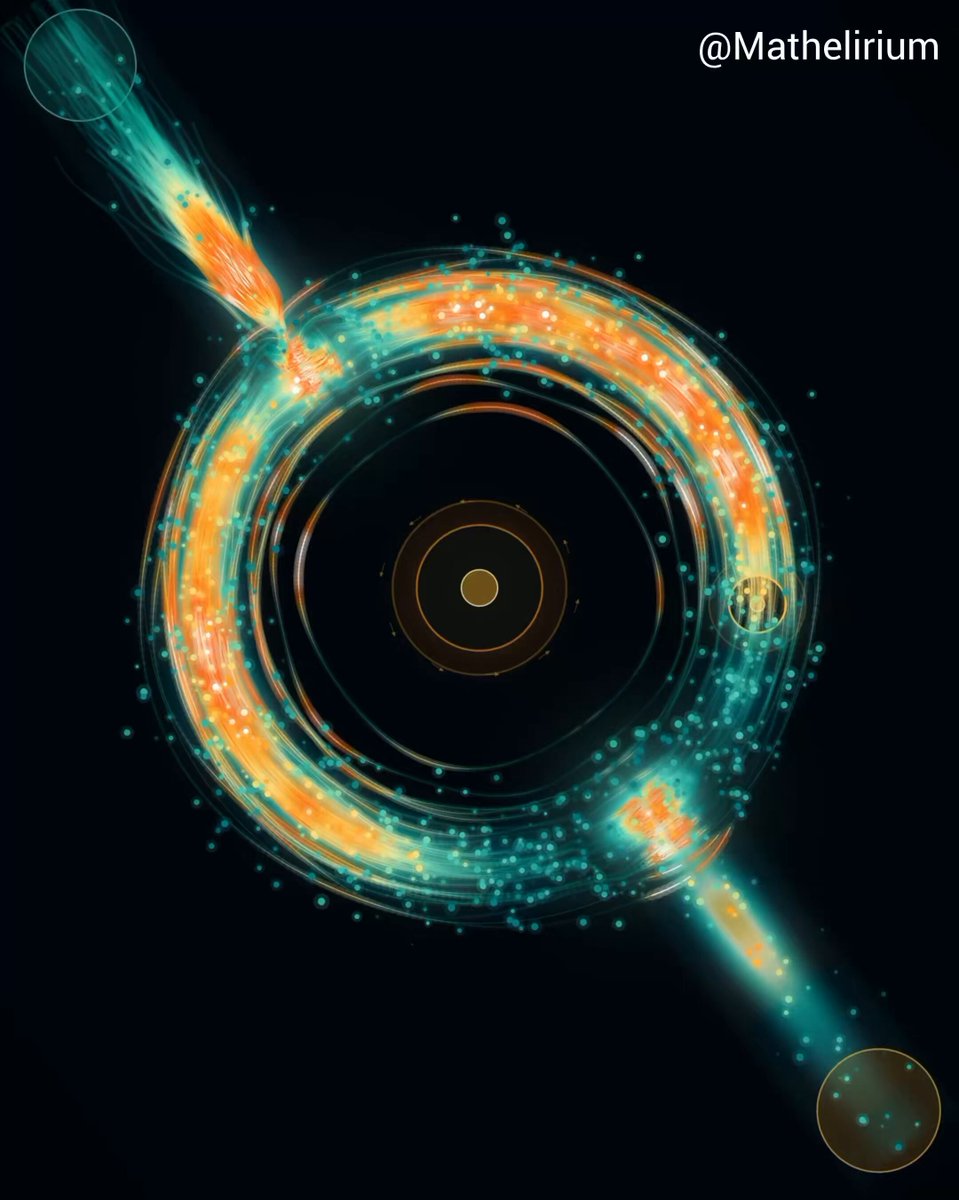
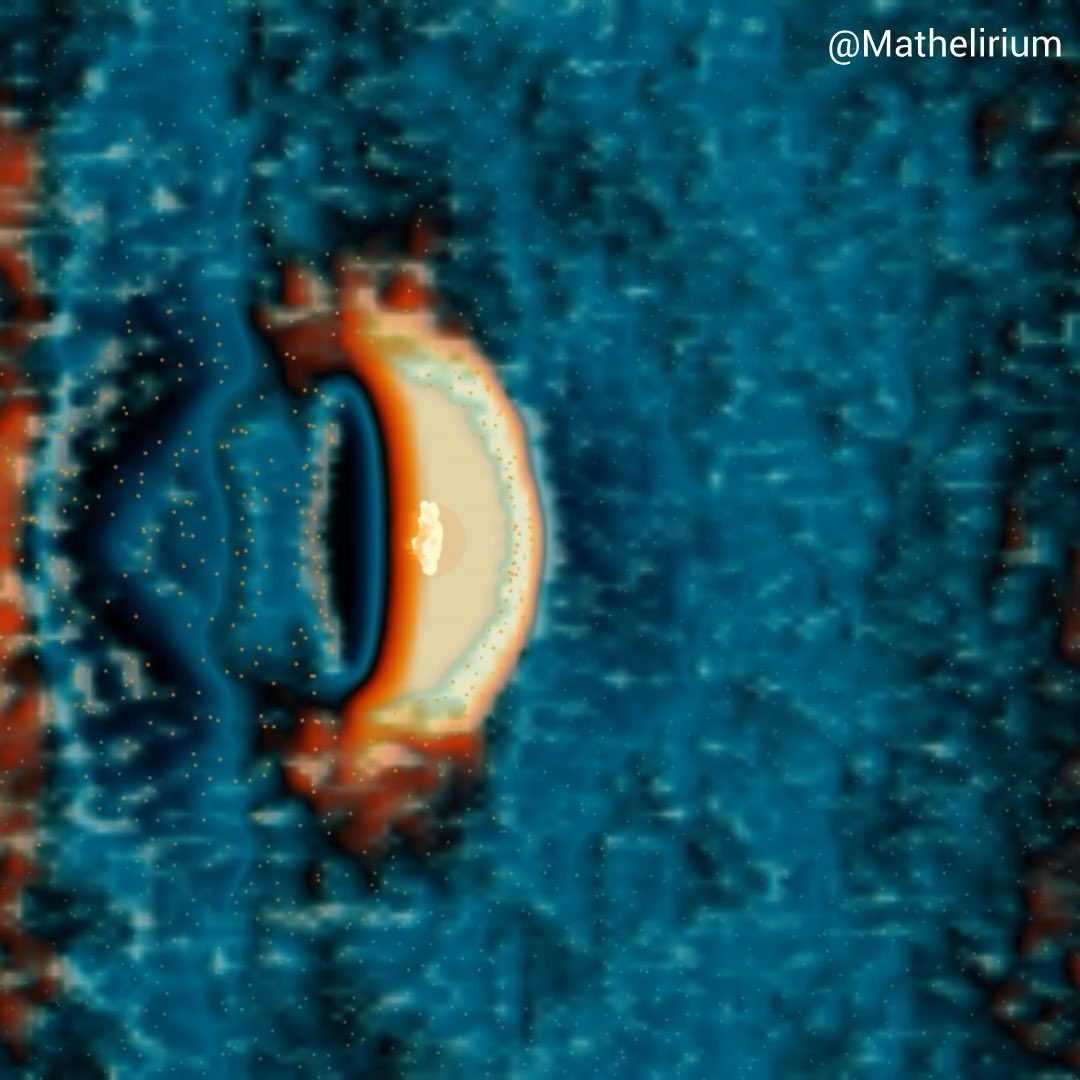
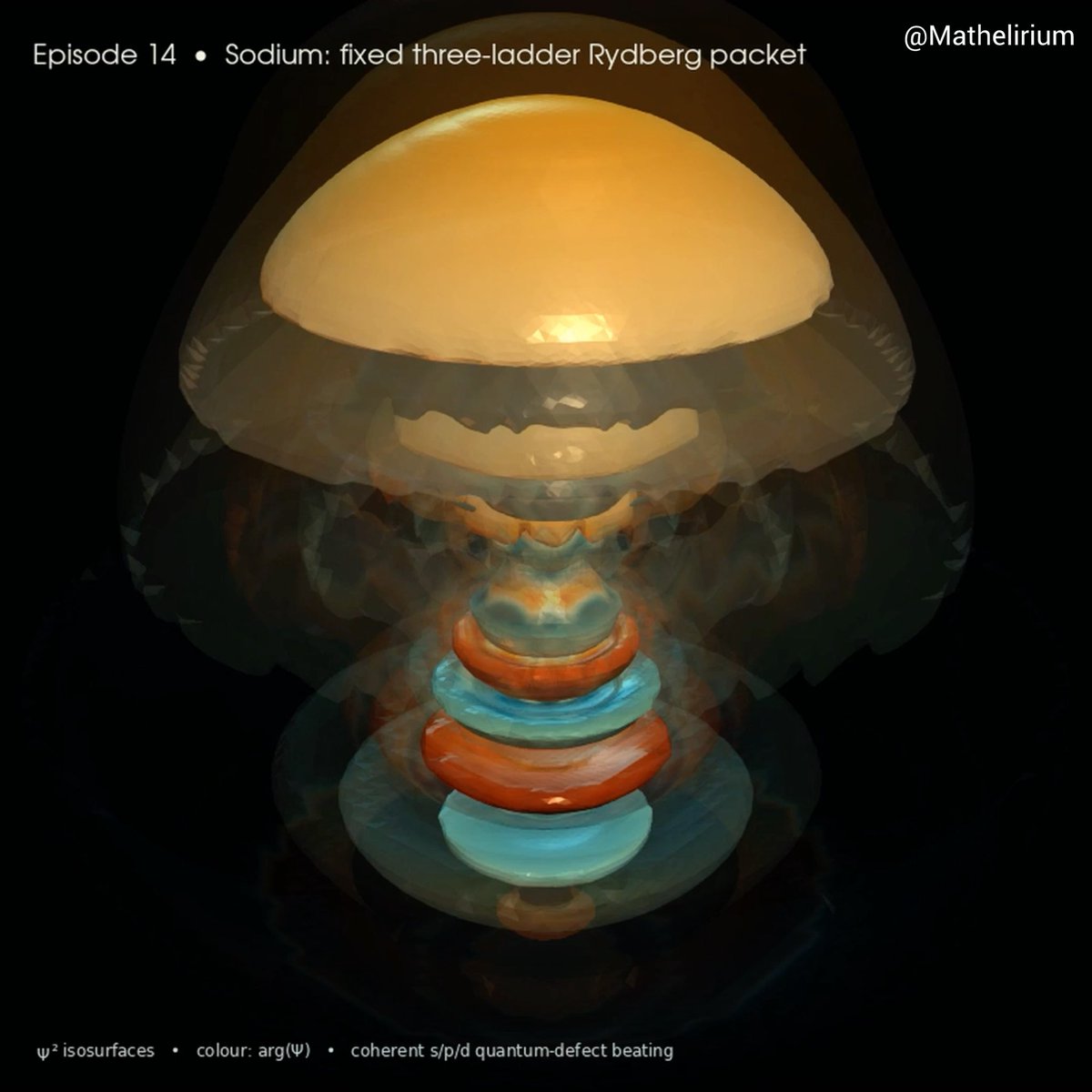
This is a Rubidium Rydberg wavepacket reshaped by an external electric field. The electron is not shown as a particle. The surface represents regions of high probability density, |Ψ|², while the colours show the quantum phase, arg(Ψ).

12,514 views • 3 days ago •via X (Twitter)

14 Comments

Master User's profile picture
Master User3 days ago

if a white father declines to send his son to twerking class, the government can use amber alerts to take his children

A.M.'s profile picture
A.M.3 days ago

it would be enjoyable to no have to look up the math on your post.

Pode's profile picture
Pode3 days ago

Wonder what it would look like inside a Bose Einstein condensate of rubidium atoms.

Chris's profile picture
Chris3 days ago

@grok tell us more about wavepacket reshaped by an external electric field and the math and coupling and dynamics

starbaser's profile picture
starbaser2 days ago

👂

Mathelirium's profile picture
Mathelirium2 days ago

😎

starbaser's profile picture
starbaser2 days ago

😆

Adam Cornell's profile picture
Adam Cornell2 days ago

Not a single electron was ever sent anywhere. The fields flux though.

Doug McNabb's profile picture
Doug McNabb2 days ago

what does a proton wave packet look like?

WuBu ⪋ WaefreBeorn 🇺🇸 👑's profile picture
WuBu ⪋ WaefreBeorn 🇺🇸 👑2 days ago

ayo you are so close

🇺🇸's profile picture
🇺🇸3 days ago

😍

Idan Beck's profile picture
Idan Beck2 days ago

These simulations are awesome - unsolicited idea from a recovering graphics dev, curious if signed distance functions might prove better for visualization here vs. marching cubes

Yanny's profile picture
Yanny2 days ago

@grok explain Rydberg wave packets.

Web3 Philosopher's profile picture
Web3 Philosopher2 days ago

Looks like higher dimensional geometry
Related Videos

Why Does Quantum Mechanics Use a Complex Wavefunction? Schrödinger’s equation doesn’t start from mystery. It starts from a very specific bet. The state of a particle is a complex field ψ(x,t), and whatever time-evolution rule we choose has to move ψ forward while preserving total probability. So the basic question is simple. What equation should ψ satisfy so that |ψ|² behaves like a conserved density, the way mass density does in fluid flow? What is ψ? Think of ψ(x,t) as an amplitude attached to the statement the particle is at position x at time t. It’s not a probability. It’s the thing you add first, and only at the end do you square it: p(x,t) = |ψ(x,t)|² Because ψ is complex, it has magnitude and phase. Write it as ψ(x,t) = r(x,t) exp(i θ(x,t)) Then r² = |ψ|² is the density, and the phase θ ends up controlling the flow through the probability current. Where does Schrödinger’s equation come from? Start with two empirical inputs that tie waves to particles: E = ħ ω p = ħ k Here ħ is Planck’s constant divided by 2π. It’s the conversion factor between frequency and energy, and between wavenumber and momentum. A plane wave with angular frequency ω and wavevector k is ψ(x,t) = A exp(i(k·x − ωt)) Now watch what derivatives do to this wave: ∂ψ/∂t = −i ω ψ ∇ψ = i k ψ ∇²ψ = −|k|² ψ Multiply by ħ and you get: i ħ ∂ψ/∂t = ħ ω ψ = E ψ −i ħ ∇ψ = ħ k ψ = p ψ −ħ² ∇²ψ = ħ² |k|² ψ = p² ψ So for plane waves, the operators Ê = i ħ ∂/∂t p̂ = −i ħ ∇ act like energy and momentum. Now bring in the classical, nonrelativistic energy bookkeeping: E = p²/(2m) + V(x) Kinetic plus potential. That’s it. Turn it into an equation for ψ by replacing E and p with the operators above: Ê ψ = (p̂²/(2m) + V) ψ Since p̂² = (−i ħ ∇)·(−i ħ ∇) = −ħ² ∇², this becomes i ħ ∂ψ/∂t = ( −ħ²/(2m) ∇² + V(x) ) ψ That’s the time-dependent Schrödinger equation. This derivation is a controlled heuristic. Match the plane-wave identities to the measured relations E = ħω and p = ħk, then impose the same energy bookkeeping you trust in classical mechanics. Why this is the right kind of rule If ψ is the state, we need a rule that preserves total probability: ∫ |ψ(x,t)|² dx = 1 Schrödinger evolution does, and you can see it by deriving a continuity equation. Let ρ(x,t) = |ψ|² = ψ*ψ. Differentiate: ∂ρ/∂t = ψ* ∂ψ/∂t + ψ ∂ψ*/∂t Use Schrödinger and its complex conjugate. The potential terms cancel, and what’s left can be rearranged into ∂ρ/∂t + ∇·j = 0 with probability current j = (ħ/(2mi)) ( ψ* ∇ψ − ψ ∇ψ* ) That’s the cleanest way to say what ψ is. |ψ|² behaves like a conserved density, the phase drives a current, and the time evolution is fixed, up to V, by combining wave relations with energy bookkeeping: i ħ ∂ψ/∂t = ( −ħ²/(2m) ∇² + V ) ψ #QuantumMechanics #SchrodingerEquation #WaveFunction #BornRule #Physics #MathematicalPhysics

Mathelirium

20,781 views • 7 months ago

Lecture 2 on our Quantum Mechanics Series Schrödinger’s equation doesn’t start from mystery. It starts from a very specific bet…the state of a particle is a complex field ψ(x,t), and whatever dynamics we write down must move ψ forward in time in a way that preserves total probability. We ask a basic question…what equation should ψ satisfy so that |ψ|² behaves like a conserved density, the way mass density does in fluid flow? What is ψ? Think of ψ(x,t) as the amplitude assigned to “the particle is at position x at time t”. It’s not a probability. It’s the object you add first, and only at the end do you square p(x,t) = |ψ(x,t)|² Because ψ is complex, it has magnitude and phase. Write it in polar form ψ(x,t) = r(x,t) exp(i θ(x,t)) Then r² = |ψ|² is the density, and θ will end up controlling flow (the probability current). Where does Schrödinger’s equation come from? Start with two empirical inputs about waves and particles: E = ħ ω p = ħ k Here ħ (“h-bar”) is Planck’s constant divided by 2π. It’s the unit conversion factor between the wave description (frequency ω, wavevector k) and the particle description (energy E, momentum p). In units, ħ has units of joule-seconds, so multiplying ω (1/seconds) gives energy (joules), and multiplying k (1/meters) gives momentum (kg·m/s). It’s the number that tells you how much energy or momentum you get per unit frequency or wavenumber. A plane wave with angular frequency ω and wavevector k is ψ(x,t) = A exp(i(k·x − ω t)) Now notice what derivatives do to this wave: ∂ψ/∂t = −i ω ψ ∇ψ = i k ψ ∇²ψ = −|k|² ψ Multiply those identities by ħ: i ħ ∂ψ/∂t = ħ ω ψ = E ψ −i ħ ∇ψ = ħ k ψ = p ψ −ħ² ∇²ψ = ħ² |k|² ψ = p² ψ So for plane waves, the operators Ê = i ħ ∂/∂t p̂ = −i ħ ∇ act like energy and momentum! Now use the classical nonrelativistic energy relation: E = p²/(2m) + V(x) This is bookkeeping for a particle moving slow enough that relativity can be ignored. The term p²/(2m) is kinetic energy. If p = mv, then p²/(2m) = (m²v²)/(2m) = (1/2)mv². The term V(x) is potential energy. It depends on position because forces come from spatially varying energy. A slope in V pushes the particle. Examples: for a charged particle in an electric potential φ(x), V(x) = q φ(x). Near Earth, V(z) = mgz. The point is total energy equals kinetic plus potential. Turn that into an equation for ψ by replacing E and p with the operators above: Ê ψ = (p̂²/(2m) + V) ψ Compute p̂² = (−i ħ ∇)·(−i ħ ∇) = −ħ² ∇², so we get i ħ ∂ψ/∂t = ( −ħ²/(2m) ∇² + V(x) ) ψ That is the time-dependent Schrödinger equation. The derivation here is a controlled heuristic: we matched the plane-wave identities to the measured relations E = ħω and p = ħk, then imposed the same energy bookkeeping as classical mechanics. Why this equation is the right kind of rule If ψ is the state, we need a rule that preserves total probability: ∫ |ψ(x,t)|² dx = 1 Schrödinger evolution does. You can see it by deriving a continuity equation. Let ρ(x,t) = |ψ|² = ψ* ψ. Take a time derivative: ∂ρ/∂t = ψ* ∂ψ/∂t + ψ ∂ψ*/∂t Use Schrödinger and its complex conjugate: ∂ψ/∂t = (1/(i ħ)) ( −ħ²/(2m) ∇²ψ + Vψ ) ∂ψ*/∂t = (−1/(i ħ)) ( −ħ²/(2m) ∇²ψ* + Vψ* ) Plug in. The V terms cancel exactly, and what remains can be rearranged into a divergence: ∂ρ/∂t + ∇·j = 0 where the probability current is j = (ħ/(2mi)) ( ψ* ∇ψ − ψ ∇ψ* ) This is the best way to explain ehat ψ is: |ψ|² behaves like a conserved density, and the phase of ψ is what drives the current j. So in this series, ψ isn’t a slogan. It’s the object whose modulus squared is the density, whose phase generates flow, and whose time evolution is fixed (up to V) by matching wave relations to energy bookkeeping: i ħ ∂ψ/∂t = ( -ħ²/(2m) ∇² + V ) ψ #QuantumMechanics #SchrodingerEquation #WaveFunction #BornRule #Physics #MathematicalPhysics

Mathelirium

40,835 views • 8 months ago

Lecture 3 of our Quantum Mechanics series. Lecture 2 gave us the one clean privilege quantum theory offers: treat ψ(x,t) as the state and ρ(x,t) = |ψ(x,t)|² as probability, because Schrödinger evolution forces ρ to obey a continuity equation. Lecture 3 is what that continuity equation is really telling you. If ρ behaves like a fluid, then the only question that matters is: What is the velocity field? Write ψ(x,t) = r(x,t) exp(i θ(x,t)). The magnitude r sets how much probability is sitting there. The phase θ sets where it tries to go. When you unpack the current j = Im(ψ* ∇ψ), it collapses to j = (ρ/m) ∇θ, which means the flow lines you draw are literally contours of phase geometry. Then the constraint that makes the picture bite: ψ has to be single-valued, so θ can’t wind by an arbitrary amount. Around any closed loop the total phase change must be 2π n, with n an integer. That’s why vortices aren’t features you add...they’re defects the math permits, in quantized units. In the render you see both layers at once...the 3D surface shows |ψ| breathing while the phase skin slides, and the 2D panel exposes the engine...current lines steering around discrete vortex charges. The math breakdown We write the state as a complex field ψ(x,t) on the plane (x in R²). The Born rule defines the probability density ρ(x,t) = |ψ(x,t)|² Schrödinger evolution (ħ = 1 units) is i ∂ψ/∂t = [ −(1/2m) ∇² + V(x,t) ] ψ Now derive conservation of probability. Start with ρ = ψ*ψ: ∂ρ/∂t = ψ* (∂ψ/∂t) + ψ (∂ψ*/∂t) Use Schrödinger and its complex conjugate: ∂ψ/∂t = (1/i) [ −(1/2m) ∇²ψ + Vψ ] ∂ψ*/∂t = (−1/i) [ −(1/2m) ∇²ψ* + Vψ* ] Substitute. The V terms cancel, and the remaining terms rearrange into the continuity equation ∂ρ/∂t + ∇·j = 0 with probability current j = (1/2mi) ( ψ* ∇ψ − ψ ∇ψ* ) = (1/m) Im(ψ* ∇ψ) So "probability density" really behaves like a conserved fluid density with flux j. Now expose the phase mechanism. Write ψ in polar form ψ(x,t) = r(x,t) exp(i θ(x,t)) Compute the gradient ∇ψ = exp(iθ) (∇r + i r ∇θ) Then ψ* ∇ψ = r (∇r + i r ∇θ) Taking the imaginary part gives Im(ψ* ∇ψ) = r² ∇θ = ρ ∇θ So the current becomes j = (ρ/m) ∇θ That’s the steering-wheel statement: Phase gradient sets the flow direction and speed (modulated by density and m). Finally, quantized vortices. Because ψ must be single-valued, going around any closed loop must return the same complex value. That forces the phase winding to be an integer multiple of 2π: ∮ ∇θ · dl = 2π n with n in Z n is the vortex charge. Vortex cores sit where ρ ≈ 0 (phase is undefined), and the current streamlines circulate around them. #QuantumMechanics #Wavefunction #SchrodingerEquation #BornRule #ProbabilityCurrent #ContinuityEquation #Phase #Vortices #TopologicalDefects #ComplexAnalysis #MathematicalPhysics #Mathematics #Physics

Mathelirium

38,203 views • 8 months ago