Загрузка видео...

Не удалось загрузить видео

На главную

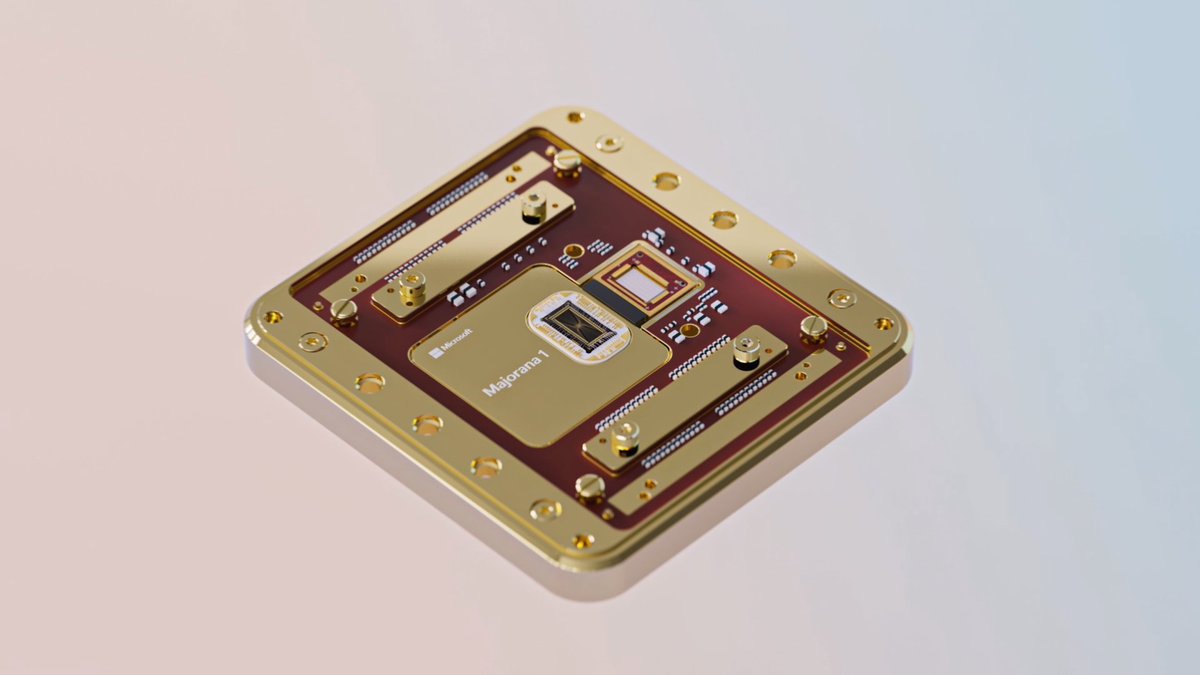
Today, we launched Helios, a technological marvel redefining the possible. Helios is the most accurate quantum computer in the world, with 98 of the highest fidelity physical qubits ever released, and 48 error-corrected logical qubits. Learn more:

90,837 просмотров • 10 месяцев назад •via X (Twitter)

Комментарии: 33

Фото профиля caseywilson.soq
caseywilson.soq10 месяцев назад

Another butthole logo?

Фото профиля SPV Laboratories 〚CORONAVIRUS TASKFORCE〛
SPV Laboratories 〚CORONAVIRUS TASKFORCE〛10 месяцев назад

48 logical qubits? A 2:1 code? What fidelities?

Фото профиля Oversized Moose With Socks (xlmoose.eth)
Oversized Moose With Socks (xlmoose.eth)10 месяцев назад

Congrats @mert

Фото профиля Simon | Morse
Simon | Morse10 месяцев назад

You simply can't stop @mert . Prolific builder across industries

Фото профиля Vaish
Vaish10 месяцев назад

Wow @mert good work

Фото профиля GorillaSkier
GorillaSkier10 месяцев назад

How many logical qubits does $ionq have?

Фото профиля Eric Draven
Eric Draven10 месяцев назад

I hope you guys IPO next year. Would be trilled to be able to buy some shares.

Фото профиля Alex Havryleshko
Alex Havryleshko10 месяцев назад

It reminded me of ENIAC - when this first computer in the world was released in 1945. Look at these sizes. And decades later we have chips in the phones thousands of time more capable that ENIAC

Фото профиля Seth BRKV
Seth BRKV10 месяцев назад

Available on AWS?

Фото профиля Mike Polich
Mike Polich10 месяцев назад

🤯

Фото профиля mmm ethmatic
mmm ethmatic10 месяцев назад

Honeywell: I guess we're doing quantum now

Фото профиля George Dalianis
George Dalianis10 месяцев назад

we will be safe 🛡️with @QANplatform 💪

Фото профиля Athermal Compute
Athermal Compute10 месяцев назад

Congrats on the quantum launch, but high fidelity doesn't solve the energy bottleneck for stochastic AI. You can't simulate true randomness cheaply on a deterministic machine. We don't simulate the quantum world; we use it as our engine. Athermal compute is the next frontier.

Фото профиля Wimukthi
Wimukthi10 месяцев назад

And what real use does this have? None.

Фото профиля IF-ONLY-INVESTING
IF-ONLY-INVESTING10 месяцев назад

Feels like @QuantinuumQC are trying to sabotage @ionq earnings call. That’s very flattering for @ionq.

Фото профиля Jhon Dario Medina
Jhon Dario Medina10 месяцев назад

Congrats Quantinuum team !!!

Фото профиля QuantumTruth
QuantumTruth10 месяцев назад

Respect the launch. Proposal: compare equal Cliff+T workloads incl. magic‑state factories. Our AetherStack’s Soul Hash™ → 4‑qubit harmonic verification → shows error‑free scaling—can Helios keep ~2:1 PQ:LQ at depth with MSD?

Фото профиля Ntokozo Thusi
Ntokozo Thusi10 месяцев назад

api?

Фото профиля Deep Rese🅰️rch
Deep Rese🅰️rch10 месяцев назад

Congratulations! I can’t wait to see the research results that come out of Helios

Фото профиля Y Lopez Bello 🌐
Y Lopez Bello 🌐10 месяцев назад

@elonmusk What do you think about this?

Фото профиля Basil Jackson
Basil Jackson10 месяцев назад

sorry, you lot! @grok fact check

Фото профиля Welcome to ROMANEUM NEWS 🌹
Welcome to ROMANEUM NEWS 🌹10 месяцев назад

Can AI and quantum computing produce a better bitcoin to also benefit the poorest of the poor ? and if yes, how soon can it happen ? Be brief, back up with facts and math. @AskPerplexity

Фото профиля Musafir
Musafir10 месяцев назад

$qanx, $ckb, $cell and $algo, thank me later

Фото профиля 𝚠𝚘𝚕𝚏⚡️
𝚠𝚘𝚕𝚏⚡️10 месяцев назад

highly unlikely lol

Фото профиля Vu
Vu10 месяцев назад

lets gooo

Фото профиля Ethereum Intern
Ethereum Intern10 месяцев назад

congrats @mert

Фото профиля Arun Nadarasa
Arun Nadarasa10 месяцев назад

🥳👏🏽

Фото профиля Russell Wagner
Russell Wagner8 месяцев назад

The main benefit of productivity is its ability to create new opportunities.

Фото профиля MoneyUniverse
MoneyUniverse10 месяцев назад

@grok wich stock is this?

Фото профиля AI News Hungama
AI News Hungama10 месяцев назад

Impressive leap in quantum fidelity and error correction. Curious to see how Helios’ performance scales with real-world workloads and integration into enterprise or AI applications. Looking forward to benchmarks and new use cases.

Фото профиля Pham Phuc Lam
Pham Phuc Lam8 месяцев назад

Misconceptions about design thinking usually stem from hype and lack of contextual understanding for students.

Фото профиля Lyceum
Lyceum10 месяцев назад

Sounds impressive! Curious about those error corrections. 🤔

Фото профиля Lidoor L. Joseph
Lidoor L. Joseph10 месяцев назад

Interesting design

Похожие видео

The Google and Caltech quantum papers demonstrated 2 breakthroughs: that Bitcoin cryptography is much easier to break than previously thought, and that far fewer logical qubits may be necessary for physical qubits. Project Eleven CEO Alex Pruden explains: "These two papers are not necessarily about a quantum computer that's bigger or more capable. They're about what it takes to break cryptography." "So what changed? One of the things that changed was that physicists and quantum cryptographers that looked at this problem for a long time studied an algorithm called RSA — an older cryptographic algorithm." "But that's not what really any blockchains use, because RSA keys are very large. It turns out, and this was one of the key upshots of the Google paper, that if you focus on the cryptography used by Bitcoin, Ethereum, and other networks, it's actually way easier to break than they thought it was, compared to RSA." "The other big breakthrough, and this is from the Caltech paper: Quantum computers are very fragile, generally. So to be useful, they need to have what's called error correction applied. And that can result in a lot of overhead. You need to have tons of physical qubits to get to one logical qubit." "This Caltech paper basically showed, 'Hey, we have some new ideas for error correction. And it turns out if we apply those, we don't need hundreds or thousands of physical qubits, maybe we just need a handful to make one logical cubit.'" "The headline of their paper is 'You may only need 10,000 physical qubits to run Shor's algorithm.' And by the way, they demonstrated 6,000 last year."

TBPN

16,456 просмотров • 5 месяцев назад

6,100-Qubit Processor Shatters Quantum Computing Record | David Nield, ScienceAlert Another major quantum computing record has been broken, and by a considerable margin: physicists have now built an array containing 6,100 qubits, the largest of its type and way above the thousand or so qubits previous systems contained. It's the work of scientists from the California Institute of Technology, who used cesium atoms as their qubits, trapping them in place with a complex system of lasers that acted as tweezers to keep the atoms as stable as possible. Qubits differ from the classical bits of traditional computers by exploiting what's known as a superposition: not just binary states of 1 or 0, but a spread of probabilities that allows for algorithms that can solve problems considered out of reach of conventional computing methods. Related: Quantum Advantage: A Physicist Explains The Future of Computers A lot of qubits will be needed to make quantum algorithms practical, however. One reason for these large arrays is error correction, which helps overcome the inherent fragility of the qubit by providing a surplus to double-check the machine's operation. "This is an exciting moment for neutral-atom quantum computing," says physicist Manuel Endres. "We can now see a pathway to large error-corrected quantum computers. The building blocks are in place." There was no single breakthrough that enabled this jump in qubit numbers, but rather a series of engineering advancements in many key areas – from the laser tweezers to the ultra-high (very low pressure) vacuum chamber. Stability has also been a problem for quantum computing systems. The innovations in this latest array kept qubits in a superposition state for almost 13 seconds – almost ten times longer than previous configurations had managed. What's more, individual qubits could be manipulated with 99.98 percent accuracy, establishing a significant benchmark in the programmability of quantum technology. "Large scale, with more atoms, is often thought to come at the expense of accuracy, but our results show that we can do both," says physicist Gyohei Nomura. "Qubits aren't useful without quality. Now we have quantity and quality." To make quantum computers a practical alternative to modern supercomputers, more qubits and even greater levels of stability will be required. Experts are tackling the problem from several different angles, which is why records for some types of quantum computer don't necessarily apply to others. Next, the researchers need to work on exploiting entanglement, which will enable the system to make the leap from storing information to actually processing it. Not too far in the future, we could be using these computers to discover new materials, matter, and fundamental laws of physics. "It's exciting that we are creating machines to help us learn about the Universe in ways that only quantum mechanics can teach us," says physicist Hannah Manetsch. Read more:

Owen Gregorian

45,324 просмотров • 11 месяцев назад

QUANTUM COMPUTING COULD UNLEASH THE MOST POWERFUL AI EVER BUILT. BUT WHO REALLY CONTROLS IT? The Pentagon has invested more than $150 million in quantum computing, a technology most Americans have never used, but one that could reshape artificial intelligence, drug discovery, encryption, national security, and surveillance. Quantum computers use qubits instead of ordinary binary bits. Unlike traditional bits, which are either a one or a zero, qubits can represent multiple possibilities at once. That gives quantum systems the potential to solve certain complex calculations beyond the reach of today’s computers. President Trump signed two executive orders this year to accelerate quantum development and prepare U.S. systems for quantum-era cyber threats. IBM is also working toward a machine with at least 1,000 programmable qubits, a major step toward more powerful quantum systems. The potential is enormous. Paired with AI, quantum computing could help researchers model disease, study pollution, test new materials, and examine massive problems faster than ever. But the risks are enormous too. The same technology could expand surveillance, undermine encryption, and give those who control it unprecedented power to predict and influence human behavior. The question is not just what quantum-powered AI can do. It is who controls it, and whether the public will have any protection from it. Austin Steinbart (Austin Steinbart) joins me to break down quantum computing, AI, surveillance, and what this technology could mean for society.

Ben Swann

10,547 просмотров • 13 дней назад