Video wird geladen...

Video konnte nicht geladen werden

Zur Startseite

UPDATE: The state completely dropped the charges against Dillon Webb, admitting his First Amendment rights were rock-solid. But when he sued for false arrest, the system protected its own. A federal judge dismissed the case, granting the deputy "qualified immunity" because of a legal technicality. ​Dillon won his freedom,...

279,181 Aufrufe • vor 1 Monat •via X (Twitter)

0 Kommentare

Keine Kommentare verfügbar

Kommentare vom Original-Post werden hier angezeigt

Ähnliche Videos
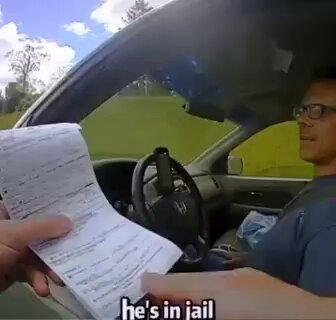
Deputy and local PD team up to bully residents of this home refusing to let them close their own door when it's discovered they do not have a search warrant. ​Law enforcement officers—including a Lake Hamilton officer and a local sheriff's deputy—show up at a private residence under the assumption that a wanted individual named "TT" (a Black male with an outstanding felony warrant) is hiding inside. ​The residents immediately make it clear: The suspect is not there, they do not consent to a search, and they want the officers off their property. In a heavily sarcastic exchange, the residents even point out the obvious irony to the deputy standing on the porch, noting that the only Black male present at the scene is the deputy himself. ​Under the Fourth Amendment, the threshold of a home is a sacred boundary. Unless officers possess a search warrant for that specific address, or are dealing with an active emergency ("exigent circumstances"), they cannot legally force their way inside. Recognizing this, the homeowner attempts to terminate the voluntary encounter by pulling the front door shut. ​Instead of backing off, an officer physically blocks the door from closing, delivering a swift ultimatum: "If you hit him [with the door], you're going to jail." ​The moment the resident attempts to shut his door anyway, the officers push past the threshold. A physical struggle ensues as the drag the man outside placing him under arrest. ​The aftermath of this encounter highlights what many critics describe as blatant law enforcement bullying: ​The Homeowner: Arrested on the spot and charged with assaulting an officer and resisting arrest—simply for attempting to close his own front door on officers who lacked a search warrant. ​The Co-Resident: During the argument, an officer explicitly tells the woman filming to call for a supervisor herself. When she stops recording to dial 911 to get a supervisor to the scene, the officers arrest her as well, slapping her with a charge for "misuse of an emergency number." ​Ultimately, the legal system recognized that these charges were completely baseless. All charges against both the man and the woman were completely dropped. ​However, despite clear video evidence of the officers escalating the situation, violating the residents' constitutional rights, and utilizing retaliatory arrest tactics, absolutely no disciplinary action was taken against the officers involved. ​This is the type of stuff that makes me sick. Qualified immunity does not protect officers that knowingly violate the rights of citizens. Hopefully these people file a lawsuit against the city any county.

Giggling Ganon

49,153 Aufrufe • vor 1 Monat

Guy gets pulled over by tyrant officer knows his rights and unloads on the officer. ​A Lake County Sheriff’s deputy decided to initiate a traffic stop, he clearly wasn’t expecting a driver who actually knew the law and was prepared to push back. Once the stop was in full swing, the driver challenged the deputy as to what the reason was for the stop. The mental gymnastics this deputy went through to try and justify the stop is mind boggling. ​ As the confrontation continued to unfold, the truth slipped out—the deputy admitted the stop happened because the driver flipped him off while driving down the road. ​Realizing that a middle finger is completely protected under the First Amendment, the officer immediately shifted gears and claimed the stop was for "speeding." ​The driver wasn't having it. He immediately called out the lie, pointing out that he had a dashcam running with real-time GPS tracking to prove his exact speed. ​When an officer pulls you over out of pure retaliation and then reaches for a generic traffic violation to cover his tracks, that isn't law enforcement—it's tyranny. ​Knowing his rights, the driver initially refused to hand over his license and registration for an unlawful stop. He correctly challenged the deputy to name a legitimate, articulable crime that had been committed. "Failure to identify" cannot be used as a primary excuse to demand paperwork when the initial stop itself lacks probable cause. ​Unfortunately, when tyrants don't get immediate submission, they escalate. Instead of producing a radar reading or admitting he had no case, the deputy resorted to state-sanctioned extortion, threatening the driver with an immediate arrest just for exercising his right to question the stop. To avoid being falsely locked up, the driver handed over his ID under explicit "threat of arrest." ​The power trip didn't stop there. Because the driver dared to speak up, the deputy called in a full "Code 3" emergency backup response. Multiple units rolled up with lights flashing—wasting tax dollars and staging a massive show of force over a completely fabricated speeding allegation. ​To cap off the entire abuse of power, the deputy realized he was losing the legal argument on camera, so he resorted to a petty personal attack. He demanded to know if the truck was a commercial vehicle and threatened to call the driver's employer to get him in trouble at work. ​This driver did exactly what more citizens need to do: he kept his camera rolling, documented the badge number, and made it clear that threats of litigation are coming. When officers think they can write retaliatory tickets just because their egos are bruised, they need to be held accountable in a court of law. In my opinion this is a textbook example of a roadside fishing expedition where an officer got his feelings hurt, abused his authority, and scrambled to invent a crime after the fact.

Giggling Ganon

80,843 Aufrufe • vor 1 Monat

This is how you educate officers that clearly do not understand the law or their job. As the conversation goes on you can see the the male officer realizes he is wrong but instead of taking the L he tries to double down on his error but in the end is forced to do that walk of shame. ​COEUR D’ALENE, IDAHO — Public Rights vs. State Property: First Amendment Auditor Threatened with Arrest for Obstructing Outside State-Run Liquor Store. ​What happens when a state-run business tries to trespass a citizen from public property for filming? This intense confrontation breaks down the exact legal battleground between a First Amendment auditor and the Coeur d'Alene Police Department. ​The videographer was standing on the sidewalk outside a state-owned and operated liquor store, exercising his right to film and take photographs. Taking issue with being recorded, a store employee confronted the auditor and requested he leave. When the auditor refused—maintaining he was on public property—management called law enforcement to issue a formal trespass warning. ​When Officer J. Chaffin and Officer C. Ziegler arrived on the scene, a massive constitutional debate unfolded: ​The Auditor’s Stance: Because the liquor store is a state-owned entity, the surrounding property and sidewalks are publicly funded, open spaces. He argues that citizens cannot be trespassed from public property unless they are actively committing a crime, asserting his 1st Amendment right to record and 4th Amendment right against unlawful seizure. ​The Police Stance: Officers countered that even though the business is state-run, it functions as a commercial space open for public commerce. They argued that management retains the right to refuse service and remove individuals deemed disruptive, and that refusing to leave constitutes criminal trespass. ​The ID Demand: Officer Chaffin demands the auditor’s identification, explicitly stating that failure to comply will result in an immediate arrest for obstructing and resisting. ​Qualified Immunity Threatened: While complying under the threat of arrest, the auditor fires back, telling Officer Ziegler that the department is violating his constitutional rights and that they will face a personal lawsuit and lose their qualified immunity. ​The "Hypothetical" Stand-off: Officer Ziegler attempts to use hypothetical scenarios to justify the trespass order, but the auditor shuts it down, demanding they stick to the reality: he was standing 20 to 30 feet away, completely peaceful, minding his own business. ​Ultimately, the officers documented his information, issued the official trespass warning, and walked away without making an arrest—leaving the auditor to give them a parting shot as they drove off.

Giggling Ganon

65,527 Aufrufe • vor 2 Monaten

An 80-year-old man with Parkinson's disease arrested for trespassing on his own property by incompetent officers... ​Here is the full backstory behind the encounter: ​The entire incident centered around a civil disagreement over property rights. According to Volusia County property appraiser records and mortgage statements, Edward Bowman is a rightful owner of the home and property, and he actively pays the mortgage on it. His stepdaughter also shares ownership rights to the home and property. ​ ​A tenant living in a mother-in-law suite situated behind the main house called the police to report that Bowman and his stepdaughter were trespassing. The tenant claimed that Bowman lived on the property but did not own the specific house they were entering, arguing they had no right to be there. ​ ​When Orange City Police officers arrived, the stepdaughter tried to explain that she had already spoken with a deputy earlier that morning who confirmed the situation was a civil property matter. However, the responding officers refused to listen to her explanation, giving her and Bowman a single warning to leave or face arrest. ​The Stepdaughter's Arrest: Officers arrested her for trespass. Despite her name being on the property appraiser site, police also attempted to charge her with possession of a firearm while trespassing because she had a licensed firearm in her pocket. ​Edward Bowman's Arrest: Despite Bowman explicitly stating, "This is my property," officers still handcuffed him and arrested him for trespassing. ​ ​The city manager and the chief of police launched a formal review of the circumstances surrounding the incident. ​The Stepdaughter: All criminal charges against her were subsequently dropped after legal review confirmed her ownership status. ​Edward Bowman: Despite the property records proving his ownership, the police department pursued charges against him for trespass and resisting an officer without violence. The police officers also claimed that Edward had a$saulted them. ​Current Legal Status: Edward Bowan’s case remains active in the court system. His family and legal team are actively fighting the system and working to get the remaining charges completely dropped. ​While the state attorney's office ultimately dismissed the case against his stepdaughter, they have not yet formally dismissed the resisting charges against Bowman. The defense is heavily leveraging the property deeds and the video evidence—which shows his severe physical limitations—to pressure the state into throwing out the case.

✨️Serenitee♡Sam✨️

36,333 Aufrufe • vor 2 Monaten

Tyrant officer gets schooled on 4th amendment and what private property is. He does the walk of shame with nothing to say. This Yolo County Sheriff's Deputy learned the hard way that stepping onto private property without your facts straight can lead to a masterclass in constitutional rights—and a legendary chewing out! Watch this standoff unfolds between a homeowner and a Yolo County Deputy (Badge #160) who decided to roll up onto land he wasn't invited on. The officer claimed he was investigating a suspicious vehicle at a home under construction, demanding that the man inside identify himself. ​But this homeowner wasn't having any of it. ​He immediately flipped the script on the deputy, pointing out the absolute lack of legal ground the officer was standing on. Nobody called 911 to have this man checked on, nobody reported a crime, and the deputy had zero confirmation of who actually owned the property before demanding ID. The property owner stood his ground, completely shutting down the officer's overreach by demanding he get off the land instead. ​Once the homeowner stepped out of his vehicle and firmly established that it was his land, the deputy realized he had absolutely nothing to hold him on. With his investigation completely dismantled, the officer was forced to turn around and walk back to his cruiser. ​To top it all off, the property owner sent him packing with a high-energy, unforgettable tirade, capping it all off by shouting that his intense vibe was fueled by nothing more than "500 calories of M&Ms, dude!" This is text book 101 of how to stand up for your rights when you have an officer that has overreached to this level. ​Dude went scorched the earth on this deputy.

Giggling Ganon

52,657 Aufrufe • vor 1 Monat

53 year old mechanic working on a car in a church parking lot gets arrested by two bully cops for not giving his ID immediately. In a church parking lot in Huntsville, Alabama. Roland Edger was doing exactly what he was paid to do: repair a broken-down vehicle for a regular customer. But a local security guard spotted them after hours and mistakenly phoned the police, reporting "suspicious males" messing with a car. ​When Huntsville Police Officer Krista McCabe arrived, Edger was entirely transparent, explaining precisely why he was there. But when McCabe demanded his physical ID, Edger questioned the order. Without warning, a second arriving officer, Cameron Perillat, grabbed Edger from behind and threw him into handcuffs. Even though Edger offered his physical ID multiple times while being detained, the officers proceeded to arrest him on charges of obstructing governmental operations. While taking him into custody the officer lied to Edgar's step son that was present saying she repeated asked him and he repeatedly refused to provide his ID. She then threatened Edgar with a resisting arrest charge even though he was already cuffed and complying. Edgar was taken to jail and booked on obstruction charges, however Edger didn't back down. Immediately after his charges were dismissed, he took the city and the officers to court. ​Initially, a lower court judge dismissed his civil rights lawsuit by granting the officers "qualified immunity." But the U.S. Court of Appeals for the 11th Circuit stripped that immunity away in a unanimous, historic decision. ​The court made the law crystal clear: ​Under Alabama's stop-and-identify statute, police have the right to ask for your name, address, and an explanation of your actions if they have reasonable suspicion. ​Crucially, the law does not compel citizens to hand over a physical ID card or driver's license unless they are operating a motor vehicle. ​Because Edger was verbally explaining his actions and the officers never actually asked for his verbal name or address before arresting him, they had absolutely no legal cause to seize him. ​The case finally went before a federal jury, which delivered justice for Roland Edger by awarding him $77,000 in damages—including $75,000 for pain and suffering and $1,000 in personal punitive damages out of the pockets of each officer involved. ​The real crime is these tyrant officers didn't face public termination or criminal charges, the case forced the City of Huntsville to completely overhaul its training protocols regarding Fourth Amendment boundaries. ​Know your rights. A badge does not give law enforcement the power to rewrite the law on the spot.

Giggling Ganon

64,054 Aufrufe • vor 1 Monat

Bully cop that wants to flex his authority, gets trolled throughout the stop and completely owned once the stop was over. Deputy Brian Morris (Badge #814) pulls over a driver named Travis near White Creek Baptist Church. Almost immediately after establishing the reason for the stop, Deputy Morris orders Travis to step out of his vehicle. ​When Travis asks why he needs to get out of the car for a simple equipment violation, Deputy Morris cites the landmark 1977 Supreme Court case Pennsylvania v. Mimms, which established that law enforcement officers have the authority to order drivers out of a vehicle during a lawful traffic stop for officer safety. However when asked if this was for safety he replied not necessarily. ​Once outside, Travis is completely transparent and informs the deputy that he is legally carrying two firearms—one on his hip and another in an ankle holster—as well as a pocket knife. Deputy Morris insists on disarming Travis for the duration of the stop. ​Travis begins recording on his phone and pushes back, arguing that temporarily seizing his weapons when he is being fully cooperative and poses no threat is a clear violation of his Second and Fourth Amendment rights. He points out that under Terry v. Ohio, an individual must be considered both armed and dangerous to justify a search or seizure, arguing that legal firearm ownership alone shouldn't automatically make someone a target for disarming. ​Despite the back-and-forth legal argument, the interaction remains verbal. Deputy Morris temporarily secures the firearms, checks Travis’s license and information, and finds no issues. Travis does remind the deputy throughout the stop that he understands that the deputy is scared and that this might not be the right job for this deputy. ​In the end, Deputy Morris unloads the handguns, returns them along with the knife, and sends Travis on his way with a verbal warning for the brake light. Before driving off, Travis unloads on the deputy with a few strong thoughts on police overreach and constitutional rights. ​Does an officer's blanket policy on safety outweigh a compliant citizen's right to carry without interference during a minor traffic stop? I know where I stand on this, but would love to hear the thoughts of others.

Giggling Ganon

91,504 Aufrufe • vor 11 Tagen

Warrantless Entry from chief of police & Taser Arrest of former deputy Leads to Federal Civil Rights Lawsuit. ​ Buhl, Idaho resident and former deputy Eli Johnson was pulled over by officers for allegedly traveling 41 mph in a 25 mph zone. Johnson pulled directly into his own driveway. While the stopping officer stepped back to his patrol vehicle to retrieve a citation book, Johnson exited his car and walked toward his house. Despite being ordered to remain by his vehicle, Johnson went inside his home, arguing that officers had no proof of speeding and demanding to speak with a supervisor. ​When Buhl Police Chief Jeremy Engbaum arrived at the scene, Johnson opened his front door to speak with the chief while standing within the entry threshold of his home. Officers instructed him to step outside to receive the traffic ticket, warning that failing to do so constituted obstruction and delaying an officer. Johnson agreed to being issued the citation but said he was staying in the safety of his home. Showing an understanding of his rights, Johnson refused to step outside and requested to speak his attorney and wait for witnesses because he does not trust the chief. ​When Johnson attempted to close his front door, the chief physically blocked the threshold with his foot to prevent it from shutting. Officers then forcefully opened the door, entered without a warrant into the entryway, deployed a Taser on Johnson, and pulled him outside onto his lawn to place him under arrest. While Johnson was initially charged with multiple offenses following the incident, all criminal charges against him were later dismissed. Johnson subsequently filed a federal civil rights lawsuit (Johnson et al. v. City of Buhl et al.) alleging that officers violated his Fourth Amendment rights through warrantless entry, unreasonable search and seizure, and excessive force. ​During summary judgment proceedings, U.S. Chief Magistrate Judge Raymond E. Patricco ruled that the officers violated the Fourth Amendment by crossing the doorway threshold into the home without a warrant or exigent circumstances. Addressing the deployment of the Taser and use of force, the court noted that body camera footage was "quick, chaotic and confusing," leaving key facts for a jury to evaluate. ​Following the summary judgment rulings, the parties entered court-ordered settlement negotiations, ultimately reaching an agreement that led to an official Order of Dismissal to close the federal civil rights case. The was settled for an undisclosed amount.

Giggling Ganon

88,236 Aufrufe • vor 19 Tagen