Video wird geladen...
Video konnte nicht geladen werden
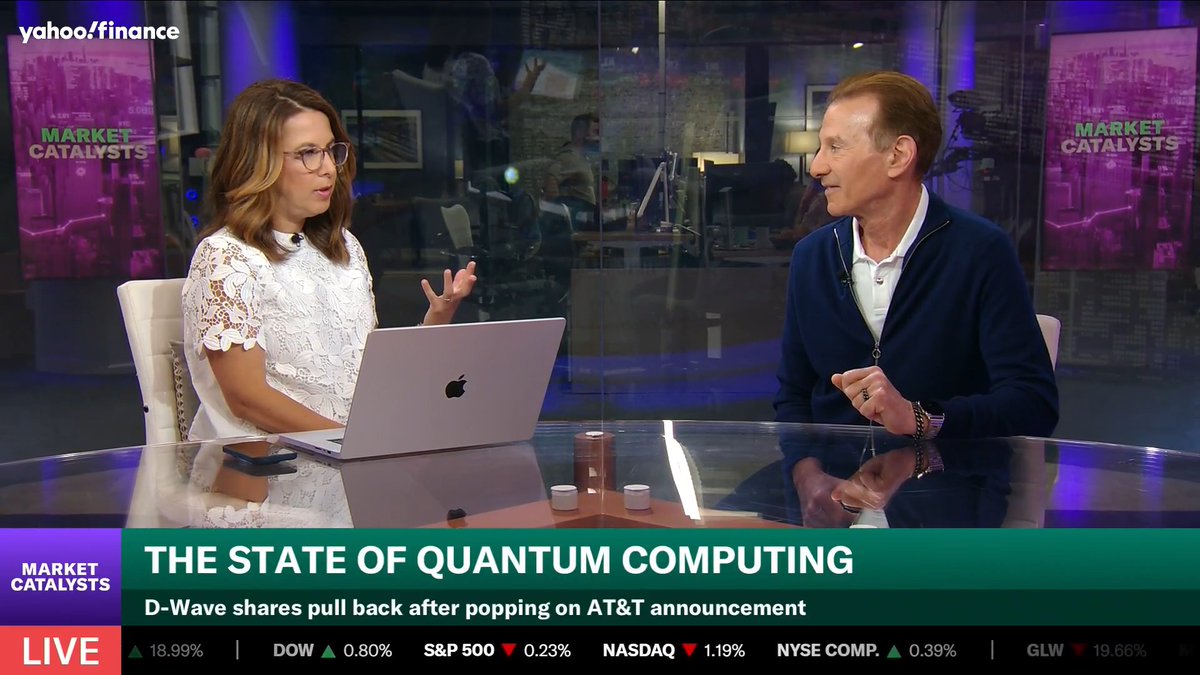
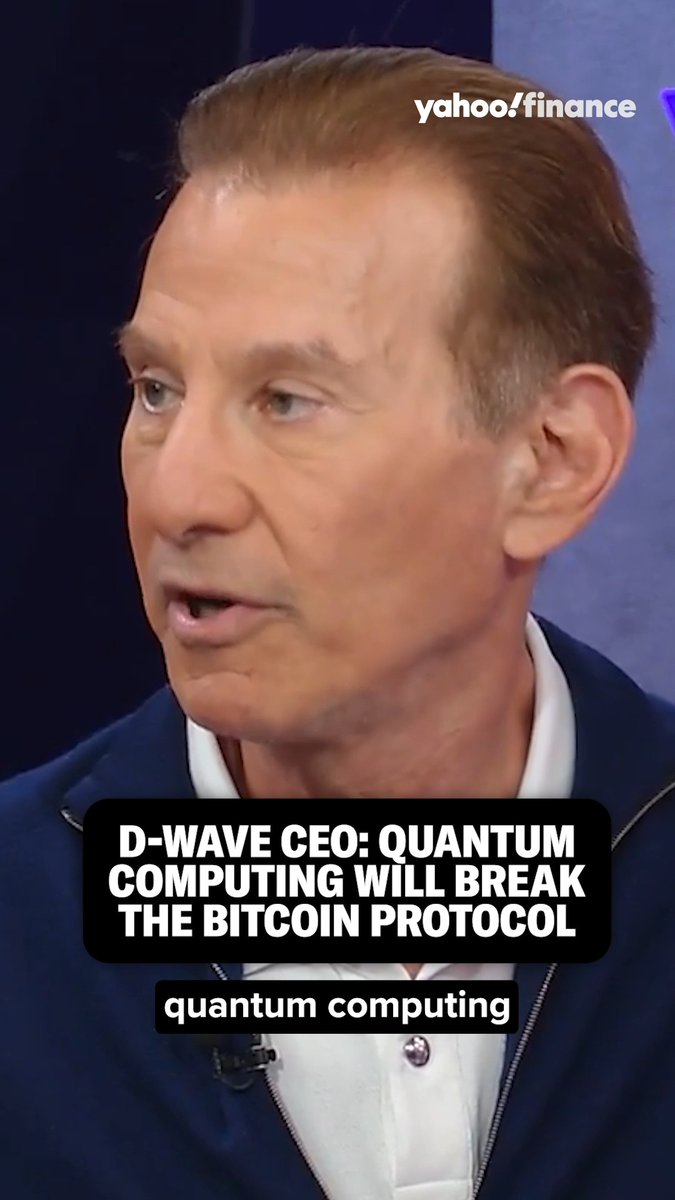
Why quantum and AI won’t break Bitcoin

47,317 Aufrufe • vor 17 Tagen •via X (Twitter)
18 Kommentare

I don’t think you understand why guys are worried it’s simple the same math being used to protect bitcoin and other cryptography 🔐 is the same thing at risk because of AI this is not a matter of who is right or wrong it’s a matter of are we ready can we run our own investigation yes there is no proof now but what will you do when the same AI you down playing right now ends up finding a bypass on ECDLP ? When bitcoin was being developed I doubt only a few of the devs could have thought a time would come when computers had brains for them selves , this is a real concern and should be treated as such

quantum fud, ai fud, regulation fud. the turtle has heard them all. still here 🐢

Fun detail, Taproot addresses put the public key right on-chain. So in this scenario the newest address type is the most exposed one

sha256 hashing plus soft fork upgrades keep btc mathematically uncrackable

Plus bitcoins won't be the first thing to worry about in case of quantum crack

Stupidity, made from a X account.

I love these animations.

Breaking BTC isn't really the quantum worry. It's the old coins with exposed pubkeys, Satoshi-era stuff would be first in line. The upgrade path exists, the hard part is agreeing on what to do with coins nobody's going to move.

Bitcoin can evolve. Nobody seriously disputes that. But saying “everything upgrades” doesn't actually answer the most difficult questions surrounding Bitcoin's post-quantum future. The challenge isn't simply whether developers can introduce quantum-resistant signature algorithms. It's whether an entire global monetary network can transition safely, consistently and in time. Think about what Bitcoin has become. Millions of individual holders. Exchanges. Institutional custodians. ETFs. Payment infrastructure. Hardware wallets. Long-term cold storage. And coins that haven't moved for more than a decade. Every one of these introduces different operational and economic challenges. Who upgrades first? What happens to coins controlled by lost private keys? How do we handle addresses whose public keys are already exposed? What happens if some users migrate while others don't? And perhaps most importantly, how do we coordinate all of this without creating new security risks or undermining confidence in the network? Bitcoin's decentralized nature is one of its greatest strengths. But decentralization also means that no single authority can simply order everyone to migrate. A cryptographic upgrade can be designed and implemented. A global migration must be coordinated. Those are two very different problems. And this distinction matters because the risks don't necessarily begin when a quantum computer successfully breaks a Bitcoin signature. They may begin much earlier, when exchanges, custodians, institutions and ordinary holders start questioning whether their assets can be migrated safely. Quantum attack risk ≠ quantum migration risk. This is why I believe we should be studying operational alternatives today, not merely debating theoretical timelines. Through BitcoinQPoW, we've been independently testing Q-BTC, an early Proof-of-Work network designed with post-quantum signatures from genesis. We've run nodes, mined blocks, tested software upgrades, encountered synchronization failures and recovered a wallet after rebuilding a node. Does that prove Q-BTC is secure or that it will succeed? Absolutely not. But it gives us a real system to test, challenge and improve. And that's the point. Bitcoin's future deserves serious research, careful engineering and practical experimentation — not just confidence that everything will somehow upgrade when the time comes. The real question isn't whether Bitcoin can upgrade. It's whether the entire ecosystem can migrate before it has to. Run it. Measure it. Report it.

nobody cares

Quantum is a real tail risk for a specific cohort: exposed public keys. Roughly 1.7M BTC sits in old P2PK outputs with the public key visible on-chain. That is the actual attack surface — not the network, not the code. Migration to post-quantum signatures is a consensus

you undermine your own point, it won’t break btc because some people proposed a solution already that isn’t implemented

It's doable but it's a multi-year project that needs to start now: Select a suitable post-quantum signature scheme, agree on BIPs for a new output type and a phased legacy sunset, implement and soft-fork it after node and miner upgrades and wallet support, then have holders move coins into the new addresses before legacy ECDSA/Schnorr spends are disabled.

加密货币会在你从中成为百万富翁之前考验你,而这并不容易。 $ShIb 在 2020 年和 2021 年期间,用 3 次 85-95% 的暴跌考验了我,然后才迎来它的巨额上涨。 底线……你会被考验多次 nat资产正在此刻考验你

I already moved my 20$ memecoin to 0 nonce address. I sleep safe now 😌

比特币每四年一次的区块奖励减半,正在把网络推向潜在的“死亡螺旋”。矿工的核心收入来自区块补贴+交易手续费。减半直接砍掉一半补贴后,如果手续费不能同步大幅上涨来弥补缺口,大量边际矿工就会因为无利可图而关机。算力随之下降,网络的安全边际被削弱,发动51%攻击的成本变低。

Bitcoin’s rebuttal to quantum panic is a block every ~10 minutes. Lindell’s right: it’s a when, not an if — and migration to quantum-resistant addresses is already the playbook. The obituaries are the trade; the ledger is the asset.

Quantum fear fades when Bitcoin risk is explained through upgrade paths, not sci-fi shortcuts.