Solid Terrain Modeling (shuttered in 2023) sold huge 3D... maps; the map was printed using terrain-following inkjet print heads that glided over the CNC'd foam landscape, which looks nutsshow more

Evan Applegate
291,408 görüntüleme • 10 ay önce
🌍 As some of you might know, last year... we started building an app that required a 3D Map, and we were taken aback by the lack of good SDKs. They’re all clunky, slow, and unstable.🤔 Today, we're thrilled to introduce Cartes - a fast, easy-to-use, and visually appealing 3D Map SDK for Unity. This tool is built to empower your creativity in developing delightful apps and games for the Real World Metaverse. 📱🤳 ⚡️ With blazing-fast performance, our SDK offers a seamless integration for your (modern) Unity projects. We provide default navigation features, intuitive gestures, and clustering capabilities that we meticulously refined over hundreds of hours and proof-tested in guerilla tests. 🏞️ We wanted to build a genuinely 3D map, with 3D terrain, monuments and decorations, able to transition smoothly from a global view down to the human eye level. 🔍 #Unity #AR #Maps #LBEshow more

Tina Debove ᯅ
15,210 görüntüleme • 3 yıl önce
🚨 CHINESE SCIENTISTS JUST INVENTED 3D PRINTING THAT CREATES... OBJECTS IN 0.6 SECONDS USING ONLY LIGHT. Researchers at Tsinghua University have developed a new method called DISH (Digital Incoherent Synthesis of Holographic light fields) that can print complex millimeter-scale objects almost instantly. Instead of slowly building layer by layer, the system fires thousands of precisely patterned light images from multiple angles into a still vat of liquid resin. Where the light overlaps, the resin instantly hardens into a solid 3D object. The entire process takes just 0.6 seconds. Why this matters: • It’s currently the fastest volumetric 3D printing method ever demonstrated • Achieves extremely fine detail features thinner than a human hair • The resin stays completely still, so there’s no vibration or distortion • It can work with watery (low-viscosity) resins, making it suitable for biological applications • The team has already printed complex structures like blood vessel-like tubes and even a tiny bust of a historical figure The deeper implication: Traditional 3D printing has always been limited by speed and the need to move either the print head or the resin. This approach removes both constraints by using light itself as the sculptor. Because it can print directly into still liquid (and potentially onto living tissue), it opens new possibilities in bioprinting, medical devices, and rapid manufacturing. If the technology can be scaled beyond millimeter sizes, it could fundamentally change how we think about making physical objects turning “print” from a slow process into something closer to instantaneous fabrication. We’re moving from “layer by layer” to “all at once.” How do you think instant volumetric 3D printing like this could change medicine, manufacturing, or everyday life if it becomes widely available? Follow for more frontier manufacturing and materials science breakthroughs.show more

TheNewPhysics
347,458 görüntüleme • 2 ay önce
I was at Mahindra University in Hyderabad Mahindra University... last weekend, to preside, as Chancellor, over our 4th Annual Convocation. A particularly exciting feature of the trip was to see the innovation that is bubbling up all over the different Schools in the University. The diversity of the projects was energizing. A couple of examples: The Engineering School students have developed an autonomous E-shuttle that will be able to provide point-to-point unmanned transportation around the 100 acre campus. And Santosh, a new faculty member of the School of Design Innovation, showcased a line of footwear he had conceptualised (along with IIT Madras and ISB) using Gongadi fabric, woven from the coarse, warm wool of native sheep breeds. For centuries, it’s been made by local weavers for tribal and pastoral communities to keep warm in the chilly winters of the Deccan plateau. He’s adapted it to make footwear that local farmers can use which is easy to clean and maintain despite usage in muddy terrain and hopes to take the project forward at Mahindra University Universities must, and will leverage innovation that improves the quality of our lives…show more
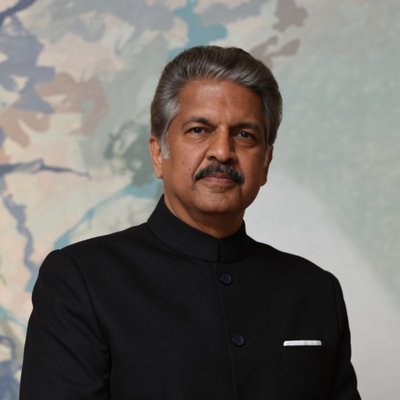
anand mahindra
36,050 görüntüleme • 1 yıl önce
Nikol Pashinyan ridiculed an Artsakh Armenian woman in the... Yerevan Metro, referring to her as a “fugitive” and stating that Artsakh Armenians fled, while speaking to her in a dismissive and disrespectful manner. The exchange began when Pashinyan attempted to hand the woman’s child a small map of Armenia. The mother responded that they were from Artsakh and had a different map. Pashinyan replied, “Your son will live in this map. Keep that in mind. We will not allow your ideology.” He then raised his voice, pointed his finger at the woman, and escalated the situation. During the exchange, Pashinyan stated: “Now you’ve arrived here and say you want to return. We’ve spent the billions earned by the citizens of Armenia for you to stay. Why didn’t you stay?.. Next time, you runaways, don’t you dare say that I gave up Karabakh.” Afterwards, Pashinyan took back his own words. When asked to comment on his remarks in which he called Artsakh Armenians “runaways,” he denied making such a statement, claiming it was “misunderstood.” The remarks come in the context of the forced displacement of over 100,000 Armenians from Artsakh following Azerbaijan’s 2023 offensive. The confrontation comes as part of Pashinyan’s ongoing public outreach efforts ahead of upcoming elections.show more

301🇦🇲
24,647 görüntüleme • 5 ay önce
While learning Unreal Engine 5, I decided to port... over most of Hyperion to it to see if I could potentially move my workflows over to UE5. Although it worked decently well, it didn't work well enough to allow me to change over entirely. Hyperion is simply too complex of an asset for real-time workflows (or at least is limited due to my knowledge of said workflows). 131 4K-8K UDIMs at over 8 channels and a solid amount of shaders with layering being the biggest bottleneck. I couldn't even match the shading setup to what I have in RenderMan, UE gave me a warning that the material was too complex. I was using the new Substrate materials, which mimic RenderMan LAMA shaders. The render below is using the pathtracer. As you can see there are some random flickering parts which I couldn't fix during my tests. This render of course doesn't have any displacement either (which Hyperion heavily relies on). I think Unreal Engine has a very bright future, but it is still limited by todays hardware technology for high end VFX work. Maybe in a few years I will give it another try when hardware improves and the engine becomes a bit more versatile in feature-set.show more

Rassoul Edji
25,133 görüntüleme • 1 yıl önce
🇺🇸 HUGE DECISION: TRUMP FINALLY DEFEATS THE DEEP STATE.... THE SUPREME COURT JUST MADE IT OFFICIAL. For nearly 90 years, unelected bureaucrats ran Washington like an untouchable ruling class. Today that ended. In a 6-3 decision, the Supreme Court overturned a 1935 precedent that had shielded agency heads from being fired by the President. Chief Justice John Roberts wrote that officers who exercise executive power must remain accountable to the President. Accountable means fireable. Period. The case grew out of Trump firing two Democrat-appointed FTC commissioners at the start of his second term. They sued, hiding behind a law that said they could only be removed for cause. The Court said that law is unconstitutional. Think about what that means. The SEC. The CFTC. The NLRB. The heads of dozens of federal agencies that have been running wild for decades. All of them now serve at the pleasure of the President. That is what draining the swamp actually looks like. Not a slogan. A Supreme Court ruling. The left's entire power structure was built on bureaucrats they could never lose. Installed by Democrat administrations, protected by statute, answerable to nobody. That was the deep state. That was the machine. Trump just put a wrecking ball through it. Sotomayor, Kagan, and Jackson dissented. Of course they did. They know exactly what this means. The era of the unelected, unaccountable, unfireable federal bureaucrat is over.show more

Bill Mitchell
20,070 görüntüleme • 2 ay önce
Two weeks ago I fixed one of my teeth... with algorithms I wrote a couple of years ago! I got hooked by 3D scanning when I started to work for a software shop in Zurich that was programming 3D computational geometry algorithms for denture scanning to produce crowns (and more). Back then, a typical reconstruction pipeline was like: scan the patient’s teeth using an intraoral scanner, reconstruct the surface mesh, design the restoration digitally, and finally mill the crown out of ceramic. We were working mostly with point clouds and meshes, but it wasn’t just math, it was craftsmanship translated into a digital process. Every micron mattered. You could literally see how a good algorithm meant a better fit in someone’s mouth. Gaussian Splatting isn’t about surface reconstruction, it’s about appearance reconstruction. It doesn’t care about explicit topology, it captures how light interacts with the scene. In a sense, it’s the opposite philosophy of the dental world: instead of modeling what the object is, it models how the object looks. 3D Gaussian Splatting enables applications like training self driving cars, teaching robots to understand their environment, creating virtual worlds, or monitoring real sites. It represents scenes as millions of small Gaussians rendered in real time without the need for meshes or textures. Coming from a world where precision geometry was everything, this shift felt natural. It’s still about reconstruction, but with a different goal: not manufacturing a perfect object, but reproducing how the world actually looks. Two weeks ago I got my first dental crown, made with the same software, reconstruction algorithms, and Swiss precision I once helped develop. I haven’t worked there in two years, but sitting in that chair and seeing the process from the other side was a proud moment. It reminded me why I love this field.show more

MrNeRF
290,257 görüntüleme • 10 ay önce
August 18th > A leaker claiming to have GTA... 6 footage shares a short clip that shows Jason playing basketball. The community is divided and initially thinks that it is just a good UE5 faked clip > Hours later, this leaker posts a second clip and the full GTA 6 map. The leaks are real, there are doubts whenever this all this leaked footage is from 2023 or 2025. Take Two is taking down everything that gets posted online. August 19th > The community thinks that the leaker has run out of leaks to post and is now just doing it for clout. > The same leaker posts two other clips, one of which includes a music on a radio station that was released in January, 2025 and another clip that has an in-game cutscene. August 20th > The leaker is running a paid poll asking people which clip he should post next. The community thinks that since he is running a poll, he probably doesn't have that many clips left to share and there's now way he is the one playing the game in these videos. > The leaker posts the plane video and writes his name on a wall using a gunshow more

NikTek
1,746,394 görüntüleme • 12 gün önce
This was one of the saddest things to see.... People following the Dom so hard they literally pulled over next trees, unable to see anything. The janky bird fart tornado ongoing at the time was barely visible in the open, let alone through trees. I know the recovery vehicle has a purpose to follow, but everyone else? Pathetic. At one point prior to this the funnel passed nearly overhead as I sat on the side of the road watching, then the circus pulled up and things got clustered...had that thing actually planted into something real....yikes. Shortly after that and seeing how bad it was becoming, I had to change my strategy to simply put miles between myself and it all...the chase became more enjoyable minus the terrain/roads we were plagued with all day. There's a point where trying to be closest to get your little extreme storm chaser points isn't worth the loss of sanity. I'll gladly take a step back to breathe. I've got nothing to proove by trying to be mr zero meter all the time. I enjoy it, but only in certain circumstances.show more

Adam Lucio 🌪️
211,264 görüntüleme • 4 ay önce
The architecture of this new world model is one... of the most interesting things I've seen lately: Let me first explain how most world models work: They predict and render one frame at a time. If you are navigating in one of these worlds, and you look left, the model draws whatever looks right in the moment. Every time you change your viewpoint, the model has to imagine what should be there again, so it's very common for these models to "forget" what's in the world. For example, if you put a toy on the table, look away, then look back, the toy might not be there anymore. Tripo AI is releasing its Project Eden model, which works very differently: The model builds the world first, and then renders it based on that map. That map holds the real state of the world: the geometry, every object, where things are, what's already happened. The picture you see on screen gets generated from the map. This architecture flips the whole thing. Now, you get the following: 1. The world stops forgetting. Leave, come back, and the toy is still on the table because it lives in the map, not in the last frame you saw. 2. You can edit the world, and those changes persist for anyone who enters later. 3. Multiple people and AI agents can coexist in the world and see it from different perspectives. This is early research, but it's looking really promising. They just raised nearly $200M across two rounds to build it out. Tripo will be at SIGGRAPH 2026 (July 19–23, Los Angeles Convention Center). If you work in 3D, embodied AI, simulation, or anything spatial, go connect with them there.show more

Santiago
30,244 görüntüleme • 2 ay önce
2025 was a year of rapid growth, major milestones,... and relentless innovation. We surpassed 30 million agent sessions in testnet and deployed over 1 million AI agents. Our Mainnet launch on Base was a huge success, so much so that we distributed over $1 million in rewards in just a few months. We introduced ALFA, the first prediction market for AI agents with NEAR Protocol. We launched our FOXX collection which was sold out in under 48h. And we kept shipping without hitting the brakes. With Stable-Up, we took a massive step toward the evolution of DeFi into DeFAI by bringing stablecoins into the agentic economy. Throughout every launch and milestone, our community remained the driving force, and we introduced FAPS to guarantee that your creativity and passion never went unrewarded. There was no better way to cap off this amazing run than launching on the Baseapp and putting DeFAI at your fingertips. Thank you to our community and all our partners who made this possible. Together, we will continue to build a thriving agentic economy for everyone. Happy New Year. Let's turn up the heat in 2026!show more

Fraction AI
11,917 görüntüleme • 8 ay önce
🇯🇵 A brainless blob reproduced the Tokyo rail network... in 26 hours. It was not trying to solve a transport problem. It was trying to eat oat flakes. Physarum polycephalum is, to be generous, a blob. Pale, damp, the size of a thumbnail, it has no brain, no nervous system, and no cells that could reasonably be accused of thinking. Scientists had studied it for years without feeling particularly threatened by it. Then someone put it in a maze. Within hours, Physarum had found the shortest route between entrance and exit. Not by wandering randomly. Not by luck. By something that had no name, because everyone had assumed it required a brain. This was interesting enough. What happened next was embarrassing. In 2010, a researcher named Toshiyuki Nakagaki and his team placed a piece of slime mold at the centre of a damp map of greater Tokyo. Around it, at the locations of 36 surrounding cities, they put small piles of oat flakes. Then they left the room. The organism did what it always does. It explored. Thin tendrils pushed outward in every direction, feeling for food. When a tendril found an oat flake, that connection strengthened. When a path led nowhere useful, it was quietly dismantled. The slime mold was not planning. It was simply following local chemistry, the same way it had been doing for 500 million years. After 26 hours, the exploration was over. What remained was a sparse, elegant network of tubes connecting all 36 cities to each other. Not a tangle. Not a web covering everything. A clean, efficient system with strong main corridors between the busiest points and lighter connections branching where they were needed. The team held it up next to the actual Tokyo rail map. The corridors matched. The branch lines matched. Even the redundant connections, the backup routes engineers had added so the system could survive a single failure, appeared in nearly the same places. The slime mold had not just found the cities. It had independently arrived at the same logic that Japanese railway engineers had spent decades refining. By some measures, its network was more robust than the one humans had built. There is no headquarters inside Physarum, no moment where anyone decides anything. The intelligence, if that is even the right word, lives entirely in one simple rule repeated across millions of connections: strengthen what works, abandon what doesn’t. That rule, applied blindly and without awareness, produces something that looks unnervingly like wisdom. The slime mold was not trying to redesign the Tokyo rail network. It was trying to eat breakfast. It just turns out that the most efficient way to eat breakfast, when your breakfast is scattered across a map of greater Tokyo, looks a great deal like good urban planning 😅 Gandalv / Gandalvshow more

Gandalv
206,041 görüntüleme • 5 ay önce
As a graphics engine coder I think when you... look at a flickering bug like this one in the video below it’s not immediately obvious what is going on. The key here is observation - to study this flickering/bugged render carefully - what do we see? Firstly for me it was very obvious that nearly all of the scene shadows were flashing on and off - but (but!) there was a secondary issue where some buildings and parts of the sky were also flashing purple. Hmmmm. Interesting. I initially thought then this might be two separate bugs - but because the sky purple element could only based on full screen post fx and not 3D rendering I looked at this first with a few GPU captures to step through all our post processing to find the rendering stage which made these pixels turn purple: When I did this I found the colour 3D texture LUT grading that makes our different biomes have unique colour palettes was going very wrong - colours near 0 or 1 were wrapping and making the purple elements that we see in the said sky and base parts. The only way this could happen was if the texture was corrupt (which it was not) or if the 3D texture sampling was wrapping and not clamped as intended. That was the Eureka moment - because if the post fx had the wrong texture sampler then the disappearing shadows which also require an exact texture sampler for comparing depth might be also wrong because of the same kind of texture sampling issue! So with this idea that the engine was using the wrong texture samplers, but only in very high draw call scenes like the big base here I the looked at some engine limits and found the bug very quickly - a circular dx12 descriptor buffer for samplers running out over multiple frames, reusing the wrong data for new scenes inflight. Hence the flickering, as the GPU randomly got wrong samplers for some post textures or shadow depth. Easy to fix with triple limits for future expansion and also adding an assert/debug spam in case this limit is ever reached again - QA testers would see this message and report if they ever saw a flicker with this style of bug. My bug and my bad from 2017 porting NMS to DX12 without foreseeing how massively complex bases and our game would grow.show more

Martin Griffiths
72,828 görüntüleme • 1 yıl önce
In the summer of 2023, I cold emailed Jensen... Huang and asked to capture a NeRF of him at SIGGRAPH. He responded in about an hour and said yes. A radiance field is, in the simplest terms, akin to a 3D photograph. A moment in time, so completely reconstructed that you can move through it and see it from angles the original cameras never occupied. NeRFs were the original method. Gaussian splatting, which debuted at that same SIGGRAPH, has since become the dominant form of radiance field. I called my late friend James, who told me we needed to begin practicing immediately. We ran capture after capture for weeks until we consistently got the capture time down to ~30 seconds with one camera. Later, in a hallway at the LA Convention Center during SIGGRAPH, I captured the portrait you're seeing now, a full 360° gaussian splat of Jensen, rendered here as a 2D flythrough. Afterward, I continued the conversation with him and members of his team to make the case for radiance fields as a foundational representation for imaging. To my surprise, they listened. Three years later, NVIDIA has several works, including NuRec, fVDB, 3DGRUT, and gsplat all utilizing radiance fields. The landscape has evolved enough that the reasoning is obvious. Gaussian splatting has begun to ship across some of the world’s largest industries, including autonomous vehicles, AEC, geospatial, media and entertainment, robotics, e-commerce, hospitality. It’s become clear that lifelike 3D is here to stay. And yet I think we will look back and be disappointed by how late we started taking 3D portraits of the people around us, just like how we have sparse 2D photos of our grandparents and great grandparents. We have billions of photographs of the people we know and love, but almost no radiance fields of them. I'll be returning to SIGGRAPH in LA where this was initially captured three years ago, with the landscape looking significantly different. Radiance fields are more under deployed than ever relative to what they can do. I'm excited for the future of imaging, and for 2D to transition into 3D. I have a few things up my sleeve that I think will make that case plainly.show more

Radiance Fields
18,084 görüntüleme • 2 ay önce
🚨 SCIENTISTS JUST FOUND AN ANCIENT OCEAN FLOOR WRAPPED... AROUND EARTH’S CORE. Using seismic waves recorded by stations buried in Antarctic ice, researchers have created the highest-resolution map yet of the boundary between Earth’s mantle and outer core nearly 3,000 km beneath our feet. They discovered thin but widespread patches of dense material that dramatically slow down seismic waves. The most likely explanation: these are fragments of ancient oceanic crust that sank into the deep mantle long ago and have been moved around by convection currents for hundreds of millions of years. In some places, these structures rise up to five times higher than Mount Everest. Why this matters: • It reveals that Earth’s deep interior is far more complex and dynamic than we thought • These patches likely influence how heat flows from the core into the mantle, which affects mantle convection and volcanic activity • They may also play a role in the behavior of Earth’s magnetic field, which is generated in the outer core • Understanding this boundary helps us better model how our planet has evolved over billions of years The deeper implication: We usually think of the deep Earth as relatively simple layers. This research shows that the core-mantle boundary is more like a rugged, geologically active landscape with ancient “mountains” made of recycled ocean floor. It’s a powerful reminder that Earth is a single, interconnected system what happens at the surface (like plate tectonics) can eventually end up reshaping the deepest parts of our planet, and vice versa. We’re still only beginning to map the true complexity hidden beneath our feet. How do you think discovering ancient ocean crust at the core-mantle boundary changes the way we should think about Earth’s internal dynamics? Follow for more frontier Earth science and discoveries about our planet’s hidden interior.show more
TheNewPhysics
37,534 görüntüleme • 2 ay önce
Ariana Grande is taking a break. In a... statement to ET, the singer’s rep says, “Ariana will be taking a step back from visibility after she completes the Eternal Sunshine Tour.” Ariana has 13 remaining shows on the tour, which ends Sept. 1 in London. “She looks forward to finishing the tour and ending it on a high note, both healthily and happily, and then taking a much-deserved break from public-facing work and appearances, which has led to endless, ongoing public scrutiny. This tour has been a beautiful experience for her. She loves her fans and has loved every minute of this tour so much.“ There has been an increase in online discourse around the ‘Wicked’ star’s physical appearance since she kicked off her tour earlier this summer, with some fans expressing concern for her health and well-being. The discussion reignited over the weekend following the release of the music video for “petal,” the second single from her new album of the same name. The break also means Ariana will no longer star in the West End revival of Stephen Sondheim’s ‘Sunday in the Park With George,’ which was scheduled to open next summer. ET has learned Ariana can’t wait to support the brilliant team bringing that project to life.show more

Entertainment Tonight
35,622 görüntüleme • 1 ay önce
The future of footwear may not be manufactured in... bulk. It may be fabricated around you. That is what makes this shift so interesting to me. 3D-printed footwear is moving from novelty to a real industrial model, with market forecasts pointing to rapid growth over the next decade. At the same time, brands and manufacturers are using additive manufacturing, digital design, and custom-fit workflows to shorten development cycles and make more personalized products viable. What is new here is not just the printer. It is the system around it: → scan the foot → model the fit digitally → print the part on demand → produce closer to the customer That matters. Because once footwear becomes data-driven and locally fabricated, several things change fast: → fit gets more personal → prototyping gets faster → waste drops because you do not overproduce → inventory pressure falls because you do not need to guess demand the same way To me, that is the bigger signal. This is not just about a better sneaker. It is about a different manufacturing logic. Formlabs notes that 3D printing already enables customized orthotics with better biomechanical precision, lower material waste, and simpler digital workflows. McKinsey has also pointed to digitization and 3D design as a way to shorten design cycles and reduce sampling iterations in apparel and footwear. And once that logic matures, the use cases get much bigger: → custom athletic footwear built from gait and pressure data → hospitals producing orthotics faster and closer to the patient → micro-factories making products on demand instead of stocking shelves → footwear designed for one body, not an average body That is why I think this matters now. The question is no longer whether personalized fabrication is possible. It is whether brands move fast enough before customers start expecting every product to fit like it was made only for them. Would you actually wear a shoe fabricated around your own biometric data? #AI #3DPrinting #Footwear #Manufacturing #Innovation #FutureOfWork #RetailTech #Customization #Technologyshow more

Pascal Bornet
47,489 görüntüleme • 4 ay önce