Loading video...

Video Failed to Load

Go Home

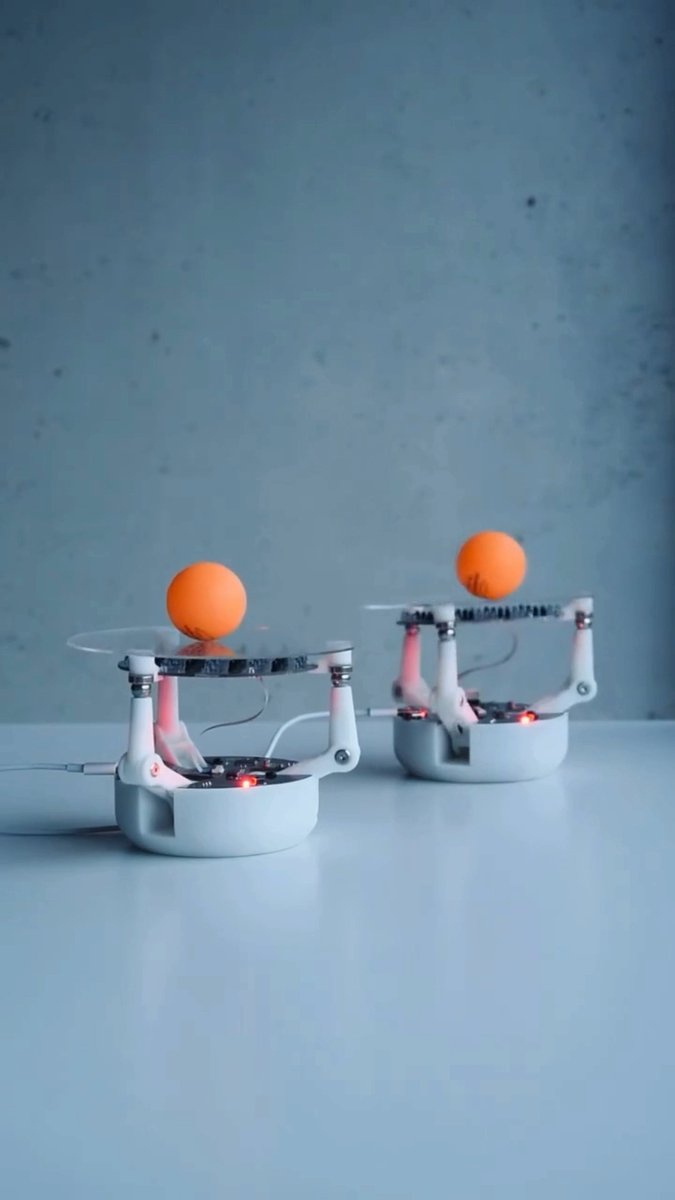
BaBot: The Ball-Balancing Robot - Real-time PID control on a 2-axis platform, powered by a microcontroller using the same chip as an Arduino. - Precision servos and IR sensors track the ball with speed and accuracy. - Perfect for learning control systems, teaching robotics, or showing off your engineering...

48,877 views • 1 year ago •via X (Twitter)

0 Comments

No comments available

Comments from the original post will appear here
Related Videos

Something big is happening in robotics - and it’s hiding in plain sight. This post is not about dancing robots but in the data that powers them. Open robotics datasets have exploded this year, turning the field into a more scalable and collaborative ecosystem. In just two years, Hugging Face datasets grew from 11k to over 600k - and robotics is by far the fastest-growing segment. We went from 1k robotics datasets in 2024 to 27k in 2025! For comparison, text generation, the second-largest category, has only around 5k datasets in 2025. That gap is massive. Open datasets are important because robotics lives and dies by real-world robot data - video, actions, sensors, failures. By making this data easy to upload, reuse, and benchmark, researchers, startups, and large players are now releasing real-robot datasets that would have stayed locked inside labs just a few years ago. Major contributors include NVIDIA, LeRobot initiative, and a rapidly growing maker community. This surge is also enabled by cheaper video storage, better tooling, and an open-source AI culture now spilling into the physical world. And it really matters: open robotics data dramatically lowers entry barriers, accelerates learning-by-doing, and speeds up progress toward generalist and humanoid robots. Robotics won’t scale through hardware alone - but to a large extent through shared data. Viz below from AI World - link to the story and more viz/filters in comment.

Pierre-Alexandre Balland

185,895 views • 6 months ago

As a newly appointed 𝗔𝘀𝘀𝗶𝘀𝘁𝗮𝗻𝘁 𝗣𝗿𝗼𝗳𝗲𝘀𝘀𝗼𝗿 at Imperial College London, I'm thrilled to announce the 𝗦𝗮𝗳𝗲 𝗪𝗵𝗼𝗹𝗲-𝗯𝗼𝗱𝘆 𝗜𝗻𝘁𝗲𝗹𝗹𝗶𝗴𝗲𝗻𝘁 𝗥𝗼𝗯𝗼𝘁𝗶𝗰𝘀 𝗟𝗮𝗯 (𝗦𝗪𝗜𝗥𝗟) at 𝗜𝗺𝗽𝗲𝗿𝗶𝗮𝗹 𝗖𝗼𝗹𝗹𝗲𝗴𝗲 𝗟𝗼𝗻𝗱𝗼𝗻. 𝗦𝗮𝗳𝗲 𝗪𝗵𝗼𝗹𝗲-𝗯𝗼𝗱𝘆 𝗜𝗻𝘁𝗲𝗹𝗹𝗶𝗴𝗲𝗻𝘁 𝗥𝗼𝗯𝗼𝘁𝗶𝗰𝘀 𝗟𝗮𝗯 (𝗦𝗪𝗜𝗥𝗟) ( is a new research lab focused on the intersection of safety and intelligence in next-generation robotics. We're hiring exceptional PhD students who are passionate about pushing the boundaries of robot learning. 𝗪𝗵𝗮𝘁 𝗺𝗮𝗸𝗲𝘀 𝗦𝗪𝗜𝗥𝗟 𝘂𝗻𝗶𝗾𝘂𝗲? We operate at the exciting convergence of: • Online & offline reinforcement learning • Imitation learning & human demonstrations • Sample-efficient learning methods • Whole-body and soft robotics systems We're 𝗹𝗼𝗼𝗸𝗶𝗻𝗴 𝗳𝗼𝗿 𝗽𝗿𝗼𝘀𝗽𝗲𝗰𝘁𝗶𝘃𝗲 𝗣𝗵𝗗 𝘀𝘁𝘂𝗱𝗲𝗻𝘁𝘀 interested in: • Developing safe exploration algorithms for robotic systems • Creating sample-efficient learning methods that minimize real-world trials • Building foundation models for robotics with safety guarantees • Advancing soft robotics and compliant human-robot interaction • Bridging theory and practice in embodied AI Why now? As robots become more capable and work closer with humans, we need systems that are both intelligent enough to handle complex tasks 𝗔𝗡𝗗 safe enough for real-world deployment. Traditional approaches treat safety and intelligence as competing priorities, we believe they're synergistic. If you're a motivated researcher who wants to develop the theoretical foundations and practical algorithms for tomorrow's safe, intelligent robots, I'd love to hear from you. Want to join? Apply via

Stephen James

16,552 views • 9 months ago

Robora Sim: A PyBullet-Powered Environment for Learning Robotic Physical Intelligence We are currently building our Robora simulation environment setup for our sim based learning, leveraging PyBullet, an industry-standard physics engine widely used in AI-driven robotics research and development. The environment is optimized with GPU-accelerated learning algorithms, enabling high-speed imitation learning and reinforcement learning within a safe and controlled virtual setup before shipping out to real world. This simulation platform allows our models to learn, adapt, and generalize across different robot morphologies, terrain types and task objectives - all before deployment to the real world. At it's core, the system combines a VLA-powered high-level planner with low-level motion control algorithms, working cohesively to produce emergent, physically intelligent behaviors. This synergy between simulation, learning, and real-world transfer marks a major step forward in our pursuit of adaptive and intelligent robotic systems. Through advanced domain randomization and synthetic data generation, the Robora Simulation Environment ensures that policies trained in simulation transfer effectively to real-world robots, minimizing the sim-to-real gap. Moreover, users will be able to test and integrate their own hardware kits within selected simulation environments in the Robora Dapp, ensuring seamless compatibility and safer real-world implementation.

Robora

23,489 views • 9 months ago