Loading video...

Video Failed to Load

Go Home

Buggy Boy (also known as Speed Buggy) is an innovative 1985 off-road arcade racing game developed by Tatsumi Electronics and published by Taito. Its clever sprite-scaling tech and playful tone made it an arcade classic. A deluxe cockpit featured 3 screens for panoramic view but it was also available...

18,659 views • 1 month ago •via X (Twitter)

0 Comments

No comments available

Comments from the original post will appear here

Related Videos

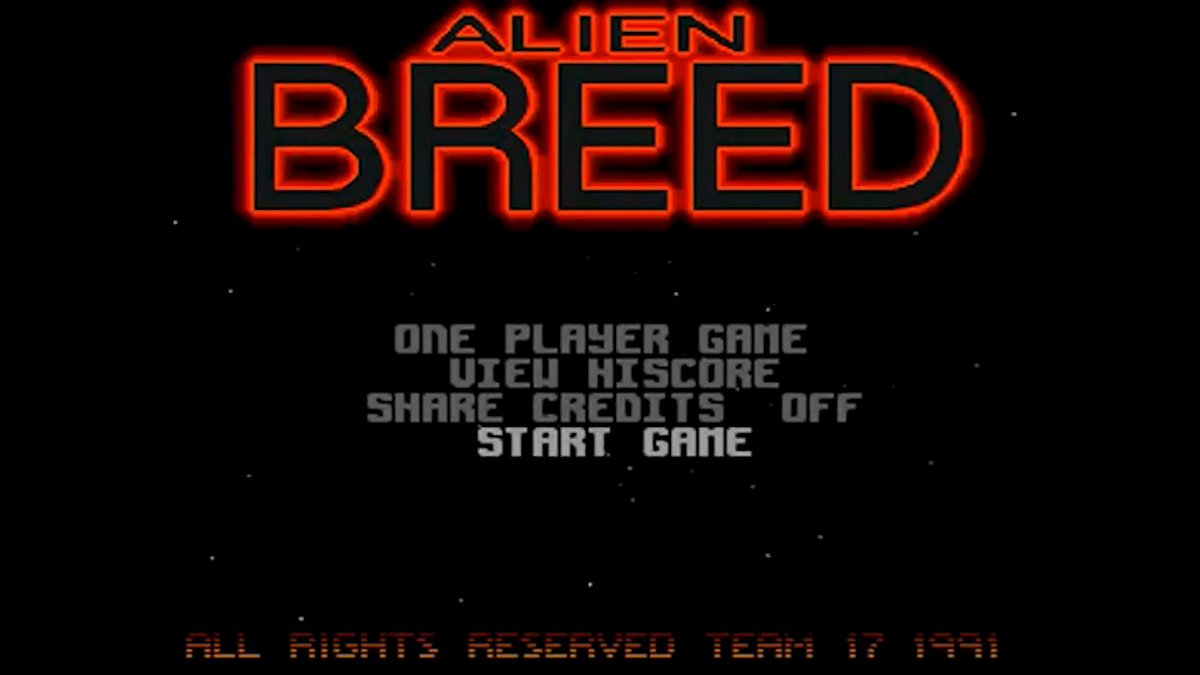
5 Facts you didn't want to know about Alien Breed for the Commodore Amiga Alien Breed (1991) is a landmark Amiga title that defined Team17’s early style: tense, atmospheric, and brutally addictive. It was perfect for co-op gaming with mates. Programmed by Andreas Tadic and Peter Tuleby, with graphics by Rico Holmes and iconic music by Allister Brimble. 1. Top-down run-and-gun sci-fi shooter heavily inspired by Aliens: You (and a friend in co-op) explore an infested space station, blasting xenomorph-like aliens (I originally thought they were aliens) while managing limited ammo and health. It mixes fast arcade action with tense resource management. 2. Team17’s breakthrough hit: This was only their second game, after Full Contact, and their first full-price release. It put the UK developer and publisher on the map, before they became famous for the Worms series. 3. Extremely well-received on Amiga: Launched to critical acclaim, with many magazines scoring it 85–91% (CVG 91%, Zero 91%, CU Amiga 90%, Amiga Action 87%). It was usually praised for its smooth multi-directional scrolling, atmosphere, co-op play, and technical excellence on the Amiga. 4. Infamously difficult: The original game was notoriously tough and short, with only six levels. Because of this, Team17 later released Alien Breed Special Edition 92, with rebalanced difficulty, extra levels, and various fixes. In my opinion, it’s a much more enjoyable game. 5. No official Commodore 64 version: it was developed primarily for the Amiga, and the Commodore 64 never got a conversion :( Would you have played it? I would have big time! Still one of the best top-down shooters ever made on the Amiga. Who else remembers the panic when the ammo ran low and the aliens kept coming?

Commodore Computer Museum 🕹

13,291 views • 4 months ago

One of Sega’s greatest strengths in the 1990s was its ability to create arcade games using 3D hardware that completely outclassed the competition. Virtua Racing and Virtua Fighter were developed on the Model 1 arcade system, which was based on advanced 3D technology originally developed for military applications. At the time, their performance was so impressive that other 3D games simply couldn’t compare. Because of that, it was extremely difficult to accurately reproduce these games on home consoles. In the early 1990s, the Model 1 arcade hardware cost close to $7,000, and even Sega’s own systems—the Mega Drive, 32X, and later the Sega Saturn—struggled to deliver arcade-perfect versions. Back then, I was disappointed by the gap in quality between the arcade and home versions. Looking back now, though, it’s amazing that Sega managed to port them as well as they did. It almost feels like a miracle. After eventually buying an arcade cabinet and a Model 1 board, I learned something I hadn’t realized before: Model 1 supported high-resolution monitors, unlike the standard displays used by most home systems. In those days, the average gamer didn’t even think about screen resolution, so seeing Virtua Fighter on a high-resolution arcade monitor created a fundamentally different experience from the home versions. When I first played Virtua Fighter on the Sega Saturn, I remember feeling that something was missing. At the time, I assumed it was simply the lower polygon count, but after seeing the original hardware in action, I realized that the difference in resolution also played a huge role. Sega’s arcade games—especially those built on the Model 1, Model 2, and Model 3 platforms—represent the peak of the company’s technological achievements. That’s one of the reasons I enjoy collecting them so much. Since home console conversions could never fully capture the original experience, the authentic arcade versions have a unique charm that’s hard to replicate. Even today, playing them on the original hardware is a great reminder of why Sega was considered the king of arcade gaming during the 1990s.

Gamer_lafan

11,313 views • 3 months ago