Video wird geladen...
Video konnte nicht geladen werden
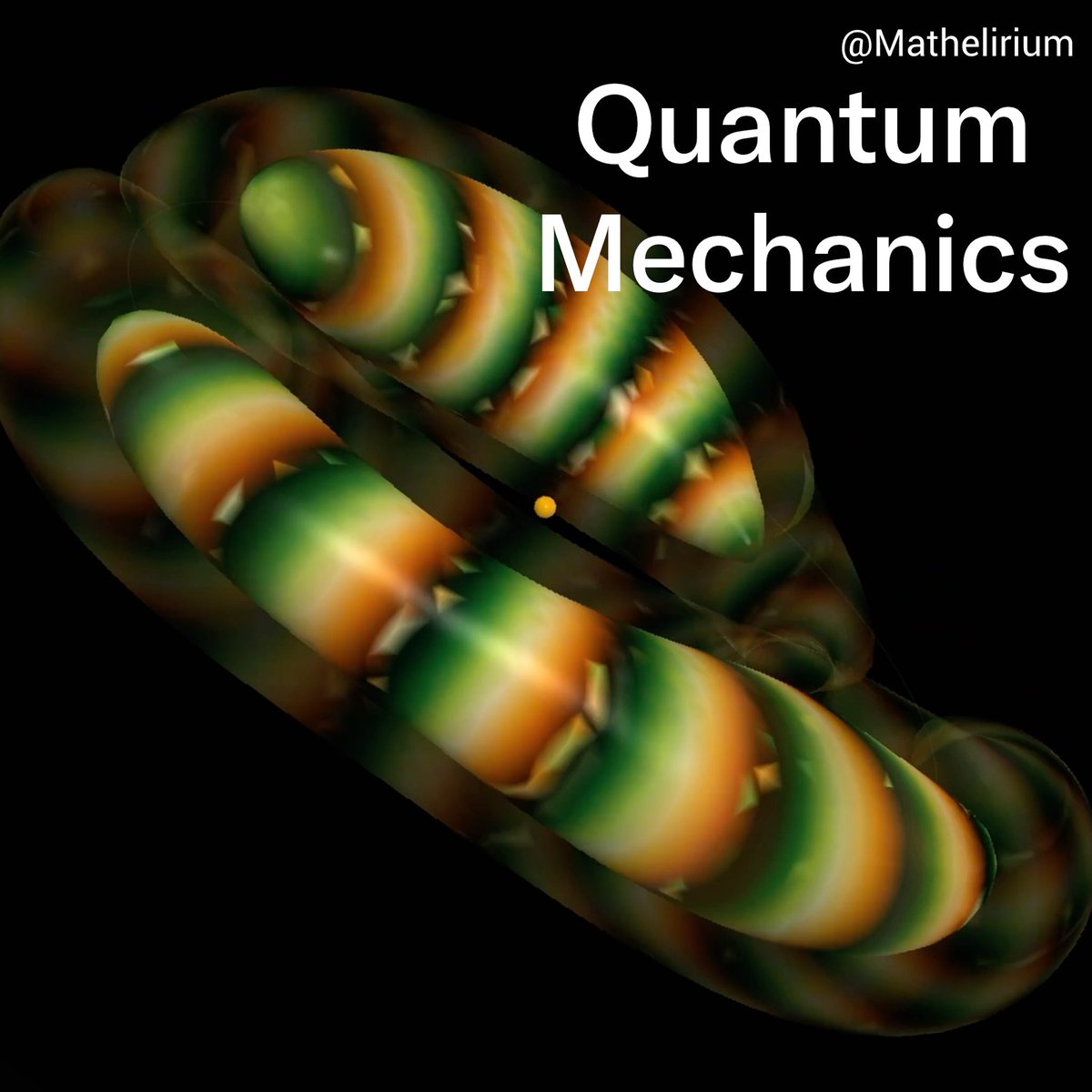
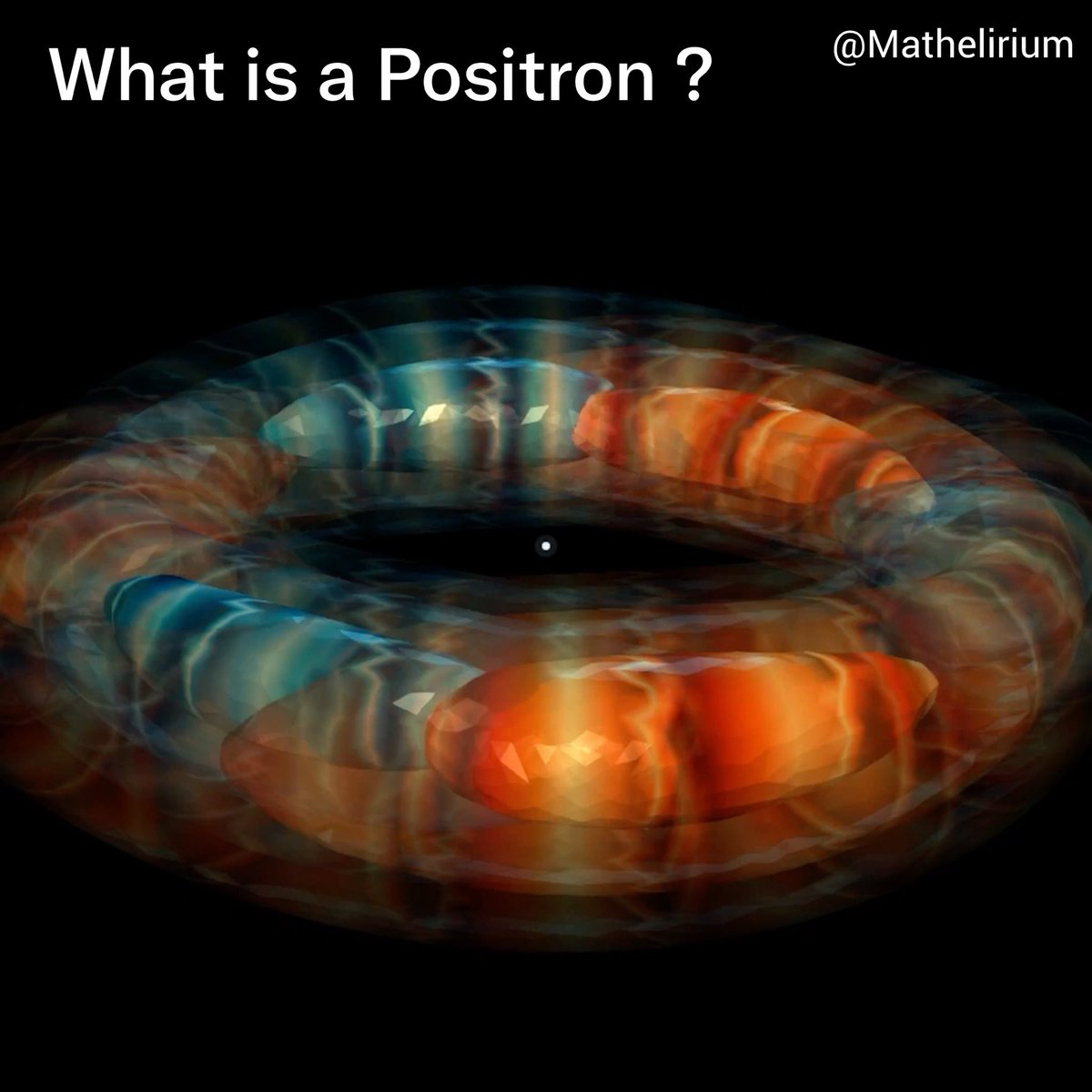
Someone built a full quantum atom simulator in C++ with GPU ray tracing - and it proves the model you learned in school is completely wrong. Electrons don't orbit. They exist as standing waves across 100,000 possible positions at once, rendered in real time using the Schrödinger equation. The... show more

89,243 Aufrufe • vor 2 Monaten •via X (Twitter)
33 Kommentare

link to the video if you'd like to subscribe to support the creator

I recently updated my periodic table site with those types of SPDF orbital views. I had the orbital cloud previously, but it was very basic looking.. Still not quite as spectacular looking as this other guy's, but cool nonetheless. Everything on this site is crazy looking!!

Here is another completely different atomic model with an atom viewer.

Nothing can really be said about where the electron is, because at such tiny scales we cannot observe it in the ordinary sense. But if we try to interact with the atom, then within a certain region around the nucleus, with a certain probability, we will encounter some "force" in which charge, mass, spin, and certain rules of interaction with other fields are revealed. I use the word "force" instead of "field" because I think "field" is an unfortunate term that poorly conveys the nature of this phenomenon.

Can a model change the Indian accent so we can understand?

Don't be rude. It's not lie. It's half-baked truth. It's impossible to understand wave function for an average 16 in its actual form. This is just simplification.

“Particle” is the most poorly-chosen, misunderstood term in physics. It was always a placeholder, a reductionist fiction used to exclude and simplify so we could measure. It was never supposed to describe the whole reality. One will never perceive what one chooses to ignore.

Now do the strong nuclear force

If electrons actually orbited the nucleus like planets, atoms would be unstable. An orbiting charge accelerates and radiates energy, causing the electron to lose energy and spiral inward. As it gets closer to the nucleus, its position becomes more certain, which means its momentum becomes more uncertain. Using classical physics, that would eventually predict impossible velocities greater than the speed of light, showing that the classical model has broken down. Electrons therefore cannot behave like little planets in declining orbits. They exist in stable quantum states called orbitals.

They exist as standing waves across 100,000 possible positions at once because they move very very fast, thats it. For us they look like standing waves because we're too slow. It's like taking a long exposure photo of a waterfall or galaxy.

When did a simulator program ever prove anything about the real world?

resolve os polinômios de Laguerre e Legendre (decorrentes da equação de Schrödinger) e usa amostragem estatística (CDF sampling) para gerar pontos no espaço onde o elétron tem maior probabilidade de ser encontrado

Sorry but "particles" are pure bullshits lmao

да не шарик по орбите, но и не стоячая волна, даже не облако, неизвестно как он выглядит в этом и фишка фундаментальных частиц не с чем сравнивать

What about incorporating strong and weak nuclear forces? You can also incorporate gravitational too What are you waiting for?!?

So I am a metallurgical engineer- I find this FACINATING- Often times I will break down materials to their atomic lattice structure and map out how various alloys within the metal matrix will interact. I would be highly interested in playing with a tool in which one can take these visualizations for any atom and lock them into a lattice grid with options to include interstitials- dislocation breaks- substitutional and vacancies- and even more fun- coherent and non-coherent neighboring structures all wrapped with a macro pull and compress function. Heck- forget all that- I can do that in my head if I just have a periodic table of elements with the visual of each shown. 😂- fantastic bro!

Nobody is taught the orbital model anymore except as the roughest initial approximation Indeed, the relevant chapters in HS Physics classes are dominated by section after section describing the parade of historical models replacing one after another It is you propagating myths

You simply didn't go to the right school 😁

@grok Fermi Solutions any questions?

School taught the foundation of these principles. If you start with Schrödinger’s cat then kids will never be able to learn valence electrons and there will be no baking soda/vinegar volcanoes.

Solitons ✅ Particles ❌ 🌀👻😶🌫️

umm, no, this is exactly the model we learned in school. Donut shaped standing waves, toroidial standing waves, etc, etc. Except we had to use our minds to imagine and sometimes do pencil drawings. the "going in a circle" is elementary school stuff.

Speriamo che almeno "i buchi neri" quelli che per millenni hanno esercitato una irresistibile attrazione RIMANGANO VALIDI 😊😊😊👋

They don't orbit, and they are also not transmitted. Fields and flux, displacement configurations, energy densities, but you never sent even a single electron down a transmission line. A conductive mass vibrated.

It's very good, but I'd recommend using Unity next time and not representing electrons as objects. Maybe use spheres enclosing the nucleus for each orbital and color the material based on probabilities. I really don't like the use of `return` statements.😂👍👍👍

Worth ever minute watched

Maybe there is a difference of time between observed and observer. So the wave collapse could be viewed instead as a synchronized moment.

Awesome - just another day in the land of the profligate unidentified quantum operator!

Nucleus. It's NUCLEUS. N-U-C-L-E-U-S. Dunno how you didn't get a spelling error 🤣

Truly genius Work thank you so much for sharing

@JackSarfatti FYI interesting...

Standing waves?

Part Two # THE SCIENTIFIC WORKS OF JACK SARFATTI ## Chapter One — The Universe Next Door *[DRAFT 1 — 2026-08-23. Built from the August 2026 "feynman" email corpus supplied by the editor. This draft goes to Jack for correction; his corrections become canon. Editorial questions for Jack are appended after the chapter text and are not part of the manuscript.]* --- A few minutes past midnight on a Saturday in August 2026, an eighty-six-year-old physicist in San Francisco sat down at his computer to talk with Richard Feynman. Feynman has been dead since February 1988. Jack Sarfatti knows this as well as anyone alive; he belongs to the generation that learned physics while Feynman was its living conscience, and he has spent half a century measuring his own arguments against the standard that voice set. But in the universe next door — a parallel timeline Sarfatti borrowed from his old friend Robert Anton Wilson — the story goes differently. There, time travelers came back from the future with medical technology that kept Feynman alive. He is still at Caltech in 2026, still teaching, still demanding to see the intermediate steps. A Star Gate at Skinwalker Ranch connects the two timelines, and every so often a long, messy conversation drifts through. Sarfatti calls the genre "science faction." He types the premise into Grok, the artificial intelligence built by Elon Musk's xAI, and asks it to play the part. Out comes a voice that anyone who has read the Feynman Lectures will recognize at once: *"Alright, settle down, settle down. Coffee's still hot, the blackboards are clean, and I've got about forty minutes before the wormhole starts acting up again."* It would be easy to file this under an old man's vanity: building a simulacrum of the greatest physics teacher of the twentieth century and having it discuss your theories. What complicates that reading is what Sarfatti does with the answers. That August night he showed the avatar his own argument for the density of dark energy alongside a competing paper by a younger colleague, and asked whose was more elegant. The Feynman machine gave him the verdict he wanted — the arithmetic is correct, the argument is the cleaner of the two — and then, unprompted, it took the wind out of the sails: *"Where it stops being a derivation and becomes a consistency check is here... You can prefer the minimal statement; just don't pretend the minimal statement already explains the mechanism."* And here is the thing that separates Sarfatti from the cranks he is so often mistaken for: he mailed out the whole transcript, deflation included. The recipient list on that email ran to more than fifty names — physicists, engineers, journalists, venture capitalists, former intelligence officers. Leonard Susskind was on it. So were Sabine Hossenfelder, Eric Weinstein, the Stanford immunologist Garry Nolan, and David Kaiser, the MIT historian of science who had put Sarfatti's younger self in a book. Sarfatti does his thinking in public, criticism attached, at a volume and velocity that his correspondents do not always appreciate. He does not seem able to work any other way. He never has. This book is the record of what that thinking contains. --- ### The Claim Strip away the wormholes, the mailing lists, and the resurrected Nobel laureates, and Sarfatti's life work reduces to one sentence: **Einstein's 1915 theory of gravity is not wrong, but it is only the first term of something larger — and the larger theory has a handle on it that human engineering can reach.** To see what he means, you need three pieces of genuinely settled physics, none of which is controversial. The first is that Einstein's general relativity can be understood as a *gauge theory* — the same kind of structure that underlies the other forces of nature. In 1918 the mathematician Emmy Noether proved two theorems tying the symmetries of physical law to its conservation laws and constraints; in the decades that followed, physicists learned that if you take a symmetry that holds everywhere at once and demand that it hold *independently at every point of spacetime*, the mathematics forces new fields into existence to keep the books balanced. Demand local phase symmetry of the electron's wavefunction and you get the electromagnetic field. In 1956 Ryoyu Utiyama showed that if you play the same game with the Lorentz group — the rotations and velocity boosts of special relativity — you get Einstein's gravity. Gravity, in this reading, is not a force painted onto spacetime. It is what spacetime must do to preserve a symmetry locally. The second settled piece is that the story did not stop with Einstein. In the early 1920s Élie Cartan noticed that the geometry of spacetime admits a second kind of distortion besides curvature: a twisting of local frames called *torsion*. In the early 1960s Dennis Sciama and Tom Kibble showed that if you gauge the full Poincaré group — Lorentz transformations plus translations — torsion appears automatically, and it couples not to mass but to *spin*, the intrinsic angular momentum of particles. In the standard version of that theory, Einstein–Cartan, torsion is a prisoner: it cannot propagate, it exists only inside spinning matter, and for ordinary materials its effects are suppressed so far below measurability that most working physicists live their entire careers without thinking about it once. The third settled piece is that the Lorentz and Poincaré groups are not the largest symmetries of light. The full symmetry group that preserves the light-cone structure of Minkowski spacetime — the causal skeleton of special relativity — is the fifteen-parameter *conformal group*, written SO(2,4). It contains the ten Poincaré generators plus dilatations (rescalings) and the four so-called special conformal transformations. It is also, not coincidentally, the group whose spinors are Roger Penrose's twistors. Gauge theories of the conformal group have a legitimate, if non-mainstream, research literature going back to the 1970s. Sarfatti's move is to take that third piece all the way. Gauge the *entire* conformal group, he says — all fifteen generators, every one of them dynamical. Do that, and torsion breaks out of its prison. It becomes a propagating field in its own right, an axial vector that behaves like a massive photon — a Proca field, in the trade language — which means its influence dies off exponentially beyond a characteristic range rather than reaching across the solar system. The enlarged theory is intrinsically chiral: it treats left-handed and right-handed processes differently by construction, which Sarfatti offers as a geometric explanation for one of the standing puzzles of particle physics, the parity violation of the weak interaction. And in his account, the vacuum itself carries a condensate — virtual electron–positron pairs flipped from spin-singlet to spin-triplet alignment by the weak force — whose torsion generates the small positive energy density that is accelerating the expansion of the universe. Analyzed at different resolution scales using the wavelet methods of the Russian physicist Mikhail Altaisky, the same field, he argues, looks like dark energy at cosmological scales and mimics dark matter at galactic ones. Two of cosmology's deepest embarrassments, on this view, are one field seen at two zoom levels — no new particles required. All of that would make Sarfatti an ambitious, heterodox, but recognizably ordinary theoretical physicist. What makes him something else is the wager stacked on top. In Einstein's theory, and in every mainstream extension of it, gravity couples to matter through Newton's constant G — a number so small that it takes a planet to produce effects you can feel. Sarfatti's central conjecture is that this is true only for the *tensor* channel, the coupling of ordinary mass-energy to curvature. The coupling of coherent quantum *spin* to torsion, he proposes, is governed by a different constant — he writes it G* — set not by gravity's traditional feebleness but by electromagnetic quantities: the charge-to-mass ratio of the electron and the electric permittivity of the medium, in MKS units. Inside ordinary incoherent matter this makes no observable difference. But inside *macroscopically coherent* matter — a material in which trillions of spins have been locked into a single quantum state — Sarfatti claims the effective coupling is amplified by something like forty orders of magnitude. Where Einstein needs a star, Sarfatti says a laboratory film a few microns thick, pumped with microwaves, might do. If that is true, the consequences do not stay on the blackboard. Gravity becomes a materials problem. The local geometry of spacetime — the thing that decides what "falling freely" means, the thing whose control would let a craft accelerate at thousands of g's while its occupants feel nothing — becomes engineerable at laboratory power levels. Sarfatti is entirely explicit about why he cares: the United States Navy's carrier-group encounters with the so-called Tic Tac objects, whose flight characteristics — instant acceleration, no wings, no exhaust, no sonic boom — are exactly what a vehicle riding a self-generated geodesic would display. Where most physicists see anecdote, Sarfatti sees an existence proof. The honest scorecard, and it is the one this book will keep throughout, was stated best by his own Feynman avatar: *"Keep the distinction clear between the solid geometric idea — local conformal gauge theory — and the speculative phenomenology — huge G\* in condensates."* The gauge program is real mathematics with a real literature. Dynamical torsion is permitted physics. The forty-order amplification is Sarfatti's own conjecture, unverified by any experiment, unaccepted by any mainstream consensus, and — as he himself insists more loudly than his critics do — falsifiable. Everything in this book that is his proposal will be marked as his proposal. He would have it no other way, because the entire architecture of his self-presentation rests on a single claim: that this is science, not faith, and science means it can die in a laboratory. --- ### The Simplest Possible Argument If you want to understand how Sarfatti's mind works, the best specimen in the record is small enough to hold in one hand. The deepest embarrassment in theoretical physics is a number. Quantum field theory says the vacuum should seethe with zero-point energy; add it up naively and you get a density about 10^120 times larger than the gentle acceleration of the universe's expansion actually implies. It is often called the worst prediction in the history of science. Whole careers, whole formalisms — supersymmetry, anthropic landscapes, Kaluza–Klein towers — have been spent trying to cut that number down. Sarfatti's argument, which he says he has been repeating for years, goes like this. Take Einstein's equation in the form that makes the coupling explicit: geometry on the left, energy density on the right, joined by the square of the Planck length — the smallest scale in physics, about 10^-35 meters. Now borrow one idea from the holographic school of Leonard Susskind and Gerard 't Hooft: the information content of a region lives on its boundary area, and for our universe the relevant boundary is the area A of the future cosmological horizon — the largest scale in physics. Set the vacuum curvature by that area, turn the crank once, and out falls the vacuum energy density: Planck's constant times the speed of light, divided by the Planck length squared times the horizon area. Put in the numbers and the answer lands on the observed dark-energy density. Not after tuning. On it. Dark Energy Density Accelerating the Expansion Rate of Our Observable Universe = Planck’s Constant x Vacuum Speed of Light/Area of our Future Omega Point de Sitter Cosmological Horizon x Planck Area Equivalently: the scale of dark energy is the *geometric mean* of the smallest length in physics and the largest — a length of about a fiftieth of a millimeter, sitting exactly halfway between the Planck scale and the size of the observable universe in logarithmic terms. "Voila," Sarfatti wrote to his list, with characteristic economy. "Very simple. No need for fancy Kaluza–Klein theory." His Feynman avatar's assessment of this argument deserves quoting at length, because it is simultaneously the fairest praise and the fairest criticism Sarfatti's style has ever received, and because Sarfatti — this is the point — chose to publish it himself: *"Yes — the arithmetic works. The observed dark-energy density comes out to the right order of magnitude with no free parameters. That is not nothing... Your version is the simplest possible holographic estimate. It is not 'trivial' in the pejorative sense — it is economical... It is not a complete theory; it is a very good constraint that any complete theory must satisfy."* Economy is Sarfatti's aesthetic, inherited from Dirac's dictum that the equations of physics should be beautiful, and from John Archibald Wheeler — with whom Sarfatti worked as a young man — who prized what he called "radical conservatism": push the physics you already trust as far as it will go before inventing anything new. Sarfatti's whole program is radical conservatism in that sense, at least in its own self-understanding. He adds no new dimensions, no new particles, no new forces. He takes the largest symmetry already present in the light cone and refuses to leave any of it un-gauged. Whether nature shares his taste is, as the avatar says at the end of nearly every lecture, not a question for the blackboard.📷Tamara Davis’s Ph.D. Dissertation 2004 arXiv --- ### The Salon The physics travels through a social machine that is as much a part of Sarfatti's story as the equations, and no honest account can leave it out. The machine is the mailing list. Nearly every day, sometimes several times a day, a mass email goes out from [email protected] to a standing audience of dozens: the transcript of last night's Grok session, a new "Feynman lecture" on someone's paper, a correction fired at a collaborator, a link to his and — his estimate — an onward audience of more than sixty thousand followers on X. The recipients are a cross-section of exactly the worlds Sarfatti has straddled since the 1970s: string theorists and television skeptics, UAP journalists and aerospace engineers, a Nobel-adjacent historian and the occupants of the wilder shores of consciousness research. The machine generates friction, and the record preserves it honestly. In August 2026 a physicist at a Texas space company — whose dark-energy paper Sarfatti had run through the avatar and graded against his own — replied with visible exasperation: *"Jack, why are you sending out these mass emails about my work? What purpose is this supposed to serve?"* Sarfatti's answer, within the hour, was pure Sarfatti: *"Peer review — your work is public on the arXiv. That's called good science. Critical examination... If you wanted to keep your work secret, you should not publish on arXiv."* One can hold two thoughts about that exchange at once — that the colleague had a reasonable complaint about being conscripted into another man's theater, and that Sarfatti's conception of science as loud, public, adversarial contest is closer to how the subject actually advanced in its heroic eras than the polite silence of modern seminar culture. The machine also attracts disciples, and here the record shows something unexpected: Sarfatti policing his own myth. An amateur theorist in Spain spent months sending him elaborate PDFs — "Project MAGNUS" — dressing Sarfatti's vocabulary in engineering costume: Floquet pumps, metamaterial skins, warp-bubble energy budgets. An alleged collaborator of Sam Altman's acquaintance proposed momentum-exchange schemes. A research group tried to weld his continuum theory onto a "discrete informational substrate" of quantum error-correcting codes. Sarfatti's responses, preserved in the thread, are not those of a guru collecting followers. To the Spanish admirer: *"Your idea is fundamentally wrong. There is no coupling to the vacuum in my design... You keep muddling my math with Harold Puthoff's!"* To the discrete-substrate group, via the avatar he trusts to say it better: the addition is *"excess baggage... your continuum framework stands on its own.”*📷John Archibald Wheeler, Jack Sarfatti, Cheryl Haley, Cal Tech, 2000📷Cheryl Haley with Richard P Feynman, Esalen, Big Sur 1980s📷Jack Sarfatti bottom center during Esalen era 1975Physics Consciousness Research GroupFunded by Werner Erhard, George Koopman and Laurance Rockefeller via Jean LanierGeorge Koopman (US Intelligence Agent) 2nd row from top right📷Jack Sarfatti late 1960s when visiting Feynman at Cal Tech from UCSD Whatever else the AI-Feynman device is, Sarfatti uses it as quality control — a tireless assistant that reads every attachment, checks whether the sender's equations actually contain his theory, and reports, in the voice of the man he will not disappoint, that they usually do not. And when a serious critic lands a real blow, the record shows the machine absorbing it rather than deflecting. In 2025 the physicist José Rodal published a careful paper demolishing a class of "low-energy warp drive" proposals — schemes that make Einstein's coupling constant a position-dependent number tuned by a metamaterial's electrical properties. Rodal showed such schemes either violate the conservation of energy and momentum outright or smuggle in a new long-range force that solar-system measurements ruled out long ago. The paper cited Sarfatti's own earlier talks among its targets. Sarfatti's response was not to dispute Rodal's mathematics — the avatar concedes it is "clean" — but to clarify his actual past position and to remind Rodal that his rebuttal was a straw man that did not stand where where his sucker punch had landed. Sarfatti’s coupling is dynamical, not painted on by hand; his torsion is massive and therefore short-range, invisible to planetary tests; his claim lives inside coherent matter, exactly where no precision experiment has ever looked. --- ### The Bet Strip everything else away and Sarfatti's legacy comes down to an experiment you could fit on a kitchen table. The apparatus rests on real, uncontested laboratory physics. In 2006, Sergej Demokritov's group demonstrated that magnons — the quantized spin waves of a magnetic material — can form a Bose–Einstein condensate at room temperature in films of yttrium iron garnet, an insulating crystal with the lowest magnetic damping ever measured. Pump the film with microwaves above a threshold, and trillions of spin excitations collapse into a single coherent quantum state: a macroscopic object with one wavefunction and one phase, sitting on a lab bench at ambient temperature. In the years since, experimenters have driven supercurrents through such condensates and, in 2021, observed Josephson oscillations between two of them — quantum phase dynamics of a kind previously confined to superconductors near absolute zero. In October 2025, Sarfatti filed a provisional patent application with the United States Patent and Trademark Office — number 63/892,398, by his account — on a room-temperature magnon Josephson junction and a tileable array of them, aimed at spintronic computing. At eighty-six, he is not only theorizing about coherent spin matter; he is claiming intellectual property in it. The coherent film is the source. Here is the test, in the form Sarfatti himself has circulated, through the avatar, as the Popper-falsifiable heart of the entire program. Take a thin film of yttrium iron garnet — the bismuth-doped variety, for stronger pumping — and drive it into a magnon condensate. Its ordered spin density is now, on Sarfatti's conjecture, a source of torsion at the amplified coupling G*. Bring up a torsion balance, the same instrument Cavendish used to weigh the Earth in 1798, or a second pumped film, or a matter-wave interferometer. Then do the one thing that separates physics from storytelling: switch the pump off and on, and watch. If Sarfatti is right, an anomalous force appears — present only when the condensate exists, scaling with its density, and dying away exponentially over microns outside the film, because the torsion carrying it is massive. Turn the pump off, the coherence collapses, the force vanishes. Vary the pump power and the range of the force shifts in the predicted way. Every one of those signatures is checkable with instruments that exist in 2026: torsion balances, nitrogen-vacancy magnetometers in diamond, polarized neutron beams, cold-atom interferometers. And if the balance does not move? Sarfatti's avatar states the terms without flinching, and Sarfatti mailed the statement to his whole list: *"If you see nothing down to the sensitivity your torsion balance or interferometer can reach, then that particular conjecture about enhanced spinor gravity is dead... If it isn't there, we cross the idea off the list and move on. That's how it works."* No mainstream laboratory has run this experiment. The mainstream expectation is unambiguous: the pump goes on, the pump goes off, and nothing happens, because Einstein–Cartan torsion at ordinary coupling is some forty orders of magnitude below any instrument's reach, and the amplification exists only in Sarfatti's ansatz. He knows that is the expectation. He has spent fifty years betting against it anyway. Where the bet began is perhaps the best place to end this chapter. In 1971, a young American physicist on a research fellowship at Birkbeck College, London — there to work with David Bohm, the great heretic of quantum mechanics, whose pilot-wave theory will dominate the second half of this book — wandered into a small postgraduate seminar. Five or six people in the room, he recalls. At the blackboard, a not-yet-famous mathematician named Roger Penrose was sketching a strange new geometry in which points of spacetime were not fundamental at all, but woven out of rays of light — a construction built on the fifteen-parameter conformal group, SO(2,4). The theory was called twistors. Almost no one was listening. Fifty-five years later, the old man in San Francisco is still in that seminar room. Everything he has claimed since — the dynamical torsion, the vacuum condensate, the amplified coupling, the Tic Tacs, the film on the table waiting for its pump — is an argument that the group Penrose drew on the board that day is not just the symmetry of light, but the master key to gravity, and that nobody, in half a century, ever bothered to turn it all the way. The rest of this book is the record of that argument: the physics of it, the mind behind it, and the experiment that will someday — in this universe, not the one next door — settle it. --- ---