Загрузка видео...

Не удалось загрузить видео

На главную

The MAG grip lat pulldown attachments are legit. Especially this close grip one which smashes the lats to bits. Elbow tucked, scrape elbow against rib cage and imaging driving elbows into back pocket. Big fan!
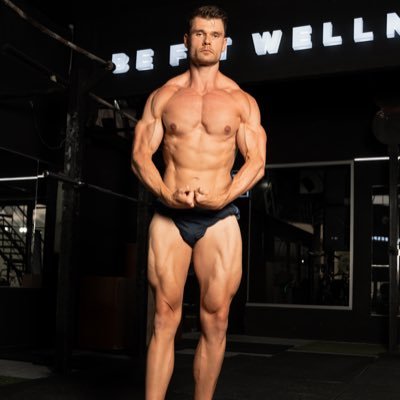
60,068 просмотров • 5 месяцев назад •via X (Twitter)

Комментарии: 0

Нет доступных комментариев

Здесь появятся комментарии из оригинального поста

Похожие видео

The muscle group that makes men over 40 look old from behind: Rear delts. It's pretty easy to spot if this applies to you. Just stand side on in front of a mirror. You'll notice your shoulders will be rolled forward, likely your head is forward too, and your posture resembles something akin to Quasimodo. And you shouldn't be surprised. This is what happens after 25 years of pressing and desk work training the FRONT of your shoulder while the back of it did nothing. Every push you've ever done pulled your shoulders forward. Almost nothing you've done pulls them back into the socket. The fix I use (and recommend to clients too)? Seated single arm rear delt row with a high elbow and a roller squeezed between the knees. Why each piece matters: High elbow = this is what separates it from a normal row. Elbow travels out and up, in line with the rear delt fibers. Row with a tucked elbow and your lats take over. Lats are already strong. That's not the target. Seated + roller squeeze = pelvis anchored, ribs stacked, spine can't lean back to cheat the weight up. The rep comes from the shoulder, not momentum. No squeeze, and the lean-back creeps in by rep six. Single arm = most men over 40 have one shoulder blade that sits lower and works worse. Bilateral rows let the good side carry it. One arm at a time, the weak side gets found out and fixed. Cable = tension through the whole arc, including the stretched position in front of your body where the rear delt actually needs work. The rear delt pulls your arm back in line with your body. Train it and your shoulders sit where they did at 30. You'll find your shirts hang differently and you'll command a more assertive posture in board meetings and Zoom calls. Remember... User a lighter weight, high elbow and feel the back of the shoulder do the work. Most guys never have.

Simmo

35,522 просмотров • 18 дней назад

The most underrated exercise on the planet is the Bar Hang. But 99% of people don't even do them. Here are 4 powerful reasons to do bar hangs every day: 1. They improve your posture Don't want to look like a croissant? Bar hangs help strengthen & mobilize your upper body. They also provide a constant stretch on the shoulders, back arms & lats. This helps reverse upper body posture defects that come from sitting for too long. 2. They improve your strength Your weight is supported first by the grip of your hand. A good grip improves your performance across all exercises like the pull-up, rows, deadlifts...pretty much any activity requiring a grip. 3. They build stronger shoulders Bar hangs can improve mobility, and strengthen the shoulders & lats while reducing shoulder pain. They stretch the brachial muscles while strengthening the supraspinatus tendon, which is responsible for shoulder strength & endurance. 4. They may help you live longer Grip strength can be a biomarker for your inner age & determines your mobility & strength as you get older. In some studies, decreased grip strength is associated with accelerated biological age. There are 2 ways to do bar hangs: The first is a passive hang (video) Take an overhand grip. Let shoulders & lats relax. Your body should sink with your shoulders touching your ears. Hang there with feet slightly forward, core braced & let your weight passively stretch your shoulders, lats, & back. The second is an active hang. Start in a passive hang. Retract your shoulder blades down and away from your ears. Stop retracting when your ears reach your elbows. Hold for as long as you can. This puts more emphasis on the muscles in your shoulders and back. If you're a beginner aim for 10 seconds to start. Work your way up to one minute and eventually 2 minutes at a time. As long as you're not sore you can do these daily. If you can't hang from a bar you can step on a box at first to help support your weight. Another way is to attach a resistance band to the bar putting while putting your feet on it. Bar hangs are one of the most underrated exercises on the planet especially if you work at a desk. Add these to your daily workouts and experience the benefits.

Dan Go

1,340,930 просмотров • 3 лет назад

⚾️ FULL EXPLANATION OF HOW THE ELBOW HANDLES STRESS When you throw a baseball, the inside of your elbow gets hit with a big pulling/gapping force. Your body has three main ways it protects the elbow from that stress. Think of it as three layers of protection working together every time you throw. ✅ Radiocapitellar Joint Compression As the inside of your elbow tries to gap open during a throw, the outside of the joint compresses. The radius and humerus on the lateral side press together, creating a physical barrier that limits how far the elbow can open into valgus. ✅ Forearm Musculature All the forearm muscles that attach to the inside of the elbow help shield it. They anchor to the medial epicondyle and act as active stabilizers during the throw. This group includes the pronator teres, FCU, FCR, FDS, and palmaris longus. The simple takeaway is that the stronger/stiffer these muscles are, the more support they provide to the UCL. Training them through finger flexion, wrist flexion, ulnar deviation, and pronation is extremely effective. ✅ Ulnar Collateral Ligament Whatever force is not absorbed by joint compression and the forearm muscles ends up on the UCL. A UCL on its own can only tolerate roughly 35 newton meters before failure, yet every pitch produces FAR MORE than that. This highlights how essential those first two protective systems really are. 🎯 Conclusion In the big picture, your bones and your ligament offer a set, mostly fixed level of protection. They are important, but they cannot be dramatically changed. Your forearm musculature, on the other hand, is highly trainable. It can get stronger/stiffer pretty quickly and make a meaningful difference in how much stress your elbow can safely handle. If you are looking for the most direct, actionable way to protect your elbow, building stronger forearm muscles is the clearest and most impactful place to focus.

Armored Heat

10,212 просмотров • 8 месяцев назад

Struggling to improve your bench press? Here’s how to identify and fix your weaknesses to increase your bench Let’s start with some form tips Big Arch - Retract your shoulder blades and drive your traps into bench by digging them into the pad. Maintain that tightness throughout the duration of the lift Bend the Bar - Act like you’re trying to bend the bar before you lift off. This causes you to externally rotate elbows to engage your lats which is crucial for a heavy bench Deep Breath - Take a deep breath before lift off and hold it in until you lift the bar where you’ll blow the air out on the way up Keep wrists straight - Wrap up your wrists tight with some wrist wraps. Don’t let wrists go limp on the concentric (lifting portion of the press). You’re losing poundage if you do Lower the bar with control - This is where lats and rear delts come into play. Nice and controlled descent and hit just below pecs Keep the arch - don’t let the bar sink into your chest and lose your arch. Keep air in and core tight the entire lift. This shortens the range of motion and allows you to stay tight and in control of the bar Leg drive and act like you’re standing up off the bench - As you explode up, drive your feet and push the bar back as if you’re trying to stand up off the bench. Weak off the chest? Likely an issue with pec strength. Here’s some exercises to help with that: -Pause Bench (1-3 seconds) -Wide Grip Bench -Incline Barbell Press -Spoto Presses -Weighted Dips -DB Flat/Incline Presses Weak with the lockout portion of the lift? Likely a weakness in your triceps or shoulders. Exercises to help with that: -Close Grip Bench -Board Presses -Pin Presses -Floor Presses -Skullcrushers -Weighted Dips -Military Presses -Slingshot Press -JM Presses -Overhead Presses Few other pieces of advice: 1) Get that back as big and strong as you can! Makes it a helluva lot easier to control the weight and add stability if our lats can support the weight. This will also carry over into your squat and deadlift. Row, row, and then row some more. Pullups/Pulldowns like crazy especially before you bench to get blood flowing back there which will help you feel and engage your lats before you lift. 2) Get a mini bicep pump from some curls before you press. Nothing heavy but having some blood in the biceps can help with tendonitis issues and help protect your joints. 3) Warm up the shoulders using a resistance band to get blood flowing to the rear delts and loosen up the shoulders. Take a foam roller and scrub the hell out of your lats as well to loosen up your shoulders.

Bailey Schober | Men’s Fitness & Nutrition Coach

26,038 просмотров • 7 месяцев назад