Video wird geladen...

Video konnte nicht geladen werden

Zur Startseite

โ›ณ๏ธ Tiny Golf - A Very Cool Meta Horizon Start Developer Competition Submission! Mixed Reality games are challenging because they must adapt to real-world spaces with dynamic content, but they donโ€™t have to be complex. Tiny Golf is a great example, using a minimalistic aesthetic and ๐Ÿ™Œ hand-tracking pinch-and-pull...

31,749 Aufrufe โ€ข vor 8 Monaten โ€ขvia X (Twitter)

0 Kommentare

Keine Kommentare verfรผgbar

Kommentare vom Original-Post werden hier angezeigt

ร„hnliche Videos

๐Ÿ“ฃ I talk a lot about Meta SDKs because I spend a lot of time with these tools. But also when someone asks me what VR/MR tools they can use for cross platform support, I recommend ๐—จ๐—ป๐—ถ๐˜๐˜†โ€™๐˜€ ๐—ซ๐—ฅ ๐—ง๐—ผ๐—ผ๐—น๐—ธ๐—ถ๐˜ which provides: - ๐—–๐—ฟ๐—ผ๐˜€๐˜€-๐—ฝ๐—น๐—ฎ๐˜๐—ณ๐—ผ๐—ฟ๐—บ ๐˜€๐˜‚๐—ฝ๐—ฝ๐—ผ๐—ฟ๐˜: Meta Quest, OpenXR, Windows Mixed Reality, + more - ๐—œ๐—ป๐˜๐—ฒ๐—ฟ๐—ฎ๐—ฐ๐˜๐—ถ๐—ผ๐—ป๐˜€: Hover, select, grab - ๐—™๐—ฒ๐—ฒ๐—ฑ๐—ฏ๐—ฎ๐—ฐ๐—ธ: Haptic + visual tint/line for possible & active interactions - ๐—จ๐—œ: Canvas interaction via XR controllers - ๐—จ๐˜๐—ถ๐—น๐—ถ๐˜๐—ถ๐—ฒ๐˜€: XR Origin support for stationary & room-scale VR - ๐—ซ๐—ฅ ๐—›๐—ฎ๐—ป๐—ฑ๐˜€: this is an extended package to support more advanced hand tracking interactions ๐Ÿ‘‰ Also, it supports ๐—”๐—ฅ ๐—ณ๐—ผ๐—ฟ ๐—บ๐—ผ๐—ฏ๐—ถ๐—น๐—ฒ ๐—ณ๐—ฒ๐—ฎ๐˜๐˜‚๐—ฟ๐—ฒ๐˜€ ๐˜๐—ต๐—ฟ๐—ผ๐˜‚๐—ด๐—ต ๐—”๐—ฅ ๐—™๐—ผ๐˜‚๐—ป๐—ฑ๐—ฎ๐˜๐—ถ๐—ผ๐—ป, the features are: - ๐—”๐—ฅ ๐—ด๐—ฒ๐˜€๐˜๐˜‚๐—ฟ๐—ฒ ๐˜€๐˜†๐˜€๐˜๐—ฒ๐—บ: Maps screen touches to Input System gesture events via TouchscreenGestureInputController - ๐—ฆ๐—ฐ๐—ฟ๐—ฒ๐—ฒ๐—ป-๐˜€๐—ฝ๐—ฎ๐—ฐ๐—ฒ ๐—ถ๐—ป๐—ฝ๐˜‚๐˜: Feeds touch data into XRRayInteractor for AR interaction - ๐—”๐—ฅ๐—ง๐—ฟ๐—ฎ๐—ป๐˜€๐—ณ๐—ผ๐—ฟ๐—บ๐—ฒ๐—ฟ: Converts place, select, translate, rotate, scale gestures into object manipulation ๐Ÿ‘จโ€๐Ÿ’ป And to emulate your apps/games without physical devices I recommend the following: - ๐—ซ๐—ฅ ๐——๐—ฒ๐˜ƒ๐—ถ๐—ฐ๐—ฒ ๐—ฆ๐—ถ๐—บ๐˜‚๐—น๐—ฎ๐˜๐—ผ๐—ฟ for VR/MR to test your interactions - ๐—”๐—ฅ ๐—™๐—ผ๐˜‚๐—ป๐—ฑ๐—ฎ๐˜๐—ถ๐—ผ๐—ป ๐—ฅ๐—ฒ๐—บ๐—ผ๐˜๐—ฒ ๐Ÿฎ.๐Ÿฌ for AR Foundation testing, this allows you to remotely test all the AR features by connecting the Unity editor to your physical device (iOS or Android) ๐Ÿ’ก Are you using Unityโ€™s XR Toolkit? ISDK? any other toolkit?

Dilmer ๐Ÿ‘“

12,943 Aufrufe โ€ข vor 4 Monaten

๐Ÿ“ฃ ๐—–๐—ฎ๐—น๐—น ๐—ณ๐—ผ๐—ฟ ๐—ฟ๐—ฒ๐˜€๐—ฒ๐—ฎ๐—ฟ๐—ฐ๐—ต ๐—ถ๐—ป๐˜€๐˜๐—ถ๐˜๐˜‚๐˜๐—ถ๐—ผ๐—ป๐˜€ ๐—ฎ๐—ป๐—ฑ ๐—ฐ๐—ผ๐—ฟ๐—ฝ๐—ผ๐—ฟ๐—ฎ๐˜๐—ฒ๐˜€ with projects and use cases focusing on the intersection of XR+AI! With Meta's release of ๐—ฃ๐—ฟ๐—ผ๐—ท๐—ฒ๐—ฐ๐˜ ๐—”๐—ฟ๐—ถ๐—ฎ ๐—ฅ๐—ฒ๐˜€๐—ฒ๐—ฎ๐—ฟ๐—ฐ๐—ต ๐—ž๐—ถ๐˜, your innovators will work with XR Bootcamp, ๐—ซ๐—ฅ ๐—ฃ๐—ฟ๐—ผ ๐—–๐—ผ๐—น๐—น๐—ฒ๐—ฐ๐˜๐—ถ๐˜ƒ๐—ฒ and xraihack's greatest minds who have already built over ๐Ÿฎ๐Ÿฒ ๐—”๐—œ-๐—ฝ๐—ผ๐˜„๐—ฒ๐—ฟ๐—ฒ๐—ฑ ๐—ซ๐—ฅ ๐—ฝ๐—ฟ๐—ผ๐—ท๐—ฒ๐—ฐ๐˜๐˜€ to date on various use cases and will get the chance to make use of this new kit. Retweet or comment below if you are interested! We are also planning to unlock funding opportunities for promising projects with the help of our regional partners. So many use cases to explore like embodied AI, contextualized AI, human-computer interaction (HCI), robotics, and more... There is no better time to start your first 100% context-aware projects or apps than today! More details about Meta Reality Labs announcement: Aria Research Kit includes: - Aria Glasses - Machine Perception Cloud Services - Client SDK and Companion app

XR Bootcamp

14,250 Aufrufe โ€ข vor 1 Jahr

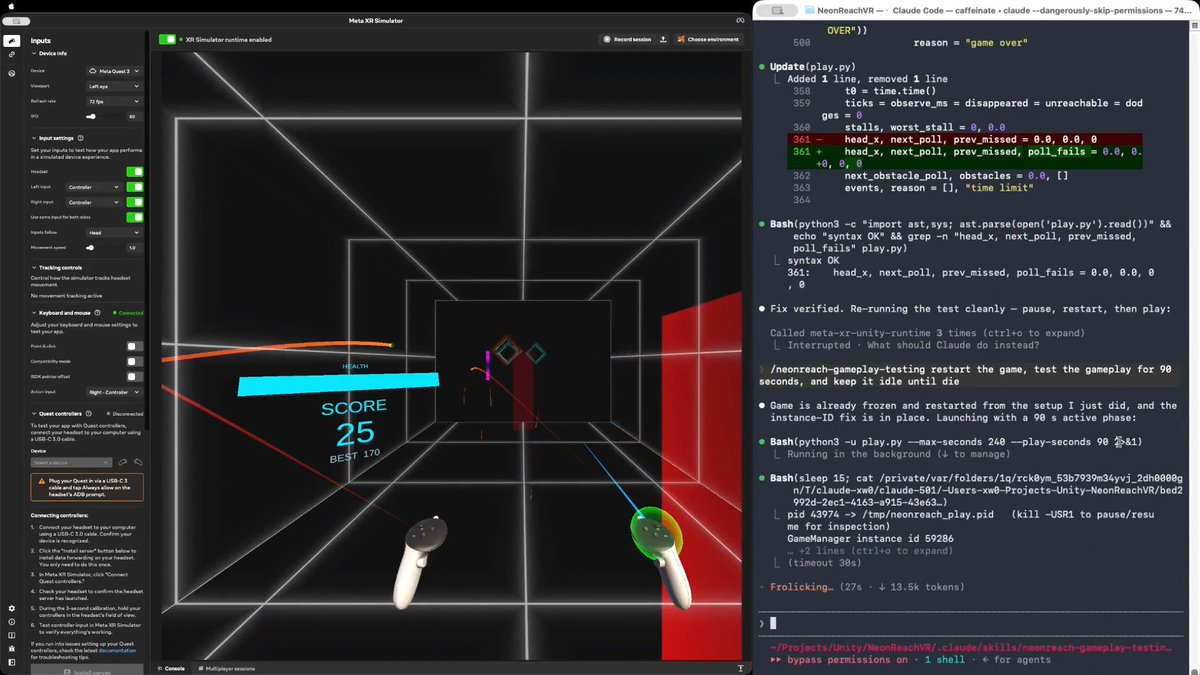
Would you believe an AI agent can test a real VR action game in real time, the way a person plays it? Meta XR Operator makes it possible. As far as I know, this is the first time. I am not talking about tapping a menu or replaying a recorded click path, but genuinely moving, shooting, and using the same game mechanics a human player does. In NeonReach VR, which is a real (and open source) action game, rings spawn 12m out and come at you somewhere between 1.5 and 5.5 m/s, getting faster over a 90 second ramp. There are three kinds: straight, weaving side to side, and spinning. Every shot is a full slingshot cycle, so you press, pull back, aim, then release. Obstacles arrive at head height and cost you a life if you don't get out of the way. You have ten lives. Here is why the game is hard for an AI agent. Even though Meta XR Operator gives the agent everything it needs to observe the app and act inside it, the agent still cannot play. One agent turn takes 10 to 15 seconds. One throw is four steps that have to happen in order, because the press has to latch before the pull, and they cannot be batched into a single call. So a throw costs about 45 seconds. A fast ring only exists for 2.3 seconds. One action takes 20x longer than the target is alive. Prompt tuning does not close a gap that size. What works is a three stage path: EXPLORATION, then SKILL, then SCRIPT. 1/ EXPLORATION. The agent drives the live app and works the game out on its own. It verified the coordinate mapping by setting a pose and reading it back, then derived the launch model. The more useful output was the traps it found. For example, the player's own body collider silently deflects a ball released inside it, with no error and no log line. That produced two confident wrong conclusions before anyone caught them. 2/ SKILL. All of that gets written down as a reusable SKILL.md plus an aim solver. There is a section that separates what was actually verified from what was assumed, so a wrong conclusion cannot quietly turn into doctrine. This stage also produced the trick that mattered. Set timeScale to 0 and a throw becomes atomic in game time, so however long the agent spends thinking never shows up in the shot. 3/ SCRIPT. The agent then compiles everything into a player script, a loop that observes, decides, and throws, calling the MCP servers directly from Python with no model in the hot path. Round trips drop from 10 to 15 seconds down to something between 1 and 16 milliseconds. The loop runs at 23 Hz, about 0.75 seconds per throw, roughly 60x faster than the agent doing it turn by turn. The result is that it plays like a person, which you can see from the attached video. It tracks the rings, works out where each one is going, throws with whichever hand is free, moves out of the way of the obstacles, and does not wait around to see whether the last throw landed. Shipping settings, no difficulty edits, no health locks, no slow motion. It plays until it actually loses. The takeaway generalizes beyond games: an agent does not have to be the player. Even following the same rules as a player, it has too much latency between moves. Having the agent write the thing that acts bypasses that constraint entirely. Try it yourself: or explore the agent-created skill and scripts: Based on NeonReach VR by Dilmer, with no code changes. I only upgraded its Meta XR Core SDK to v205, which ships Meta XR Operator. Our blog post, Introducing Meta XR Operator: Close the Build-Test-Verify Loop for VR: Disclosure: I work at Meta. And this represents my own opinion. #XR #VR #AI #MetaQuest #Unity #GameDev

Xiang Wei

52,877 Aufrufe โ€ข vor 23 Tagen

Hello everyone ๐Ÿ‘‹ It is pretty excited to know that Unity released a new VR Multiplayer template ๐Ÿš€๐Ÿฅณ! This template integrates Unity Gaming Services, Netcode for GameObjects, and the XR Interaction Toolkit, enabling you to quickly launch your next social VR game. ๐Ÿ“Œ Key features include: ๐Ÿ‘‰ XR Hands 1.4.1: Access hand tracking data from devices that support it. ๐Ÿ‘‰ XR Interaction Toolkit v3.0.1: A high-level, component-based system for creating XR experiences, facilitating 3D and UI interactions from Unity input events. ๐Ÿ‘‰ XR Plugin Management 4.4.1: Streamlines XR plug-in lifecycle management and offers a build-time UI through Unity Unified Settings. ๐Ÿ‘‰ Netcode for GameObjects 1.8.1: Provides networking capabilities for GameObject and MonoBehaviour workflows. ๐Ÿ‘‰ OpenXR 1.10.0: An open standard by Khronos that simplifies AR/VR development across various devices. โ˜๏ธ Unity Cloud Multiplayer Services: - Authentication 3.3.1: Offers anonymous and platform-specific authentication solutions. - Lobby 1.2.0: Facilitates player discovery and connection for various multiplayer scenarios. - Relay 1.6.0: Ensures secure player connectivity via a join code system, eliminating the need for third-party solutions or dedicated servers. - Vivox 16.0.0: Enhances multiplayer experiences with in-game voice and text chat capabilities. โ„น๏ธ To access the template and additional documentation check out: #unity #multiplayer #xr

Dilmer

12,048 Aufrufe โ€ข vor 2 Jahren