正在加载视频...

视频加载失败

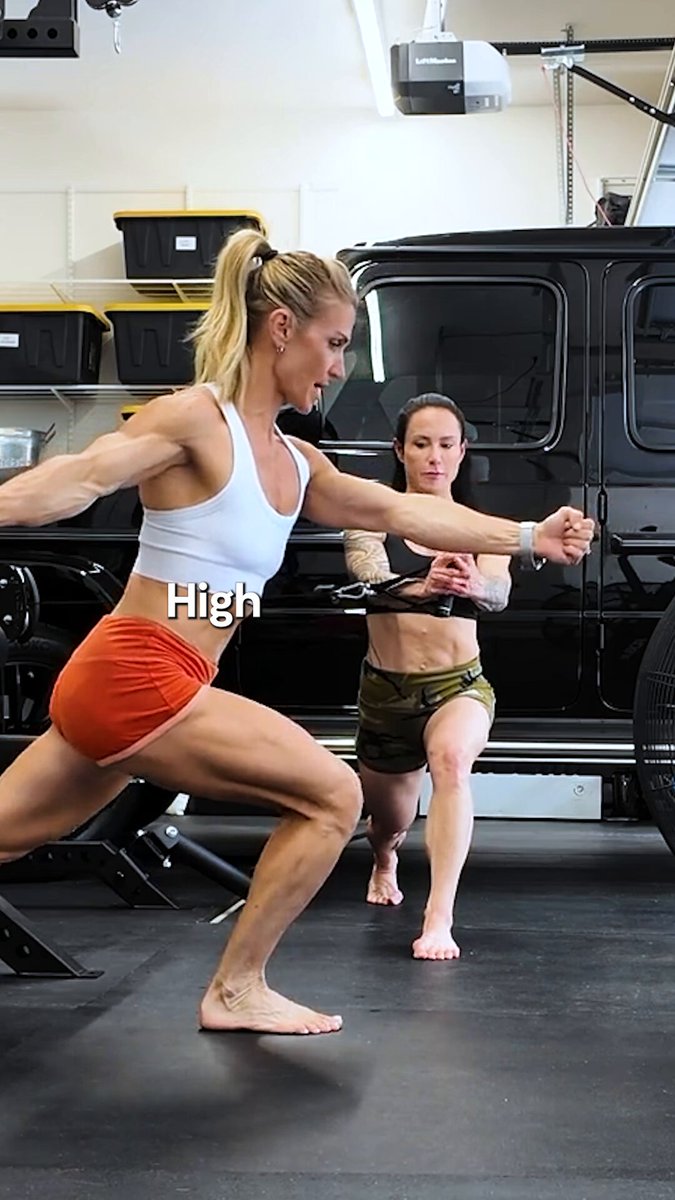
Upper Body French Contrast Training 1. Strength Movement - high force low velocity 2. High Force Plyometric - low load high intent 3. Fast Strength Movement - ballistic 4. High Speed Plyometric - assisted / overspeed This sequence serves as a comprehensive peaking method by targeting multiple points along...

32,753 次观看 • 10 个月前 •via X (Twitter)

0 条评论

暂无评论

原始帖子的评论将显示在这里

相关视频

Do you need to train heavy to build muscle? 💪 For years the mantra was you need to go heavy to build muscle. Or you needed to go heavy to stimulate large type II fast twitch fibers but go light for more reps to stimulate smaller type I fibers. But new research has challenged that dogma. Several meta-analysis have shown similar muscle growth with low loads vs high loads when set number is matched & proximity to failure is similar (PMIDs: 28834797, 35015560, 33312275, & 33433148). While muscle hypertrophy was not different between high and low load training, strength increased significantly more with high load training in all these meta-analysis As far as targeting fiber types, it becomes kind of irrelevant when you take an exercise close to failure because fiber types tend to be recruited in order from smallest to largest. So with high load training, small & large fibers get recruited quickly but you don’t do many reps. With low load training, you initially recruit smaller fibers but as the muscle fatigues it is forced to recruit the larger fibers as the exercise is taken close to failure. The net effect is that taking sets close to failure with high or low loads produces a lot of muscle activation and similar hypetrophy The take home is, do what you enjoy if muscle growth is the goal. Just make sure you train HARD & go close to failure (within a few reps) & do enough total sets. But if strength is a priority you’ll need to train heavy & be careful going to failure as it can impair strength gains From my first conversation with Andrew D. Huberman, Ph.D.

Layne Norton, PhD

53,287 次观看 • 1 年前

There are multiple factors at play that will influence where Erin goes. One is over western Canada! The main uncertainty is the shape, and strength, of the Bermuda High — a large high pressure system sprawled from the Azores to near Bermuda. It dominates the Atlantic, and acts as a force field of sorts that blocks hurricanes. It’s what’s suppressing Erin south right now. In the coming days, Erin will probably arc around the western side of the Bermuda high as it curves north. That’s why the shape and strength of the Bermuda High are so important. A stronger/farther west Bermuda High would potentially shunt Erin west-southwest, bringing it closer to the Bahamas and perhaps southeastern U.S. A weaker Bermuda High would allow Erin an out-to-sea “escape route” earlier, sparing most of North America any impacts. Either way, Bermuda and the Canadian Maritimes are at the greatest risk of impacts. The shape of the Bermuda High will be influenced by two “upper-level lows,” or pockets of cold air, low pressure and spin at high altitudes. Those two disturbances will roll across North America and work to erode the western side of the Bermuda High. One will arrive Friday, and the other on Tuesday. The latter is currently located over Yukon, Canada. Because it had previously been over the Gulf of Alaska, meteorologists didn’t have the ability to release weather balloons into it. Now that it’s moving over land, more weather balloons will “sample” its structure. That data will be pumped into weather models, helping to improve simulations. Subsequently, we’ll have a much better idea of how the upper-air weather pattern over North America — and the shape of the Bermuda High and eventual track of Erin — by probably Wednesday afternoon.

Matthew Cappucci

27,461 次观看 • 11 个月前