正在加载视频...

视频加载失败

Videodrome - Behind The Scenes 1983 / Canada / David Cronenberg Visual effects supervisor Michael Lennick recalls how Rick Baker’s team delivered an unforgettable practical effect by projecting a video image onto dental dam material mounted inside the television 👄sound on👄

26,189 次观看 • 1 年前 •via X (Twitter)

3 条评论

Blah Blah Blah 的头像
Blah Blah Blah1 年前

This amazing scene inspired another fantastic tv warp scene in Def By Temptation.....on difference was....well, the TV was.........hungry....

World Transformation Movement 的头像
World Transformation Movement2 年前

World-leading psychiatrist says “this interview is the holy grail of insight needed to rehabilitate the human race”. Watch Australian biologist Jeremy Griffith explain his revolutionary breakthrough in understanding human behaviour we've been waiting for.

Phil Free 的头像
Phil Free1 年前

"ᴛʜᴇ ᴇʏᴇ ɪꜱ ᴛʜᴇ ᴡɪɴᴅᴏᴡ ᴏꜰ ᴛʜᴇ ꜱᴏᴜʟ."

相关视频

Videodrome (1983) 🕯️📹 Released on February 4, 1983, “Videodrome” faced a difficult theatrical run due to its transgressive content but eventually found a massive second life through home video and high-quality restorations. The film opened in 600 theaters across North America. It debuted at number 8 on the box office charts, earning approximately $1.19 million in its opening weekend. It was a significant commercial "bomb," grossing a total of $2.12 million against a budget of roughly $5.95 million. Director David Cronenberg noted that the film was difficult to categorize, neither fitting clearly as an "art-house" film nor a standard "exploitation" horror flick. Universal Pictures executives later expressed regret for giving it a wide release rather than treating it as a specialized art film. Home video was instrumental in transitioning “Videodrome” from a financial failure to a revered cult classic. The film was released on VHS and Betamax in the 1980s by companies like CIC Video. In the UK, early versions were heavily censored—cut by nearly three minutes—due to the "video nasty" moral panic of the era. The film's critical status was cemented with its inclusion in the Criterion Collection, which released a landmark DVD in 2004 and a Blu-ray in 2010. These editions featured the "unrated" version and extensive documentaries on its groundbreaking prosthetic effects. Arrow Video released a highly praised dual-format (Blu-ray/DVD) set in the UK with new restorations and archival content in 2015. New 4K restorations, approved by Cronenberg, were released to theaters and home media, further enhancing the film's "techno-surrealist" visuals for modern audiences. Today, the film is widely available for digital streaming on platforms like Peacock and for purchase through boutique labels.

Tom😈Loves❤️Horror😱

16,931 次观看 • 9 个月前

On this day, 43 years ago, David Cronenberg's 'Videodrome' (1983) was released in the USA & Canada. Here is David Cronenberg explaining how he got the inspiration to make 'Videodrome' (1983): "'Videodrome' came out of two things, I suppose. The first was remembering, as a kid, watching TV late at night, and of course it was black and white television, and when all the regular stations would go off the air you could get these distant, strange stations that were probably all American. The airwaves would be quiet, so you could pick up and we had a rotating antennae, you know, so we could rotate the antennae on our house and get this stuff. But they were always very bad images, and they would fade in and out, and where they came from and what they were was very mysterious. That was many years before I was making movies, I was probably fourteen or fifteen or sixteen. Anyway, these create strange late-night channels, plus bits of Marshall McLuhan, plus I have no idea what, combined to the initial premise that someone been rented, but it had sand-blasted brick in the Toronto style and beams. And there was nothing in the room but a table, a chair and an IBM Selectric, that was it. It was quite a big room, and I was just in the middle of it and I would go there every day and write. And that’s where I wrote 'Videodrome', I can remember that, but I don’t remember any more of the details other than just the normal way that things accumulate around a central concept. receives images on his television set that are fascinating to him, and seem to have an element of danger which makes them more fascinating. I don’t even think I knew, at the time that I started writing, that I would be examining the influence of television or that I would create a character based on Marshall McLuhan [O’Blivion], none of that was really in my mind to begin with. And I can’t really remember how I proposed this to the guys at Film Plan. It was the same thing, you know, the tax money was coming in, they wanted to do another movie, Pierre David and Victor Solnicki. I remember renting a room right across the hall from where Ron Sanders was editing, it was downtown near the waterfront. It was in an old building that had been rented, but it had sand-blasted brick in the Toronto style and beams. And there was nothing in the room but a table, a chair and an IBM Selectric, that was it. It was quite a big room, and I was just in the middle of it and I would go there every day and write. And that’s where I wrote Videodrome, I can remember that, but I don’t remember any more of the details other than just the normal way that things accumulate around a central concept." ('David Cronenberg: Interviews with Serge Grünberg', 2000)

DepressedBergman

44,610 次观看 • 8 个月前

🎓Learn how to create a powerful Torn Fabric smart material in a matter of seconds in my latest video series (AAA) Pro Tips! This smart material can be used on virtually any 3D asset. ____________________________________________________ In this video, the steps are as follows: 1. Create a base fill layer containing no information. We will use this layer to call out the core effects. Add a black mask to this layer and inside that mask add a paint layer and draw a simple pill shape. 2. Next, add a blur directional and be sure the direction is the same direction that your fabric is flowing to. 3. Add a UV border generator set to subtract to mask out any uv seams followed by an anchorpoint. Additionally, add a messy Fibers 3 fill layer set to overlay. 4. Use a levels to adjust the mask along with a sharpen filter. A warp filter should also be added to introduce some randomness. Add an anchor point at the top of the mask as well. 5. Create another fill layer with its opacity channel set to black and apply a black mask to the fill layer. Inside its mask retrieve the anchorpoint information from the previous fill layer. 6. Create an additional fill layer with a bright diffuse color along with a black mask applied to it. Add the anchorpoint information from the previous mask into its mask as well and this should give us some white fibers on the edges. Now we have a torn fabric effect wherever we paint using the paint layer created inside the callout mask! ____________________________________________________ More AAA Game Dev Tips can be found on my YouTube channel here: Stay tuned for more weekly Tips! Happy Texturing!💚 #gamedev #gameart #tutorial #3dmodeling #hardsurface #texturing

Cohen Brawley

78,888 次观看 • 2 年前

Gpt image 2 + Seedance 2.5 on Higgsfield Prompt: 30-SECOND CINEMATIC SHORT Create a 30-second cinematic sequence with the visual discipline of a major feature film. The world is entirely made from paper, cardboard, ink, and delicate handcrafted materials. 00:00–00:05 — THE FIRST FOLD Begin with an extreme macro shot of a blank sheet of textured paper. A single fold slowly forms across its surface. Lens: 100mm macro Camera: Completely static Soft daylight moves across the paper as the fold continues. Cut precisely as the paper reaches its final shape. 00:05–00:11 — THE CITY EMERGES Transition into a 50mm shot. The folded paper begins forming miniature streets and architectural structures. Buildings rise naturally from the surface through carefully constructed paper folds. The camera slowly tracks sideways. Tiny windows catch the light. Nothing feels computer-generated; every surface should have believable paper fibers, folds, shadows, and imperfections. 00:11–00:17 — THE REVEAL Move into a 35mm shot. The camera pulls backward. The small arrangement is revealed as an enormous handcrafted paper city stretching across a large table. Roads connect different districts. Bridges cross miniature rivers. Paper trees move gently from an unseen breeze. 00:17–00:23 — MORNING Transition into a slow overhead crane shot. Warm sunlight gradually spreads across the paper city. Shadows from the buildings become longer and more defined. Tiny paper windows begin reflecting the sunlight. The camera continues rising, revealing the geometric relationship between the streets and buildings. 00:23–00:27 — THE DETAIL Cut to an 85mm close-up. Focus on a tiny paper clock mounted on one building. The clock moves forward by one minute. Rack focus from the clock to the miniature skyline behind it. 00:27–00:30 — FINAL IMAGE Return to an extreme wide shot. The entire paper city sits beneath a large studio window. The morning light completely fills the miniature world. Camera slowly pulls backward until the city becomes a small object within the larger room. Fade to black. CINEMATOGRAPHY Large-format feature-film aesthetic. 100mm macro for texture. 85mm for detail. 50mm for natural perspective. 35mm for environmental shots. Controlled dolly and crane movements. Realistic depth of field. Natural focus transitions. Soft motion blur. Subtle lens imperfections. No artificial camera shake. MATERIAL DIRECTION Every surface must visibly behave like physical paper. Visible paper fibers. Natural folds. Tiny imperfections. Soft cardboard edges. Realistic contact shadows. Believable paper thickness. Natural material deformation. LIGHTING Soft morning daylight. Large window as the primary source. Natural bounce light. Gentle shadows. Subtle warm highlights. No artificial neon effects. No excessive visual effects. CONTINUITY The same paper city throughout the entire sequence. Buildings maintain identical shapes and positions. Roads remain connected. Paper materials remain consistent. No random transformations. No flickering. No duplicated structures. No sudden environmental changes. DIRECTOR’S NOTE Treat this as a miniature feature film, not a visual-effects demonstration. The camera should discover the world gradually. Start intimate. Reveal scale. Return to detail. Finish wide. The audience should feel that they are watching a real handcrafted world photographed with a cinema camera. Photorealistic 4K • tactile materials • feature-film cinematography • sophisticated lighting • realistic miniature photography • cinematic depth • precise camera movement • seamless visual continuity.

K

22,472 次观看 • 1 个月前

Introducing the "Geo Method" - A way of filmmaking that tethers AI video to something physically real, and unmistakably human. Our method bridges traditional cinema and the incredibly impressive AI future. "Geo" represents earth, ground, geometry, location. How it works: we build scenes and sets as physical miniatures, hand-crafted, lit, and shot practical on cinema cameras and lenses. That footage becomes our source plate: a live-action anchor with real light, real depth, and real texture that brings unmatched intention and direction to the generative AI process. Then, inside our proprietary software ("ST00DIO"), we bring the plate to life with additional elements. Our mixture of original 3D models and AI-generated assets are integrated into the scene, giving us greater control over performance and animation, directed by humans. AI handles relighting, asset-based set extensions, and atmosphere, but the world itself is born from photographic live action. The final piece is our "Shot Composer" tool for micro adjustments if needed, or entirely new scene framing. From a single still frame from the miniature capture source plate, it generates procedural geometry and a matching, fully directable virtual camera. From there, if we desire, we can further direct the shot with precise control: camera moves that were never physically possible on the practical tabletop, specific composition rebuilds, and explicit blocking for animated characters, then render the new result against the original live-action plate (video). What you get is a true hybrid production for AI animation: the grounded realism of practical miniatures with the creative freedom and speed of AI. The scene is real. The camera becomes editable. The visual effects are picture-perfect. The storytelling is human-led. The Geo Method. Developed at m00m Studios (m00m 🛰) by Jordan Freda and Ben Lam.

Jordan 🛰️ Freda

121,139 次观看 • 17 天前

🚨 FLASHBACK: THE Day Charlie Kirk RODE A Horse Through New York City—Behind The Scenes CANDID Footage🏇🤠 NEW YORK CITY — Before the tragic events of September 10th reshaped the political landscape, Charlie Kirk delivered one of the most iconic moments in cable news history. Today, we’re looking back at the behind-the-scenes footage from July 27, 2025, when the Turning Point USA founder traded the lecture hall for a saddle in the heart of Midtown Manhattan. 🎥 THE MIDTOWN "COWBOY" Appearing on Fox & Friends Weekend, Kirk wasn't just there to provide analysis; he was there to lead by example. Despite being raised in Chicago with zero ranching experience, Kirk famously mounted a horse outside the Fox News studios. The unscripted footage reveals a side of Charlie the mainstream media often ignored: Charlie was never afraid to try something new and step outside of his comfort zone. Charlie joked about his "underhand" lasso technique, openly admitting he had no idea how to rope a bull on national television. The "Man of Will": He emphasized that the stunt took "a lot of persuasion and a lot of will," reflecting his personal mantra of pushing past comfort zones. The Mission: Even amidst the spectacle, Kirk remained focused on the work, noting that hosting and advocating for the movement was a "thrill" that offered experiences one couldn't find anywhere else. These clips serve as a stark reminder of the void Kirk left behind. While current TPUSA leadership faces questions regarding "transactional" data harvesting and internal power shifts, this footage captures the original spirit of the movement—one rooted in authenticity and a fearless willingness to "fail" in front of millions for the sake of a larger cause. "More people need to be willing to try new stuff, be willing to fail. And sometimes you fail on national television in front of millions of people... But I did get on a horse." — Charlie Kirk 🕯️ THE EMPTY SADDLE Months after his passing, the image of Kirk riding through downtown Manhattan remains a symbol of the "America First" energy that defined a generation. As the trial of Tyler Robinson approaches and the "ghosts in the machine" continue to be exposed, we remember the man who wasn't afraid to take the reins. Rest in Peace, Charlie. The movement you started continues to ride.

Project Constitution

17,907 次观看 • 6 个月前

📖SEEDANCE 2.0 JUST MADE EVERY FILM SCHOOL IRRELEVANT FOR SOLO CREATORS Solo creators with the right workflow are closing clients that used to require a full production studio. Seedance 2.0 inside Dreamina holds character consistency across scenes in a way no other tool at this price point comes close to. Same face, same costume, same lighting logic — frame after frame after frame. That's the feature that turns a single prompt session into a short film. The lava demon materializing inside a gothic cathedral. The girl in black holding her ground while everything burns around her. Two characters with completely different visual languages sharing the same atmospheric world — and Seedance holds both of them consistent across every cut. That's not a generation. That's a production. Here's the 7-step workflow that produced this: • Step 1 — Define the character before you define the scene. Write a complete physical description — face structure, hair, clothing, skin, posture. This becomes the anchor every future generation references. • Step 2 — Build the world separately from the character. Gothic cathedral, candlelight, fog, cracked stone, scattered bodies. Define the atmosphere as its own entity before you place anyone inside it. • Step 3 — Generate the reference frame. One image that establishes the visual language, the color grade, the lighting temperature. Lock this as your style reference before generating any video. • Step 4 — Feed the reference into Seedance's image-to-video pipeline with a motion prompt. Camera behavior only — slow push, hold, circle. The image handles the subject. The prompt handles the direction. • Step 5 — Generate four variations per scene. Delete the two that look generated. Keep the one where the character's face holds and the atmosphere feels physical rather than rendered. • Step 6 — Edit in CapCut or Premiere Pro. Add music that matches the emotional temperature of the grade — the visual already tells you what the sound should feel like. Dark orchestral, slow tempo, single instrument carrying the melody. • Step 7 — Save the character description and reference frame as a template. The next episode starts from the same character in the same world. Series content becomes a system, not a restart. How a freelancer sells this: Dark fantasy content for game studios, music artists, and fantasy brands is a real market with real budgets. A musician dropping an album needs a visual world. A game studio needs promotional cinematics. A fantasy brand needs a story. Where to find clients: • Music artists on SoundCloud and Spotify releasing dark, gothic, or cinematic albums — search by genre, find artists with 1k–50k listeners who have no visual content. They have the audience and the need but no production budget for traditional video. • Indie game studios on Itch and Steam launching fantasy or horror titles — they need promotional cinematics and trailers but can't afford a production company. A single free scene built from their game's character art opens every conversation. • Dark fantasy and gothic brands on Instagram and TikTok with strong photo content but zero video presence — jewelry brands, clothing labels, occult lifestyle brands. They have the aesthetic already built. You just add motion to it. • Fantasy and horror fiction authors on Instagram and Substack launching new books — they need visual teasers, trailers, and world-building content to build pre-launch audiences. Most have no idea this kind of production is accessible at this price point. • Tabletop RPG creators and Dungeon Masters on Patreon and Kickstarter — they build entire fantasy universes and need cinematic content for campaigns, promotional videos, and subscriber rewards. The niche is underserved and the creators inside it spend consistently on content tools and services. 📥Tomorrow I'll show you what's sitting right next to this opportunity. 🔖Save this if you are looking for practical AI methods that actually pay.

Zentrix⌚️

50,098 次观看 • 3 个月前

Lucas Crespo (Lucas Crespo 📧 ) is the mastermind behind Every 📧 's visual vibe—and he does it one prompt at a time. As our creative lead, Lucas uses tools like native image gen in ChatGPT and Midjourney to generate the cover images you see every day. He also designs the interfaces for our products—Cora, Spiral, and Sparkle—and makes everything on our site feel as thoughtful and delightful as possible. We get into: - Why Every’s aesthetic feels familiar and new at the same time. Every’s aesthetic plays with the tension between the old (like Greek statues and Baroque symbols) and the new (like saturated colors and modern motifs) to make the glamor of the past feel fresh. - Art direction matters more than ever today. As AI makes it easier to generate images, Lucas says the real work of design is shifting toward art direction, specifically, curating an aesthetic that feels “organic;” on his X timeline that’s showing up as clouds, earthy landscapes, and textures. - Reimagining what a website can be with AI. Lucas compares most websites to identical buildings—predictable, efficient, and forgettable—and wonders how AI can help us break that mold by designing experiences that prioritize serendipity over speed, and curiosity over control. - Behind the scenes of Cora’s visual aesthetic. How Lucas designed the landing page and launch video for Cora by rooting it in the product’s philosophy: turning the inbox from a source of chaos into something that feels calm, thoughtful—like stepping into spring. - The future of internet interfaces. Lucas believes the future of digital interfaces will be curated with the same care as a film set or ad campaign, where every detail is chosen with intention. Lucas also walks us through how he created the headline image for Every’s consulting page—a human and robotic hand fist-bumping—using Midjourney to iterate from rough prompt to polished visual. This is a must watch for anyone interested in the future of design and making the internet a little more beautiful every day. Watch below! Timestamps: 1. Introduction: 00:01:41 2. How AI changed the course of Lucas’s career: 00:04:02 3. Why Every’s aesthetic feels both familiar and fresh: 00:11:38 4. Why Lucas thinks minimalism is overrated: 00:16:19 5. Art direction matters more than ever in the age of AI: 00:22:01 6. How to reimagine what a website can be with AI: 00:25:06 7. Lucas’s process in Midjourney to generate cover images: 00:33:41 8. Midjourney v. image generation in ChatGPT: 00:43:01 9. Behind the scenes of Cora’s design language: 00:49:43 10. How AI is rewriting the role of a designer: 00:59:57

Dan Shipper 📧

16,038 次观看 • 1 年前

seedance prompt: Realistic Video Narration (15-Second Full Version - Pure First-Person POV): Presented in the style of unprocessed, handheld, unstable iPhone video footage. All camera settings are automatic, with no post-processing color grading or special effects. The footage captures the realistic breathing of the operator and slight, irregular hand shake. Autofocus frequently exhibits intense searching, brief out-of-focus periods, and delayed recovery. Auto white balance naturally shifts between warm and cool tones as it blends with the library lights and natural light from distant windows. The overall image is flat and slightly washed out, retaining realistic lens flare, edge purple-green iridescence, and slight overexposure or underexposure. Faint fingerprint artifacts occasionally appear at the bottom of the frame. Only natural ambient sound effects are used (the sound of turning pages, very light footsteps in the distance, the low hum of an air conditioner, suppressed breathing, and the subtle rustling of stockings against a cheongsam). All sounds are extremely suppressed, with slight microphone distortion at louder frequencies. The entire video employs a pure first-person POV perspective (student's subjective viewpoint), with camera movements completely following natural head rotations and gaze movements. The composition is occasionally imperfect, showing realistic breathing tremors and slight shaking during moments of tension. From 0-4 seconds, the camera, in a first-person perspective, rests on a desk in a secluded corner of the library, with noticeable breathing tremors. You can clearly see your legs in black trousers. A female teacher approaches from behind and sits directly opposite you, wearing a white, glossy cheongsam-style dress (high slit design, keyhole cutout at the chest, pink floral lace shoulder embellishments), paired with white suspender stockings and white garter belts. She suddenly leans forward, one hand reaching out to cover your mouth, the other pressing on the inside of your black trousers, whispering, "Don't make a sound... be good, sit still." Her voice is extremely low, yet carries a powerful seduction. The autofocus searches for the high slit of the white cheongsam and the white suspender stockings. Between 4 and 9 seconds, the teacher leans forward more proactively, the high slit of her glossy white cheongsam sliding upwards, revealing a large expanse of her fair thigh and white stockings. She whispers in your ear, "Watch closely... this is what you want to see." The camera instinctively lowers its focus, locking onto a close-up of your black trousers and the teacher's white stockings—the glossy cheongsam fabric taut, the stockings subtly reflective. Your breathing noticeably becomes heavier. Between 9 and 15 seconds, footsteps approach in the distance, and the teacher presses you down more aggressively, whispering a warning, "Someone's coming... but you can't move or make a sound." The high slit of the white cheongsam and the stockings are pressed tightly together, the image shakes violently, the tension reaching its peak. The footsteps grow closer, and the image freezes in an extremely oppressive atmosphere. The footage presents a realistic, unprocessed handheld video quality, a natural, imperfect feel reminiscent of a documentary, without any post-production color grading or special effects. All camera actions are consistent with the physical characteristics of iPhone automatic shooting.
0:25

Sensitive content

seedance prompt: Realistic Video Narration (15-Second Full Version - Pure First-Person POV): Presented in the style of unprocessed, handheld, unstable iPhone video footage. All camera settings are automatic, with no post-processing color grading or special effects. The footage captures the realistic breathing of the operator and slight, irregular hand shake. Autofocus frequently exhibits intense searching, brief out-of-focus periods, and delayed recovery. Auto white balance naturally shifts between warm and cool tones as it blends with the library lights and natural light from distant windows. The overall image is flat and slightly washed out, retaining realistic lens flare, edge purple-green iridescence, and slight overexposure or underexposure. Faint fingerprint artifacts occasionally appear at the bottom of the frame. Only natural ambient sound effects are used (the sound of turning pages, very light footsteps in the distance, the low hum of an air conditioner, suppressed breathing, and the subtle rustling of stockings against a cheongsam). All sounds are extremely suppressed, with slight microphone distortion at louder frequencies. The entire video employs a pure first-person POV perspective (student's subjective viewpoint), with camera movements completely following natural head rotations and gaze movements. The composition is occasionally imperfect, showing realistic breathing tremors and slight shaking during moments of tension. From 0-4 seconds, the camera, in a first-person perspective, rests on a desk in a secluded corner of the library, with noticeable breathing tremors. You can clearly see your legs in black trousers. A female teacher approaches from behind and sits directly opposite you, wearing a white, glossy cheongsam-style dress (high slit design, keyhole cutout at the chest, pink floral lace shoulder embellishments), paired with white suspender stockings and white garter belts. She suddenly leans forward, one hand reaching out to cover your mouth, the other pressing on the inside of your black trousers, whispering, "Don't make a sound... be good, sit still." Her voice is extremely low, yet carries a powerful seduction. The autofocus searches for the high slit of the white cheongsam and the white suspender stockings. Between 4 and 9 seconds, the teacher leans forward more proactively, the high slit of her glossy white cheongsam sliding upwards, revealing a large expanse of her fair thigh and white stockings. She whispers in your ear, "Watch closely... this is what you want to see." The camera instinctively lowers its focus, locking onto a close-up of your black trousers and the teacher's white stockings—the glossy cheongsam fabric taut, the stockings subtly reflective. Your breathing noticeably becomes heavier. Between 9 and 15 seconds, footsteps approach in the distance, and the teacher presses you down more aggressively, whispering a warning, "Someone's coming... but you can't move or make a sound." The high slit of the white cheongsam and the stockings are pressed tightly together, the image shakes violently, the tension reaching its peak. The footsteps grow closer, and the image freezes in an extremely oppressive atmosphere. The footage presents a realistic, unprocessed handheld video quality, a natural, imperfect feel reminiscent of a documentary, without any post-production color grading or special effects. All camera actions are consistent with the physical characteristics of iPhone automatic shooting.

John

33,237 次观看 • 4 个月前

New short course: Collaborative Writing and Coding with OpenAI Canvas! Explore new ways to write and code with OpenAI Canvas, a user-friendly interface that allows you to brainstorm, draft, and refine text and code in collaboration with ChatGPT. In the short course, created with OpenAI, and taught by , a research lead at OpenAI, you’ll learn to use Canvas to enhance your workflows. Canvas lets you go beyond simple chat interactions. It provides a side-by-side workspace where you and ChatGPT can edit and refine text or code collaboratively. This makes brainstorming, drafting, and iterating as you write feel more natural and effective. As the first major update to ChatGPT’s visual interface since its launch in 2022, Canvas gives a new, innovative approach to collaboration with AI. For instance, after writing the first version of your code, Canvas can review it and give suggestions for improvement. It can also help with debugging by adding logging, identifying problems to fix, and writing comments. In addition, you'll also learn what it takes to train the model for an interface like Canvas. In this video-only short course, you’ll: - Learn how to ask for in-line feedback and control the iteration of your work by directly editing selected areas of your text or code from the model’s output. - Learn how to access quick automation tools in a shortcut menu that allows you to modify your writing tone and length, enhance your code, and restore previous versions of your work. - Learn how to use Canvas as a research assistant tool with an example of asking the model to reason through the screenshot of a plot to write a research report, in which you can ask questions within the created report. - Ask the model to write Python code to replicate the graph seen on a screenshot image. - Go behind the scenes of how you can create a video game, such as Space Battleship, from scratch, edit it, and display it in one self-contained HTML file. - Get a real-world application example of creating a SQL database from the image of its architecture. - Understand the model training and design processes that power Canvas! Please sign up here:

Andrew Ng

128,180 次观看 • 1 年前

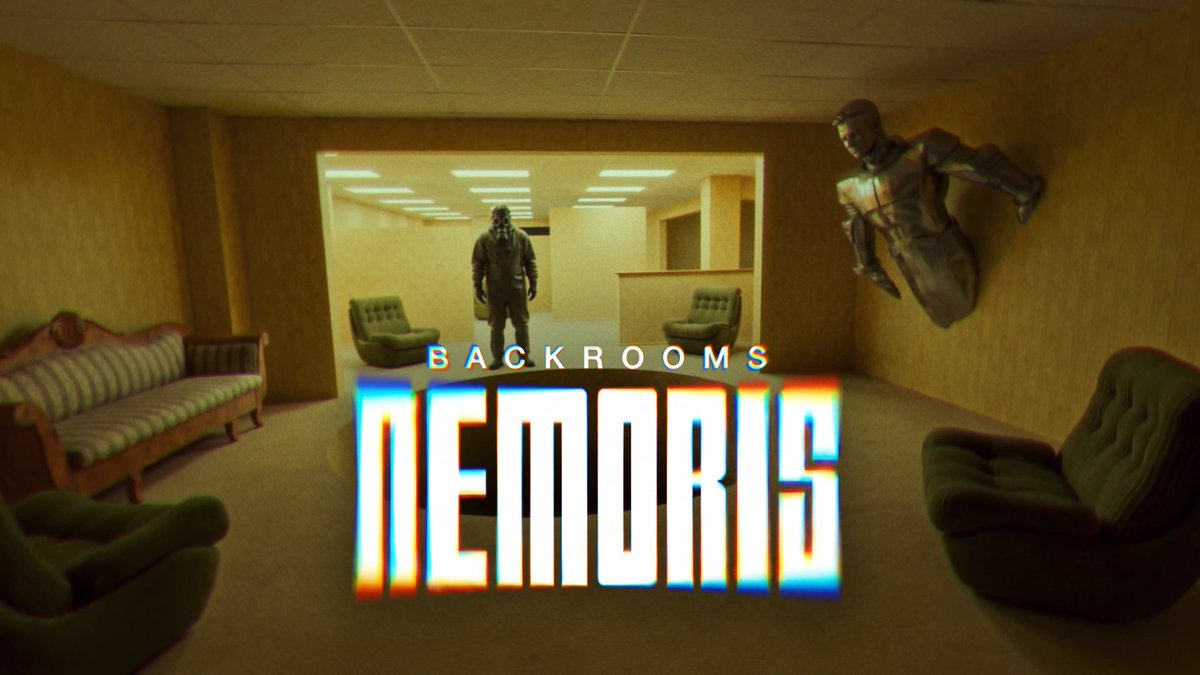
Backrooms Nemoris S1E01: It Eats Light I've spent the last six months working in secret on this pilot episode for a new Backrooms canon. We premiered this week in Toronto and a it's now available on all platforms: a new Magnific Originals series! This is quite possibly the most complex project I've ever taken on in my life. Yep, even if that sounds like an exaggeration, it took even more effort than building the first version of Magnific Upscaler. I had never before tried to bring such a concrete, specific vision to the screen while pushing the current state of the art as far as possible. Every scene you see in this episode, every object, every movement of a character's hands, every space, every hum of the fluorescent lights... it's all there for a very specific reason, with absolute control and intention on my part. I never imagined that something that looks so simple on the surface could be so incredibly complicated. The script is my own, based on the original Backrooms concept (the iconic 4chan image) but developed to create an entirely new canon from scratch. In this first episode, I reveal barely more around 5% of the overall puzzle, so you may end up thinking: what the f*ck did I just watch? Or you may need multiple viewings to pick up on some extra clues, because several of them are genuinely hidden. The idea is to create a full 10 episode series, an anthology, and have you, the viewers, gradually piece together the puzzle yourselves as the clues are revealed. Beyond the video and image generations, I did all of the editing in DaVinci Resolve, with particular attention to the sound. I'd say around 60% of the time I spent on this project went into sound. In some scenes, there are more than 13 stereo tracks layered at the same time, using sounds I recorded myself or created and edited from generations and foley libraries. Every sound, every voice, and every gasp is designed to pull you into the world of the story and make you feel like you're actually there. That meant spending an enormous amount of time on sound design, thinking about things like the individual position of each sound in space, EQ, reverb to simulate different environments, the sense of immersion, etc. I've never learned so much about something so quickly. As for the generations, a few numbers: • 12 hours of total generated video for 17 minutes of final footage 🤯 • More than 7,000 generations in total. • An average of around 60 generations for every 15 seconds of final footage. • 6 months of work, including many weekends, with just one person behind the whole thing... I almost lost my mind. • Platform: Magnific, of course. Models: mainly Seedance 2.0 and 2.5 for video generations, and Nano Banana Pro and Seedream 5 for image references. • Approximately $20,000 in total token costs, not including the value of my own time. For the next episodes, I can't do this alone again or I'll go crazy. My plan is to put together a small team: voice actors, a colorist, 3D VFX artists, a sound designer, and, in general, people from the traditional film industry who can help us professionalize our pipeline and take this story to another level. If you're reading this and you think you might be interested, please leave a comment. Ah! If you have any technical questions about how this was made, I'd be happy to answer them. Feel free to ask me anything you like! Anyway, I'll leave you with the episode. For the love of everything holy: please watch it at home, relaxed, on a big screen, with a good sound system or a quality pair of headphones, the lights off, and some popcorn. And most importantly, enjoy. Nemus te reddat!

Javi Lopez ⛩️

1,430,588 次观看 • 25 天前

Trapped between a locked door and a deadly drop. One mysterious drive, one desperate escape, and nowhere left to run. Created on seedance 2.5 Prompt: Ultra-photorealistic cinematic 30-second action-thriller set inside a modern upscale hotel room on a high floor at night. An adult professional woman in a practical dark jacket, trousers, and comfortable shoes discovers she is being pursued after securing a mysterious encrypted-looking USB drive inside her travel bag. 0–5s: Tight macro close-up of the USB drive on the hotel desk. She quickly grabs it, looks toward the door, places it inside her travel bag, and closes it. Three sudden knocks freeze her in place. 5–10s: Slow cinematic push toward the hotel door. A heavy knock follows as a muffled male voice says, “Open the door. We know you're inside.” Her expression shifts from confusion to fear. She whispers, “That's not possible,” then cautiously backs away. 10–15s: Extreme close-up of the door handle slowly turning downward. Realistic latch and lock sounds. Cut to her frightened face as she grabs the travel bag and rushes toward the balcony. 15–20s: She slides the glass balcony door open with both hands, physically overcoming the resistance of the track. Cool night air moves her hair and jacket naturally. Behind her, the hotel room door shakes violently from an impact. She steps carefully onto the balcony, maintaining realistic balance near the high ledge. 20–25s: Another powerful impact hits the hotel door. The lock and frame resist before the door finally swings inward naturally around its hinges. A partially visible silhouette appears in the doorway. Loose papers flutter from the sudden airflow as she moves farther onto the balcony. 25–30s: She reaches the railing and looks down at the city far below. She turns toward a neighboring balcony separated by a narrow gap, then looks back toward the approaching silhouette. She grips the railing tightly and whispers, “Think.” Dramatic exterior wide shot reveals the hotel façade, her balcony, and the neighboring balcony. Grounded movie realism, realistic human acting and biomechanics, accurate gravity, momentum, inertia, friction, balance, door mechanics, sliding glass movement, fabric motion, object weight, natural night lighting, restrained handheld cinematography, realistic depth of field, natural motion blur, practical-effects aesthetic, synchronized dialogue and sound design, distant city ambience, footsteps, breathing, door impacts, lock vibration, glass-door movement, and night wind. No superhero physics, no impossible jump, no falling, no teleportation, no floating objects, no exploding door, no broken glass without cause, no exaggerated wind, no robotic acting, no distorted anatomy, no changing face or clothing, no duplicated characters, no impossible camera movement, no CGI appearance, no blood, no gore, no text, no logos, no watermark. End with a hard cut to black at the peak of the cliffhanger..

Rshhad

11,599 次观看 • 1 个月前

someone is going to make millions with this in 2026 99% of people think this is a real human (or they fail to notice it’s an ai-generated video) but this video is completely ai-generated, including the background music. let me teach you how to create this in a few minutes follow this workflow step by step: first, create the base image of your ai influencer using nb pro. this is currently the best tool for character consistency i used a json prompt to generate the base image then i turn it into video (i will share the exact json prompt with you in this thread) now, to generate the video paste this prompt into google veo using the “frame to video” option “a man in his 40s sits on a 1980s living room couch, looking directly at the camera with a serious expression. he gestures naturally with one hand as he speaks in vintage tv broadcast aesthetic: "today is october 12th, 1985. what i'm about to tell you will sound impossible... but mark my words, these three predictions will come true. no background music, no sound effects” next, i gave it a chunk of script, i only changed the script dialogue each time and kept the rest of the prompt exactly the same using this method, you also get a little consintent voiceover here is the format for you to use: [character description] + [visual style] + [dialogue of your script for under 8 seconds] for example, for the next part dialogue; [A man in his 40s sits on a 1980s living room couch, looking directly at the camera with a serious expression. He gestures naturally with one hand as he speaks in Vintage TV broadcast aesthetic: "but mark my words, these three predictions will come true... ONE: You will carry a device no bigger than a playing card that holds ten thousand songs" ] rest things i adjusted in the editing, now how to clone the audio for these several clips we just generated? i got the best audio from the very first clip i generated using veo 3 but here is the trick: - export that clip to a video editor - detach the audio of it - duplicate it to make it 10+ seconds long - clone the voice over using elevenlabs (go to 11Labs-> click on voices-> click on "create or clone a voice" button in the top right side) (i named mine “1985 ai influencer” inside 11labs) then, finally export all your video clips into your video editor detach the audios of all clips, and export it to 11Labs to clone it with that "1985 AI Influencer" voice once you dubbed it, import it back to your editor that’s it. there are endless use cases where you can use such an ai influencer like this to promote your biz: - skincare - weight loss & nutrition - psychology and mental health - marketing and sales - predictions (like this video) - making money & career growth - dating, parenting, and so on… there are a few people already started using such ai influencers, you are just behind them, you can find their pages on instagram don't be lazy, create one such an ai influencer for your targeted biz 2026 is going to be yours

ViralOps

14,381 次观看 • 10 个月前

Jeepers Creepers (2001) #OTD 📽️ Released 25 years ago 🎂 One of the definitive creature features of the early 2000s. Directed by Victor Salva and executive produced by Francis Ford Coppola, it successfully revitalized the monster-movie genre with its blend of urban legend, visceral dread, and practical effects. Writer-director Victor Salva wrote the script in 1999. He was inspired by a summer of watching atmospheric horror hits like The Blair Witch Project and The Sixth Sense, which moved him to write a classic monster movie rooted in suspense rather than cheap gore. The unforgettable opening sequence—where two siblings on a road trip spot a mysterious figure dumping body-sized sheets down a pipe—was loosely inspired by a real-life true crime case. In 1990, a Michigan man named Dennis DePue murdered his wife and was seen by a passing couple dumping her body behind an abandoned schoolhouse, an event later detailed on a famous episode of Unsolved Mysteries. Salva took that terrifying premise and interwove the supernatural lore of The Creeper: an ancient, winged demon that awakens every 23rd spring for 23 days to harvest and feed on human organs to sustain itself. Character actor Jonathan Breck won the role of The Creeper after a terrifying audition. To maximize the fear factor, Salva kept Breck completely isolated from Gina Philips and Justin Long throughout production. The lead actors never saw Breck in his heavy prosthetic makeup until the cameras rolled for their first encounter, capturing genuine on-screen terror. Due to late-stage budget cuts, the original scripted ending had to be scrapped. The final, bleak sequence—where Darry is taken and his eyes are harvested—was largely worked out through last-minute improvisation by the cast and crew. Released on August 31, 2001, by MGM, Jeepers Creepers was a massive box office sleeper hit. It debuted at number one over the four-day Labor Day weekend, breaking the record at the time for the highest-grossing Labor Day opening with nearly $16 million. Ultimately, the film grossed $37.9 million domestically and over $59.4 million worldwide, easily multiplying its $10 million budget and securing the immediate greenlight for a sequel. The film’s commercial momentum carried heavily into its home video release on VHS and DVD in January 2002. Capitalizing on the peak era of physical media, the MGM Home Entertainment Special Edition DVD—featuring deleted scenes and alternate endings—became a major rental and retail success. Heavy rotation on late-night cable networks throughout the early 2000s introduced the movie to a broader audience of horror fans, cementing its transition from a theatrical hit to a household staple. Jeepers Creepers has earned a firm cult classic status within the horror community. While mainstream critics initially gave it mixed reviews—praising the intensely suspenseful, slow-burn first act but criticizing the shift into conventional monster tropes later on—audiences fell in love with it. The film is widely celebrated for producing one of the last truly iconic, original cinematic monsters of the modern era. The ominous use of the titular 1938 jazz song "Jeepers Creepers", the silhouette of the Creeper’s duster coat and wide-brimmed hat, and his rusted, screaming 1941 Chevy COE delivery truck all became unforgettable staples of modern horror iconography. Despite the franchise’s later timeline being bogged down by inferior sequels, a poorly received reboot, and severe public controversy regarding the director’s personal criminal history, the original 2001 film stands alone as an atmospheric, highly influential milestone of early-2000s horror.

Tom😈Loves❤️Horror😱

14,021 次观看 • 1 个月前

Way back in 1996, I was working on Diddy Kong Racing. Probably the most fun I've had in my entire life! One of the most fun parts was creating animation sequences using the custom made software by Rob Harrison who was one of the lead programmers on the team. After I gave him a list of features I needed it to have, Robert created a great editor based on a simplified timeline editor similar to what I had previously used in Alias Poweranimator. Characters, objects and cameras would follow paths that I could draw to create motion, and along those paths I could place 'trigger' events which were usually icons that looked like a musical note or a special effect. So for instance, during the start sequence when Diddy Kong flies around the famous 'N64' logo high up in the clouds, Diddy Followed a path and as he hit triggers along the way, special sound effects were triggered and twinkle star particles were emitted. The sky background was simply a spinning cylinder with a basic blue sky texture on it. However, although it sounds simple, scenes soon became very complicated, and this WIZPIG end sequence after defeating him for the first time was a lot to handle. I made the characters follow paths which ran all over the place triggering sound effects as they ran away from the evil boss! I had so much fun creating sequences, and doing WIZPIG's VOICE! But none of this would have been possible without the great work from Rob to give me a great tool to animate those sequences which really brought the game to life! All of the team worked their asses off in a red hot barn during that summer, but we loved every minute - and it shows in the game! I remember Chris Stamper being really impressed with the speed we were putting this kind of thing together thanks to the way we were communicating with each other as a team. But with this particular sequence he wasn't happy when he saw I was building a lighthouse. I remember him asking why I was wasting memory on graphics because it was in short supply - and everything should be built for a reason. (And quite rightly so) However, little did he know it would become a rocket ship for Wizpig to launch into space with, and ride around the space racetrack, but he soon found out! Lee Schuneman did a great job bringing the team together and getting them to trust in his vision of a racing game with an 'adventure' element. The amazing front end by Johnni Christiensen set it apart from many other games with it's bold use of colour and great cartoony style And that music you hear is by non other than my best pal David Wise! What a game! What a time we had! We all worked so hard - And some of the team now even work with me at Playtonic Games! (Paul Mountain, John Pegg, Martin Wakely) #DiddyKongRacing #GameDev #VideoGameHistory #Art #Characterdesign

KevBayliss_VideoGame_Artist

91,355 次观看 • 7 个月前

🚨They CANNOT SCAN kilometers into SOLID ROCK! That is what skeptics of the Khafre Project’s findings say, and they are correct to point out that Synthetic Aperture Radar (SAR) can't do this. They are also TOTALLY MISTAKEN, here is why: The Khafre team are not using conventional SAR imaging in the way critics assume. They are using a patented form of SAR Doppler Tomography, pioneered by Prof. Filippo Biondi. This is not simple surface imaging. It is a phase-coherent interferometric method that detects subtle Doppler frequency shifts caused by internal micro-vibrations within dense structures. Instead of trying to penetrate rock, it “listens” to tiny seismic vibrations in the stone. Biondi’s trick is to capture micro-motions. Tiny seismic or structural tremors slightly shift the radar’s frequency (Doppler effect). By analyzing these Doppler shifts across multiple SAR images, they can reconstruct a 3D tomographic image of what’s inside, like a CT-scan from space. Prof. Filippop Biondi's patent (PCT/EP2023/064345) explicitly describes processing “coherent vibrational Doppler information” in SAR to allow penetrating 3D imaging "over a depth of several kilometers". In other words, it effectively turns the radar into a spaceborne sonar, using Earth’s natural vibrations to “sound” the subsurface, something ordinary SAR can’t do. A peer-reviewed Remote Sensing paper describes using COSMO-SkyMed SAR data to map new shafts and chambers inside Khufu . This case study in a scientific journal shows the technique in action (with high-res 3D results!). Beyond pyramids, the technique has practical uses. For bridges and infrastructure, Biondi’s SAR Doppler method can extract a structure’s “vibration profile” from orbit. That profile highlights cracks or damage. In one study the team applied it to Italy’s Morandi Bridge before it collapsed, SAR-based vibration maps showed unusual energy spikes right at the failing pylon. They even imaged deep tunnels. The HarmonicSAR site reports they “detected for the first time the Gran-Sasso Physics Laboratory at 1.4 km below the Earth using SAR”. In other words, their tomography saw a known underground lab 1400 m under Italy! They’ve also done scans of mountain tunnels (San Gottardo). Biondi was co-author on a 2016 Scientific Reports paper tracking Iraq’s Mosul Dam instability via SAR. That study used spaceborne radar to measure tiny ground motions around the dam over time. It shows that SAR micro-motion techniques can monitor slow structural shifts on a large engineering project. In short, SAR Doppler Tomography isn’t ordinary radar, it’s like using satellites and the Earth’s own background hum to “see” underground. Think of it as applying a CT-scan or ultrasound-like method from orbit. It’s unconventional, but it’s patent-backed and has some peer-reviewed results. RECIEPTS: Synthetic Aperture Radar Doppler Tomography Reveals Details of Undiscovered High-Resolution Internal Structure of the Great Pyramid of Giza Filippo Biondi's SAR/Doppler Patent Perspectives on the Structural Health Monitoring of Bridges by Synthetic Aperture Radar HarmonicSAR (Filippos Website) Mosul Dam SAR/Doppler Project

Jay Anderson

170,406 次观看 • 10 个月前

Just finished a 30-second cinematic delivery story using Seedance 2.5, now available on Pollo AI The realistic scooter action, dynamic city shots, smooth camera movement, and consistent character really stood out. And right now, you can get Seedance 2.5 on Pollo AI for 50% OFF for a limited time. Prompt : Create an ultra-realistic cinematic delivery-rider story with a strong orange brand identity. She wears a professional orange delivery jacket, orange helmet, dark fitted cargo pants, practical sneakers, and an orange delivery backpack. Her scooter/motorbike is also orange with subtle matching details. Keep the same outfit, bike, helmet, and backpack consistent in every scene. The video opens with her relaxing at home when her phone suddenly receives a new food-delivery order. She checks the notification, quickly grabs her orange helmet and delivery bag, and heads outside with a focused but energetic expression. She starts her orange scooter, pulls onto a busy city street, and navigates through realistic traffic. Use dynamic tracking shots, helmet-mounted POV, low-angle wheel shots, side tracking shots, and close-ups of her focused face and hands controlling the bike. She checks her watch while stopped safely at a traffic signal, realizes she needs to move quickly, and continues through the city. Show her arriving at the restaurant, parking the scooter, rushing inside, and receiving a freshly packed food order from the staff. She secures the package inside her orange delivery bag and immediately rides toward the customer's location. Show fast-paced but safe city movement, changing streets, traffic, sunlight reflections, and realistic urban atmosphere. She arrives at the destination, quickly removes her helmet, grabs the delivery bag, and walks toward the customer. She hands over the food with a warm smile, checks her phone showing the completed delivery, and looks relieved and proud. Finish with a cinematic hero shot of her getting back onto the orange scooter and riding away through the glowing city street as the camera follows from behind. Style: Premium cinematic commercial, realistic delivery-rider lifestyle, energetic storytelling, strong orange-and-black visual identity, natural expressions, realistic traffic, authentic urban environments, dynamic handheld and gimbal camera movement, dramatic low angles, POV shots, shallow depth of field, realistic motion blur, physically accurate lighting, detailed fabric and vehicle textures, photorealistic 4K HDR, polished brand-film quality.

Synthia

15,622 次观看 • 2 个月前

“The (PRC) Ethnic Unity Law is now in effect, I could shoot you!” When did a Toronto sidewalk become CCP territory? On September 22, a man wearing a PRC flag on his jacket tore down Falun Gong banners outside the Chinese Consulate, shoved practitioners, and screamed that he would kill them and shoot them. He told a woman standing on Canadian pavement that the ground itself belonged to Beijing. That woman, Lina Li, has now spoken out for the first time in the attached video. She described protecting the banners when her chin was cut. Only afterward did she feel the blood. Fellow practitioner Nora Geng, kicked while filming, said the attacker showed no fear of police and used language about “separatism” that does not sound like a random passerby. Toronto Police are investigating. They should finish the job. This is not a neighborhood quarrel. It is the latest export of a 27-year campaign. Since July 1999 the Chinese Communist Party has tried to erase Falun Gong, a spiritual practice grounded in Truthfulness, Compassion, and Forbearance. Inside China that campaign has meant prisons, torture, and the well-documented harvesting of organs from prisoners of conscience. Outside China it has become transnational repression: family members threatened back home, practitioners followed, banners slashed, and hoax bomb threats used to cancel Shen Yun performances, including in Toronto this year. The method is consistent. A foreign statute is invoked on a free street as if it had force of law. A public sidewalk is declared “Chinese territory.” Death threats are delivered in daylight, then the suspect flees. The message is not subtle: even in Canada, even under the Charter, even in front of cameras, you can be punished for believing what Beijing forbids. Canada has already seen the pattern. Elderly practitioners assaulted. Displays vandalized. Relatives in China used as leverage. Diplomatic missions and United Front networks have long treated diaspora communities as extensions of Party discipline. When a man can claim the right to execute people on a Toronto sidewalk and walk away, the problem is no longer “awareness.” It is enforcement. Toronto Police should preserve every frame and every second of audio, identify the speaker, and test the words against the Criminal Code on uttering threats, assault, and mischief. The Ontario Attorney General and federal public-safety officials should treat this as more than a noisy dispute between “community groups.” If the attacker is linked to consular direction or United Front work, that belongs in an RCMP and CSIS file. A democracy is not judged by how loudly it lectures Beijing. It is judged by whether “I will kill you” remains a crime when the victim practices a faith the Party hates. Charge the suspect. Give the practitioners a public accounting. Make clear that Chinese law ends at China’s border, and that Canadian law still begins on a Toronto sidewalk. ACI — Aric Chen | Insights Toronto Police Toronto Police Operations Ministry of the Attorney General Public Safety Canada RCMP CSIS Canada

Aric Chen

17,464 次观看 • 19 天前

One drop of blood, and the classroom became a battlefield Seedance 2.5 on Pollo AI Prompt: Cinematic horror-action short film set in a Japanese high school classroom, natural realistic pacing, grounded practical-effects style, no over-acting. Classroom filled with wooden desks, students in uniforms, a chalkboard, fluorescent lights, windows with afternoon light. Natural handheld camera work, muted authentic color grading, all sound fully natural and diegetic — no music, no artificial sound design, just real classroom, fight, and impact sounds throughout. > > **[0-3s]** Extreme close-up on the teacher's (GIVEN IN REFRANCE IMAGE) chalk squeaking sharply across the board mid-sentence, then a sudden beat of dead silence in the room, all eyes subtly shifting upward — an unsettling stillness before anything happens. > > **[3-4s]** Close-up: a single drop of dark blood falls from the ceiling, landing directly on a student's open notebook, the soft wet sound of impact clearly audible. > > **[4-5s]** SLOW MOTION: the student's eyes widen in shock, head tilting slowly upward to look at the ceiling above him. > > **[5-7s]** The ceiling cracks violently, plaster and dust raining down with a loud crash as a zombie bursts through, crashing onto a desk, wood splintering audibly. > > **[7-9s]** It lunges immediately, sinking into the neck of the nearest student — a sharp, natural cry of pain, desks scraping as others recoil. > > **[9-11s]** Within seconds, the bitten student rises again — eyes milky white, veins dark across his face — now a zombie himself, guttural groaning as he lunges at the student beside him. > > **[11-13s]** Chaos erupts: students scream and scramble out of their seats, chairs toppling loudly, rushing toward the classroom door in a panicked crowd, footsteps and shouting overlapping naturally. > > **[13-15s]** The teacher turns sharply, grabbing a wooden bench, the scrape of it dragging off the floor audible, her breathing intensifying. > > **[15-17s]** She swings the bench hard into the first zombie — a solid, heavy impact thud, it crashes back into a row of desks with a loud clatter. > > **[17-19s]** She swings again, striking a second zombie down, papers flying with a soft rustle, another hard impact sound. > > **[19-21s]** A few students grab chairs and desk legs, joining her — wood scraping, natural grunts of effort as they strike newly turned zombies near the door. > > **[21-23s]** Quick intercut shots: a chair slams onto a zombie's back with a crack, another shoved into the chalkboard with a loud bang, teacher sweeping a third off its feet with a scrape and thud. > > **[23-25s]** The group fights back-to-back in the center of the room, desperate breathing, grunts, wood-on-body impacts, zombies falling one by one with heavy thuds around them. > > **[25-27s]** Final zombie lunges at the teacher; she sidesteps and slams the bench down hard — one final heavy impact, it collapses to the floor motionless. > > **[27-29s]** Wide shot: the classroom wrecked — desks overturned, papers scattered, zombies down on the floor. Heavy breathing fills the silence as the teacher and surviving students stand together, blood on their clothes and hands. > > **[29-30s]** Final shot: the teacher lowers the bench slowly, exhausted, natural exhale audible, dust settling in the sunlight through the windows. Cut to black. > > All sound fully natural and diegetic throughout — chalk on board, blood drip, ceiling crack, zombie groans, screaming, wood impacts, heavy breathing. No music, no text overlay, no watermark. Natural handheld camera with realistic shake during the action, muted desolate color grading16:9, 30 seconds, Add a very small watermark namely 'AUQIB' at bottom right in whole video as creators name.

auqib

42,496 次观看 • 1 个月前