正在加载视频...

视频加载失败

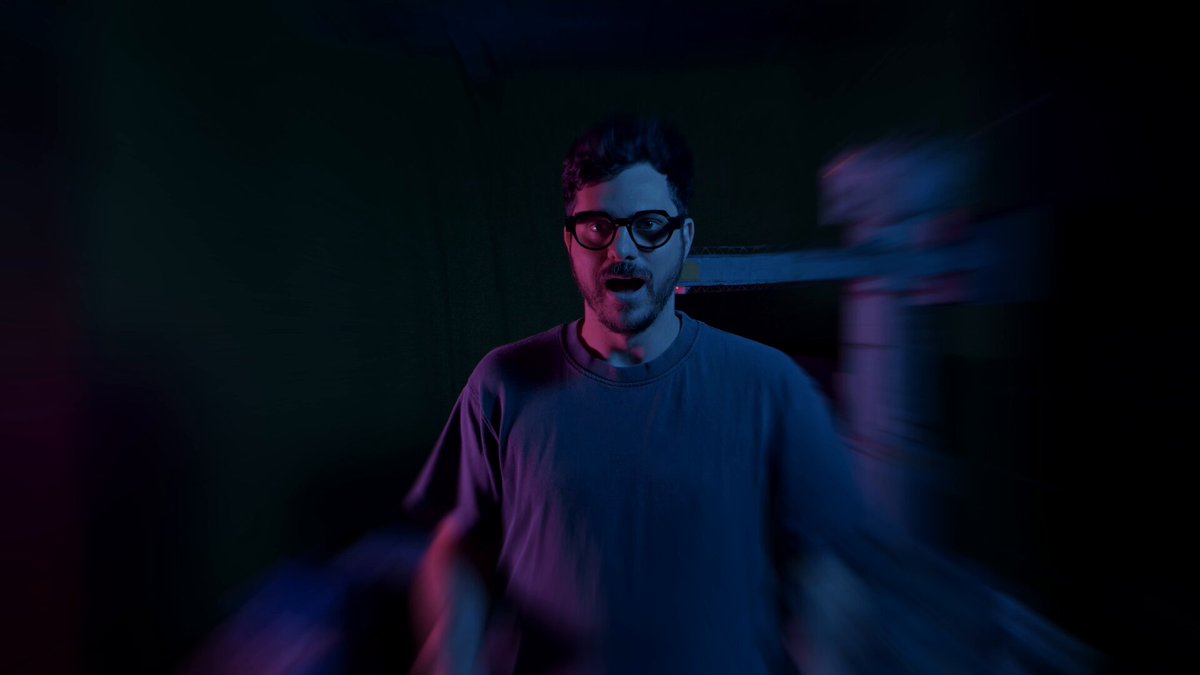
Videodrome - Behind The Scenes 1983 / Canada / David Cronenberg Visual effects supervisor Michael Lennick recalls how Rick Baker’s team delivered an unforgettable practical effect by projecting a video image onto dental dam material mounted inside the television 👄sound on👄

26,189 次观看 • 1 年前 •via X (Twitter)

3 条评论

Blah Blah Blah 的头像
Blah Blah Blah1 年前

This amazing scene inspired another fantastic tv warp scene in Def By Temptation.....on difference was....well, the TV was.........hungry....

World Transformation Movement 的头像
World Transformation Movement2 年前

World-leading psychiatrist says “this interview is the holy grail of insight needed to rehabilitate the human race”. Watch Australian biologist Jeremy Griffith explain his revolutionary breakthrough in understanding human behaviour we've been waiting for.

Phil Free 的头像
Phil Free1 年前

"ᴛʜᴇ ᴇʏᴇ ɪꜱ ᴛʜᴇ ᴡɪɴᴅᴏᴡ ᴏꜰ ᴛʜᴇ ꜱᴏᴜʟ."

相关视频

Videodrome (1983) 🕯️📹 Released on February 4, 1983, “Videodrome” faced a difficult theatrical run due to its transgressive content but eventually found a massive second life through home video and high-quality restorations. The film opened in 600 theaters across North America. It debuted at number 8 on the box office charts, earning approximately $1.19 million in its opening weekend. It was a significant commercial "bomb," grossing a total of $2.12 million against a budget of roughly $5.95 million. Director David Cronenberg noted that the film was difficult to categorize, neither fitting clearly as an "art-house" film nor a standard "exploitation" horror flick. Universal Pictures executives later expressed regret for giving it a wide release rather than treating it as a specialized art film. Home video was instrumental in transitioning “Videodrome” from a financial failure to a revered cult classic. The film was released on VHS and Betamax in the 1980s by companies like CIC Video. In the UK, early versions were heavily censored—cut by nearly three minutes—due to the "video nasty" moral panic of the era. The film's critical status was cemented with its inclusion in the Criterion Collection, which released a landmark DVD in 2004 and a Blu-ray in 2010. These editions featured the "unrated" version and extensive documentaries on its groundbreaking prosthetic effects. Arrow Video released a highly praised dual-format (Blu-ray/DVD) set in the UK with new restorations and archival content in 2015. New 4K restorations, approved by Cronenberg, were released to theaters and home media, further enhancing the film's "techno-surrealist" visuals for modern audiences. Today, the film is widely available for digital streaming on platforms like Peacock and for purchase through boutique labels.

Tom😈Loves❤️Horror😱

16,931 次观看 • 8 个月前

On this day, 43 years ago, David Cronenberg's 'Videodrome' (1983) was released in the USA & Canada. Here is David Cronenberg explaining how he got the inspiration to make 'Videodrome' (1983): "'Videodrome' came out of two things, I suppose. The first was remembering, as a kid, watching TV late at night, and of course it was black and white television, and when all the regular stations would go off the air you could get these distant, strange stations that were probably all American. The airwaves would be quiet, so you could pick up and we had a rotating antennae, you know, so we could rotate the antennae on our house and get this stuff. But they were always very bad images, and they would fade in and out, and where they came from and what they were was very mysterious. That was many years before I was making movies, I was probably fourteen or fifteen or sixteen. Anyway, these create strange late-night channels, plus bits of Marshall McLuhan, plus I have no idea what, combined to the initial premise that someone been rented, but it had sand-blasted brick in the Toronto style and beams. And there was nothing in the room but a table, a chair and an IBM Selectric, that was it. It was quite a big room, and I was just in the middle of it and I would go there every day and write. And that’s where I wrote 'Videodrome', I can remember that, but I don’t remember any more of the details other than just the normal way that things accumulate around a central concept. receives images on his television set that are fascinating to him, and seem to have an element of danger which makes them more fascinating. I don’t even think I knew, at the time that I started writing, that I would be examining the influence of television or that I would create a character based on Marshall McLuhan [O’Blivion], none of that was really in my mind to begin with. And I can’t really remember how I proposed this to the guys at Film Plan. It was the same thing, you know, the tax money was coming in, they wanted to do another movie, Pierre David and Victor Solnicki. I remember renting a room right across the hall from where Ron Sanders was editing, it was downtown near the waterfront. It was in an old building that had been rented, but it had sand-blasted brick in the Toronto style and beams. And there was nothing in the room but a table, a chair and an IBM Selectric, that was it. It was quite a big room, and I was just in the middle of it and I would go there every day and write. And that’s where I wrote Videodrome, I can remember that, but I don’t remember any more of the details other than just the normal way that things accumulate around a central concept." ('David Cronenberg: Interviews with Serge Grünberg', 2000)

DepressedBergman

44,258 次观看 • 6 个月前

🎓Learn how to create a powerful Torn Fabric smart material in a matter of seconds in my latest video series (AAA) Pro Tips! This smart material can be used on virtually any 3D asset. ____________________________________________________ In this video, the steps are as follows: 1. Create a base fill layer containing no information. We will use this layer to call out the core effects. Add a black mask to this layer and inside that mask add a paint layer and draw a simple pill shape. 2. Next, add a blur directional and be sure the direction is the same direction that your fabric is flowing to. 3. Add a UV border generator set to subtract to mask out any uv seams followed by an anchorpoint. Additionally, add a messy Fibers 3 fill layer set to overlay. 4. Use a levels to adjust the mask along with a sharpen filter. A warp filter should also be added to introduce some randomness. Add an anchor point at the top of the mask as well. 5. Create another fill layer with its opacity channel set to black and apply a black mask to the fill layer. Inside its mask retrieve the anchorpoint information from the previous fill layer. 6. Create an additional fill layer with a bright diffuse color along with a black mask applied to it. Add the anchorpoint information from the previous mask into its mask as well and this should give us some white fibers on the edges. Now we have a torn fabric effect wherever we paint using the paint layer created inside the callout mask! ____________________________________________________ More AAA Game Dev Tips can be found on my YouTube channel here: Stay tuned for more weekly Tips! Happy Texturing!💚 #gamedev #gameart #tutorial #3dmodeling #hardsurface #texturing

Cohen Brawley

78,816 次观看 • 2 年前

Gpt image 2 + Seedance 2.5 on Higgsfield Prompt: 30-SECOND CINEMATIC SHORT Create a 30-second cinematic sequence with the visual discipline of a major feature film. The world is entirely made from paper, cardboard, ink, and delicate handcrafted materials. 00:00–00:05 — THE FIRST FOLD Begin with an extreme macro shot of a blank sheet of textured paper. A single fold slowly forms across its surface. Lens: 100mm macro Camera: Completely static Soft daylight moves across the paper as the fold continues. Cut precisely as the paper reaches its final shape. 00:05–00:11 — THE CITY EMERGES Transition into a 50mm shot. The folded paper begins forming miniature streets and architectural structures. Buildings rise naturally from the surface through carefully constructed paper folds. The camera slowly tracks sideways. Tiny windows catch the light. Nothing feels computer-generated; every surface should have believable paper fibers, folds, shadows, and imperfections. 00:11–00:17 — THE REVEAL Move into a 35mm shot. The camera pulls backward. The small arrangement is revealed as an enormous handcrafted paper city stretching across a large table. Roads connect different districts. Bridges cross miniature rivers. Paper trees move gently from an unseen breeze. 00:17–00:23 — MORNING Transition into a slow overhead crane shot. Warm sunlight gradually spreads across the paper city. Shadows from the buildings become longer and more defined. Tiny paper windows begin reflecting the sunlight. The camera continues rising, revealing the geometric relationship between the streets and buildings. 00:23–00:27 — THE DETAIL Cut to an 85mm close-up. Focus on a tiny paper clock mounted on one building. The clock moves forward by one minute. Rack focus from the clock to the miniature skyline behind it. 00:27–00:30 — FINAL IMAGE Return to an extreme wide shot. The entire paper city sits beneath a large studio window. The morning light completely fills the miniature world. Camera slowly pulls backward until the city becomes a small object within the larger room. Fade to black. CINEMATOGRAPHY Large-format feature-film aesthetic. 100mm macro for texture. 85mm for detail. 50mm for natural perspective. 35mm for environmental shots. Controlled dolly and crane movements. Realistic depth of field. Natural focus transitions. Soft motion blur. Subtle lens imperfections. No artificial camera shake. MATERIAL DIRECTION Every surface must visibly behave like physical paper. Visible paper fibers. Natural folds. Tiny imperfections. Soft cardboard edges. Realistic contact shadows. Believable paper thickness. Natural material deformation. LIGHTING Soft morning daylight. Large window as the primary source. Natural bounce light. Gentle shadows. Subtle warm highlights. No artificial neon effects. No excessive visual effects. CONTINUITY The same paper city throughout the entire sequence. Buildings maintain identical shapes and positions. Roads remain connected. Paper materials remain consistent. No random transformations. No flickering. No duplicated structures. No sudden environmental changes. DIRECTOR’S NOTE Treat this as a miniature feature film, not a visual-effects demonstration. The camera should discover the world gradually. Start intimate. Reveal scale. Return to detail. Finish wide. The audience should feel that they are watching a real handcrafted world photographed with a cinema camera. Photorealistic 4K • tactile materials • feature-film cinematography • sophisticated lighting • realistic miniature photography • cinematic depth • precise camera movement • seamless visual continuity.

K

19,384 次观看 • 6 天前

🚨 FLASHBACK: THE Day Charlie Kirk RODE A Horse Through New York City—Behind The Scenes CANDID Footage🏇🤠 NEW YORK CITY — Before the tragic events of September 10th reshaped the political landscape, Charlie Kirk delivered one of the most iconic moments in cable news history. Today, we’re looking back at the behind-the-scenes footage from July 27, 2025, when the Turning Point USA founder traded the lecture hall for a saddle in the heart of Midtown Manhattan. 🎥 THE MIDTOWN "COWBOY" Appearing on Fox & Friends Weekend, Kirk wasn't just there to provide analysis; he was there to lead by example. Despite being raised in Chicago with zero ranching experience, Kirk famously mounted a horse outside the Fox News studios. The unscripted footage reveals a side of Charlie the mainstream media often ignored: Charlie was never afraid to try something new and step outside of his comfort zone. Charlie joked about his "underhand" lasso technique, openly admitting he had no idea how to rope a bull on national television. The "Man of Will": He emphasized that the stunt took "a lot of persuasion and a lot of will," reflecting his personal mantra of pushing past comfort zones. The Mission: Even amidst the spectacle, Kirk remained focused on the work, noting that hosting and advocating for the movement was a "thrill" that offered experiences one couldn't find anywhere else. These clips serve as a stark reminder of the void Kirk left behind. While current TPUSA leadership faces questions regarding "transactional" data harvesting and internal power shifts, this footage captures the original spirit of the movement—one rooted in authenticity and a fearless willingness to "fail" in front of millions for the sake of a larger cause. "More people need to be willing to try new stuff, be willing to fail. And sometimes you fail on national television in front of millions of people... But I did get on a horse." — Charlie Kirk 🕯️ THE EMPTY SADDLE Months after his passing, the image of Kirk riding through downtown Manhattan remains a symbol of the "America First" energy that defined a generation. As the trial of Tyler Robinson approaches and the "ghosts in the machine" continue to be exposed, we remember the man who wasn't afraid to take the reins. Rest in Peace, Charlie. The movement you started continues to ride.

Project Constitution

17,907 次观看 • 4 个月前

📖SEEDANCE 2.0 JUST MADE EVERY FILM SCHOOL IRRELEVANT FOR SOLO CREATORS Solo creators with the right workflow are closing clients that used to require a full production studio. Seedance 2.0 inside Dreamina holds character consistency across scenes in a way no other tool at this price point comes close to. Same face, same costume, same lighting logic — frame after frame after frame. That's the feature that turns a single prompt session into a short film. The lava demon materializing inside a gothic cathedral. The girl in black holding her ground while everything burns around her. Two characters with completely different visual languages sharing the same atmospheric world — and Seedance holds both of them consistent across every cut. That's not a generation. That's a production. Here's the 7-step workflow that produced this: • Step 1 — Define the character before you define the scene. Write a complete physical description — face structure, hair, clothing, skin, posture. This becomes the anchor every future generation references. • Step 2 — Build the world separately from the character. Gothic cathedral, candlelight, fog, cracked stone, scattered bodies. Define the atmosphere as its own entity before you place anyone inside it. • Step 3 — Generate the reference frame. One image that establishes the visual language, the color grade, the lighting temperature. Lock this as your style reference before generating any video. • Step 4 — Feed the reference into Seedance's image-to-video pipeline with a motion prompt. Camera behavior only — slow push, hold, circle. The image handles the subject. The prompt handles the direction. • Step 5 — Generate four variations per scene. Delete the two that look generated. Keep the one where the character's face holds and the atmosphere feels physical rather than rendered. • Step 6 — Edit in CapCut or Premiere Pro. Add music that matches the emotional temperature of the grade — the visual already tells you what the sound should feel like. Dark orchestral, slow tempo, single instrument carrying the melody. • Step 7 — Save the character description and reference frame as a template. The next episode starts from the same character in the same world. Series content becomes a system, not a restart. How a freelancer sells this: Dark fantasy content for game studios, music artists, and fantasy brands is a real market with real budgets. A musician dropping an album needs a visual world. A game studio needs promotional cinematics. A fantasy brand needs a story. Where to find clients: • Music artists on SoundCloud and Spotify releasing dark, gothic, or cinematic albums — search by genre, find artists with 1k–50k listeners who have no visual content. They have the audience and the need but no production budget for traditional video. • Indie game studios on Itch and Steam launching fantasy or horror titles — they need promotional cinematics and trailers but can't afford a production company. A single free scene built from their game's character art opens every conversation. • Dark fantasy and gothic brands on Instagram and TikTok with strong photo content but zero video presence — jewelry brands, clothing labels, occult lifestyle brands. They have the aesthetic already built. You just add motion to it. • Fantasy and horror fiction authors on Instagram and Substack launching new books — they need visual teasers, trailers, and world-building content to build pre-launch audiences. Most have no idea this kind of production is accessible at this price point. • Tabletop RPG creators and Dungeon Masters on Patreon and Kickstarter — they build entire fantasy universes and need cinematic content for campaigns, promotional videos, and subscriber rewards. The niche is underserved and the creators inside it spend consistently on content tools and services. 📥Tomorrow I'll show you what's sitting right next to this opportunity. 🔖Save this if you are looking for practical AI methods that actually pay.

Zentrix⌚️

50,098 次观看 • 2 个月前

Lucas Crespo (Lucas Crespo 📧 ) is the mastermind behind Every 📧 's visual vibe—and he does it one prompt at a time. As our creative lead, Lucas uses tools like native image gen in ChatGPT and Midjourney to generate the cover images you see every day. He also designs the interfaces for our products—Cora, Spiral, and Sparkle—and makes everything on our site feel as thoughtful and delightful as possible. We get into: - Why Every’s aesthetic feels familiar and new at the same time. Every’s aesthetic plays with the tension between the old (like Greek statues and Baroque symbols) and the new (like saturated colors and modern motifs) to make the glamor of the past feel fresh. - Art direction matters more than ever today. As AI makes it easier to generate images, Lucas says the real work of design is shifting toward art direction, specifically, curating an aesthetic that feels “organic;” on his X timeline that’s showing up as clouds, earthy landscapes, and textures. - Reimagining what a website can be with AI. Lucas compares most websites to identical buildings—predictable, efficient, and forgettable—and wonders how AI can help us break that mold by designing experiences that prioritize serendipity over speed, and curiosity over control. - Behind the scenes of Cora’s visual aesthetic. How Lucas designed the landing page and launch video for Cora by rooting it in the product’s philosophy: turning the inbox from a source of chaos into something that feels calm, thoughtful—like stepping into spring. - The future of internet interfaces. Lucas believes the future of digital interfaces will be curated with the same care as a film set or ad campaign, where every detail is chosen with intention. Lucas also walks us through how he created the headline image for Every’s consulting page—a human and robotic hand fist-bumping—using Midjourney to iterate from rough prompt to polished visual. This is a must watch for anyone interested in the future of design and making the internet a little more beautiful every day. Watch below! Timestamps: 1. Introduction: 00:01:41 2. How AI changed the course of Lucas’s career: 00:04:02 3. Why Every’s aesthetic feels both familiar and fresh: 00:11:38 4. Why Lucas thinks minimalism is overrated: 00:16:19 5. Art direction matters more than ever in the age of AI: 00:22:01 6. How to reimagine what a website can be with AI: 00:25:06 7. Lucas’s process in Midjourney to generate cover images: 00:33:41 8. Midjourney v. image generation in ChatGPT: 00:43:01 9. Behind the scenes of Cora’s design language: 00:49:43 10. How AI is rewriting the role of a designer: 00:59:57

Dan Shipper 📧

16,038 次观看 • 1 年前

seedance prompt: Realistic Video Narration (15-Second Full Version - Pure First-Person POV): Presented in the style of unprocessed, handheld, unstable iPhone video footage. All camera settings are automatic, with no post-processing color grading or special effects. The footage captures the realistic breathing of the operator and slight, irregular hand shake. Autofocus frequently exhibits intense searching, brief out-of-focus periods, and delayed recovery. Auto white balance naturally shifts between warm and cool tones as it blends with the library lights and natural light from distant windows. The overall image is flat and slightly washed out, retaining realistic lens flare, edge purple-green iridescence, and slight overexposure or underexposure. Faint fingerprint artifacts occasionally appear at the bottom of the frame. Only natural ambient sound effects are used (the sound of turning pages, very light footsteps in the distance, the low hum of an air conditioner, suppressed breathing, and the subtle rustling of stockings against a cheongsam). All sounds are extremely suppressed, with slight microphone distortion at louder frequencies. The entire video employs a pure first-person POV perspective (student's subjective viewpoint), with camera movements completely following natural head rotations and gaze movements. The composition is occasionally imperfect, showing realistic breathing tremors and slight shaking during moments of tension. From 0-4 seconds, the camera, in a first-person perspective, rests on a desk in a secluded corner of the library, with noticeable breathing tremors. You can clearly see your legs in black trousers. A female teacher approaches from behind and sits directly opposite you, wearing a white, glossy cheongsam-style dress (high slit design, keyhole cutout at the chest, pink floral lace shoulder embellishments), paired with white suspender stockings and white garter belts. She suddenly leans forward, one hand reaching out to cover your mouth, the other pressing on the inside of your black trousers, whispering, "Don't make a sound... be good, sit still." Her voice is extremely low, yet carries a powerful seduction. The autofocus searches for the high slit of the white cheongsam and the white suspender stockings. Between 4 and 9 seconds, the teacher leans forward more proactively, the high slit of her glossy white cheongsam sliding upwards, revealing a large expanse of her fair thigh and white stockings. She whispers in your ear, "Watch closely... this is what you want to see." The camera instinctively lowers its focus, locking onto a close-up of your black trousers and the teacher's white stockings—the glossy cheongsam fabric taut, the stockings subtly reflective. Your breathing noticeably becomes heavier. Between 9 and 15 seconds, footsteps approach in the distance, and the teacher presses you down more aggressively, whispering a warning, "Someone's coming... but you can't move or make a sound." The high slit of the white cheongsam and the stockings are pressed tightly together, the image shakes violently, the tension reaching its peak. The footsteps grow closer, and the image freezes in an extremely oppressive atmosphere. The footage presents a realistic, unprocessed handheld video quality, a natural, imperfect feel reminiscent of a documentary, without any post-production color grading or special effects. All camera actions are consistent with the physical characteristics of iPhone automatic shooting.
0:25

Sensitive content

seedance prompt: Realistic Video Narration (15-Second Full Version - Pure First-Person POV): Presented in the style of unprocessed, handheld, unstable iPhone video footage. All camera settings are automatic, with no post-processing color grading or special effects. The footage captures the realistic breathing of the operator and slight, irregular hand shake. Autofocus frequently exhibits intense searching, brief out-of-focus periods, and delayed recovery. Auto white balance naturally shifts between warm and cool tones as it blends with the library lights and natural light from distant windows. The overall image is flat and slightly washed out, retaining realistic lens flare, edge purple-green iridescence, and slight overexposure or underexposure. Faint fingerprint artifacts occasionally appear at the bottom of the frame. Only natural ambient sound effects are used (the sound of turning pages, very light footsteps in the distance, the low hum of an air conditioner, suppressed breathing, and the subtle rustling of stockings against a cheongsam). All sounds are extremely suppressed, with slight microphone distortion at louder frequencies. The entire video employs a pure first-person POV perspective (student's subjective viewpoint), with camera movements completely following natural head rotations and gaze movements. The composition is occasionally imperfect, showing realistic breathing tremors and slight shaking during moments of tension. From 0-4 seconds, the camera, in a first-person perspective, rests on a desk in a secluded corner of the library, with noticeable breathing tremors. You can clearly see your legs in black trousers. A female teacher approaches from behind and sits directly opposite you, wearing a white, glossy cheongsam-style dress (high slit design, keyhole cutout at the chest, pink floral lace shoulder embellishments), paired with white suspender stockings and white garter belts. She suddenly leans forward, one hand reaching out to cover your mouth, the other pressing on the inside of your black trousers, whispering, "Don't make a sound... be good, sit still." Her voice is extremely low, yet carries a powerful seduction. The autofocus searches for the high slit of the white cheongsam and the white suspender stockings. Between 4 and 9 seconds, the teacher leans forward more proactively, the high slit of her glossy white cheongsam sliding upwards, revealing a large expanse of her fair thigh and white stockings. She whispers in your ear, "Watch closely... this is what you want to see." The camera instinctively lowers its focus, locking onto a close-up of your black trousers and the teacher's white stockings—the glossy cheongsam fabric taut, the stockings subtly reflective. Your breathing noticeably becomes heavier. Between 9 and 15 seconds, footsteps approach in the distance, and the teacher presses you down more aggressively, whispering a warning, "Someone's coming... but you can't move or make a sound." The high slit of the white cheongsam and the stockings are pressed tightly together, the image shakes violently, the tension reaching its peak. The footsteps grow closer, and the image freezes in an extremely oppressive atmosphere. The footage presents a realistic, unprocessed handheld video quality, a natural, imperfect feel reminiscent of a documentary, without any post-production color grading or special effects. All camera actions are consistent with the physical characteristics of iPhone automatic shooting.

John

32,608 次观看 • 3 个月前

New short course: Collaborative Writing and Coding with OpenAI Canvas! Explore new ways to write and code with OpenAI Canvas, a user-friendly interface that allows you to brainstorm, draft, and refine text and code in collaboration with ChatGPT. In the short course, created with OpenAI, and taught by , a research lead at OpenAI, you’ll learn to use Canvas to enhance your workflows. Canvas lets you go beyond simple chat interactions. It provides a side-by-side workspace where you and ChatGPT can edit and refine text or code collaboratively. This makes brainstorming, drafting, and iterating as you write feel more natural and effective. As the first major update to ChatGPT’s visual interface since its launch in 2022, Canvas gives a new, innovative approach to collaboration with AI. For instance, after writing the first version of your code, Canvas can review it and give suggestions for improvement. It can also help with debugging by adding logging, identifying problems to fix, and writing comments. In addition, you'll also learn what it takes to train the model for an interface like Canvas. In this video-only short course, you’ll: - Learn how to ask for in-line feedback and control the iteration of your work by directly editing selected areas of your text or code from the model’s output. - Learn how to access quick automation tools in a shortcut menu that allows you to modify your writing tone and length, enhance your code, and restore previous versions of your work. - Learn how to use Canvas as a research assistant tool with an example of asking the model to reason through the screenshot of a plot to write a research report, in which you can ask questions within the created report. - Ask the model to write Python code to replicate the graph seen on a screenshot image. - Go behind the scenes of how you can create a video game, such as Space Battleship, from scratch, edit it, and display it in one self-contained HTML file. - Get a real-world application example of creating a SQL database from the image of its architecture. - Understand the model training and design processes that power Canvas! Please sign up here:

Andrew Ng

128,180 次观看 • 1 年前

someone is going to make millions with this in 2026 99% of people think this is a real human (or they fail to notice it’s an ai-generated video) but this video is completely ai-generated, including the background music. let me teach you how to create this in a few minutes follow this workflow step by step: first, create the base image of your ai influencer using nb pro. this is currently the best tool for character consistency i used a json prompt to generate the base image then i turn it into video (i will share the exact json prompt with you in this thread) now, to generate the video paste this prompt into google veo using the “frame to video” option “a man in his 40s sits on a 1980s living room couch, looking directly at the camera with a serious expression. he gestures naturally with one hand as he speaks in vintage tv broadcast aesthetic: "today is october 12th, 1985. what i'm about to tell you will sound impossible... but mark my words, these three predictions will come true. no background music, no sound effects” next, i gave it a chunk of script, i only changed the script dialogue each time and kept the rest of the prompt exactly the same using this method, you also get a little consintent voiceover here is the format for you to use: [character description] + [visual style] + [dialogue of your script for under 8 seconds] for example, for the next part dialogue; [A man in his 40s sits on a 1980s living room couch, looking directly at the camera with a serious expression. He gestures naturally with one hand as he speaks in Vintage TV broadcast aesthetic: "but mark my words, these three predictions will come true... ONE: You will carry a device no bigger than a playing card that holds ten thousand songs" ] rest things i adjusted in the editing, now how to clone the audio for these several clips we just generated? i got the best audio from the very first clip i generated using veo 3 but here is the trick: - export that clip to a video editor - detach the audio of it - duplicate it to make it 10+ seconds long - clone the voice over using elevenlabs (go to 11Labs-> click on voices-> click on "create or clone a voice" button in the top right side) (i named mine “1985 ai influencer” inside 11labs) then, finally export all your video clips into your video editor detach the audios of all clips, and export it to 11Labs to clone it with that "1985 AI Influencer" voice once you dubbed it, import it back to your editor that’s it. there are endless use cases where you can use such an ai influencer like this to promote your biz: - skincare - weight loss & nutrition - psychology and mental health - marketing and sales - predictions (like this video) - making money & career growth - dating, parenting, and so on… there are a few people already started using such ai influencers, you are just behind them, you can find their pages on instagram don't be lazy, create one such an ai influencer for your targeted biz 2026 is going to be yours

ViralOps

14,325 次观看 • 8 个月前

🚨They CANNOT SCAN kilometers into SOLID ROCK! That is what skeptics of the Khafre Project’s findings say, and they are correct to point out that Synthetic Aperture Radar (SAR) can't do this. They are also TOTALLY MISTAKEN, here is why: The Khafre team are not using conventional SAR imaging in the way critics assume. They are using a patented form of SAR Doppler Tomography, pioneered by Prof. Filippo Biondi. This is not simple surface imaging. It is a phase-coherent interferometric method that detects subtle Doppler frequency shifts caused by internal micro-vibrations within dense structures. Instead of trying to penetrate rock, it “listens” to tiny seismic vibrations in the stone. Biondi’s trick is to capture micro-motions. Tiny seismic or structural tremors slightly shift the radar’s frequency (Doppler effect). By analyzing these Doppler shifts across multiple SAR images, they can reconstruct a 3D tomographic image of what’s inside, like a CT-scan from space. Prof. Filippop Biondi's patent (PCT/EP2023/064345) explicitly describes processing “coherent vibrational Doppler information” in SAR to allow penetrating 3D imaging "over a depth of several kilometers". In other words, it effectively turns the radar into a spaceborne sonar, using Earth’s natural vibrations to “sound” the subsurface, something ordinary SAR can’t do. A peer-reviewed Remote Sensing paper describes using COSMO-SkyMed SAR data to map new shafts and chambers inside Khufu . This case study in a scientific journal shows the technique in action (with high-res 3D results!). Beyond pyramids, the technique has practical uses. For bridges and infrastructure, Biondi’s SAR Doppler method can extract a structure’s “vibration profile” from orbit. That profile highlights cracks or damage. In one study the team applied it to Italy’s Morandi Bridge before it collapsed, SAR-based vibration maps showed unusual energy spikes right at the failing pylon. They even imaged deep tunnels. The HarmonicSAR site reports they “detected for the first time the Gran-Sasso Physics Laboratory at 1.4 km below the Earth using SAR”. In other words, their tomography saw a known underground lab 1400 m under Italy! They’ve also done scans of mountain tunnels (San Gottardo). Biondi was co-author on a 2016 Scientific Reports paper tracking Iraq’s Mosul Dam instability via SAR. That study used spaceborne radar to measure tiny ground motions around the dam over time. It shows that SAR micro-motion techniques can monitor slow structural shifts on a large engineering project. In short, SAR Doppler Tomography isn’t ordinary radar, it’s like using satellites and the Earth’s own background hum to “see” underground. Think of it as applying a CT-scan or ultrasound-like method from orbit. It’s unconventional, but it’s patent-backed and has some peer-reviewed results. RECIEPTS: Synthetic Aperture Radar Doppler Tomography Reveals Details of Undiscovered High-Resolution Internal Structure of the Great Pyramid of Giza Filippo Biondi's SAR/Doppler Patent Perspectives on the Structural Health Monitoring of Bridges by Synthetic Aperture Radar HarmonicSAR (Filippos Website) Mosul Dam SAR/Doppler Project

Jay Anderson

169,956 次观看 • 8 个月前

Way back in 1996, I was working on Diddy Kong Racing. Probably the most fun I've had in my entire life! One of the most fun parts was creating animation sequences using the custom made software by Rob Harrison who was one of the lead programmers on the team. After I gave him a list of features I needed it to have, Robert created a great editor based on a simplified timeline editor similar to what I had previously used in Alias Poweranimator. Characters, objects and cameras would follow paths that I could draw to create motion, and along those paths I could place 'trigger' events which were usually icons that looked like a musical note or a special effect. So for instance, during the start sequence when Diddy Kong flies around the famous 'N64' logo high up in the clouds, Diddy Followed a path and as he hit triggers along the way, special sound effects were triggered and twinkle star particles were emitted. The sky background was simply a spinning cylinder with a basic blue sky texture on it. However, although it sounds simple, scenes soon became very complicated, and this WIZPIG end sequence after defeating him for the first time was a lot to handle. I made the characters follow paths which ran all over the place triggering sound effects as they ran away from the evil boss! I had so much fun creating sequences, and doing WIZPIG's VOICE! But none of this would have been possible without the great work from Rob to give me a great tool to animate those sequences which really brought the game to life! All of the team worked their asses off in a red hot barn during that summer, but we loved every minute - and it shows in the game! I remember Chris Stamper being really impressed with the speed we were putting this kind of thing together thanks to the way we were communicating with each other as a team. But with this particular sequence he wasn't happy when he saw I was building a lighthouse. I remember him asking why I was wasting memory on graphics because it was in short supply - and everything should be built for a reason. (And quite rightly so) However, little did he know it would become a rocket ship for Wizpig to launch into space with, and ride around the space racetrack, but he soon found out! Lee Schuneman did a great job bringing the team together and getting them to trust in his vision of a racing game with an 'adventure' element. The amazing front end by Johnni Christiensen set it apart from many other games with it's bold use of colour and great cartoony style And that music you hear is by non other than my best pal David Wise! What a game! What a time we had! We all worked so hard - And some of the team now even work with me at Playtonic Games! (Paul Mountain, John Pegg, Martin Wakely) #DiddyKongRacing #GameDev #VideoGameHistory #Art #Characterdesign

KevBayliss_VideoGame_Artist

91,119 次观看 • 5 个月前

Just finished a 30-second cinematic delivery story using Seedance 2.5, now available on Pollo AI The realistic scooter action, dynamic city shots, smooth camera movement, and consistent character really stood out. And right now, you can get Seedance 2.5 on Pollo AI for 50% OFF for a limited time. Prompt : Create an ultra-realistic cinematic delivery-rider story with a strong orange brand identity. She wears a professional orange delivery jacket, orange helmet, dark fitted cargo pants, practical sneakers, and an orange delivery backpack. Her scooter/motorbike is also orange with subtle matching details. Keep the same outfit, bike, helmet, and backpack consistent in every scene. The video opens with her relaxing at home when her phone suddenly receives a new food-delivery order. She checks the notification, quickly grabs her orange helmet and delivery bag, and heads outside with a focused but energetic expression. She starts her orange scooter, pulls onto a busy city street, and navigates through realistic traffic. Use dynamic tracking shots, helmet-mounted POV, low-angle wheel shots, side tracking shots, and close-ups of her focused face and hands controlling the bike. She checks her watch while stopped safely at a traffic signal, realizes she needs to move quickly, and continues through the city. Show her arriving at the restaurant, parking the scooter, rushing inside, and receiving a freshly packed food order from the staff. She secures the package inside her orange delivery bag and immediately rides toward the customer's location. Show fast-paced but safe city movement, changing streets, traffic, sunlight reflections, and realistic urban atmosphere. She arrives at the destination, quickly removes her helmet, grabs the delivery bag, and walks toward the customer. She hands over the food with a warm smile, checks her phone showing the completed delivery, and looks relieved and proud. Finish with a cinematic hero shot of her getting back onto the orange scooter and riding away through the glowing city street as the camera follows from behind. Style: Premium cinematic commercial, realistic delivery-rider lifestyle, energetic storytelling, strong orange-and-black visual identity, natural expressions, realistic traffic, authentic urban environments, dynamic handheld and gimbal camera movement, dramatic low angles, POV shots, shallow depth of field, realistic motion blur, physically accurate lighting, detailed fabric and vehicle textures, photorealistic 4K HDR, polished brand-film quality.

Synthia

15,622 次观看 • 14 天前

NEW: Something's very wrong in the nation's capital when it takes almost 15 minutes for police to arrive after a man assaulted a DC Fire and EMS Department paramedic in the back of an ambulance and then apparently went after the public. The medics called a 10-33 for 4th and Massachusetts NW. This means they are in danger and need police right away. This was followed by the medics calling again for police, along with calls by a battalion chief and an EMS supervisor. It also appears the fire department operations center assisted in trying to get a police response. It was an EMS supervisor who reported the public was also being attacked more than 10 minutes after the 10-33 call. We can't just say this one was necessarily a DC911/Office of Unified Communications problem. In fact, radio traffic showed dispatchers handled the initial call from Medic 2 expertly and followed long-standing procedures that OUC once struggled with. What we don't know is what went on behind the scenes at both OUC and the DC Police Department that brought such a slow response. The only clue is a dispatcher saying at one point there were no police units available. Eventually, both MPD and U.S. Capitol Police arrived to handle the situation and the banged-up medic was taken to the hospital. To illustrate how serious a call like this can be, just 11 days ago, Firefighter/Paramedic Graham Hoffman (pictured below) was stabbed in his heart by a woman inside an ambulance in Kansas City, MO. Hoffman died. I can assure you if a police officer called a 10-33, it wouldn't take almost 15 minutes for other officers to arrive. This isn't the first time this has occurred. Some procedures were supposedly tightened and improved after previous slow responses to fire and EMS 10-33s. That needs to happen again and those in charge need to make sure that this time it sticks. The DC Line Tom Sherwood NEWS FROM THE CONCRETE Emily Davies Olivia Diaz Leonard N. Fleming Stephanie Ramirez Mark Segraves Colleen Costello 🍁 Councilmember Zachary Parker Christina Henderson Debbie Steiner Commissioner Tiffani Nichole Johnson 4B06♋️ Evan Yeats More Speed Tables Mayor Muriel Bowser Deputy Mayor Lindsey Appiah Charles Allen Phil Mendelson The Hill is Home PoPville DC Crime Facts Andrew Beaujon Sara Schreiber Jeff Rueckgauer (@capitaljeff.bsky.social) Brightwoodian Office of the D.C. Auditor Kathy Patterson DC Fire Fighters Association, Local 36 DC Police Union Brianne K. Nadeau jenny gathright tednbc4 @MatthewFrumin Tenleytown & Around Six Minutes to Live Councilmember_RobertWhite Anita Bonds CM McDuffie's Office Billy Goldfeder FirefighterCloseCall Rick Lasky

Dave Statter

16,278 次观看 • 1 年前

Video content creation sounds simple, but what if you don’t have time to: • Write the script, • Prepare the visuals, • Generate the voiceover, • Create the subtitles, • And finally render the video? This is why we built Noustiny on top of Nous Research Hermes Agent by adding 12 generic Hermes tools + 13 generic Hermes skills, bringing the whole process into one single flow. How does it work? Let’s take a closer look 👇 ———— 1- Story state: context, tree, motifs: Hermes had no built-in narrative-state primitive for tracking canon, branching story structure, and recurring motifs. So we added three generic Hermes tools for this: → story_tree_graph: Manages the story tree structure. It handles operations like canon path, descendants, and splice insertion points. → narrative_context_builder: Walks the canon chain and returns the live context every narrative skill should reason against. This includes recent chain, mood, and character state. → motif_tracker: Remembers recurring motifs across the story arc. For example, a sword introduced in beat 2 can reappear meaningfully in later scenes. ———— 2- Character / cast pipeline: Hermes had no built-in primitive for cast extraction or character continuity. So we added a four-tool character pipeline: → story_copyright_detector: Handles IP scrubbing. For example, “Iron Man” is converted into an IP-free character description before the image API ever sees it. → character_sheet_builder: Produces 1 to 4 characters. For each character, it creates an IP-free visual description and a hero-portrait prompt. These portraits become the reference frames used across later storyboard scenes. → character_registry_lookup: Finds a character by name inside the cast sheet and attaches the correct portrait reference to each beat. → character_alias_resolver: Resolves aliases like “Mr. Stark” into the main character name. This way, the same character keeps one portrait reference even if they appear under different names. ———— 3- Voice pipeline: Hermes had no built-in primitive for audio acquisition or voice cloning. So we added the full voice chain, and the agent dispatches it autonomously in order: → narration_voice_director: The director-agent reads the seed + story and returns persona_label, search_query, and fallback_query. → voice_sample_builder: Uses yt-dlp + ffmpeg. It accepts a URL, an 11-character ID, or a free-text query. It runs ytsearch5 with dead-video tolerance and normalizes the audio to 24 kHz mono PCM. → voice_clone_synthesize: Wraps ElevenLabs IVC + timestamps. The voice ID is cached by reference SHA. Per-character alignment comes through the same audio call at no extra cost. → voice_clone_cleanup: Frees the cached voice ID after render so orphan voices do not accumulate. ———— 4- Render: Hermes had no built-in video-render entry. So we added the final render tool: → noustiny_storybook: The agent dispatches it as the final step of the chain. One tool call drives the FastAPI render service end to end and emits the mp4. ———— 5- Skills: 13 generic Hermes skills added into skills/creative/: The branching engine in Noustiny works like a council of narrative skills. Each skill is loaded by the gateway as a system prompt and orchestrated in this order: → narrative-brainstorm: Proposes 2 to 3 next-checkpoint options from the canon chain. → narrative-writer-assist: Writes a spliced insert beat that fits the parent and child. → narrative-continuity-critic: Audits downstream beats against the new insert. → narrative-rewriter: Updates the stale beats flagged by the continuity critic. → narrative-judge: Approves or rejects the rewrite against the original flow. → narrative-scene-qa: Checks each beat for consistency, length, and register. → narrative-writer: Finalizes the chosen branch as polished prose. After one splice, this cascade walks downstream by itself until the canon becomes coherent again. ———— 6- Visual + IP pipeline: On the visual side, the goal is not just generating scenes. It is also preserving character continuity and IP safety. This pipeline runs through these skills: → visual-prompt-builder: Turns a beat into an IP-free image prompt and reads the character-sheet references. → scene-composition: Defines shot framing, scene composition, and layout rules. → story-copyright-detector: Skill counterpart of the same-named tool. It can be used for direct slash-command invocation. → character-sheet-builder: Skill counterpart of the same-named tool. Defines cast extraction rules and the IP-free portrait-prompt format used to seed character consistency across the storyboard. → storybook-intro: Generates the cinematic intro page for the render. ———— 7- Voice skill: → narration-voice-director: Defines persona reasoning rules and supports the decision logic behind the same-named voice tool. ———— 8- Pattern: Hermes baseline already had the gateway, agent loop, skill registry, and tool registry. We extended that foundation with 12 generic Hermes tools + 13 generic Hermes skills and organized the system into four main pipelines: • story-state • character continuity • voice • render The important part is this: Noustiny is not a hardcoded system locked inside a single app. A Telegram bot, Discord bot, CLI session, or third-party Next.js app can call the same gateway and use the same tool + skill chains. - No app glue. - No hardcoded prompts. - A drop-in, registry-compatible, agent-native video creation flow. ✅Github:

Ufuk

28,972 次观看 • 3 个月前

On March 18, 1991 —exactly 35 years ago today—the rubber-suited, body-horror sci-fi chaos of The Guyver exploded onto limited screens! 💥🧛‍♂️🍕 Yo, Crypt Squad & Pizza Power Kids! It's your favorite eternal pizza-slingin' NES overlord, Cap'n Retrovania, clawin' outta the neon-drenched crypt to celebrate this gnarly '90s cult classic with extra cheese and toxic vibes! Directed by creature-FX madmen Screaming Mad George (the gooey genius behind Society's infamous shunting scene) and Steve Wang (master of creature effects) produced by Brian Yuzna (king of Re-Animator, From Beyond, and all things gloriously grotesque), it's a wild live-action take on Yoshiki Takaya's Bio-Booster Armor Guyver manga/anime. Picture this latchkey nightmare Average college dude Sean Barker (Jack Armstrong) finds a mysterious alien Guyver Unit that bonds to him like a sentient pizza box from hell, transforming him into a bio-armored cyborg beast with retractable mega-swords, gravity crushers, high-frequency vibes, and that iconic helmet scream. He gets hunted by the evil Chronos Corporation (aka Kronos), run by slimy exec Fulton Balcus (David Gale) and mutant goon squad led by Lisker (Michael Berryman —fresh off The Hills Have Eyes terror). They unleash waves of grotesque Zoanoid shapeshifters in practical-suit glory—think full-on tokusatsu monster mayhem with martial arts brawls, apartment demolitions, and over-the-top body explosions. Bonus rad cameos? Mark Hamill as rogue CIA agent Max Reed (Luke Skywalker goin' full B-movie!), Vivian Wu as Sean's girl Mizky, Jeffrey Combs in support, scream queen Linnea Quigley, Jimmie 'JJ' Walker, and more '80s/'90s cult icons. Pure early-'90s cheese: practical effects dripping slime, karate kicks, and that perfect blend of manga weirdness meets American direct-to-video energy. Most of us discovered it on VHS around '92—right in the sweet spot of Ninja Turtles reruns, Power Rangers precursors, and late-night USA Up All Night binges. Critics were meh back then, but it's built a die-hard cult following for the sheer absurdity, those gooey Zoanoid designs, and the unapologetic fun. Recent Blu-ray/4K releases make those creature suits pop like never before—def worth a rewatch! Who's fired up for Guyver Day? Drop your fave scene below (that insane apartment Zoanoid fight? The final boss showdown? Hamill's one-liners?), tell me if you vibe more with the original or the 1994 sequel Guyver: Dark Hero (which cranks the action even higher), and let's flood the crypt with retro sci-fi love! Happy Guyver Day, retro warriors—may your pizza stay hot and your Zoanoids stay slimy! 🍕💀📼 #TheGuyver #GuyverDay #RetroSciFi #CultClassics #BioBoosterArmor #SteveWang #ScreamingMadGeorge #BrianYuzna #Tokusatsu #90sHorror #PizzaPower #RetrovaniaLand #80sKidsRule #90sNostalgia

Retrovania Land 🍕

340,072 次观看 • 5 个月前

Rare Dr. Robert Monroe speaking about the formerly classified Gateway process. — Robert Monroe's work on human consciousness, particularly through the development of the Gateway Process, has left a significant mark on both esoteric and scientific communities. His journey began with personal experiences of out-of-body states, which led him to investigate how sound could influence consciousness. The cornerstone of Monroe's methodology is Hemi-Sync, a patented audio technology where two slightly different sound frequencies are delivered to each ear, creating a third "beat" frequency that the brain perceives. This binaural beat phenomenon is believed to synchronize the brain's hemispheres, potentially facilitating deep meditation, healing, and expanded states of consciousness. The Gateway Process involves a series of structured exercises designed to help individuals achieve these states. These exercises range from basic relaxation techniques to more complex practices that aim for out-of-body experiences (OBEs), remote viewing, and even time-space transcendence. The process is divided into "Focus" levels, each representing a different state of consciousness: Focus 10 Known as the "Mind Awake/Body Asleep" state, where the physical body is deeply relaxed, but the mind remains alert. Focus 12 An expanded awareness state where one can access intuitive knowledge and explore beyond the physical senses. Focus 15 The "No Time" state, where perception of time is altered, allowing for deeper introspection. Focus 21 A state aimed at interacting with other energy systems outside of our normal reality. In 1983, the U.S. Army commissioned a report through the CIA titled "Analysis and Assessment of the Gateway Process," conducted by Lieutenant Colonel Wayne M. McDonnell. This document, declassified in 2003, provides a detailed examination of how the Gateway Process could be applied from a military and intelligence perspective. It theorizes on the physics and biology of consciousness, suggesting that through Hemi-Sync and the Gateway exercises, one might transcend traditional limits of space and time: CIA Document This report can be accessed via the CIA's FOIA Electronic Reading Room under the document number CIA-RDP96-00788R001700210050-7. It discusses the potential for practical applications like remote viewing, which was part of broader psychic research efforts like Project Stargate. The CIA's involvement was driven by the strategic interest in psychic phenomena during the Cold War, with fears that the Soviet Union was exploring similar techniques for psychological warfare or espionage. The document outlines: Frequency Following Response (FFR) How the brain can be induced to follow external sound frequencies, leading to synchronization. Hemispheric Synchronization (Hemi-Sync) The process of balancing the electrical activity between the brain's hemispheres to achieve altered states. Biomedical and Quantum Mechanical Theories These are used to explain the mechanisms behind the Gateway Process, suggesting that consciousness might interact with the universe as a holographic projection. Monroe's work was further institutionalized through the Monroe Institute, which he founded in 1974. This institute continues to offer programs based on his research, including the Gateway Voyage, which remains a popular course for those seeking to explore consciousness. The Institute's approach is experiential, focusing on direct personal engagement with these altered states rather than purely theoretical study. The technical details of Monroe's process, particularly in the CIA's report, blend scientific method with speculative theory, aiming to harness consciousness for extraordinary human capabilities. I graduated in the Gateway program decades ago as well as Ingo Swann’s RV training (trained by Ingo) and will address this more in 2025.

Brian Roemmele

111,462 次观看 • 1 年前

Wuthering Waves, and what's next... A visit to Kuro Games headquarters an exclusive interview with CEO Solon by YTN Team Full Video: Q: Looking back, what first motivated the team to take on such an ambitious project? A: From the very beginning, we realized something important: when a goal feels difficult but the result is exciting, people’s eyes light up. That moment tells us the challenge is worth pursuing. We genuinely enjoy tackling hard problems, because we believe meaningful achievements only come from doing things that are difficult but right. Q: Your early projects gained attention very quickly. How did that affect the team? A: When our first product launched, the response exceeded expectations. At the time, it almost made us believe we already had everything figured out. But that confidence was quickly tested. We lacked experience in long-term content planning, sustainable version updates, and large-scale operations. Many issues only became apparent after launch, forcing us to learn by solving problems in real time. Q: How did those early lessons shape Punishing: Gray Raven? A: In hindsight, many early versions of our games didn’t fully reach their potential. Those shortcomings became invaluable lessons. When developing Punishing: Gray Raven, we consciously avoided repeating those mistakes. We studied player ecosystems, observed how other successful titles operated, and anticipated feedback before it arrived. That preparation laid the groundwork for a project that has now sustained itself for nearly six years. Q: When did the concept for Wuthering Waves take shape? A: With Wuthering Waves, our goal was very clear from the start: to create something players had never experienced before. We drew inspiration from works like Death Stranding, Annihilation, and outstanding domestic animation. Themes such as resonance, abstract spaces, supernatural phenomena, and strong audiovisual expression naturally pointed us toward an open-world action game. Q: Sound and “resonance” play a major role in the worldbuilding. Why was that important? A: We wanted sound to be more than atmosphere, it needed to be a narrative force. The idea of a world-altering resonance, a low-frequency “lament” capable of reshaping reality, became the foundation of the setting. From there, the world, its conflicts, and its powers gradually took form. Kuro aims to create concepts players have never experienced before. Inspirations include: - Supernatural themes. - Strong mechanical and emotional imagery. - Music as a storytelling medium. Q: How do you ensure cohesion between story, gameplay, and world design? A: Alignment is critical. Story, environment, and gameplay must reinforce each other. That requires long-term planning, especially when multiple versions are developed in parallel. Early coordination allows level design, systems, and IP development to inspire one another, which improves both efficiency and creative momentum. The goal is to avoid disconnected content between versions and maintain narrative and gameplay cohesion. Q: What does Version 3.0 represent for Wuthering Waves? A: Version 3.0 is a major milestone. It introduces an entirely new region, new characters, upgraded combat systems, and a significantly improved open-world traversal experience. Every version aims to deliver the best experience possible while continuing to surprise players. Q: How does the team handle player feedback? A: We monitor feedback through community data, sentiment analysis, and post-version reviews. Both positive and negative responses are carefully analyzed and reflected in future updates. Continuous iteration is essential to long-term success. Q: Early story reception was mixed. How did the team respond? A: We recognized that narrative presentation needed improvement. By optimizing production pipelines and increasing investment, later versions achieved much stronger storytelling clarity and delivery. Players can now more clearly feel the depth, direction, and long-term potential of the world. Q: Kuro Games is known for polish. How central is that philosophy? A: We believe every visible part of the game must meet high internal standards, like - Visual effects - Skills - Environmental details -Music and audio design or promotional content must meet a high standard. We want players to feel the identity and power of Wuthering Waves both inside and outside the game. We know that early story reception was weaker, but significant effort has been invested in: - Clearer storytelling - Stronger presentation - More emotionally impactful performances and scenes. Q: How do community events factor into long-term development? A: Long-term IP growth depends on emotional connection. Community events, both online and offline, help us understand player expectations while strengthening that bond. It’s a two-way relationship. Q: Looking ahead, what is Kuro Games’ long-term vision? A: Our goal is to become a globally influential action-game developer. Upcoming projects (e.g., Nami, still in development) are focused on: - Delivering unique action combat experiences. - Creating something clearly distinct within the action game genre. The story of Wuthering Waves is planned years in advance, with major narrative arcs already outlined. Q: Finally, how would you describe Kuro Games’ current phase? A: From Zhuhai to Guangzhou, we’re in a strong upward phase. Our growth is driven by a commitment to meaningful, high-quality experiences. Staying true to that original intent is what will continue to guide us forward. #WutheringWaves #punishinggrayraven

Naru

72,974 次观看 • 8 个月前