Loading video...

Video Failed to Load

Go Home

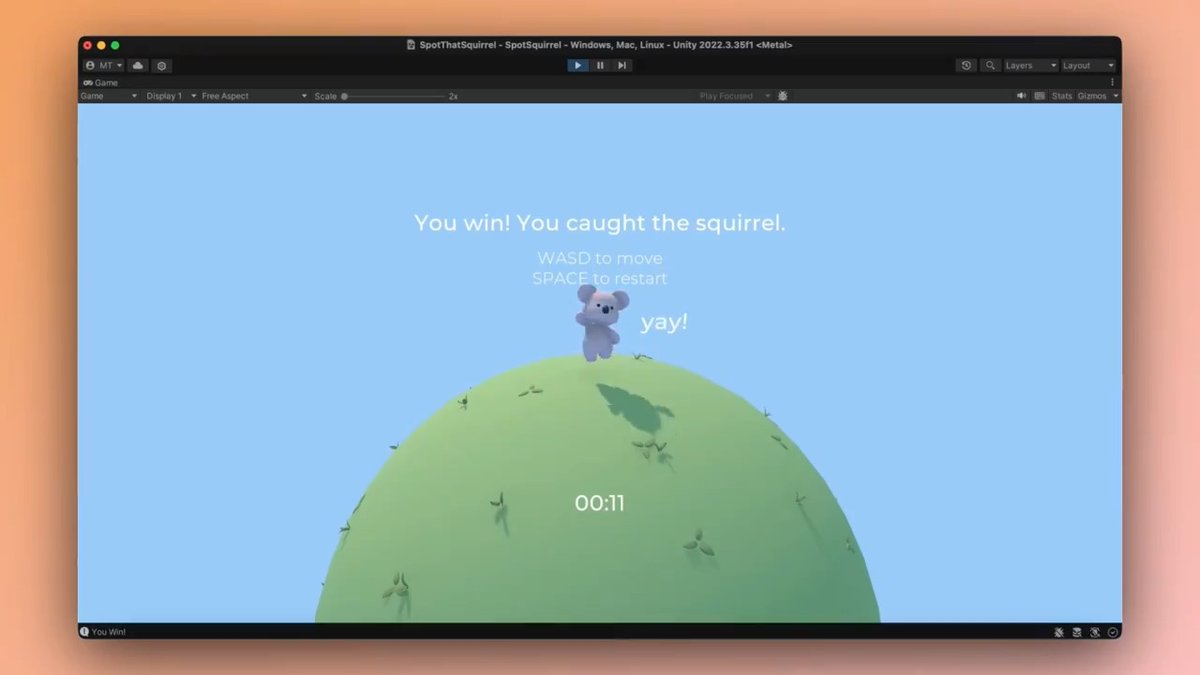
We build a Skill.md for it🔥 OpenAI Developers #Codex + #GPT-5.5 + #Hyper3D Rodin: one-click animated game assets. (This track looks goofy 😂 Try our Skill in any Coding Agent, interactive #3D Asset from image/text ⬇️

23,533 views • 2 months ago •via X (Twitter)

0 Comments

No comments available

Comments from the original post will appear here

Related Videos

🚨 OpenAI just launched Codex, a brand-new autonomous coding agent that can build features and fix bugs on its own. We’ve been using it Every 📧 for a few days, and I’m impressed. I invited Alexander Embiricos (ben davies), a member of the product staff responsible for Codex, to demo Codex and talk about it live on a special edition of AI & I: What Codex is and how it works Codex is designed to be used by senior engineers—it performs coding tasks like adding features or fixing bugs autonomously. It's built to allow you to start many sessions at once, so you can have multiple agents working in parallel. Codex is built to have "taste" OpenAI trained Codex to have the taste of a senior software engineer. It knows how big codebases work, how to write a good PR, and uses clean, minimal code. Why an “abundance mindset” is best for interacting with agents Codex is designed to allow users to delegate many tasks at once without getting caught up in the details. This lets you point an abundance of agents at a specific task like a difficult bug—it’s worth it even if only one of them succeeds. How OpenAI is thinking about agents Codex is one piece of a unified super-assistant OpenAI wants to eventually build—an agent that helps users easily get things done by selecting the right tools for them behind the scenes. OpenAI’s vision for the future of programming In the future developers will probably spend less time writing routine code and more time guiding agents, reviewing their work, and making strategy decisions. Programming will become more social, letting teams easily delegate multiple tasks at once, allowing people to focus on ideas and collaboration instead of routine coding. Watch below!

Dan Shipper 📧

145,487 views • 1 year ago

GPT-5.6 vs GPT-5.5 on my custom spaceship prompt. I gave both models the exact same custom prompt. This is also the same prompt I previously gave to Fable 5. For context, GPT-5.6 Pro worked for 87 minutes, while GPT-5.5 Extra High worked for 34 minutes and 42 seconds. As I’ve said before, based on great authority GPT-5.6 will be an incremental/soldi improvement over GPT-5.5, not a “Fable killer.” My rough expectation has been that it would trade blows with Fable 5 on some benchmarks, maybe win around half depending on the category, but not clearly surpass it overall. And again fable five will have bigger model smell, but this was expected. After testing this coding output, that view feels pretty accurate. GPT-5.6 is clearly better than GPT-5.5 in several visual areas. The lighting, shading, chairs, object details, and exterior of the spaceship looked noticeably stronger. The scene was also easier to test. I do want to give GPT-5.5 credit though. It built out the rooms much much better and the planets looked better than GPT-5.6’s. It was also interesting that both GPT-5.5 and GPT-5.6 produced better-looking planets than Fable 5 in this specific test. The downside with GPT-5.5 was stability. The game was much glitchier and harder to test compared to GPT-5.6. But when it comes to the core of the demo, which is the spaceship itself, Fable 5 still beat both models pretty comfortably. GPT-5.6 is impressive, but from this test, it looks exactly like what I expected which was a meaningful incremental improvement over GPT-5.5, at least for indie game demos, but not something that replaces Fable 5. In collaboration with Chetaslua

Chris

249,713 views • 1 month ago